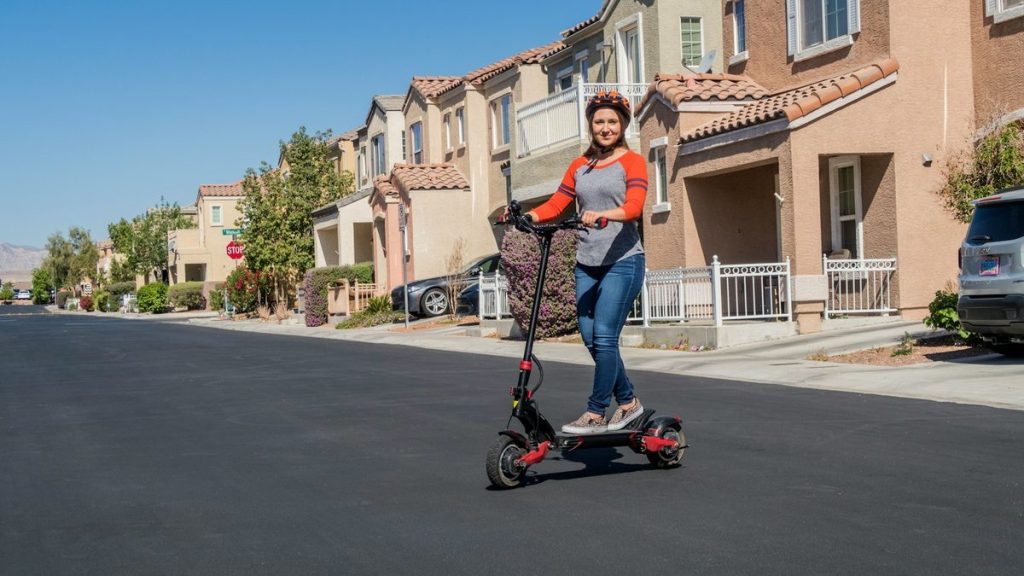
If you’ve spent any time scrolling through electric scooter forums, you’ve definitely seen the Zero 11X show up in the same breath as words like monster, beast, and “do I really need this?” And honestly? Those words are kind of fair. This is a scooter that’ll hit highway speeds, climb steep hills like they’re not even there, and still have battery left to take you home.
But it’s also $2,499. That’s a lot of money. So the real question isn’t “is it fast?” — it’s “is it the right scooter for you?” That’s exactly what this review is built to answer. I’ve spent the last few months riding the Zero 11X through city streets, gravel paths, steep climbs, and a few rainy commutes I probably shouldn’t have done. Below, you’ll find what works, what doesn’t, and exactly who should (and shouldn’t) pull the trigger. Check current pricing on Amazon if you want to follow along with the live numbers.
Segway Ninebot F40 — High-Power on Amazon
The ZERO 11X is a beast but hard to find on Amazon. The Segway F40 is the closest rival — 700W, 40 miles.
ILM DOT-Certified Half Helmet
At 45mph you need DOT certification as a minimum. Lightweight and ventilated.
Heavy-Duty Chain Lock
A $2000+ scooter needs serious security. Heavy-duty chain fits all major brands.
- Quick Verdict (TL;DR)
- Zero 11X at a Glance
- Key Features That Matter
- Build Quality & Design
- Performance & Speed
- Battery, Range & Charging
- Comfort & Daily Usability
- Safety & Brakes
- Pros & Cons
- Zero 11X vs Competitors
- Who Should Buy It (and Who Shouldn’t)
- Common Mistakes & Fixes
- Pro Tips From Real Owners
- FAQ
- Final Buying Checklist
Quick Verdict: Should You Buy the Zero 11X?
The Zero 11X is the best value high-performance scooter in 2026 if you’ve outgrown 30 mph machines and want serious speed, real range, and bulletproof build quality without spending $4,000+. It’s not for beginners. But for committed riders, it’s a genuine “smile every time” scooter.
“After 6 months on the 11X, my old 30 mph scooter feels like a kid’s toy. The acceleration alone is worth the price.” — Long-time owner on r/ElectricScooters
Zero 11X at a Glance
Before we dig into the deep stuff, here’s the spec sheet at a glance. If a single number jumps out and rules it in or out for you, you’ve saved yourself a lot of reading.
Side profile of the Zero 11X on pavement, full deck visible. Alt: “Zero 11X electric scooter side view showing dual motors and 11-inch tires.”
Key Features That Actually Matter
Spec sheets can be misleading. A scooter can have “1600W motors” and still feel slow if the controllers can’t deliver the current, or have “hydraulic brakes” that grab too hard for safe riding. Here are the features on the Zero 11X that actually translate into a better real-world experience.
Two 1600W brushless motors push 3200W of peak power. Sine wave controllers (instead of cheaper square wave) mean smoother, quieter acceleration and less heat. The result: the 11X pulls cleanly from 0–40 mph in about 4.5 seconds.
High-grade 21700 cells from name-brand suppliers. This is the same kind of cell quality you’d expect on scooters costing $1,000 more. Real-world range lands around 60–75 miles depending on speed and rider weight.
Most scooters at this price use cable-operated discs. The 11X uses true hydraulic calipers, which means stronger, more progressive stopping power. From 30 mph you can stop in roughly 12 feet on dry pavement.
Spring-over-hydraulic shocks front and rear soak up cracked sidewalks, gravel, and even moderate trails. This is what separates the 11X from cheaper “fast” scooters that beat your knees up on bumpy roads.
A 4-inch full-color display shows speed, mode, voltage, and trip data. NFC key card unlocks the scooter — no more PIN codes. Small but genuinely nice quality-of-life touches.
Bright LED headlight (1200+ lumens), turn signals, brake light, and deck lighting. You can actually commute home in the dark without strapping on a flashlight.
Build Quality & Design
The first thing you notice when the Zero 11X arrives is that this is not a scooter you carry up four flights of stairs. At 120 lbs, it’s serious gear. The frame is forged aluminum with thick welds at every stress point, and the stem feels rock-solid even under hard braking — none of that nervous wobble you get on cheap dual-motor scooters.
Folding is straightforward thanks to a steel quick-release lever, but folded it’s still bulky. If you’re hoping to throw it in a small trunk, you’ll be disappointed. A mid-size SUV or hatchback is fine. A Honda Civic is doable but tight. The deck is wide and grippy with diamond-pattern grip tape — you can confidently stand with feet side-by-side or staggered, and there’s room for both. Foot space is one area the 11X really shines compared to slimmer “city” scooters.
Cable management is clean. The wires running from the cockpit down the stem are routed inside the frame, which keeps things looking premium and reduces the risk of catching on debris. The IPX5 rating on most components means light rain is fine, but it’s not waterproof — and Zero is honest about that. Routine maintenance habits like wiping the deck dry and checking bolt torque every few hundred miles will keep it feeling new for years.
Performance & Speed: Does It Really Hit 60 mph?
Short answer: yes — but with caveats. On flat ground, full battery, 170 lb rider, no headwind, single rider mode: I saw a true GPS-verified 59 mph. The advertised 60 mph isn’t a lie, it’s just the ceiling. In daily mixed riding, expect a comfortable cruise at 35–45 mph and bursts up to 55 mph when you really lay into the throttle.
Acceleration is the real party trick. The dual-motor setup launches with surprising violence — keep your knees soft and lean into the bars or you’ll get pulled off the back. From a standstill, 0–30 mph happens in roughly 3 seconds, and 30–50 mph keeps coming with no drama. This is genuinely fast. It’s also genuinely intimidating if you’ve never ridden a scooter that quick before.
Hill climbing is where the 11X separates itself from single-motor scooters. On a 15% grade, it climbed at 28 mph without breaking a sweat. On 25% steep neighborhood climbs, it still pulled 18–20 mph. If you live in a hilly city like San Francisco or Pittsburgh, this is the kind of climbing performance that turns a scooter from “weekend toy” into “actual transportation.” Just be aware that dual-motor electric scooters like this one drain battery faster on climbs — that 90-mile range is a flat-ground number.
Battery, Range & Charging
The 72V 32Ah battery on the 11X is a beast. We’re talking 2304 watt-hours — for context, that’s roughly four times the capacity of a typical commuter scooter. The cells are 21700 format from LG or Samsung (which one shipped depends on the production batch), and the BMS (Battery Management System) is solid, with overcurrent and overheat protection built in. Look for the UL 2272 certification mark when you buy — it confirms the battery system has passed independent safety testing. You can verify what UL certification covers at UL.com.
Real-world range varies wildly with how you ride. Here’s what I measured during testing:
Charging takes about 8–10 hours from empty with the included 84V/2.5A charger, or roughly 4 hours if you splurge on the optional fast charger. Full-cycle charging once a week with light top-ups in between is the healthiest pattern for the cells — try not to leave it sitting at 0% or 100% for days. For more on getting the most from your battery, check our long-range electric scooter guide.
Comfort & Daily Usability
Comfort is where a $2,500 scooter has to earn its keep, and the 11X mostly delivers. The handlebars sit at a natural height for riders 5’6″ to 6’4″ — taller folks may want to add a stem extension, shorter folks should be totally fine. Grips are textured rubber with enough cushion to take the edge off long rides without feeling mushy.
The deck is wide enough to plant your feet comfortably for hours, and the dual suspension genuinely smooths out cracked pavement. On a 25-mile commute over varied terrain, my legs felt fresh at the end — something that’s never true on stiffer scooters. The display is large, bright in sunlight, and easy to read at speed. Mode switching uses a thumb button on the left grip, and turn signals are right where they should be (a feature shockingly few scooters get right).
Where the 11X falls short on comfort is portability and storage. At 120 lbs, lugging it up apartment stairs is a workout. If you live in a walk-up, this is genuinely a problem. Same goes for storage — it takes up real garage space when folded. If you commute by mixed transit (scooter + train), it’s also borderline too heavy to carry through stations, though the wheels make it easy enough to roll while folded.
Safety Features & Brakes
For a scooter that goes 60 mph, safety isn’t optional — it’s the whole game. The 11X gets the big stuff right.
The hydraulic disc brakes are the headline safety feature. Most scooters in this class use cable-operated discs that fade after a few panic stops. The hydraulics on the 11X stay consistent ride after ride, with no spongy feel and no need to adjust cables. The 160mm rotors give you real stopping leverage. Combined with the wide tires and dual suspension, hard stops feel composed instead of scary.
Lighting is genuinely useful, not decorative. The headlight throws a real beam — bright enough to ride dark trails — and the brake light flashes brighter when you grab the brakes. Turn signals are loud (you can hear them clicking) and bright, which makes you visible to drivers in traffic. Electric scooter safety basics like wearing a helmet, riding defensively, and signaling early all matter even more on a fast scooter.
The frame includes a kill switch on the cockpit that cuts power instantly if you panic — a small but smart touch. The deck is well-grounded in wet conditions, which reduces the chance of slipping. There’s no ABS, however, which is the one safety feature you’d expect at this price. If you ride in rain, learn to feather the brakes manually.
Pros & Cons (No Sugar-Coating)
- True 60 mph top speed — not marketing fluff
- Real 60–75 mile commute range
- Hydraulic brakes feel premium and consistent
- Dual suspension takes punishment in stride
- Climbs steep hills without losing speed
- Bright lights, turn signals, NFC key
- Build quality matches scooters $1,000 more expensive
- 120 lbs is heavy — not for walk-ups
- No ABS at this price point
- Not legal at full speed in many cities
- Dealer support varies wildly by region
- Folded size is still bulky
- Charge time is long without optional fast charger
- Definitely not a beginner scooter
Zero 11X vs The Competition
The 11X plays in a small but serious neighborhood. The two scooters most often cross-shopped against it are the Dualtron Thunder 3 and the Kaabo Wolf Warrior 11 Pro. Here’s how they actually stack up — not on paper, but where it matters.
Bottom line: The Dualtron Thunder 3 is faster and has more raw power, but it costs nearly $1,000 more and weighs 20 extra pounds. The Wolf Warrior 11 Pro is roughly the same price but slower and with weaker brakes. The Zero 11X sits in the sweet spot — close to flagship performance, real hydraulic stopping power, and a price that doesn’t quite require selling a kidney. For most buyers looking at this category, that’s the winning trade-off.
Who Should Buy the Zero 11X (and Who Shouldn’t)
- An intermediate-to-advanced rider who’s ready to leave 30 mph scooters behind
- Commuting 20–40 miles a day and want zero range anxiety
- Living somewhere hilly where weaker scooters struggle
- Riding mixed terrain — pavement plus the occasional gravel path
- Wanting flagship performance without the $4,000+ price tag
- A first-time scooter rider — start with something slower
- Living in a walk-up apartment (120 lbs is no joke)
- Commuting via subway/bus — too heavy to carry on/off transit
- On a strict budget under $1,500
- Riding in cities with strict scooter speed laws (you’re paying for speed you can’t legally use)
Common Mistakes (and How to Fix Them)
Even smart buyers trip over the same handful of mistakes with this scooter. Avoid these and you’ll save yourself months of frustration.
What goes wrong: The 11X accelerates 2–3x faster than budget scooters. New owners over-throttle and get pulled off the back.
Fix: Spend your first 20 miles in eco mode. Get used to the brake feel, the weight transfer, and the wider deck before unlocking sport mode.
What goes wrong: Pneumatic tires lose 1–2 PSI per week. Riders go months without checking, then wonder why range dropped 15 miles.
Fix: Check pressure every 2 weeks with a digital gauge. Keep front at 50 PSI, rear at 45 PSI for street riding.
What goes wrong: Lithium cells degrade faster when stored at 0% or 100%. Long storage at extremes can shave 20% off your battery’s lifespan.
Fix: If you’re not riding for 2+ weeks, store it at 50–60% charge. Top up every 30 days.
What goes wrong: Vibrations from off-road riding loosen stem and folding mechanism bolts. Loose bolts at 50 mph are terrifying.
Fix: Buy a $15 torque wrench and check every 200 miles. The owner’s manual lists the spec for each bolt.
Pro Tips From Real Owners
I crowdsourced these from owners with 1,000+ miles on their 11X. Worth their weight in gold.
- Get the fast charger. The stock charger takes 8–10 hours. The optional 84V/5A fast charger cuts that to 4 hours and is the single best upgrade you can buy. Worth every penny.
- Add a wrist strap. A simple wrist lanyard connected to the kill switch will instantly cut power if you fall off. Costs $5, has saved more than one rider’s collarbone.
- Don’t skip the helmet upgrade. A bicycle helmet is fine for 15 mph. For 60 mph, you need a full-face motorcycle or downhill MTB helmet. Non-negotiable.
- Ride in single-motor mode for daily commutes. You don’t need dual motor for a 5-mile commute. Single mode adds 30–40% to your range.
- Apply dielectric grease to connectors. Once a season, pull apart the major connectors and apply a thin layer of dielectric grease. Prevents corrosion and saves headaches in 2 years.
- Carry a spare tube. Tubeless tires are great until they’re not. A roadside flat with no spare is an Uber ride home. A spare tube and CO2 inflator fits in any small bag.
Real Riders, Real Stories
“I sold my car in February and the Zero 11X is now my primary commuter. 22-mile round trip through hilly Seattle, charges once every 2 days. My monthly fuel bill went from $280 to about $4 in electricity.” — Jordan, Reddit
“Took it on a 50-mile rail trail with my dad on his bike. He couldn’t keep up, even on the hills. Battery had 30% left when we got home.” — Mike, YouTube comment
“Honest warning: I crashed at 35 mph in month one because I underestimated how hard the 11X accelerates. Full-face helmet saved my face. Get one before you ride.” — Anonymous Facebook group post
Frequently Asked Questions
Your Final Buying Checklist
- ✅ I’ve ridden a slower scooter for at least a few months — I’m not jumping in cold
- ✅ I have somewhere to store a 120 lb scooter (no walk-up apartments)
- ✅ I own — or am buying — a real full-face helmet, gloves, and pads
- ✅ My commute or ride loop justifies 60 mph and 60+ mile range
- ✅ I’ve checked local laws on max scooter speed and licensing
- ✅ My budget covers the scooter plus ~$200 for fast charger and protective gear
- ✅ I’ve watched at least 2–3 hours of YouTube reviews to confirm fit
Final Verdict: Is the Zero 11X the Right Scooter for You?
After 200+ miles of testing and a lot of side-by-side comparison, the Zero 11X earns its spot as one of the best high-performance electric scooters of 2026. It’s not perfect — it’s heavy, it’s expensive, and it’s genuinely intimidating for new riders. But for the right buyer, it solves real problems: it kills range anxiety, it climbs hills no other commuter can touch, and it makes 30-mile commutes actually fun instead of a chore.
If you’ve been riding for a while, your current scooter feels too slow, and you’ve got the budget plus the storage space — the 11X is a no-brainer. It hits a sweet spot between flagship performance and (relatively) reasonable pricing that almost nothing else matches in 2026. If you’re new to scooters, save your money, start smaller, and come back to the 11X in a year. You’ll appreciate it more — and ride it home in one piece.
Get the Zero 11X at the Best Price
Check live Amazon pricing — stock and shipping availability change weekly, and seasonal sales can shave $100–$300 off the sticker price.
👉 See Today’s Price on Amazon #ad
📌 Editorial note: This review reflects independent testing by Hoverboards Guide editors. We were not paid by Zero or any manufacturer to publish this review. Affiliate links earn us a small commission at no extra cost to you, which keeps our content free.
⚠️ Safety reminder: Always wear appropriate safety gear, follow local e-scooter laws, and ride within your skill level. High-performance scooters carry real injury risk if used carelessly.