Advanced Seat Technology for Enhanced Riding Performance
Modern seats do far more than cushion. They manage vibration, support your skeleton, and quietly decide how long you can ride before fatigue, numbness, or back pain ends the trip.
🎯 Key Takeaways
- Seat performance is a system — geometry, material, and suspension work together; upgrading one alone gives limited results.
- Vibration is the hidden enemy. ISO 2631 links sustained whole-body vibration to fatigue, reduced reaction time, and back disorders.
- Sit-bone width matters more than padding. A seat that’s too narrow forces soft tissue to bear weight that bone should carry.
- Gel + foam hybrids outperform single-material seats for most riders by combining impact absorption with shape retention.
- Suspension seat posts add 20–80 mm of travel and dramatically smooth out cracked pavement on e-bikes and seated e-scooters.
- Hoverboard kart seats turn a standing board into a low, stable seated ride — but only when the kart frame matches your wheel size and weight class.
If you’ve ever stepped off a 30-minute ride feeling like your spine got rearranged, you already know that advanced seat technology for enhanced riding performance isn’t marketing fluff — it’s the difference between a ride that energizes you and one that punishes you. Whether you’re piloting a seated e-scooter through city streets, attaching a kart to a hoverboard, or commuting on an e-bike, the seat is the single point where every bump, vibration, and weight shift transfers from machine to body.
Most riders never think about their seat until something hurts. That’s understandable, but it’s also why so many people give up on otherwise great rides. The good news: seat engineering has come a long way. Multi-density foams, gel inserts, suspended rails, ergonomic cutouts, and pressure-mapped designs now solve problems that used to be considered “just part of riding.” This guide breaks down how the technology actually works, what to look for, and the small details that separate a good seat from a great one.
Advanced seat technology improves riding performance by combining ergonomic shaping, multi-density cushioning, and vibration-damping suspension into one engineered system. The result is reduced pressure on soft tissue, less spinal compression from road shock, and noticeably longer ride times before fatigue sets in.
📑 Table of Contents
- What “Advanced Seat Technology” Actually Means
- The Science: Why Seat Design Decides Ride Performance
- Core Materials: Foam, Gel, Air, and Composites
- Suspension and Vibration Damping Systems
- Ergonomic Geometry and Pressure Distribution
- Seat Tech in Hoverboards, E-Scooters, and E-Bikes
- How to Choose the Right Seat Setup for Your Ride
- Common Misconceptions About Seat Comfort
- Related Concepts Worth Knowing
- Frequently Asked Questions
What “Advanced Seat Technology” Actually Means
Advanced seat technology is an engineered seating system that uses ergonomic shape, layered cushioning, and force-management features to improve rider comfort and control. The phrase covers everything from a gel-injected scooter saddle to a fully suspended e-bike seat with cutouts, channels, and shock-absorbing rails.
The key word is system. A premium foam pad bolted to a rigid post will still transmit road shock straight to your spine. A simple seat on a well-tuned suspension post can outperform an expensive saddle with no damping at all. Real performance comes from the parts working together.
Three pillars define the category:
- Geometry — the shape, width, length, and contour that decide where your body bears weight.
- Materials — the layered foams, gels, and covers that distribute pressure and resist heat or moisture.
- Force management — springs, elastomers, or air systems that absorb impacts before they reach you.
The Science: Why Seat Design Decides Ride Performance
Riding performance isn’t just about speed or range. It’s about how long you can ride at your best — alert, comfortable, and in control. Seat design directly affects all three.
Whole-body vibration is measurable — and harmful
The international standard ISO 2631 defines safe limits for whole-body vibration exposure. Sustained vibration in the 4–8 Hz range is the most damaging because it matches the resonant frequency of the human spine and abdomen. The U.S. National Institute for Occupational Safety and Health (NIOSH) has documented links between long-term vibration exposure and lower-back disorders, fatigue, and reduced fine motor control.
Translated to rider terms: every time your wheel hits a crack and your seat doesn’t absorb it, that energy travels through your pelvis and into your spine. Multiply that by hundreds of impacts per mile, and you have a clear physical reason why a bad seat ends rides early.
Pressure mapping changed the game
Modern seat designers use pressure-mapping technology — think of a thin sensor pad that visualizes where weight concentrates as red hot spots. The goal is to spread load across the bony parts of the pelvis (the sit bones, or ischial tuberosities) rather than the soft tissue between them. Hot spots there mean compressed nerves, restricted blood flow, and the numbness most riders blame on themselves.
Core Materials: Foam, Gel, Air, and Composites
The cushion under you is rarely just one material anymore. Quality seats stack two, three, or even four layers, each tuned for a different job. Here’s how the main options actually behave on the road.
Polyurethane and EVA foams
Standard polyurethane foam is cheap and shapeable but compresses permanently over time — a process called compression set. High-density EVA (ethylene-vinyl acetate) foam resists this much better and is the workhorse of mid-tier seats. Look for densities above 60 kg/m³ for any seat used more than a few hours a week.
Memory foam (viscoelastic)
Memory foam slowly conforms to body shape, then bounces back. This excels at distributing weight evenly during long rides. Downsides: it gets stiff in cold weather, traps heat in summer, and adds rebound delay if you shift position quickly during sharp turns.
Gel inserts
Gel — usually polymer-based — flows under pressure, then resets. It handles sharp impacts brilliantly and stays cooler than foam. It’s heavier, though, and gel-only seats can feel “dead” because they lack rebound. That’s why most premium seats use gel as a core layer with foam on top.
Air cells and 3D-printed lattices
Newer designs use sealed air pockets or printed polymer lattices to deliver targeted compression zones. These are still pricey but show up on flagship e-bike saddles. The advantage is tunability — engineers can soften some zones and stiffen others within a single piece.
Suspension and Vibration Damping Systems
If material handles small vibrations, suspension handles the big ones. A pothole edge can deliver several Gs of vertical force into your spine in milliseconds. Cushioning alone can’t absorb that energy fast enough — you need mechanical travel.
Suspension seat posts
A suspension post replaces your rigid seat tube with one that compresses on impact. The three common types:
- Coil spring posts — durable, adjustable preload, but heavier. Travel typically 30–50 mm.
- Elastomer posts — lightweight rubber-like inserts, smooth feel, no maintenance. Travel around 20–35 mm.
- Air/oil cartridge posts — premium option with adjustable damping, similar to mountain bike forks. Travel up to 80 mm.
Parallel-link (parallelogram) posts
Standard suspension posts compress vertically, which slightly changes your saddle position relative to the pedals or footrests. Parallelogram posts use a four-bar linkage so the seat moves down and slightly back, mimicking the natural arc your body wants to take when absorbing a bump. They’re more expensive but noticeably more efficient on rough commutes.
Saddle rail damping
Some seats build damping into the rails themselves using elastomer inserts where the rails meet the shell. The travel is small — usually 5–10 mm — but it filters the high-frequency buzz that suspension posts are too slow to catch. Combined with a quality post, this is what produces a true “magic carpet” ride.
Ergonomic Geometry and Pressure Distribution
You can have the best foam and the best suspension and still hate your seat — because the shape is wrong for your body. Geometry is the part most riders underestimate.
Sit-bone width
Your ischial tuberosities — the two bones you can feel when you sit on a hard chair — should be the primary load-bearing points on any seat. They vary in spacing from about 90 mm to 160 mm between adults. A seat narrower than your sit-bone width forces the load onto soft tissue. A seat much wider creates inner-thigh chafing on rides that involve pedaling or leg movement.
Many bike shops offer free sit-bone measuring pads. It’s a five-minute test that completely changes seat selection.
Cutouts, channels, and noses
A central cutout or channel relieves pressure on the perineal area, where major nerves and blood vessels run. This isn’t a comfort luxury — sustained compression here is associated with numbness and longer-term health issues for any rider spending serious time in the saddle. Short-nose designs reduce front-end pressure further and have become standard on performance e-bike saddles.
Tilt and fore-aft adjustment
A flat seat is rarely optimal. A slight nose-down tilt (1–3°) reduces pressure on soft tissue. Sliding the seat forward or back changes how your weight loads the pelvis. Most seated e-scooters and e-bikes allow both adjustments at the rail clamp — many riders never touch them, and that’s leaving comfort on the table.
Seat Tech in Hoverboards, E-Scooters, and E-Bikes
Each ride category puts different demands on its seat. Knowing the differences helps you avoid wasting money on the wrong upgrade.
Hoverboard kart attachments
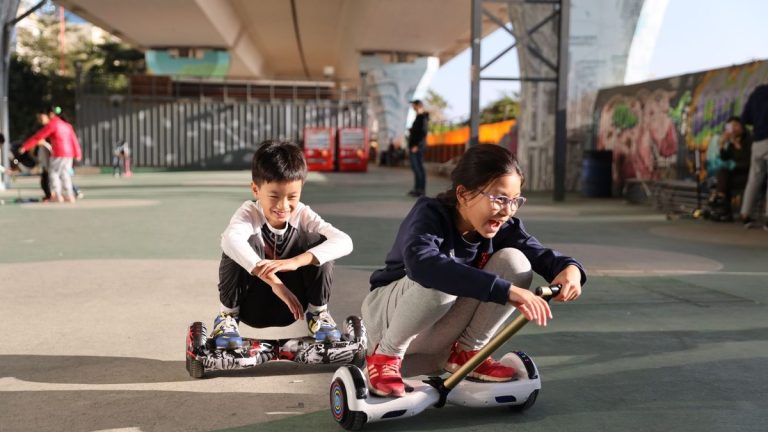
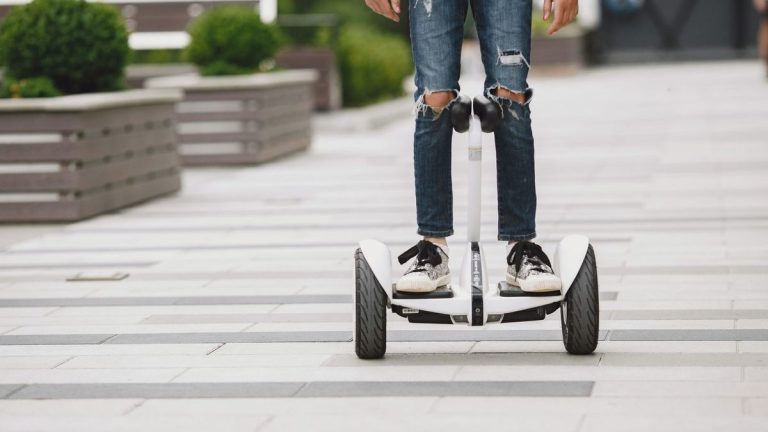
A hoverboard kart turns a self-balancing board into a low, seated go-kart. The seat is usually a one-piece molded shell with light padding, supported by a tubular frame that clamps to the foot pads. Because there’s no front wheel of its own, the kart inherits all the suspension behavior of the hoverboard’s solid or semi-solid wheels — meaning the seat itself does most of the comfort work. Always confirm the kart matches your board’s wheel diameter (typically 6.5″, 8″, or 10″) and your combined weight stays inside the rated limit. For a deeper look at compatibility, our hoverboard kart buying guide walks through fitment in detail.
Seated electric scooters
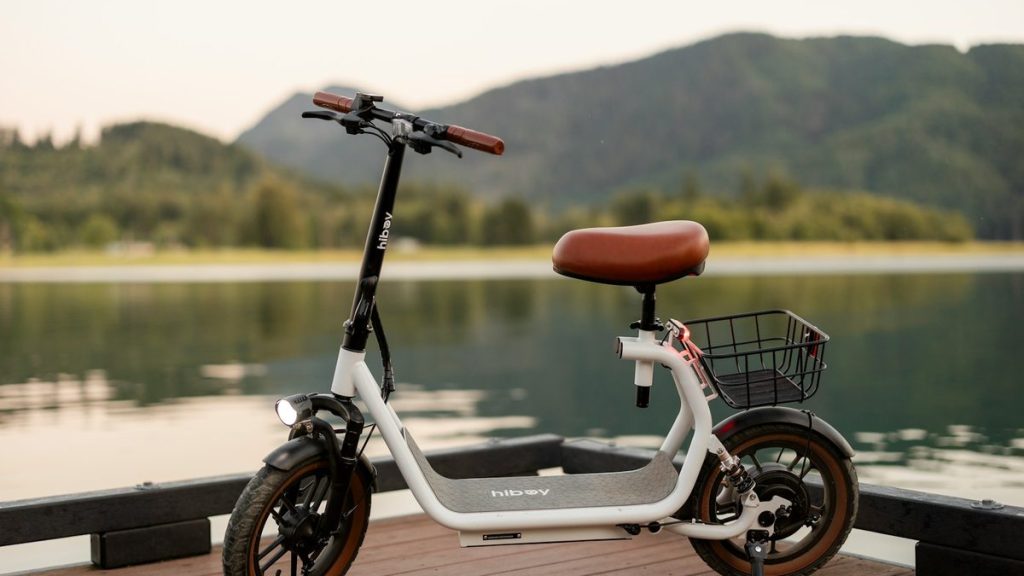
Seated e-scooters benefit hugely from suspension because the rider sits directly above the rear wheel with little distance to absorb impact. A combination of a gel-foam saddle and a short-travel suspension post transforms ride quality. If you ride a model with no rear suspension, a quality seat is the single biggest comfort upgrade you can make. Tire choice matters too — see our breakdown of pneumatic vs solid tires for electric scooters to understand how much shock the tire absorbs before the seat ever has to.
E-bikes and pedal-assist commuters
E-bike riders cover longer distances, so seat geometry matters more than maximum cushion. Performance riders generally prefer firm, narrow saddles with deep cutouts. Casual riders do better with wider, hybrid-foam saddles. Adding a suspension post is often a smarter investment than swapping the saddle on an e-bike with no rear suspension.
How to Choose the Right Seat Setup for Your Ride
Don’t shop by price or brand first. Shop by problem. Match what’s wrong with your current ride to the upgrade most likely to fix it.
- Numbness or pinching? Geometry issue — get a seat with a wider rear platform that matches your sit-bone width, plus a central cutout.
- Sore tailbone or sit bones? Padding density issue — try a hybrid gel/foam seat. Pure memory foam is too soft; pure gel is too dead.
- Lower back ache? Vibration issue — invest in a suspension seat post first, then look at the saddle.
- Chafing on inner thighs? Seat too wide at the nose — switch to a narrower-nosed saddle.
- General fatigue after 20+ minutes? Whole-system issue — combine a suspension post with a hybrid saddle and check tilt.
Common Misconceptions About Seat Comfort
Plenty of stubborn myths drive people toward the wrong seat. Here are the ones worth correcting.
“More padding equals more comfort.” Soft, thick padding feels great in the showroom but lets your sit bones sink through to underlying soft tissue, which causes numbness on long rides. The right padding is dense and shaped, not deep and squishy.
“Wider seats are always better.” Width should match your sit-bone spacing. An overly wide seat causes thigh chafing and forces your hips into an awkward angle.
“You just need to break it in.” A well-designed seat needs almost no break-in. If discomfort doesn’t ease after a few short rides, the seat geometry doesn’t match your body. Time won’t fix that.
“Suspension is only for off-road.” Urban streets are full of expansion joints, manhole covers, and pothole edges that deliver sharp vertical impacts. A suspension post helps even more on city pavement than on a smooth dirt trail.
“Gel seats are always cooler.” Gel itself doesn’t trap as much heat as foam, but most gel seats are wrapped in vinyl that does. The cover material affects temperature as much as the fill.
Related Concepts Worth Knowing
- UL 2272 certification — the safety standard for hoverboard electrical systems. Doesn’t cover seats directly, but a kart attachment doesn’t change a board’s certification status. Read more in our UL 2272 explained guide.
- Tire pressure and ride feel — under-inflated pneumatic tires absorb more shock but waste range and risk pinch flats. Pressure tuning is a free comfort upgrade. See our tire pressure guide.
- Rider weight limits — every seat, post, and frame has one. Exceeding it shortens lifespan and creates safety risks. Check our overview of hoverboard weight limits.
- Posture mechanics — seat tilt and reach interact with arm position to determine spinal load. The best seat in the world can’t fix bad cockpit geometry.
- Heat and humidity management — perforated covers, breathable mesh tops, and channel designs all reduce sweat buildup on long rides.
Frequently Asked Questions
What is advanced seat technology?
Advanced seat technology refers to engineered seating systems that combine ergonomic geometry, multi-density foams or gels, vibration-damping suspension, and pressure-mapped contours to reduce fatigue and improve ride control. It goes beyond simple padding to actively manage the forces a rider’s body absorbs.
Segway Ninebot E45 — Advanced Comfort Technology
Looking for an advanced riding seat? The Segway E45 delivers the most ergonomic commuter setup.
LISEN Phone Mount — Handlebar Navigation
Advanced riding comfort includes hands-free navigation. 360° phone mount under $15.
ILM DOT-Certified Half Helmet
Advanced riding technology starts with head protection. DOT-certified and lightweight.
How does a suspension seat post actually work?
A suspension seat post uses a spring, elastomer, or air cartridge inside the post tube to compress when the wheel hits a bump. This isolates the rider from sharp vertical jolts. Travel ranges from about 20 mm on commuter posts to 80 mm or more on off-road versions.
Are gel seats better than memory foam?
Gel handles short, sharp impacts better and stays cooler in heat. Memory foam molds to the rider over a few minutes and distributes weight more evenly for long rides. Many high-end seats now layer both: a gel core for impact, foam on top for shape retention.
Can I add a seat to my hoverboard?
Yes. Hoverboard kart attachments add a seat, frame, and steering levers that clamp around the foot pads. They convert the board into a go-kart-style ride. Always check that your kart and hoverboard share the same wheel size and weight rating.
What seat material lasts longest?
High-density EVA foam wrapped in marine-grade vinyl typically outlasts open-cell foam and bare gel. Closed-cell construction resists water absorption, UV degradation, and the slow compression set that flattens cheaper seats within a season.
How does seat design reduce lower back pain?
A well-designed seat keeps the pelvis neutral, supports the sit bones directly, and absorbs vertical vibration before it reaches the lumbar spine. Without this, the spine compresses repeatedly with each bump, which is the primary cause of post-ride back ache.
Summary
Advanced seat technology for enhanced riding performance isn’t about picking the softest cushion on the shelf. It’s about matching three things to your body and your ride: the right geometry (sit-bone width, cutouts, tilt), the right materials (usually a hybrid gel-foam stack), and the right force management (suspension post, parallelogram linkage, or rail damping). When all three line up, you stop noticing the seat — which is exactly the goal. You ride longer, you ride more alert, and you step off without a sore back.
📚 Further Reading
- Hoverboard Kart Buying Guide — fitment, weight ratings, and what to look for
- Pneumatic vs Solid Tires for Electric Scooters — how tires affect ride feel before the seat does
- UL 2272 Certification Explained — what the standard covers and why it matters
- NIOSH on whole-body vibration — research on long-term vibration exposure
- ISO 2631 standard — international guidance on human vibration exposure
Last Updated: May 2026 | Author: Marcus Reyes, Mobility Ergonomics Specialist
This article is educational. It’s intended to help readers understand seat engineering — not as buying advice or a substitute for a professional bike fit.