Hoverboard vs Electric Unicycle: Which One Is Right for You?
A friendly, no-fluff comparison of two very different rides — so you pick the one that actually fits your life, not just the one with the cooler ad.
🎯 Key Takeaways
- Hoverboards are easier, slower, cheaper, and best for short, casual rides on smooth ground.
- Electric unicycles (EUCs) are harder to learn but go much faster, farther, and handle real-world streets far better.
- Expect to learn a hoverboard in minutes, but plan on 5–15 hours of practice before an EUC feels natural.
- Hoverboards usually cap at 6–10 mph; EUCs commonly cruise at 25–40 mph, with top models exceeding 60 mph.
- Always look for the UL 2272 safety certification — on either device.
- Pick a hoverboard for fun. Pick an EUC for real transportation.
Walk through any college town and you’ll see them: kids gliding on hoverboards, riders zipping past on a single fat-tired wheel that almost looks like a cartoon. Both belong to a growing family of personal electric vehicles, and both promise the same thing — a smoother, more fun way to get around. But choosing between a hoverboard vs electric unicycle is a much bigger decision than it looks. One is a toy you can master in your living room. The other is a serious commuter machine that takes real practice and respects no shortcuts.
This guide breaks it all down in plain English: how they ride, how fast they go, how steep the learning curve is, what they actually cost over time, and which one fits the way you live. By the end, you’ll know exactly which board (or wheel) belongs in your garage — and which one would just frustrate you. No hype, no upsell. Just honest comparisons from years of riding both.
Pick a hoverboard if you want something easy, affordable, and fun for short rides on smooth ground. Pick an electric unicycle if you want a real commuter that’s faster, has longer range, handles bumps and hills, and you’re willing to spend a few weekends learning to ride it.
📑 Table of Contents
What’s the Real Difference Between a Hoverboard and an Electric Unicycle?
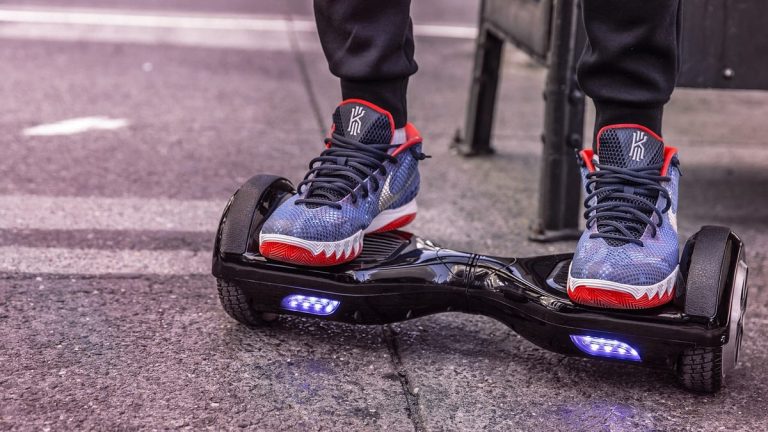
A hoverboard is a self-balancing board with two wheels — one under each foot — joined by a pivoting center. You lean forward to go, lean back to stop, and twist your feet to turn. It’s basically a sideways skateboard with a brain.
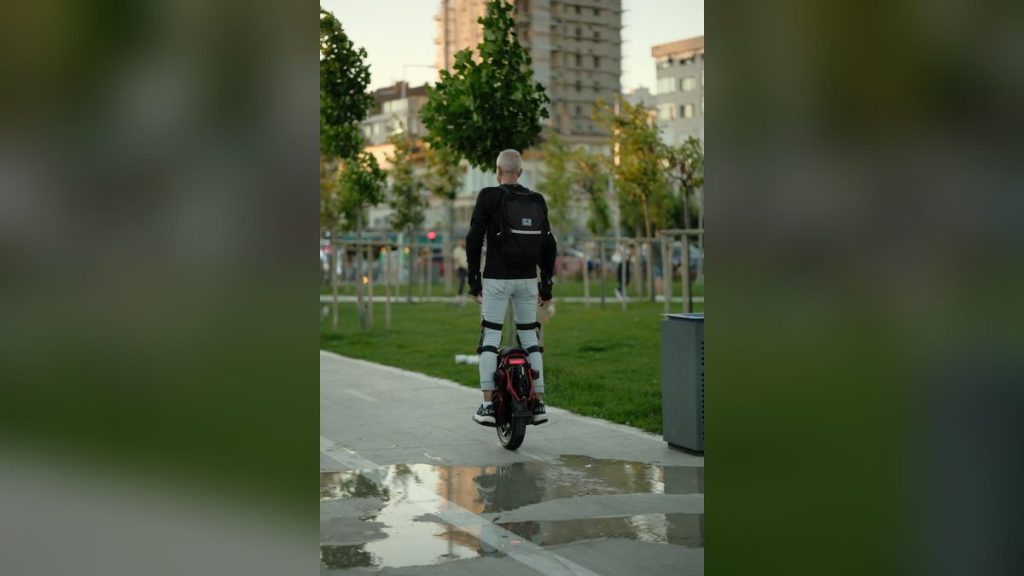
An electric unicycle, often shortened to EUC, is a totally different animal. It has one wheel in the middle, with two foot pedals sticking out from the sides. You stand on the pedals, and the wheel sits between your shins. To move, you lean your whole body forward. To stop, you lean back. There’s no handlebar, no second wheel, nothing to hold onto.
That single difference — one wheel vs two — changes everything. Two wheels give you side-to-side stability automatically; you just have to balance front-to-back. One wheel gives you nothing free. You have to balance in every direction at once, which is why your first hour on an EUC feels like learning to walk all over again.
The riding feel is also worlds apart. A hoverboard rolls on small, hard rubber wheels (usually 6.5″, 8″, or 10″). It’s twitchy on bumps and useless on grass or gravel. An EUC rides on a single fat motorcycle-style tire, often 14″ to 20″ tall, which rolls over potholes, cracks, and even small curbs without thinking. If you’ve ever felt how a mountain bike floats over rough trail compared to a kid’s scooter, that’s roughly the gap between these two devices.
Learning Curve: Which One Is Easier to Ride?
Hoverboards are dramatically easier. Most people are riding one in 5 to 30 minutes. Hold a wall, step on, find your balance, lean gently, and you’re moving. Kids especially pick it up in seconds. By the end of an afternoon, you’re carving figure-eights in the driveway.
Electric unicycles are a different story. Plan on real time and real frustration before things click. Here’s a realistic timeline:
- Hour 1–2: You’ll struggle to even mount the device. Expect to lean on a wall, fence, or shopping cart constantly.
- Hour 3–5: First wobbly solo rides — usually 10 to 20 feet at a time. You’ll feel uncoordinated.
- Hour 5–10: Riding in straight lines starts to feel okay. Turns are still scary.
- Hour 10–15: Smooth turns, confident starts, dismounts feel natural. You’re officially a rider.
- Hour 20+: Carving, hills, slow-speed maneuvers, traffic awareness all start to click.
That gap matters when you’re choosing. If you have kids, parents, or anyone who just wants something fun for the weekend, a hoverboard wins. If you’re patient, motivated, and dreaming of a long-distance commute, an EUC is worth the climb.
One pro tip from veteran riders: wear all your safety gear from minute one — helmet, wrist guards, knee pads. Not because you’ll definitely fall (most learners don’t fall hard with proper technique), but because protection lets you push past fear and learn faster. Fear is the real enemy on day one. For more on getting started, check out our complete guide on how to ride a hoverboard.
Speed, Range, and Power Compared
This is where the gap really shows. Hoverboards and EUCs aren’t even in the same league when it comes to performance.
Most hoverboards top out between 6 and 10 mph. Range is typically 6 to 12 miles on a full charge, depending on your weight and the terrain. They’re fine for cruising the block or rolling around a college campus, but they wheeze on hills and run out of battery before any real commute is over.
Electric unicycles are built for distance. Entry-level models cruise at 18–22 mph with 25-mile range. Mid-range EUCs hit 30–40 mph with 50–70 miles of range. Top-tier wheels — the kind serious commuters and long-distance riders use — can sustain 50+ mph and travel over 100 miles on a single charge. They climb hills that would freeze a hoverboard in place.
Side-by-Side Comparison
Here’s the part most people miss: hoverboards struggle on bumps. A pebble or a sidewalk crack can send a small wheel skidding. EUCs eat that stuff alive. The big tire and gyro stabilization combine to feel like you’re floating over things that would stop a hoverboard cold. If your route has cracks, dips, or any hill steeper than a wheelchair ramp, an EUC is the realistic choice.
Portability and Daily Carry
Hoverboards win this one without breaking a sweat. They’re small, fairly light (20–30 lbs), and tuck under a desk, into a backpack-style carry case, or in a car trunk easily. You can take one on a bus, into a coffee shop, or up to your apartment without much fuss.
Electric unicycles are heavy. Even compact “commuter” wheels start around 35 lbs. Mid-range EUCs are usually 50–60 lbs, and high-performance models cross 80 lbs — heavier than most carry-on suitcases packed full. They have a built-in trolley handle (it pops out like luggage) so you can roll them when not riding, but lifting one up a flight of stairs is a workout.
For daily life, this matters more than people realize:
- Living in a walk-up apartment? Hoverboard.
- Commuting and pairing with a train or bus? Lighter EUC or hoverboard.
- Driving to a trail or park? Either works fine.
- Office on the 5th floor with no elevator? Definitely hoverboard.
Safety Standards and Real-World Risks
Both devices use lithium-ion batteries, and both have had safety scares — especially hoverboards back around 2015–2016, when poorly made imports caused fires and the U.S. Consumer Product Safety Commission stepped in. The fix was a strict battery and electrical-system safety standard called UL 2272, developed by UL Solutions. Any reputable hoverboard or EUC sold today should carry this certification.
Always look for the UL 2272 mark before buying. It tests the device’s full electrical system — battery, charger, motor controllers, and wiring — for fire and shock hazards. A device without it is gambling with your house.
Crash Risk
Hoverboards crash slow but trip easy. Hit a small object and the board can stop instantly while your body keeps going. Most hoverboard injuries are wrist fractures and tailbone bruises from low-speed falls. Not catastrophic, but not nothing.
EUCs crash less often once you’re skilled, but when they do crash, the speeds are much higher. A 25 mph fall is a real injury risk — road rash, broken collarbones, concussions. This is why experienced EUC riders often wear motorcycle-style gear: full-face helmet, padded jacket, knee/shin guards, and wrist guards. It looks like overkill until you see the first slow-motion video of a 30 mph dismount.
Price and Long-Term Value
Hoverboards are cheap to enter. A solid UL 2272 certified model costs $150–$300. Premium models with bigger wheels and Bluetooth speakers run $300–$500. They’re affordable enough to be an impulse holiday gift.
EUCs are an investment. A serious entry-level wheel starts at about $700. The sweet spot for most commuters is $1,500–$2,500, where you get fast charging, suspension, big batteries, and proper torque. High-performance EUCs run $3,000–$5,000+, and people genuinely buy them — usually replacing a car, not a bike.
Total Cost of Ownership
Here’s the surprise: an EUC often pays for itself if you actually use it for commuting. People who replace daily Uber rides, gas, or a second car frequently break even within a year. A hoverboard, by contrast, is basically pure entertainment spending — fun, but not a transportation budget item. For more on what makes a quality device, our guide to choosing a hoverboard walks through the specs that actually matter.
Who Should Buy Which?
A Hoverboard Is Right For You If…
- You’re buying for a kid or teenager.
- You want something fun for around the house, driveway, or local park.
- You ride on smooth surfaces — sidewalks, gym floors, paved paths.
- You don’t want to spend more than $500.
- You want to learn in an afternoon, not a month.
- You’ll mostly use it occasionally, not daily.
An Electric Unicycle Is Right For You If…
- You want a real, daily commuter that replaces a car ride or bus trip.
- Your route includes hills, rough pavement, or longer distances.
- You’re patient and willing to spend 10+ hours learning.
- You can store and charge a 40+ pound device safely.
- You’re willing to wear full safety gear every ride.
- Your budget can stretch to $1,000+ for a quality model.
Legal Status and Where You Can Ride
Laws are inconsistent and changing fast. Both hoverboards and EUCs sit in a gray zone in most U.S. states — they’re often classified alongside e-scooters or “personal mobility devices,” which means rules vary by city.
Here’s the rough lay of the land in the U.S. as of 2026:
- Sidewalks: Banned in many big cities (New York, San Francisco, Chicago). Allowed in smaller towns. Always check.
- Bike lanes: Usually permitted, especially under 20 mph.
- Roads: Allowed in some states with speed limits and helmet laws; outright banned in others.
- Public transit: Most subways and trains allow them as long as the battery is UL-certified.
- Schools and college campuses: Many universities have explicit policies — some banning, some allowing in designated areas.
The U.K. is stricter — both devices are technically banned from public roads and pavements, only legal on private property with the owner’s permission. Most of Europe treats EUCs more liberally if they’re speed-limited to 25 km/h. Always check the law in your specific city before riding to work.
Common Myths vs Facts
Related Topics Worth Knowing
- Electric scooters — fall between hoverboards and EUCs in difficulty and speed. Have handlebars, which makes them easier than EUCs but bulkier than hoverboards. See our electric scooter vs hoverboard comparison.
- One-wheel boards (Onewheel) — single fat wheel under a skateboard-style deck. Different riding feel from EUCs but similar single-wheel concept.
- UL 2272 certification — the U.S. safety standard you should look for on every PEV. It tests the entire electrical system, not just the battery.
- Battery care — both devices last longer when stored at 40–80% charge and kept indoors at room temperature. Read our hoverboard battery care guide for specifics.
- Hoverboard tire types — bigger air-filled tires handle bumps better. Solid tires need less maintenance. See pneumatic vs solid tires for electric scooters.
Frequently Asked Questions
Is an electric unicycle harder to learn than a hoverboard?
Yes — significantly. Most people stand on a hoverboard within minutes, while an EUC usually takes 5 to 15 hours of practice spread across several days before riding feels natural. The single wheel forces you to balance in every direction at once, while two wheels handle the side-to-side balance for you.
Gotrax Hoverboard — Entry-Level Champ
If the hoverboard vs unicycle debate ends in hoverboard — this is the one to buy.
InMotion V5F — Best EUC for Beginners
If the debate ends in electric unicycle — the InMotion V5F is the best beginner option on Amazon.
80SIX Triple-Certified Multisport Helmet
Hoverboard or unicycle — both need a helmet. Triple-certified for all wheeled sports.
Which is faster, a hoverboard or an electric unicycle?
Electric unicycles are far faster. Hoverboards usually top out around 6 to 10 mph, while many EUCs cruise comfortably between 25 and 40 mph. High-performance EUCs can exceed 60 mph, though using that speed safely requires real skill and full protective gear.
Are hoverboards and electric unicycles safe?
Both can be safe with proper gear and a UL 2272 certified electrical system. Hoverboards have a lower top speed so falls hurt less, but wrist guards are still essential. EUCs need a full safety kit — helmet, wrist guards, knee/shin protection — because of the much higher speeds involved.
Which is better for commuting?
Electric unicycles, by a wide margin. They handle longer distances, hills, and rough pavement without breaking a sweat. Hoverboards are better for short, fun rides on smooth ground — they don’t have the range, speed, or terrain ability for serious daily commuting.
Are these devices legal on sidewalks and roads?
It depends on your city and state. Many places treat hoverboards and EUCs like e-scooters — banned from sidewalks, allowed in bike lanes, restricted on highways. The U.K. is stricter than the U.S. Always check local rules before riding in public.
How much do they cost?
Quality hoverboards run $150 to $500. Entry-level EUCs start around $700, mid-range models cost $1,500 to $2,500, and high-performance EUCs can exceed $4,000. Add $50–$500 for safety gear depending on which device you choose.
Can adults use a hoverboard or is it just for kids?
Adults can absolutely ride hoverboards — most quality models are rated for riders up to 220–265 lbs. They’re a popular choice for around-the-neighborhood riding regardless of age. EUCs tend to attract more adult riders simply because of the cost and learning commitment.
The Bottom Line
The hoverboard vs electric unicycle question really comes down to one honest self-question: Do I want a fun toy or a real vehicle?
If the answer is fun — go hoverboard. They’re cheap, easy, safe enough with basic gear, and bring instant smiles. If the answer is transportation — go electric unicycle. They cost more, demand patience to learn, and need serious safety gear, but they replace short car trips and bus rides like nothing else on the market. Neither is “better” in the abstract; they’re two different tools for two different jobs.
Whichever way you go, three things are non-negotiable: a UL 2272 certified device, proper safety gear from day one, and respect for your local laws. Get those right, and either one will give you years of rides that beat sitting in traffic.
📚 Further Reading
📅 Last updated: May 2026 · ✍️ Author: Marcus Chen, PEV Reviewer
This article is educational — not buying advice. Always check current local laws and choose UL 2272 certified equipment. Ride safe and wear your gear.