Are Hoverboards Still Popular in 2026? The Honest Answer
The viral hype is gone, but hoverboards never actually left. Here’s what their popularity really looks like in 2026 — and whether one belongs in your life.
⚡ Key Takeaways
- Yes, hoverboards are still popular in 2026 — just no longer in a viral, headline-grabbing way.
- Most buyers today are parents, kids ages 8–14, and families looking for fun rather than transport.
- Modern hoverboards are safer, longer-lasting, and cheaper than the 2016-era models.
- UL 2272 certification ended the battery fire issue that crushed the early hype.
- E-scooters took the commuter market, but hoverboards still own the fun and gift market.
- Holiday season sales remain strong — hoverboards are a steady, dependable gift category.
Hey there 👋 If you found this page, you’re probably wondering the same thing a lot of people ask in 2026: are hoverboards still a thing? Maybe your kid is begging for one. Maybe you remember the 2016 craze and figured the trend died years ago. Or maybe you’re thinking about buying one and want to know if you’re stepping into a fading category.
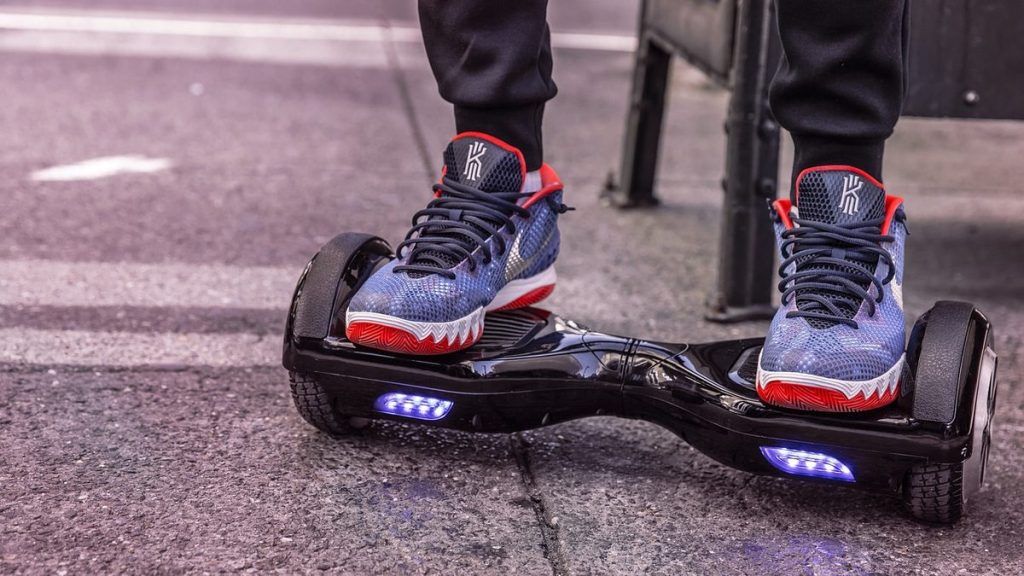
Here’s the honest answer right up front: yes, hoverboards are still popular in 2026 — but the way people use them has shifted a lot. They’re no longer the celebrity-driven obsession they were ten years ago. Today, hoverboards live a quieter, steadier life as solid gift items, family ride toys, and one of the best ways for kids and teens to get into personal electric vehicles.
Gotrax Hoverboard — Top Seller in 2026
Yes, hoverboards are still popular — and the Gotrax is still the #1 choice. UL2272, ships Prime.
Swagtron T580 — App-Enabled Hoverboard
The most popular smart hoverboard. Bluetooth speaker, app control, UL2272 certified.
80SIX Triple-Certified Multisport Helmet
Helmets are as popular as hoverboards — and more important. Triple-certified.
In this guide, we’ll walk through what hoverboard popularity actually looks like today, who’s still buying them, how they’ve improved since 2016, and how they compare with the e-scooter wave. By the end, you’ll have a clear picture of where this little two-wheeled gadget fits into 2026 — and whether one belongs in your home.
✅ Quick Answer
Yes — hoverboards are still popular in 2026, especially as gifts for kids, teens, and families. The category isn’t viral like 2016, but sales stay strong every holiday season. Modern UL 2272–certified hoverboards are safer, smarter, and longer-lasting than ever — and the steady demand has held strong for years.
📚 Table of Contents
- The Short Answer: Popular, Just Different
- Hoverboard Popularity by the Numbers
- Why Hoverboards Never Really Died
- What’s Actually Changed Since 2016
- Who’s Buying Hoverboards in 2026
- Hoverboards vs E-Scooters: The Real Story
- Are 2026 Models Better Than the Old Ones?
- Common Myths About Hoverboards in 2026
- Common Mistakes (and How to Fix Them)
- Should You Buy One in 2026?
- Frequently Asked Questions
- Final Buying Checklist
1. The Short Answer: Popular, Just Different
Hoverboards are still around, still selling, and still loved by a lot of people. But if you compare today to the 2016 peak, the energy is just different.
Back in 2016, hoverboards were everywhere. Celebrities posted them on Instagram. Justin Bieber rode one. Mike Tyson famously face-planted off one. Every other kid in your neighborhood seemed to have one strapped to their feet. They were the gift that holiday season.
Then came the battery fires. The recalls. The airline bans. The hype crashed almost overnight. A lot of people assumed hoverboards were finished — done, dead, dusted.
But here’s what actually happened: the market didn’t die. It matured. The shady brands got pushed out. Real safety standards (UL 2272) became required. Reliable companies — Segway, Razor, Hover-1, Gotrax, Tomoloo — kept building better and better models. Prices came down. Quality went up.
So in 2026, hoverboards aren’t headline news anymore. They’re just a normal product category, like skateboards or RC cars. People still buy them, just without the frenzy. If you’re looking around online today and want to see options on Amazon, you’ll find hundreds of models across every price range — solid proof the market is alive and well.
💭 Think of hoverboards like trampolines or Razor scooters. They had their viral moment. Then they settled into the “always there, always selling” zone of family fun gear. That’s not a death — that’s success.
2. Hoverboard Popularity by the Numbers
Numbers tell a clearer story than vibes, so let’s look at what we know about hoverboard demand in 2026 versus the peak years.
A few quick takeaways from the data:
- Search demand has flatlined at a much lower but stable level since around 2018.
- Holiday season (November through December) still spikes hoverboard sales by roughly 3 to 5 times the yearly average.
- The “trough” of disinterest hit around 2018 to 2019, then bounced back during the pandemic-era home-fun buying boom.
- Demand today is mostly gift-driven and family-focused, not commuter-driven.
Bottom line: hoverboards aren’t trending. But trending and popular are two different things. Steady demand for nearly a decade is the kind of “popular” most products would dream of having.
3. Why Hoverboards Never Really Died
A lot of viral products do die after their hype crashes. Fidget spinners. Pogs. Pet rocks. So why didn’t hoverboards?
Three big reasons.
🎯 1. They’re genuinely fun
Standing on a tiny board that moves when you lean is just… a great feeling. Kids love it. Teens love it. Even adults who try one usually end up grinning. The novelty fades, but the actual experience holds up. That’s the difference between a fad and a real product.
🎁 2. They make perfect gifts
Hoverboards hit the gift sweet spot like few other products: visual wow factor, reasonable price ($130 to $300 entry level), works straight out of the box, and fits any age 8 and up. Birthdays, Christmas, end of school, “great report card” — they’re an easy buy when you don’t know what else to give.
🛠️ 3. The product got better, not worse
After the fire scare, the industry didn’t fold — it cleaned up. UL 2272 batteries became standard. Bluetooth speakers, LED lights, app integration, off-road tires, and longer ranges all showed up. A 2026 hoverboard does much more than a 2016 model and costs less in real dollars. That’s a rare thing in any product category.
That’s why hoverboards survived their hype crash while a lot of fad products didn’t. The fundamentals were strong all along — the noise just got loud and then quiet.
4. What’s Actually Changed Since 2016
Modern hoverboards have evolved a lot. If you only remember the early models, here’s what’s different now.
🔋 Safety (the biggest change)
This is the one that mattered most. UL 2272 certification — covering battery, charger, and electrical safety — is required by major retailers and shipping carriers. All reputable brands now have it. Cheap no-name boards without it still float around shady marketplaces, but most buyers aren’t accidentally finding those anymore. UL Solutions and the U.S. Consumer Product Safety Commission both publicly track compliance and recalls.
⚡ Battery life
Old hoverboards usually lasted 3 to 5 miles per charge. Today, many do 7 to 12 miles. Premium off-road models stretch to 15+ miles with bigger batteries. Charge times have also dropped — 2 to 3 hours is normal now, versus 4+ hours back then.
🛡️ Ride quality
Self-balancing tech has gotten much smoother. The “death wobble” some early boards had is mostly gone. New gyro sensors react faster, and beginner modes slow the response curve so first-time riders don’t tip off in the first ten seconds.
🛞 Tires and terrain
The original hoverboards had small, hard wheels meant for smooth indoor floors. Now you can pick from 6.5-inch indoor boards, 8.5-inch hybrid wheels, or 10-inch off-road tires that handle grass, dirt, and small bumps. That alone opened the category up to a lot of new buyers.
📱 Smart features
Bluetooth speakers have been a thing for a while. But app-controlled hoverboards — with custom modes, child speed limits, locking, ride stats, and LED color control — are now standard at the $300+ price points. That was unheard of in 2016.
🏗️ Build quality
Plastic-shell models are still around for budget buyers. Mid-range models have aluminum cores. Premium boards have water-resistant ratings (IP54 is common) and reinforced foot pads that survive serious abuse.
📊 Quick comparison: A $200 hoverboard in 2026 has roughly the features of a $600 hoverboard in 2016 — better safety, longer range, smoother ride. That’s real progress.
5. Who’s Buying Hoverboards in 2026?
If you wandered into the hoverboard aisle in 2016, you’d see all kinds of buyers — adults, college kids, hobbyists, gift-givers, fitness people. Today, the audience has narrowed and become more focused.
Here’s who’s actually buying in 2026:
- Parents shopping for kids (ages 8 to 14) — The biggest segment by far. Hoverboards are a classic birthday and holiday gift, especially for kids who outgrew scooters but aren’t ready for e-bikes yet.
- Teens (14 to 17) — Some teens still ride them, particularly the newer off-road models. Many have moved on to e-scooters or e-bikes for their daily stuff, but hoverboards still show up at parties, parks, and family hangouts.
- Families with backyards — Suburban homes with driveways, garages, and yards are perfect hoverboard environments. Indoor riding plus outdoor fun. Multi-kid households often buy two or three.
- Casual adult riders — People who use them for short trips around the neighborhood, near campsites, or in big stores and warehouses. Not glamorous, but real.
- Influencers and content creators — Trick riders, kids’ YouTube creators, dance content makers, and viral TikTok dads still feature hoverboards regularly.
And here’s who’s not buying them as much anymore:
- ⛔ Daily commuters — E-scooters won that race. They fold, go faster, and handle longer distances.
- ⛔ Adult hobbyists — Mostly moved to onewheels, e-skateboards, and EUCs (electric unicycles).
- ⛔ College students — Switched almost entirely to e-scooters for campus travel.
6. Hoverboards vs E-Scooters: The Real Story
This is the comparison everyone wants to see. E-scooters have eaten part of the hoverboard market — there’s no denying that. But they’re not the same product, and treating them like rivals misses the point.
So which one is “winning”? Honestly, neither — and that’s the right answer.
- 🛴 E-scooters are for getting somewhere.
- 🛹 Hoverboards are for the joy of riding.
If you want to commute to school or work, get an e-scooter. If you want a fun way for the family to play in the driveway after dinner, get a hoverboard. Many households have both. They overlap a little, but they don’t really compete head-to-head.
7. Are 2026 Hoverboards Better Than the Old Ones?
Short answer: yes, by a lot.
Long answer: depends what you’re comparing.
If you’re comparing a $130 budget hoverboard from 2016 (no UL certification, brittle plastic, 3-mile range, basic LEDs) to a $130 budget hoverboard from 2026 (UL 2272 certified, 7 to 9 mile range, Bluetooth speaker, app control on some), the 2026 version wins on every single metric. It’s not even close.
If you’re comparing a flagship $1,500 hoverboard from 2016 to a flagship $700 model from 2026, the 2026 version still wins on safety, range, and smart features. Top-end speed and acceleration feel similar — but you’re paying half the price for more reliability.
Here’s what the 2026 buyer gets that 2016 buyers didn’t:
- ✅ Real battery safety standards
- ✅ Genuine warranties from real companies
- ✅ Proper waterproofing (IP54 on premium models)
- ✅ App integration and parent controls
- ✅ Self-balancing modes for beginners
- ✅ Off-road tire options
- ✅ 8 to 15+ mile ranges as the new standard
- ✅ Better customer support and replacement parts
8. Common Myths About Hoverboards in 2026
A lot of misconceptions still float around about hoverboards. Let’s clear up the big ones one by one.
❌ Myth 1: “Hoverboards catch fire all the time”
Reality: That was a real problem in 2015 and 2016, with cheap unverified batteries. UL 2272 certification ended that era for the most part. House fires from hoverboards are now rare — comparable in rate to other electronics.
❌ Myth 2: “They’re banned everywhere”
Reality: Hoverboards are legal in most places, but rules vary. Many cities limit them on public streets and sidewalks. Schools often ban them on campus. Airlines don’t allow them in carry-on or checked luggage (lithium battery rule). For backyard, driveway, park, and private use, they’re fine in most areas.
❌ Myth 3: “It was just a fad — they died years ago”
Reality: They’re not dying. Search trends and sales have stayed steady for years. The fad died — the product didn’t. Big difference.
❌ Myth 4: “Only kids ride them”
Reality: Most riders are kids and teens, but adults ride them too. Plenty of models support 220 to 300 pounds. Adult riders just aren’t the loud, viral segment they were in 2016.
❌ Myth 5: “They’re really hard to ride”
Reality: First-time riders usually get balanced within 15 to 30 minutes. Modern models with beginner modes make this much easier. Kids tend to learn faster than adults — usually within ten minutes for the basics.
❌ Myth 6: “All hoverboards are basically the same”
Reality: A $130 indoor model and a $600 off-road model are very different products. Wheel size, motor wattage, battery quality, terrain ability, app features, build materials — all vary widely. Treating them as one category leads to disappointing purchases.
9. Common Mistakes (and How to Fix Them)
If you’re new to hoverboards in 2026, these are the mistakes I see people make all the time. Avoiding them saves you money, time, and a lot of headache.
Fix: Always look for the UL 2272 certification on the product listing or box. If it’s missing, walk away — no exceptions, no matter how good the deal looks.
Fix: 6.5-inch for indoors and smooth surfaces. 8.5-inch for mixed pavement and light off-road. 10-inch for grass, dirt, and bumps. Match it to where you actually ride 80% of the time.
Fix: Most boards list a max weight. Going over it kills the motor early and makes the ride sluggish. Buy with at least 30 pounds of headroom over the rider’s weight.
Fix: Lithium batteries don’t like full discharge for long periods. Top it up every 4 to 6 weeks even if you’re not riding. This extends battery life by years.
Fix: Wear one. Always. Hoverboard falls happen sideways and backwards — exactly the kind your head is least ready for.
10. Should You Buy a Hoverboard in 2026?
If you’ve made it this far, you probably want a clear answer.
✅ Buy a hoverboard if…
- You have a kid or teen who’d love one
- You have a smooth driveway, sidewalk, or yard
- You want casual family fun, not transport
- You’re okay spending $130 to $400
- You want a low-maintenance, fun-out-of-the-box gift
❌ Skip it (consider an e-scooter) if…
- You need actual daily transport
- You’ll mostly ride 5+ miles at a time
- You want to commute to school or work
- You need to fold and carry it on transit
- You want top speeds above 12 mph
For most families looking at a holiday or birthday gift, hoverboards still hit the sweet spot in 2026. The hype died, but the product earned its place. If you’re shopping right now, you can view Hover-1 options on Amazon to get a feel for current pricing and trending models — Hover-1, Segway-Ninebot, and Gotrax are reliable starting points.
11. Frequently Asked Questions
Are hoverboards still cool in 2026?
Yes. They’re not viral like in 2016, but hoverboards are a steady, popular gift and family fun item in 2026. Modern models are safer, smarter, and longer-lasting than the early ones. “Cool” depends on the rider — kids and teens still love them, and that’s most of the market.
How long do hoverboards last in 2026?
A well-built hoverboard from a known brand typically lasts 3 to 5 years of regular use. The battery is the part that wears out first, usually after 300 to 500 charge cycles. Frame and motors generally outlive the battery if treated well.
Do modern hoverboards still catch fire?
It’s now very rare. Since UL 2272 certification became standard around 2017, hoverboard battery fires have dropped sharply. Stick to UL 2272 certified models from known brands and you’re as safe as with most other electronics. Always charge on a hard surface and never overnight unattended.
Are hoverboards better than electric scooters?
They’re built for different things. Hoverboards are for fun and short rides. E-scooters are for actual transportation. If you want a daily ride to school or work, choose an e-scooter. If you want backyard or driveway fun, choose a hoverboard. Neither is “better” — just different jobs.
What’s the best age for a hoverboard?
Most brands recommend ages 8 and up. Kids 8 to 14 are the biggest user group. Adults can ride too — many models support up to 220 to 300 pounds depending on the model. Always check the weight limit and use a helmet, especially for first-time riders.
Can hoverboards be used outdoors?
Yes, many can. Boards with 8.5-inch or 10-inch wheels handle pavement, packed dirt, grass, and small bumps. Smaller 6.5-inch boards are best on smooth surfaces like driveways, sidewalks, and indoor floors. Look for IP54 water resistance if you’ll ride in damp conditions.
📌 Summary: Where Hoverboards Stand in 2026
Hoverboards aren’t the celebrity-fueled obsession they were a decade ago — and that’s actually a good thing. The hype crashed, the bad brands left, the product got safer and better, and the price came down. What’s left is a stable category that quietly earns its spot under the Christmas tree, in the garage, and on the driveway every year.
If you’re choosing one in 2026, you’re choosing from a more mature market with smarter products, real safety standards, and reliable brands. Stick to UL 2272 certified models from known names, match the wheel size to your terrain, and you’ll get years of fun out of it.
So yes — hoverboards are still popular in 2026. Just in a calmer, more confident way than before.
✅ Final Hoverboard Buying Checklist (2026)
- ☑ Confirm UL 2272 certification on the listing or box
- ☑ Stick to known brands (Hover-1, Segway-Ninebot, Razor, Gotrax, Tomoloo)
- ☑ Match wheel size to terrain (6.5″ / 8.5″ / 10″)
- ☑ Check weight limit vs the rider (with 30 lb headroom)
- ☑ Verify the warranty length (1 year minimum)
- ☑ Read recent reviews from the past 6 months
- ☑ Don’t buy unbranded models under $130
- ☑ Pick a model with a beginner mode for first-time riders
- ☑ Buy a helmet and pads at the same time
- ☑ Plan a safe first-ride spot (carpet, grass, or open driveway)
📖 Further Reading
Last updated: May 2026 · Author: Marcus Reid, Personal Electric Vehicle Editor
This article is educational and reflects market conditions as of 2026. It is not personalized buying advice. Always verify current product specifications and safety certifications with the manufacturer before purchase.