
From classic single-wheel sport unicycles to self-balancing electric unicycles, here’s how that one spinning wheel actually works — and what every new rider should know before stepping on.
Key Takeaways
- A unicycle wheel is the single load-bearing wheel that does the work of two on a bike — it carries the rider, transmits power, and acts as the balance point.
- Manual unicycles use a fixed-gear hub where pedals connect directly to the axle. Electric unicycles (EUCs) use a hub motor with gyroscopes that balance the rider automatically.
- Wheel size changes the ride more than any other factor: small wheels (14–20″) are nimble and easy to learn; big wheels (24–36″+) roll faster and smoother but are harder to control.
- Every unicycle wheel has four core parts — hub, spokes, rim, and tire — and each affects strength, weight, and ride quality.
- For electric models, look for UL 2272 certification (battery and electrical safety) and pair every ride with a properly certified helmet.
A unicycle wheel is the simplest wheeled vehicle ever invented — and one of the most fascinating. Whether you’ve seen a circus performer juggle while pedaling, watched a commuter glide past on a self-balancing electric unicycle, or just wondered how anyone stays upright on one tire, the answer comes down to a single component: the wheel itself.
This guide explains what a unicycle wheel is, how it actually works, and what separates a manual unicycle wheel from a hoverboard’s pair or an electric unicycle’s powered hub. We’ll walk through the parts inside the wheel, the sizes that suit different riders, and the safety details most articles skip over.
By the end, you’ll understand the physics of balance, why wheel size dramatically changes the learning curve and top speed, which materials matter, and the most common mistakes new riders make. No jargon, no sales pitch — just a plain-English walkthrough of the spinning piece of engineering at the heart of every unicycle.
A unicycle wheel is the single, central wheel of a unicycle that serves as both the drive and the balance point. On manual unicycles, pedals connect directly to the hub, so the rider controls speed and direction by pedaling. On electric unicycles, a hub motor paired with gyroscopic sensors keeps the wheel upright automatically — the rider just leans to go.
Table of Contents
What Is a Unicycle Wheel?
A unicycle wheel is the single wheel that supports the entire weight of the rider on a unicycle. It is both the drive system and the balance point — there’s no second wheel to lean on, no handlebar to grip, and on most models, no brake. This makes the wheel the most important part of the whole machine.
Unicycles have been around since the late 1800s, when riders noticed that the front wheel of a “penny-farthing” bicycle could be ridden on its own once the back fell off. Today, the term “unicycle wheel” covers two very different families:
- Manual (sport) unicycle wheels — pedaled by foot, used in freestyle riding, mountain unicycling (muni), distance touring, and circus performance.
- Electric unicycle wheels (EUCs) — battery-powered, self-balancing, used as personal transportation similar to hoverboards and electric scooters.
Both share the same core idea — one tire doing the work of two — but the engineering inside is very different. A manual wheel is a passive mechanical part. An electric wheel is a small computer with a motor and a battery inside it. Understanding which kind you’re dealing with is the first step before you buy, ride, or maintain one.
How a Unicycle Wheel Actually Works
The wheel of a unicycle solves three problems at once: it carries the rider’s weight, it transfers force into forward motion, and it keeps everything upright. How it does each one depends on whether the wheel is manual or electric.
The Manual Unicycle: A Fixed-Gear Hub
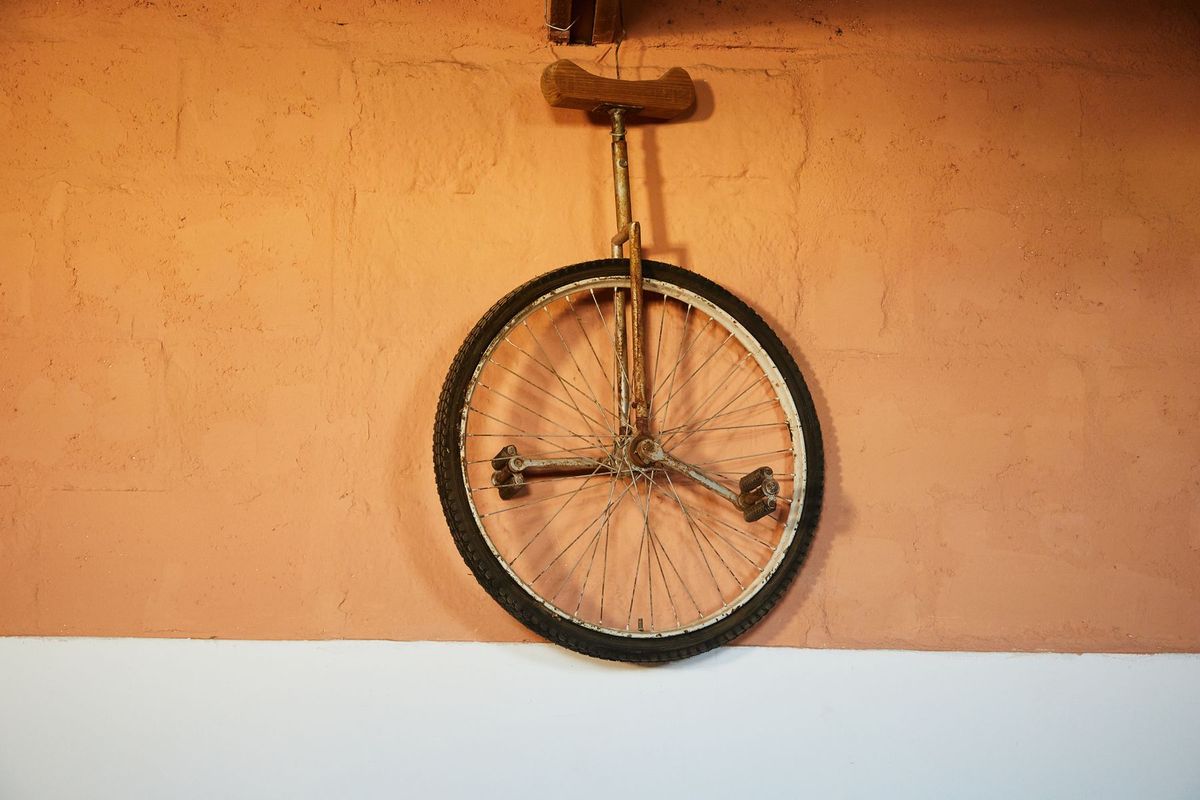
On a traditional unicycle, the cranks (the metal arms holding the pedals) bolt directly onto the wheel’s axle. There is no chain, no gear shifting, and no freewheel. When you push the pedals forward, the wheel rotates forward at exactly the same rate. When you push back, it rolls back. This is called a fixed-gear or direct-drive setup.
Balance comes from the rider, not the wheel. By pedaling slightly faster or slower, the rider keeps the wheel directly under their center of gravity — much like how you balance a broom on your hand by moving your hand under it. Steering happens through hip rotation and small weight shifts.
The Electric Unicycle: Computer-Controlled Balance
An electric unicycle wheel contains a hub motor (the spinning part is the motor itself), a lithium-ion battery, and a control board with gyroscope and accelerometer sensors. Those sensors measure tilt thousands of times per second. When you lean forward, the board detects the angle and tells the motor to spin faster, “catching up” to your body so you don’t fall.
This is the same balance principle used by Segway-style devices and self-balancing hoverboards. The difference is that an electric unicycle has only one wheel and only one axis of self-balance — front-to-back. Side-to-side balance still comes from the rider, which is why EUCs feel different from a hoverboard even though both are self-balancing.
Manual vs. Electric Unicycle Wheels
If you’re weighing a sport unicycle against an electric one, the wheel itself is where the choice really lives. Here’s a side-by-side look at how the two compare on the things that matter most.
The headline difference: a manual unicycle is a skill toy that gets you fit. An electric unicycle is a transportation tool that gets you somewhere. Neither is “better” — they just answer different questions.
Anatomy: The Four Core Parts of a Unicycle Wheel
Every unicycle wheel — manual or electric — is built from the same four basic ingredients. If you understand these, you’ll understand 90% of what makes one wheel feel different from another.
1. The Hub
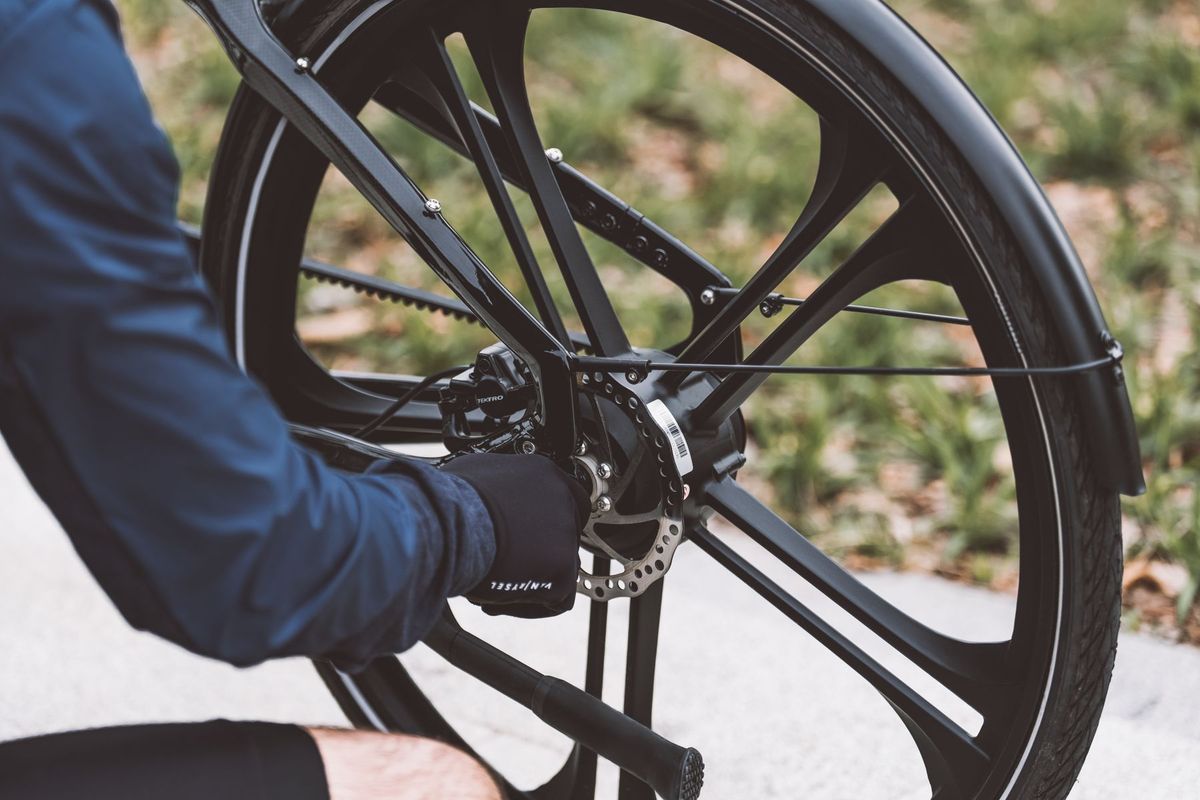
The hub is the round center piece. On a manual unicycle, the cranks bolt onto either side of it and spin with the wheel. Hubs are usually made of cromoly steel or aluminum, with sealed bearings that let the wheel rotate freely. On an electric unicycle, the hub is the motor — the wires come out of the axle, and the magnets and copper coils that drive the wheel are sealed inside the hub itself.
2. The Spokes (or Solid Disk)
Manual unicycles use thin steel spokes laced between the hub and the rim, just like a bike wheel. Spoke count varies: 36 spokes is the common standard for adult riders, while heavy-duty mountain unicycles may use 48. Electric unicycles usually skip spokes — the hub motor is wide enough that it connects almost directly to the rim through a short metal disc, which is stronger and saves space for the battery.
3. The Rim
The rim is the metal ring that holds the tire. Aluminum alloy is the standard material because it’s strong and light. Wider rims (40mm+) support fatter tires and feel more stable; narrower rims (25–32mm) are lighter and faster on smooth pavement. The rim also holds the brake track on manual unicycles that have brakes (most don’t).
4. The Tire
The tire is what actually touches the ground, and it changes the ride more than any other single part. The choice between pneumatic (air-filled) and solid tires is the same conversation here as in the e-scooter world: pneumatic gives a comfortable, grippy ride but can puncture; solid tires are bulletproof but stiffer.
Wheel Sizes and What They’re For
Wheel size is the single biggest factor in how a unicycle feels to ride. A bigger wheel rolls farther per pedal stroke (manual) or per motor revolution (electric), which means more speed and smoother rolling over bumps. A smaller wheel is more nimble, easier to start and stop, and friendlier when you’re learning.
For a manual unicycle, riders learning their first wheel almost always start at 20 inches — it’s small enough to mount easily but large enough to roll smoothly. For an electric unicycle, a 16-inch wheel is the sweet spot for first-time riders, with bigger wheels reserved for people who want higher speed or rough-terrain capability.

Choosing the Right Wheel for Your Riding Style
The “best” unicycle wheel depends entirely on what you actually want to do. Here’s a quick decision guide based on common rider goals:
- You want a fitness and skill challenge: Pick a 20-inch manual unicycle. The learning curve is real but the reward is huge — and you’ll never need to charge it.
- You want to commute 3–10 miles each way: A 16- to 18-inch electric unicycle balances size, weight, and range without overwhelming a new rider.
- You want long-distance touring: Look at 22- to 24-inch electric unicycles, which handle rough roads and offer 40+ mile range on a single charge.
- You want off-road / trail riding: A 26- or 29-inch mountain unicycle (manual) or a high-power 22-inch EUC with a knobby tire is the right call.
- You want to perform tricks: A 19- or 20-inch trials/freestyle unicycle with a wide tire and short cranks is the freestyle standard.
Whatever you choose, do not skip protective gear. Wrist guards and a helmet are non-negotiable for any unicycle, and full-face helmets plus knee/elbow pads are strongly advised for any electric unicycle ridden above 15 mph.
Safety, Maintenance, and Common Misconceptions
A spinning wheel is only as safe as the rider on top of it. Here are the safety basics, plus a few myths that need correcting.
Safety Standards You Should Know
- UL 2272 — The U.S. safety standard from UL Solutions covering electrical and battery systems for self-balancing devices. Any electric unicycle sold in the U.S. should carry it.
- CPSC helmet standard (16 CFR 1203) — Required for any helmet sold as a bicycle helmet in the U.S. Look for the CPSC sticker inside.
- ASTM F1952 — A higher-performance standard for downhill mountain bike helmets, recommended for EUC riders going over 20 mph.
Routine Maintenance
Manual wheels need bearings cleaned and re-greased every 1–2 years, tires checked for wear, and crank bolts torqued before every long ride. Electric wheels add a few items: keep firmware up to date, store batteries between 40–80% charge for long periods, and never charge a damaged battery.
Myths vs. Facts
❌ Myth: “If you can ride a bike, you can ride a unicycle.”
InMotion V5F — The Best Unicycle Wheel
The InMotion V5F has the smoothest unicycle wheel experience on Amazon. Beginner to intermediate.
No longer sold on Amazon
ILM DOT-Certified Half Helmet
Riding a unicycle wheel at speed requires head protection. DOT-certified and lightweight.
187 Killer Pads Wrist Guards
Falls from a unicycle are inevitable. Pro-grade wrist protection from the most trusted brand.
✅ Fact: Unicycling uses different muscles and requires constant micro-adjustments. Most cyclists need the same 10–20 hours of practice as anyone else.
❌ Myth: “Electric unicycles will balance you no matter what.”
✅ Fact: EUCs only balance front-to-back. Side balance is on you. Going faster than the motor’s max output or losing battery mid-ride can also cause sudden cut-outs.
❌ Myth: “All unicycle tires are the same.”
✅ Fact: Tire width, tread, and pressure dramatically change handling. A 3-inch knobby tire and a 1.5-inch slick tire feel like completely different vehicles.
Related Concepts Worth Knowing
- Hoverboard wheels — Two parallel wheels, side-by-side, sharing one self-balancing platform. See our guide to how hoverboards work.
- Electric scooter wheels — Two inline wheels with handlebar steering. The rear wheel is usually motorized, the front passive.
- Onewheel — A different single-wheel device with a wide go-kart-style tire and a skateboard-like deck. Self-balances front-to-back like an EUC but ridden sideways.
- Penny-farthing — The Victorian-era ancestor of the unicycle, with one huge front wheel and a tiny trailing wheel. The unicycle is essentially the front wheel on its own.
- Gyroscopic precession — The physical principle that helps any spinning wheel resist tipping. It’s a small contributor to unicycle balance but not the main one — the rider does most of the work.
Frequently Asked Questions
How long does it take to learn to ride a unicycle?
Most adults need 10 to 20 hours of practice spread over two to four weeks to ride a manual unicycle confidently. Electric unicycles are usually rideable within 1 to 3 hours because the wheel balances itself; the rider only steers.
What size unicycle wheel is best for beginners?
A 20-inch wheel is the standard learner size for manual unicycles because it is forgiving, easy to mount, and fits most adults. For electric unicycles, a 14- to 16-inch wheel is friendliest for first-time riders.
How fast can a unicycle wheel go?
A skilled rider on a 36-inch manual unicycle can sustain 10 to 15 mph. Modern high-performance electric unicycles can exceed 50 mph, though most consumer models are limited to 20 to 30 mph for safety.
Are electric unicycles legal on public roads?
Legality varies by state and country. In many U.S. states, electric unicycles fall under the same rules as e-scooters or e-bikes, but some cities ban them from sidewalks or roads. Always check local ordinances before riding — and consult your state DMV’s guidance.
What is UL 2272 and why does it matter?
UL 2272 is a U.S. safety standard from UL Solutions covering the electrical and battery system of self-balancing devices, including electric unicycles and hoverboards. A UL 2272 mark indicates the device passed fire and shock-hazard tests, which became a baseline requirement after a wave of hoverboard battery fires in 2015–2016.
Do I need a special helmet for unicycling?
For low-speed manual unicycling, a CPSC-certified bicycle helmet is enough. For fast electric unicycles or off-road riding, a full-face helmet meeting ASTM F1952 (downhill mountain bike standard) is strongly recommended.
What’s the difference between a unicycle wheel and a hoverboard wheel?
A unicycle has one wheel that the rider sits or stands directly above. A hoverboard has two wheels on a horizontal axis with the rider standing between them. The single-wheel design demands more balance from the rider but is more compact and agile.
Summary: The Unicycle Wheel in One Page
- A unicycle wheel is the single wheel that handles drive, weight, and balance — manual versions are pedal-powered, electric versions self-balance with sensors and a hub motor.
- Wheel size is the biggest factor in ride feel: 16–20″ is beginner-friendly, 24″+ is faster and smoother, 28″+ is for advanced riders only.
- Every unicycle wheel has four parts that matter: hub, spokes/disc, rim, tire. Each one shapes weight, strength, and grip.
- For electric unicycles, look for UL 2272 certification and respect tiltback warnings — they exist to keep you upright.
- Pair every ride with proper protection: CPSC helmet at minimum; full-face helmet, wrist guards, and knee pads for high-speed or trail use.
Further Reading
- Pneumatic vs. Solid Tires for Electric Scooters — same tire science applies to unicycles.
- Beginner’s Guide to Self-Balancing Devices — how the sensor stack inside an EUC actually works.
- Hoverboard Safety and UL 2272 Explained — deeper dive on battery certification.
- CPSC.gov — Self-Balancing Scooter Safety (official U.S. government source).
- UL Solutions — UL 2272 Standard Overview (official certifier).
This article is educational. It is not buying advice and contains no affiliate or sponsored links. Always check local laws and follow manufacturer guidance for any unicycle or electric rideable.