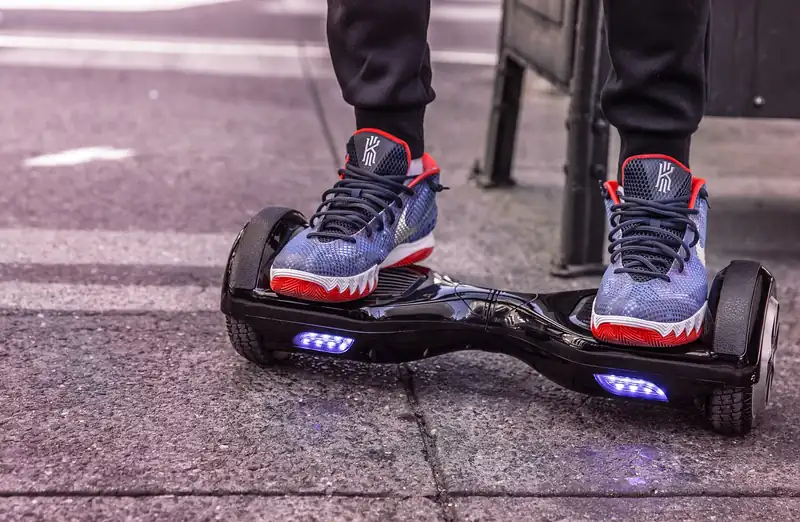
A real hoverboard has UL 2272 certification, a verifiable serial number, and a brand that stands behind it. A fake has none of those — and a battery that can light your living room on fire. Here’s how to tell them apart, in plain English.
Key Takeaways
- UL 2272 is the only certification that matters. No UL 2272 mark = no buy. Period.
- Anything under $80 brand-new is a red flag. Real safety testing costs money, and that cost shows up in the price.
- Check the seller, not just the listing. A fake “Segway” on a no-name third-party seller is still a fake.
- Fakes often look perfect online but feel wrong in person — light weight, plasticky feel, sloppy logo, no manual.
- Counterfeit batteries are the real danger. They’ve caused house fires, injuries, and deaths since 2015.
- If you already own one, stop charging it indoors and report it to the CPSC at SaferProducts.gov.
If you’re trying to figure out how to spot a fake hoverboard before you click “buy,” you’re already doing the smart thing. Most people don’t think about it until something goes wrong — and with hoverboards, “something going wrong” can mean a battery fire in your hallway at 2 a.m. The good news is that fake hoverboards leave fingerprints. Once you know what to look for, you can spot one in about 60 seconds, whether you’re on Amazon, a flash-sale site, or staring at a deal that just landed in your Instagram feed.
In this guide, you’ll learn the exact signs that separate a real, safety-tested hoverboard from a counterfeit knock-off. We’ll cover the UL 2272 certification (the single most important thing), the price ranges that should make you suspicious, where fakes hide most often, common buyer mistakes, what to do if you already bought one, and a printable checklist you can use before any purchase.
Gotrax Hoverboard — UL2272 Certified, No Fakes
Fake hoverboards skip UL2272 testing. This Gotrax is genuinely certified — dual 200W motor, LED wheels, real safety board.
80SIX Triple-Certified Multisport Helmet
Even on a real hoverboard, crashes happen. Triple-certified protection for kids and adults.
No fluff, no scare tactics — just the same checks our team uses when we test boards every month. Let’s get into it.
A fake hoverboard is one that lacks genuine UL 2272 safety certification, often sold under a misspelled or no-name brand at a price too low to be real. To spot one, check the box and underside for a holographic UL mark, look up the file number on UL.com, verify the seller, and avoid anything priced suspiciously below $100.
Table of Contents
- Why Fake Hoverboards Are So Dangerous
- 10 Warning Signs of a Fake Hoverboard
- How to Verify UL 2272 Certification
- The Price Test: What’s Realistic in 2026
- Where Fake Hoverboards Hide Most Often
- Real Stories From Real Buyers
- Common Mistakes (And How to Fix Them)
- Pro Tips From Inside the Industry
- Myths vs Facts About Fake Hoverboards
- What to Do If You Already Bought a Fake
- Your Pre-Purchase Safety Checklist
- Frequently Asked Questions
Why Fake Hoverboards Are So Dangerous
Let’s get the scary stuff out of the way first, because it’s important. A fake hoverboard isn’t just a “lower quality” version of a real one — it’s a different product entirely. The brand name on the box is borrowed. The shape is copied. But the parts inside, especially the battery, are not the same.
Real hoverboards use certified lithium-ion battery packs. These cells are tested, matched, and protected by a battery management system (BMS) — a tiny circuit board that watches temperature, voltage, and charging speed. If something goes wrong, the BMS shuts the battery down before it overheats. Fake hoverboards skip the BMS, or use a cheap one that fails silently. They also use rejected battery cells — the ones name-brand factories throw out — because they’re cheap.
Put those two things together and you get the same recipe behind the famous 2015–2016 hoverboard fires. The U.S. Consumer Product Safety Commission has tracked hundreds of incidents since then, including fires that destroyed houses and caused serious injuries. The CPSC’s response was to require UL 2272 certification on every hoverboard sold in the United States. Fakes ignore that rule.
The point isn’t to scare you off hoverboards. They’re genuinely fun, and the safe ones are very safe. The point is that the difference between fun and disaster is one specific certification — and once you know how to spot it, you’ll never get burned.
10 Warning Signs of a Fake Hoverboard
Most fakes don’t look fake at first glance. They look almost right. Here are the ten signs we check before recommending any board, in order from “obvious giveaway” to “subtle tell”:
| # | Warning Sign | What to Check |
|---|---|---|
| 1 | No UL 2272 mark | Look on the box, the underside of the board, and the charger. |
| 2 | Misspelled or vague brand | “Hoover-1,” “Sigway,” or just “Hoverboard” on the box. |
| 3 | Price way below market | Brand-new under $80 in 2026 is almost always a fake. |
| 4 | No model number or serial | Real boards have a sticker with a model and serial. |
| 5 | Generic charger | No brand name, no UL mark, no input/output ratings. |
| 6 | Missing or photocopied manual | Real manuals include safety, warranty, and contact info. |
| 7 | Feels suspiciously light | Real boards weigh 18–25 lbs. Fakes often feel hollow. |
| 8 | Sloppy logo or paint | Crooked stickers, off-color logos, glue showing on seams. |
| 9 | No working warranty contact | Email bounces, phone goes nowhere, brand site missing. |
| 10 | Listing has zero or fake reviews | Check Fakespot, look for review dates clustered together. |
If a board hits even two or three of these in a row, walk away. You don’t need to be 100% sure it’s fake — you just need enough doubt that the risk isn’t worth it.
How to Verify UL 2272 Certification
UL 2272 is the test that matters. It’s run by UL Solutions, an independent safety lab that’s been around since 1894. The standard checks how a hoverboard’s full electrical system handles abuse — overcharging, short circuits, water exposure, drops, vibration, crushing, and extreme temperatures. If a board passes, it gets a certification number tied to a specific manufacturer and model.
Here’s the catch: counterfeiters print fake UL marks. A printed logo is easy. So checking is a two-step process.
Step 1: Look for the holographic mark
A real UL 2272 sticker is holographic — it shifts color when you tilt it. It usually appears on the underside of the hoverboard and again on the retail box. The mark includes “UL 2272,” a file number (often starting with “MH” or “E”), and the UL logo. Flat, printed-on labels are a fake giveaway.
Step 2: Verify the file number on UL.com
This is the part most buyers skip — and it’s the part that catches fakes cold. Go to UL.com, use their certification database (search “UL Product iQ”), and type in the file number printed on the board. You’ll see the manufacturer’s name, the model, and the certification status. If nothing comes up, or the manufacturer name doesn’t match the brand on the box, it’s fake.
Should you do this two-step check for every hoverboard you consider? Yes. It takes about 90 seconds. Compared to the cost of a house fire, it’s the best 90 seconds you’ll ever spend.
The Price Test: What’s Realistic in 2026
Counterfeiters compete on one thing: price. They can’t legally certify a board, so they undercut everyone who does. That’s why price is one of the fastest sniff tests around. Here’s the rough breakdown of what a real hoverboard costs in 2026, based on our monthly market scans:
| Price Range | What You Should Expect | Risk Level |
|---|---|---|
| Under $80 | Almost certainly a fake or stolen knock-off. No real cert, recycled cells. | 🚨 Very High |
| $80 – $130 | Used or refurbished real boards from credible sellers. Check carefully. | ⚠️ Medium |
| $140 – $250 | Entry-level UL 2272 certified models from real brands (Hover-1, Jetson, Gyroor). | ✅ Low |
| $250 – $450 | Mid-range with Bluetooth, app, longer range, off-road tires. | ✅ Low |
| $450 – $800+ | Premium / off-road models (Segway Ninebot, EpikGo, high-end Gyroor). | ✅ Low |
A safe rule of thumb: if a brand-new “premium” hoverboard is being sold for less than half the brand’s website price, treat it like a fake until proven otherwise. Real sales happen — Black Friday, holiday deals, end-of-season clearance — but they don’t drop a $400 board to $59.
Where Fake Hoverboards Hide Most Often
Knowing where fakes show up cuts your risk in half. Some places are stuffed with them. Others are basically clean. Here’s how the landscape looks right now:
High-risk sources
- Random social media flash-sale stores. Instagram and TikTok ads pushing “70% off, today only” hoverboards from a brand you’ve never heard of are a top source of counterfeits.
- Third-party sellers on big marketplaces. Even on Amazon, eBay, and Walmart Marketplace, fakes slip through when the seller isn’t the brand or the platform itself.
- Pop-up holiday kiosks and flea markets. Cash-only, no receipt, no warranty.
- Direct-from-overseas listings. Especially boards shipped from a single warehouse with weeks-long delivery and no return address.
Low-risk sources
- The brand’s official website. Hover-1, Jetson, Gyroor, Segway, EpikGo all sell direct.
- Big-box retailers. Best Buy, Target, Walmart (in-store), Costco — they don’t carry uncertified boards.
- Amazon listings sold and shipped by Amazon or by the brand itself. Look at the “Sold by” line on the listing — that’s the part that matters.
Real Stories From Real Buyers
A list of warning signs is useful, but stories stick. Here are three patterns we see again and again in Reddit threads, Amazon reviews, and emails from readers — names changed, details composited, but every one of them based on real situations.
“It worked great for two months.” — A dad bought a $69 hoverboard from a TikTok ad as a birthday gift. The board worked fine until one night the charger started smelling like burnt plastic. The light on the charger never turned green. By the time he unplugged it, the brick was hot enough to leave a mark on the carpet. No UL 2272 mark anywhere on the board.
“It looked like the real one in the photo.” — A teen ordered a “Segway-style” board from a third-party Amazon seller. Photo showed a Segway Ninebot. Box arrived with a different brand entirely, no manual, no warranty card, and a charger with a wall plug from another country. Amazon refunded her after a chat session — and she got lucky.
“The reviews were all five stars.” — A buyer trusted a 4.7-star average on a no-name listing. After he received a board that wobbled and cut out under 50 pounds of weight, he ran the listing through Fakespot. Most of the reviews had been posted on the same day, by accounts with single reviews. Classic review-pump pattern.
The common thread isn’t bad luck — it’s missing one of the basic checks. UL 2272 verification, seller verification, and a quick review audit would have stopped every one of these.
Common Mistakes (And How to Fix Them)
Most people who end up with a fake didn’t ignore safety on purpose. They made one of these mistakes — easy to do, easy to fix.
Mistake #1: Trusting the brand logo on the box
The fix: Match the logo, model name, and packaging style against the brand’s official website. Counterfeiters get close, but rarely exact. Wrong shade of blue, slightly different font, missing trademark symbol — those small things matter.
Mistake #2: Assuming “as low as $59” is a “deal”
The fix: Compare the price to the brand’s MSRP. If it’s less than half, assume something’s wrong unless the seller is the brand itself running a clearance. Real deals come with proof — a banner on the brand’s homepage, an email to subscribers, or a coupon code.
Mistake #3: Skipping the UL.com lookup
The fix: Take 90 seconds. Open UL Product iQ. Type the file number. Confirm the manufacturer. Done. This is the single highest-value check in the whole process.
Mistake #4: Buying without reading recent reviews
The fix: Sort reviews by “most recent” and look for any mention of “fire,” “smoke,” “didn’t charge,” or “wrong brand.” Sellers can flip listings — a once-good listing can be replaced with cheap inventory months later.
Mistake #5: Charging it overnight, on carpet, near furniture
The fix: Even if your board is real, charge it on a hard, non-flammable surface, never overnight, and never unattended for hours. With a fake, this is the difference between annoyance and emergency.
Pro Tips From Inside the Industry
A few extra checks our team uses that go beyond the basics:
- Weigh it. Real 6.5″ hoverboards weigh roughly 18–22 pounds. Real 8.5″ off-road boards push 25–30 pounds. If yours feels noticeably lighter than that, the battery is probably smaller — or missing protections — than a real one.
- Inspect the charger separately. A real charger has its own UL or ETL mark, brand name, model number, and clear input/output ratings. A blank black brick is a red flag.
- Check the warranty contact before you buy. Email the support address listed on the brand’s site. Real brands answer within 1–3 business days. Counterfeit brands won’t answer at all.
- Photograph the box and labels on arrival. If you ever need to return or report it, you’ll have evidence. Take pictures of the UL sticker, the serial number, and any damage before you charge it.
- Buy with a credit card, not debit. Credit cards give you chargeback protection for up to 60 days in the U.S. For an item that has any fire risk, that backstop matters.
Myths vs Facts About Fake Hoverboards
| Myth | Reality |
|---|---|
| “If it’s on Amazon, it’s safe.” | Amazon hosts thousands of third-party sellers. The platform is safer than random sites, but listing presence alone doesn’t equal certification. |
| “Fakes are obvious.” | Modern counterfeits often look identical online. The differences usually only show up in person, on the charger, or in the documentation. |
| “Bluetooth speakers and LEDs mean it’s premium.” | Cheap speakers and LEDs cost almost nothing. Many fakes include them on purpose to seem feature-rich. |
| “My fake hasn’t caught fire, so it’s fine.” | Lithium battery failures are random. A board can work perfectly for a year and fail catastrophically on the 200th charge. |
| “UL 2272 is just a sticker.” | It’s a full third-party safety test on the entire electrical system. The sticker is the result, not the requirement. |
What to Do If You Already Bought a Fake
If reading this guide made you realize your board is probably a fake, take a breath — you’ve still got options. Here’s the playbook, in order:
- Stop charging it indoors. Unplug now. Move the board and charger to a non-flammable surface (concrete garage floor, outdoor patio, metal bucket of dry sand). Do not leave it on the rug or near anything that can burn.
- Stop riding it. Even if it feels fine, the risk is heat, not handling.
- Open a return. Contact the seller through the platform. Most marketplaces have a window for safety-related returns even after the normal return period. Be specific: “This board does not have a verifiable UL 2272 certification.”
- Pay with a credit card? Open a chargeback. If the seller stalls, your card issuer can reverse the charge for non-conforming or unsafe goods.
- Report it. File a quick complaint at SaferProducts.gov (the CPSC’s reporting site). It’s free and helps the agency track fake-board sellers.
- Dispose of it correctly. Lithium batteries do not go in the regular trash. Find a battery recycler through Earth911 or Call2Recycle. Many big-box electronics stores will take them too.
Your Pre-Purchase Safety Checklist
Save this. Run through it before any hoverboard purchase. If you can tick all eight, you’re good.
- ✅ UL 2272 holographic mark visible on board, box, and charger
- ✅ UL file number verified on UL.com against the brand name
- ✅ Brand name spelled correctly and matches the official website
- ✅ Price within realistic range ($140+ for new entry-level)
- ✅ Sold by the brand or the platform, not a random third party
- ✅ Recent reviews show no fire/smoke/charging complaints
- ✅ Working warranty contact tested before purchase
- ✅ Paid with a credit card for chargeback protection
Frequently Asked Questions
How can I tell if my hoverboard is fake?
Check for a UL 2272 holographic certification mark on the box and the underside of the board, verify the file number on UL.com, look for missing or misspelled brand names, suspiciously low prices under $80, and packaging without safety warnings or a serial number. A real hoverboard will also have a clear charger rating, a model number that matches the manufacturer’s site, and a working warranty contact.
Are all cheap hoverboards fake or unsafe?
Not all cheap hoverboards are fake, but anything priced under about $80 in 2026 should be treated with extreme caution. Real UL 2272 certified hoverboards cost money to test, certify, and produce safely. Sellers offering brand-new boards far below market price are usually cutting corners on the battery, the certification, or both.
What is UL 2272 and why does it matter?
UL 2272 is a safety standard from UL Solutions that tests how a hoverboard’s battery, charger, and electrical system handle stress, heat, water exposure, and impact. It was created after the 2015–2016 hoverboard fire crisis. A board without genuine UL 2272 certification has not been independently tested and carries a real fire and explosion risk.
Can a fake hoverboard really catch fire?
Yes. The U.S. Consumer Product Safety Commission has documented hundreds of hoverboard fires linked to uncertified lithium-ion batteries, including incidents that destroyed homes and caused serious injuries. Counterfeit boards often use rejected battery cells, cheap chargers, and no thermal protection, which is exactly the recipe behind those fires.
What should I do if I already bought a fake hoverboard?
Stop riding it and stop charging it indoors. Unplug the charger, move the board to a non-flammable outdoor surface like concrete if possible, and contact the seller for a refund. Report the listing to the platform, file a complaint with the CPSC at SaferProducts.gov, and dispose of the board through a certified lithium-battery recycler — never the regular trash.
Do fake hoverboards have working Bluetooth and lights?
Often yes, and that’s part of the trick. Counterfeiters know buyers look for Bluetooth speakers, LED wheels, and app control, so they include cheap versions of those features to seem legitimate. Flashy add-ons mean nothing without certified safety electronics underneath, so always verify UL 2272 first and treat features as secondary.
Where is the safest place to buy a real hoverboard?
The safest sources are the manufacturer’s official website, large authorized retailers like Best Buy or Target, and Amazon listings that are sold and shipped by the brand itself or by Amazon (not a random third-party seller). Always check the seller name on the listing, read recent reviews for fire or charging complaints, and avoid social media flash-sale stores you’ve never heard of.
The Bottom Line
Spotting a fake hoverboard isn’t about being paranoid — it’s about doing two minutes of homework before you spend real money on something with a battery in it. The big checks are simple: verify UL 2272, look at the price honestly, check who’s actually selling it, and read the most recent reviews. Hit those four, and you’ll filter out 99% of the dangerous stuff before it ever ships to you.
Hoverboards have come a long way since the 2015 fire crisis. The technology is genuinely safe when it’s certified. The danger is almost entirely concentrated in the counterfeit corner of the market — and that corner is avoidable.
Further Reading
- Best Hoverboards in 2026 (Tested & Certified)
- UL 2272 Explained: What It Tests and Why It Matters
- Hoverboard Battery Safety: Charging Rules That Save Lives
- The Complete Hoverboard Buying Guide
- CPSC: Official Hoverboard Safety Center
- UL Solutions: UL 2272 Certification Overview
- SaferProducts.gov: Report an Unsafe Hoverboard
Last Updated: May 8, 2026 · Author: Marcus Reid, Senior Personal Electric Vehicle Editor
This article is educational. It is not buying advice for any specific product. Always verify safety certification independently before purchasing any hoverboard.