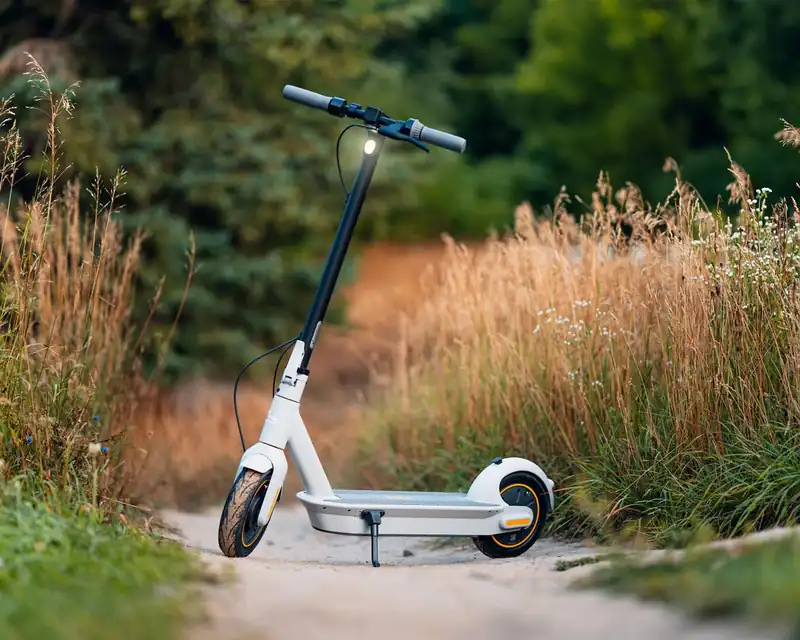
A plain-English breakdown of electric scooter prices in 2026 – from $300 budget rides to $3,000 speed machines, plus the running costs most buyers forget.
So, how much does an electric scooter cost? For most adults in 2026, the honest answer is somewhere between $300 and $1,500. Budget models start around $250 to $500. Mid-range commuters, where most people land, run $500 to $1,200. Premium and high-speed scooters climb from $1,200 to $3,000, and a handful of monster “hyperscooters” cost more than a used car. The overall market average is about $1,113, but that number is pulled up by expensive machines. The practical sweet spot for a great daily ride sits closer to $600 to $1,100.
Here is the good news. Prices have held steady the last couple of years, but the value you get has jumped a lot. Features that cost $1,200 or more just two years ago, like hydraulic suspension, turn signals, and self-healing tires, now show up on scooters under $600. Your dollar simply stretches further today than it did in 2023.
But the price on the box is only half the story. A scooter also costs a little to charge, a little to maintain, and you will want a helmet and a lock on day one. In this guide we will break down every price tier, show you real 2026 models and what they cost, and add up the running costs so there are no surprises. By the end you will know exactly what to spend for the kind of riding you actually do.
So, How Much Does an Electric Scooter Cost?
Let’s start with the quick answer, then dig into the details. A brand-new adult electric scooter in 2026 usually falls into one of four buckets. Budget scooters cost $250 to $500 and handle short, flat trips. Mid-range scooters cost $500 to $1,200 and are the daily-commuter workhorses most people buy. Premium scooters run $1,200 to $3,000 with dual motors and serious range. And enthusiast hyperscooters start at $3,000 and go way, way up.
The market average of roughly $1,113 sounds high because a few very expensive models drag it upward. In real life, you do not need to spend that much. A genuinely good, comfortable, long-lasting scooter lands in the $600 to $1,100 range. That is where you get suspension, a battery big enough for a real commute, app features, and a brand that will still answer the phone if something breaks.
One thing worth repeating: the sticker price is not the total cost. Charging, tires, brake pads, and safety gear all add a bit over time. Do not worry, these numbers are small compared to a car, and we will add them all up later so you can budget honestly.
| Tier | Price Range | Top Speed | Real-World Range | What You Get |
|---|---|---|---|---|
| Budget | $250-$500 | 15-19 mph | 8-18 miles | One motor, basic brakes, often flat-free tires |
| Mid-Range | $500-$1,200 | 19-28 mph | 20-35 miles | Suspension, app, turn signals, bigger battery |
| Premium | $1,200-$3,000 | 28-45 mph | 35-60 miles | Dual motors, hydraulic brakes, hill power |
| Hyperscooter | $3,000+ | 45-60+ mph | 60-90 miles | Huge battery, extreme speed, off-road build |
Electric Scooter Price Tiers Explained
Every scooter you will see falls into a price tier, and each tier buys you a very different ride. Understanding these four groups is the fastest way to figure out where your money should go. Here is what each level really gets you in 2026.
Budget: $250-$500
These are your first-scooter, short-hop machines. Expect 15 to 19 mph top speeds, a real-world range of about 8 to 18 miles, one motor, and simple brakes. Many use solid or honeycomb tires so you never get a flat. They are perfect for campus, light errands, or testing whether scooter life is for you. The trade-off is comfort and hill power. Cheap models struggle on steep climbs and feel every bump.
Mid-Range: $500-$1,200
This is the heart of the market and where most smart buyers land. For this money you get suspension, 19 to 28 mph speeds, 20 to 35 real miles per charge, app connectivity, brighter lights, and often turn signals. Build quality takes a big jump too. If you plan to ride most days, start your search here.
Premium: $1,200-$3,000
Now you are into dual-motor territory. These scooters hit 28 to 45 mph, cover 35 to 60 miles, and stop with hydraulic disc brakes. They handle hills like they are flat and shrug off potholes. This tier makes sense for long commutes, heavier riders, or anyone who wants car-replacement performance.
Hyperscooters: $3,000+
Welcome to enthusiast country. These beasts do 45 to 60-plus mph, carry huge batteries good for 60 to 90 miles, and weigh a ton. They are built for speed lovers and off-road adventurers, not grocery runs. Unless you know exactly why you need one, this tier is overkill for daily transport.
Real 2026 Scooters and What They Cost
Price tiers are helpful, but real models make it click. Here is a lineup of popular, currently-sold 2026 scooters across every budget, with honest prices and specs. Notice how much scooter you get for around $800, which is exactly why that price point is so popular.
At the entry level, the Gotrax G4 runs about $500 to $600 and even includes a built-in cable lock, a rare touch at that price. The Segway E2 Plus II dips under $400 with front suspension and Apple Find My theft tracking. Step up to the NIU KQi 300X, around $700 to $800, and you get a 500W motor, hydraulic suspension, turn signals, and a claimed 37 miles of range.
The Segway Ninebot MAX G2, also near $800, is widely called the most comfortable scooter under $1,000 thanks to dual suspension and big 10-inch self-healing tires. Want more speed? The MAX G3 at about $1,200 pushes 28 mph and up to 50 miles. And at the extreme, the Kaabo Wolf Warrior GT Pro costs around $3,200 and blasts past 50 mph. Same category, wildly different prices, because you are paying for battery size, motor power, and build.
The Hidden Costs of Owning an Electric Scooter
Here is where a lot of first-time buyers get caught off guard. The scooter itself is the big cost, but a few smaller ones follow it home. The great news is that they add up to far less than owning a car. Let’s walk through each one so your budget is realistic.
Charging is almost laughably cheap. At the average US electricity rate, a full charge costs roughly 6 to 10 cents, and you will spend about $13 a year charging a daily commuter. That works out to around one-third of a cent per mile. Compare that to roughly 17 cents a mile for gas in a car.
The rest are occasional costs. Plan for these:
- Maintenance: about $50 to $180 a year for brake pads, bolts, and general upkeep
- Tires: $20 to $70 per tire, replaced every one to two years depending on how hard you ride
- Insurance: optional in most states, but a basic policy runs $100 to $300 a year if you want theft and liability cover
- Accessories: a one-time $145 to $420 for a helmet, lock, lights, and a phone mount
- Battery: the priciest long-term part, but a good pack lasts 3-5 years before it noticeably fades
How Much Should You Actually Spend?
The right budget depends entirely on how you plan to ride. There is no single “best” price. A student zipping across campus and a 10-mile daily commuter need very different machines. Find yourself below and you will know your number.
The casual or occasional rider
If you will ride a few times a week on flat, short routes, a $300 to $500 budget scooter is plenty. Do not overspend on range and speed you will never use. Look for solid tires so you never fuss with flats, and a trusted brand like Gotrax or Segway.
The daily commuter
This is most people. Spend $600 to $1,100 and buy once, cry once. You want suspension for comfort, 20-plus miles of real range, and app features. The NIU KQi 300X and Segway Ninebot MAX G2 are proven picks in this exact zone and will serve you for years.
The long-distance or hilly rider
Big hills, a heavier body, or a commute past 12 miles each way? Budget $1,200 to $2,500 for a dual-motor scooter with hydraulic brakes and a large battery. The extra power is not a luxury here, it is what keeps the ride safe and the battery from draining fast.
The budget-tight buyer
Watching every dollar? You can still ride well. Shop last year’s models, open-box deals, and holiday sales. A $350 scooter bought on a Black Friday discount often outperforms a full-price no-name that costs the same.
Is an Electric Scooter Worth the Money?
Let’s do the math, because this is where scooters shine. Yes, you pay $600 or so upfront. But the running costs are tiny, and if the scooter replaces even part of your driving, it pays for itself fast.
Riding a scooter costs roughly 0.35 cents per mile in electricity, versus about 17 cents per mile for gas alone in a car. Add in car maintenance, which averages over $1,000 a year against maybe $50 to $180 for a scooter, and the gap grows huge. One widely cited breakdown found that swapping a car commute for a scooter can save close to $4,000 a year once you count gas, upkeep, and parking.
The payback is quick. A $600 scooter effectively pays for itself after about 1,214 miles of replacing car trips, which is roughly five miles a week over a year. Compared to daily Uber or rideshare rides, the break-even comes even faster, sometimes in just a few weeks. So while a scooter is not free, for anyone with a short-to-medium commute it is one of the cheapest ways to get around a city, period.
| Model | Approx. Price | Top Speed | Claimed Range | Best For |
|---|---|---|---|---|
| Segway E2 Plus II | ~$400 | 18 mph | 21 miles | Short, casual trips |
| Gotrax G4 | $500-$600 | 20 mph | 25 miles | First-time budget buyers |
| NIU KQi 300X | $700-$800 | 24 mph | 37 miles | Feature-packed commuting |
| Segway Ninebot MAX G2 | ~$800 | 22 mph | 43 miles | Comfort and long range |
| Segway Ninebot MAX G3 | ~$1,200 | 28 mph | 50 miles | Premium daily driver |
| Kaabo Wolf Warrior GT Pro | ~$3,200 | 50+ mph | 70+ miles | Speed and off-road fun |
| Expense | Typical Cost | Notes |
|---|---|---|
| Charging (electricity) | ~$13 / year | About 0.35 cents per mile |
| Maintenance | $50-$180 / year | Brake pads, bolts, tune-ups |
| Tire replacement | $20-$70 per tire | Every 1-2 years with regular use |
| Insurance (optional) | $100-$300 / year | Not required in most US states |
| Accessories (one-time) | $145-$420 | Helmet, lock, lights, phone mount |
Common Mistakes (and How to Fix Them)
Fix: Match the scooter to your actual commute. If you ride flat city streets for 5 miles, a 40 mph dual-motor beast is wasted money. Buy for your real route, not the spec sheet.
Fix: Add about $150 to $250 for a helmet, lock, and lights from day one, plus a few dollars a year for charging and tires. Budget the whole package, not just the scooter.
Fix: Sub-$300 mystery brands often break within months and have no warranty support. A trusted brand like Segway, Gotrax, or NIU on sale is almost always the better deal.
Fix: Only buy UL-2272 certified scooters. An uncertified battery is a real fire risk, and the small savings are never worth it. This is the one corner you must not cut.
Pro Tips
- 💡 Shop the sales. Black Friday, spring launch season, and holiday weekends regularly knock $100 to $300 off popular models like the Ninebot MAX and NIU KQi lines.
- 💡 Buy one tier above your minimum range. Real-world range is only about 60 to 70 percent of the advertised number, so a little headroom keeps you from range anxiety.
- 💡 Set aside a $150 to $250 accessory budget on day one for a helmet, sturdy lock, and lights. It keeps you safe and protects your investment.
- 💡 Consider last year’s model, open-box, or a certified refurbished unit. You often get 90 percent of the scooter for 70 percent of the price.
- 💡 Match the battery size in watt-hours to your commute, not the top speed. A bigger battery beats a faster motor for everyday reliability.
A Real-Life Example
When Maya switched from driving to a $780 Segway Ninebot MAX G2 for her 4-mile commute in Austin, she braced for hidden costs. A year later, she had spent about $13 charging it, $40 on a new rear tire, and a one-time $170 on a helmet and folding lock. Her old parking garage alone had cost more than the scooter itself. “I honestly forget it costs anything to run,” she said. “I plug it in like my phone.”
Her one regret? Almost buying a $350 no-name scooter first. It had similar specs on paper, but reviews were full of dead batteries and no customer support. Spending a bit more on a known brand meant a two-year warranty and a ride she actually trusts every morning.
Frequently Asked Questions
A genuinely good electric scooter costs $600 to $1,100 in 2026. That range gets you suspension for comfort, a battery big enough for a real 20-plus-mile commute, app features, and a trusted brand with warranty support. You can spend less for short casual trips, but this is the sweet spot where quality and price meet for most daily riders.
Expensive scooters cost more because of bigger batteries, dual motors, and heavy-duty build quality. A $3,000 hyperscooter carries several times the battery capacity of a budget model, plus powerful motors that hit 40 to 50 mph, hydraulic brakes, and off-road suspension. You are paying for range, speed, and durability, not just a badge. Most commuters never need that much and can happily spend far less.
Charging an electric scooter costs only about 6 to 10 cents for a full charge. Over a whole year of daily commuting, that adds up to roughly $13 in electricity, or around one-third of a cent per mile. Compared to about 17 cents a mile for gas in a car, charging is one of the cheapest parts of scooter ownership by a wide margin.
Cheap electric scooters can be worth it if you buy a trusted brand and keep your expectations realistic. A $300 to $500 Gotrax or Segway is great for short, flat rides and testing scooter life. The models to avoid are sub-$300 no-name brands with no warranty and possible uncertified batteries. A budget scooter on sale from a real brand beats a cheap mystery brand every time.
Maintaining an electric scooter costs about $50 to $180 a year for most riders. That covers occasional brake pads, tightening bolts, and a tire replacement every year or two at $20 to $70 per tire. Scooters have very few moving parts compared to a car, so upkeep is minimal. The biggest long-term expense is the battery, which lasts three to five years before it needs replacing.
Yes, an electric scooter is dramatically cheaper than a car or regular Uber use. Running costs are roughly 0.35 cents per mile versus about 17 cents for car gas alone, before insurance, parking, and maintenance. A $600 scooter can pay for itself in a few months of skipped rideshare fares and gas. For short city commutes, it is one of the most affordable ways to get around.
Final Checklist ✅
- ✅ Set a total budget that includes the scooter plus about $200 for safety gear
- ✅ Confirm the scooter is UL-2272 certified before you buy
- ✅ Pick a battery range that is at least double your one-way commute
- ✅ Check the weight capacity and folded size for how you will carry it
- ✅ Compare warranty length and whether the brand has real customer support
- ✅ Read real-world range tests, not just the advertised spec-sheet number
- ✅ Watch for a seasonal sale or open-box deal before you check out