One rolls on two wheels with handlebars. The other surfs on a single fat tire. Here's how to pick the ride that actually fits your life.
Trying to decide between an electric scooter vs Onewheel? You’re not alone. These two rides pull people in for totally different reasons, and picking the wrong one is an expensive mistake. An electric scooter is the sensible, do-it-all commuter with handlebars, hand brakes, and a fold-down stem. A Onewheel is a single fat tire that feels like snowboarding on pavement. Both are a blast. But they fit very different lives.
Here at hoverboardsguide.com, we’ve spent years on both, in stop-and-go city traffic, on quiet bike paths, and out on dirt trails. This guide breaks down the real differences in plain English: speed, range, price, safety, and that all-important fun factor. No hype, no jargon, no filler.
By the end, you’ll know exactly which one belongs in your garage, and why. Let’s roll.
Electric Scooter vs Onewheel: The Short Answer
Short on time? Here’s the gist. Buy an electric scooter if you want a reliable daily driver. It’s easier to learn, safer for beginners, goes farther on a charge, and folds up so you can hop on the bus or slide it under your desk. Most people who just need to get from A to B should get a scooter. It simply works.
Buy a Onewheel if you’re chasing a feeling. Riders describe it as surfing, snowboarding, or even flying. It carves, it floats over grass and dirt, and it turns a boring errand into a mini adventure. But it costs more, has a real learning curve, and asks more of your body and your attention every single ride.
Think of it this way. A scooter is transportation that happens to be fun. A Onewheel is fun that happens to be transportation. Both are great machines. The right pick just depends on what you actually want from the ride.
| Factor | Electric Scooter | Onewheel |
|---|---|---|
| Top speed | 15-22 mph | 16-20 mph |
| Range per charge | 15-43 miles | 8-32 miles |
| Weight | 26-55 lbs | 23-35 lbs |
| Learning curve | Minutes | Days to weeks |
| Braking | Hand brake (fast) | Lean back (regen) |
| Best terrain | Pavement, bike lanes | Dirt, grass, trails |
| Folds for transit? | Yes | No (has handle) |
| Price range | $300-$1,000 | $750-$2,900 |
How They Actually Ride (Feel and Learning Curve)
The biggest real difference between these two isn’t on the spec sheet. It’s how they feel under your feet and how long they take to learn. This is where most buyers are surprised, so it’s worth slowing down on.
Riding an electric scooter
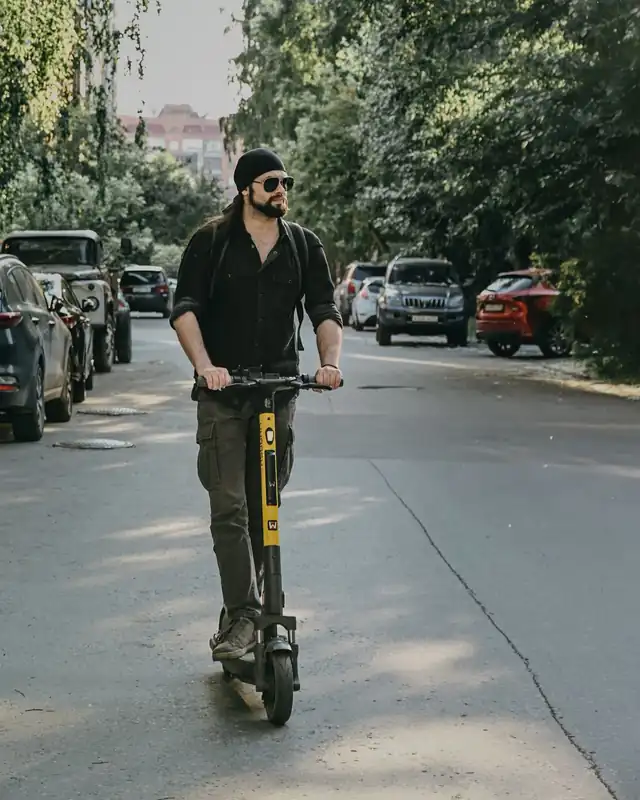
You step on, twist or press the throttle, and go. Handlebars give you something to hold and steer with. A thumb or trigger controls speed, and a hand brake (sometimes two) slows you down fast. Most adults feel steady within a few minutes. If you can ride a kick scooter or a bike, you already understand it. That low learning curve is the scooter’s superpower, and it’s a big reason they sell so well.
Riding a Onewheel
There are no handlebars. You stand sideways, like on a skateboard, with one foot in front of the other. The board balances itself front-to-back, but you control speed by leaning: tip your toes down to go, lean back to slow. Steering comes from your ankles and hips. Most people need a few hours spread over several days to feel comfortable, and a week or two to feel truly confident. It’s much closer to learning to snowboard than learning to drive.
Speed, Range, and Power Compared
On paper, top speeds look similar. Most commuter electric scooters and Onewheels top out somewhere between 16 and 22 mph. But the numbers hide two big differences: how far you can go, and how that speed feels.
Range is where scooters pull ahead. A strong commuter like the Segway Ninebot MAX G2 is rated up to 43 miles (figure on 25 to 30 in the real world with a normal adult rider). Onewheels range from about 8 miles on the little Pint to 20 to 32 on the flagship GT. If you have a longer commute, a scooter usually goes farther between charges.
Speed feels different, too. At 20 mph on a scooter, you have handlebars and a hand brake, so it feels planted and controllable. At 20 mph on a Onewheel, you’re balancing on one tire with nothing to hold, which is thrilling but demands respect. Onewheels also ‘push back’ by tilting the nose up as you near their limit. That’s the board’s polite way of telling you to lean back and slow down before it runs out of power.
- Top speed: e-scooters roughly 15-22 mph; Onewheels roughly 16-20 mph (the GT S-Series edges a bit higher)
- Range: e-scooters about 15-43 miles; Onewheels about 8-32 miles
- Hills: both climb well, but heavier riders and steep grades cut range and speed on either one
- Charge time: scooters about 4-6 hours; Onewheels about 45 minutes (Pint) to 2-3 hours (GT), faster with an optional Hypercharger
Portability, Commuting, and Everyday Practicality
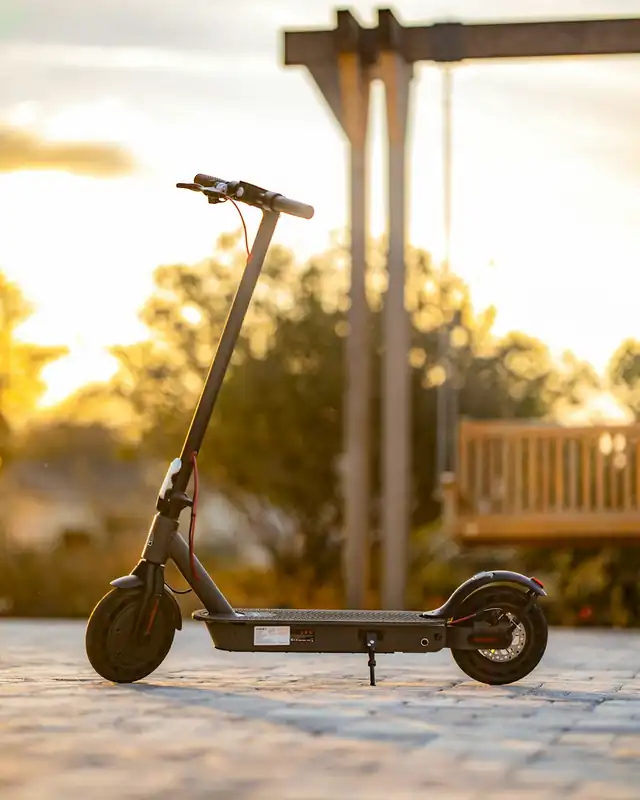
This is where your daily life quietly decides the winner. Electric scooters fold. The stem drops down so you can carry it onto a train, tuck it under a desk, or drop it in the trunk. The catch is weight. A long-range scooter like the MAX G2 tips the scales around 53 lbs, so ‘foldable’ doesn’t always mean ‘featherweight.’
Onewheels don’t fold, but they’re often lighter (roughly 23 to 35 lbs) and have a built-in handle so you can carry one like a briefcase. They slide into a car trunk with ease. Carrying one a long distance, though, gets old fast, because that fat tire and battery add up in your arm.
For real commuting, scooters win on the boring-but-important stuff. You get a hand brake for stop-and-go traffic, a handlebar to hang a bag on, built-in lights, a bell or horn, and often a phone mount and turn signals. You can roll up to a coffee shop, fold in five seconds, and walk right in. A Onewheel makes you carry it inside and gives you nowhere to put your stuff.
Terrain: Where Each One Truly Shines
Here’s where the Onewheel gets its revenge. That single go-kart-style tire is a monster off pavement. Grass, dirt trails, hard-packed sand, gravel, wet leaves, forest paths, the Onewheel floats over stuff that would stop a scooter cold. This is the number one reason people fall in love with it. It’s less a commuter and more an all-terrain toy you’ll invent excuses to ride.
Electric scooters live on pavement. Good ones have air-filled (pneumatic) tires and suspension that soak up cracks and small bumps, and the best commuter tires now ‘self-heal’ small punctures on their own. But small wheels and deep potholes are natural enemies. Hit a bad hole or a curb at speed and a scooter can stop you hard. Off pavement, most scooters bog down in loose dirt or thick grass.
So match the machine to your ground. Smooth city streets and bike lanes? A scooter is faster, goes farther, and rides comfier. Dirt trails, beaches, campgrounds, and grassy parks? The Onewheel is in a class all its own, and nothing else feels quite like it.
- Onewheel: best on dirt, grass, sand, gravel, and light trails
- E-scooter: best on pavement, bike lanes, and smooth paved paths
- Both: respect wet surfaces, since traction and braking suffer in the rain
Safety, the Onewheel Recall, and Staying Upright
Let’s talk safety honestly, because it matters more than any spec. In September 2023, the U.S. Consumer Product Safety Commission (CPSC) and Future Motion recalled about 300,000 Onewheel boards, covering every model from the original to the GT, after crashes tied to ‘nosedives,’ where the board can stop balancing if you push it past its limits. At least four deaths were reported at the time of the recall. The fix was a free firmware update that added ‘Haptic Buzz,’ a loud beep and vibration that warns you before the board gives up. As of 2026, related lawsuits are still working their way through the courts.
What does that mean for you? If you buy a Onewheel, update the firmware right away, learn to respect ‘pushback’ and Haptic Buzz, and never ride faster than you can safely step off. The nosedive risk is real, but it’s very manageable with good habits, steady speeds, and the right gear.
Scooters aren’t risk-free either. Their small wheels don’t like potholes, and wet brakes need extra stopping distance. Whatever you ride, a helmet is non-negotiable, and wrist guards are the smartest cheap upgrade you can make, especially on a Onewheel where your hands hit first.
Price and Value: What You Really Pay
Budget often makes the choice for you. Solid commuter electric scooters start around $300 to $500 (think Gotrax or Hiboy) and climb to about $800 to $1,000 for a do-everything model like the Segway MAX G2. You get a lot of range and comfort for the money, which is why scooters dominate the commuter world.
Onewheels cost more, and there’s no cheap ‘real’ one. The little Pint starts around $750, the Pint X near $1,100, and the flagship GT and GT S-Series run $2,000 to $2,900. You’re paying for a one-of-a-kind feeling and genuine off-road ability, not everyday practicality.
Running costs stay low for both. You charge from a normal wall outlet for pennies, and there’s no gas, oil, or (in most places) insurance. Tires and batteries are the main long-term costs. Scooter tires are cheap and easy to swap, while a Onewheel tire is pricier but rarely needs replacing. Bottom line: if you want the most usable ride per dollar, a scooter wins. If you want a unique experience and the budget’s there, the Onewheel earns its price in grins.
| Model | Top speed | Range | Weight | Starting price |
|---|---|---|---|---|
| Pint | ~16 mph | ~6-8 mi | 23 lbs | $750 |
| Pint X | 18 mph | 12-18 mi | 27 lbs | $1,100 |
| Pint S | 20 mph | 12-18 mi | 27 lbs | $1,400 |
| XR Classic | ~19 mph | ~18-20 mi | ~27 lbs | $1,900 |
| GT | 20 mph | 20-32 mi | 35 lbs | $2,000 |
| GT S-Series | ~20-25 mph | 18-28 mi | 33 lbs | $2,900 |
| Scooter | Top speed | Range | Approx. price |
|---|---|---|---|
| Segway Ninebot MAX G2 | 22 mph | Up to 43 mi | $800-999 |
| NIU KQi 300P | 20 mph | ~30 mi | ~$700 |
| Gotrax G4 | 20 mph | ~25 mi | ~$500 |
| Hiboy S2 | 19 mph | ~17 mi | ~$380 |
Common Mistakes (and How to Fix Them)
Fix: If your main goal is cheap A-to-B travel, a $300-$500 electric scooter does it better. Only pay Onewheel prices if you specifically want the off-road, board-sport feel that a scooter can’t give you.
Fix: Before your first ride, connect the app and install the latest firmware so you get Haptic Buzz and pushback warnings. These alerts are your early-warning system against a nosedive, and they only work if you update.
Fix: Most bad falls happen right near a device’s limit. Ride at 60-70% of top speed while you learn, and only push faster once stopping and stepping off feel completely automatic.
Fix: Some cities ban these from sidewalks or cap speed on bike paths, and a few restrict one-wheeled boards specifically. Look up your state and city rules first so you don’t get a ticket or a nasty surprise.
Pro Tips
- 💡 Wear wrist guards on a Onewheel. Your hands hit the ground first in almost every fall, and guards turn a broken wrist into a scraped glove.
- 💡 For daily use, charge to about 80-90% and only top up to 100% before long rides. It’s an easy habit that helps either battery last more years.
- 💡 Practice Onewheel dismounts on grass first. Learning to step off cleanly at low speed builds the reflex that saves you at higher speeds.
- 💡 On a scooter, cover your brake in traffic like you would on a bike. Small wheels need a little extra stopping distance, especially when the ground is wet.
- 💡 Keep your tires properly inflated. Correct pressure boosts range, comfort, and grip on both a scooter and a Onewheel.
A Real-Life Example
Take Marcus, who bought a Onewheel for his two-mile downtown commute because it looked amazing online. He loved the feeling but hated lugging a 27-pound board up to his office with nowhere to hang his laptop bag. Six months later he added a folding scooter for weekdays and saved the Onewheel for weekend trail sessions. Now he has the best of both, and only wishes he’d started with the scooter.
Then there’s Priya, a longtime snowboarder who tried a friend’s scooter and found it ‘fine, but kind of boring.’ One weekend on a Onewheel and she was hooked by the carving, surfy feel. She rides grassy paths and beach boardwalks purely for fun, not to get anywhere. For her, the Onewheel’s higher price was worth every penny, because she wanted the experience, not just the transportation.
Frequently Asked Questions
An electric scooter is much easier to learn. Most adults feel steady within minutes because handlebars and a hand brake give you control and something to hold onto. A Onewheel has no handlebars and balances by leaning, so plan on a few hours over several days before it feels natural. It’s closer to learning to snowboard than to ride a bike.
Both are safe with good habits and gear, but they carry different risks. Onewheels can ‘nosedive’ if pushed past their limits, which led to a 2023 recall and a firmware fix called Haptic Buzz, so always update yours and respect the warnings. Scooters struggle with potholes and need extra braking distance when wet. Wear a helmet either way, and add wrist guards for a Onewheel.
Not usually, they’re close. Most Onewheels top out around 16-20 mph, while commuter scooters run about 15-22 mph. The fastest Onewheel, the GT S-Series, edges a little higher, but plenty of premium scooters hit 25-30+ mph. Speed feels very different, though: a scooter has a hand brake and handlebars, while a Onewheel demands more balance and respect at the same mph.
The Onewheel is the clear off-road winner. Its single fat tire floats over grass, dirt, sand, and trails that stop most scooters cold. Electric scooters are built for pavement and bike lanes; some have chunky tires and suspension, but loose surfaces and deep potholes are their weak spot. If off-road fun is the whole point, choose the Onewheel.
Onewheels cost more across the board. A real Onewheel starts around $750 for the Pint and climbs to $2,000-$2,900 for the GT and GT S-Series. Solid commuter scooters run about $300-$500 to start, with premium long-range models like the Segway MAX G2 around $800-$1,000. Dollar for dollar, a scooter gives you more usable transportation.
For most commuters, an electric scooter is the better buy. It folds for the train or the office, goes farther on a charge, has a hand brake for traffic, and gives you a handlebar to hang a bag on. A Onewheel can commute, but you’ll carry it everywhere with nowhere to store your stuff. Save the Onewheel for fun and get a scooter for the daily grind.
Final Checklist ✅
- ✅ Decide your main use: daily commuting (lean scooter) or weekend fun and off-road (lean Onewheel)
- ✅ Set a real budget that includes a helmet and wrist guards, not just the ride itself
- ✅ Measure your commute distance and match it to real-world range, not the marketing number
- ✅ Check whether you’ll need to fold and carry it onto transit or into an office
- ✅ Look up your state and city rules for e-scooters and one-wheeled boards
- ✅ If buying a Onewheel, confirm it can run the latest firmware with Haptic Buzz
- ✅ Test ride if you can, and always try a Onewheel on grass before hitting pavement