Age, weight, and license laws, plus the health conditions that decide whether riding is safe for you — all in plain English.
Electric scooter rider eligibility comes down to a few simple questions. Are you old enough? Are you within the weight limit? Do you meet your local laws? And is your body in good enough shape to ride safely? Most people breeze through all four without a second thought. But if you have a health condition, a young rider at home, or you’re just not sure of the rules, a little homework goes a long way.
The tricky part is that there’s no single national rulebook in the United States. Age limits, license needs, and helmet laws change from state to state and even city to city. On top of the legal side, there are real health restrictions worth thinking about — things like heart trouble, balance disorders, seizures, or pregnancy that can make riding riskier than it looks.
This guide walks you through all of it in plain English: who can legally ride, how weight limits work, which health conditions matter, and how to ride safely if you have a concern. No scare tactics, no dense legal jargon — just honest, friendly advice so you can decide with confidence whether an electric scooter is right for you.
Who’s Legally Allowed to Ride an Electric Scooter?
Here’s the honest answer: it depends on where you live. There is no single national law for electric scooters in the United States. Instead, each state — and often each city — makes its own rules. So the very first step in checking your eligibility is a quick look at your local laws.
For most adults, the legal side is refreshingly simple. Most states do not require a driver’s license for a low-speed electric scooter. North Carolina is the main state that asks owners to register their scooter, and you usually don’t need insurance or a plate anywhere else. What you do need is to follow the rules of the road — ride in bike lanes or on the street, stay off many sidewalks, and obey traffic signals like everyone else.
Two rules trip people up. First, helmets are required for riders under 18 in most regulated states, including California, New York, Florida, Connecticut, and Delaware. Second, riding while drunk absolutely counts. Because a scooter has a motor, DUI laws often apply — and a scooter DUI can even cost you your regular car license.
- No federal law — your state and city set the rules
- Most states: no license, no registration, no insurance needed
- Riders under 18 usually must wear a helmet
- Sidewalk riding is banned in many cities
- Alcohol and drugs: DUI rules apply to scooters, too
| Requirement | Typical rule | Good to know |
|---|---|---|
| Minimum age | Usually 16 | A few states allow 12-15 on low-power models; some cities set it at 18 |
| Driver’s license | Not required in most states | California asks for a license or permit — check your state |
| Registration | Not required in most states | North Carolina is the main exception |
| Helmet | Mandatory for under-18 in most regulated states | Smart for every rider, at any age |
| Riding under the influence | Illegal — DUI rules apply | A scooter DUI can affect your car license, too |
| Where you can ride | Bike lanes and streets under ~20 mph | Many cities ban sidewalk riding |
Weight Limits: Why Your Body Weight Matters
Every electric scooter has a maximum rider weight, usually printed in the specs as “max load.” Most standard adult scooters hold between 220 and 265 pounds. Heavy-duty and off-road models can carry 330 to 400 pounds or more. This number isn’t a polite suggestion — it’s tied to the strength of the motor, frame, and brakes.
Going over the limit doesn’t mean the scooter snaps in half on day one. But it hurts performance in ways you’ll feel every ride. Heavier loads cut your range — a rider near the max might see 20 to 30 percent less distance than a lighter rider on the same scooter. Speed drops, too. Push past the limit and you can lose up to 40 percent of your top speed. Hills crawl, and your brakes have to work a lot harder to stop you safely.
The smart move is to leave headroom. Aim to weigh about 80 percent of the scooter’s max load. So if you weigh 220 pounds, look for a scooter rated for at least 275 to 300 pounds. That cushion protects your range, keeps acceleration lively, and makes braking safer. And don’t forget to add the weight of a loaded backpack, groceries, or a work bag you carry along.
Health Conditions That Can Affect Safe Riding
This is the part most guides skip, but it matters most. Riding a scooter is a physical activity. You’re standing, balancing, steering, and reacting — sometimes at 15 to 20 miles per hour. Certain health conditions make that harder or riskier. None of these automatically ban you from riding. But they’re worth an honest look, and often a quick chat with your doctor.
Heart conditions and fainting spells
If you have a heart condition, or you sometimes feel faint or lightheaded, speed adds real risk. A blackout on a moving scooter can cause a nasty fall. Get your doctor’s clearance first, keep your speed low, and stay close to home until you know exactly how your body reacts.
Epilepsy and seizures
A seizure means losing control of your body, even for a few seconds — and on a scooter, that’s dangerous. Many people with well-controlled epilepsy do ride e-bikes and scooters, but only after talking with their neurologist. If your seizures aren’t well controlled, it’s safer to hold off for now.
Vertigo and balance disorders
Balance is everything on two wheels. Inner-ear problems like vertigo, labyrinthitis, or other vestibular issues can throw you off in an instant. Doctors usually say to avoid riding during a flare-up, and to wait until your symptoms have settled for a good while before you climb back on.
Vision problems
You need to spot potholes, curbs, and cars fast. If your eyesight is weak, always ride with your glasses or contacts in. Avoid night riding and bad weather, when it’s harder both to see hazards and to be seen by drivers around you.
Diabetes and blood sugar swings
A sudden drop in blood sugar can leave you shaky, confused, or weak — the last thing you want mid-ride. Eat something before you head out, keep a fast-acting snack in your pocket, and don’t take long rides on an empty stomach.
Joint pain, mobility, and recent surgery
Standing and soaking up bumps takes leg and core strength. If you have arthritis, limited mobility, or you’re healing from surgery, wait for medical clearance and pick a scooter with real suspension to soften every bump in the road.
Pregnancy, Seniors, and Kids: Special Situations
Some riders sit in a gray area where the answer isn’t a flat yes or no. Here’s honest guidance for three groups people ask about most.
Riding while pregnant
Most doctors advise against riding an electric scooter while pregnant. Pregnancy shifts your center of gravity and changes your balance, which raises the risk of a fall — and even a small fall can be serious for you and the baby. If you’re early on with no complications, some doctors may okay short, slow rides on smooth paths, but always ask your provider first.
Seniors and older riders
Age alone doesn’t stop you. Plenty of people ride happily into their 60s and 70s. The key is honest self-assessment: if you’re steady on a bike, you’ll likely be fine. Choose a scooter with suspension and big tires, start in a quiet space, and never skip the helmet — older bodies bruise and break more easily.
Kids and teens
Most electric scooters are built and rated for ages 16 and up, and the law often agrees. Kids’ models do exist for younger riders, usually starting around age 8, with slower speeds and smaller decks. Match the scooter to the child’s age and size, and make a helmet a firm, no-exceptions rule.
The Physical Skills Riding Actually Requires
You don’t need to be an athlete to ride a scooter. But a few basic abilities make riding both safe and fun. If any of these feel like a real struggle, it’s worth practicing — or picking a more stable scooter — before you head out on the road.
- Balance: you’ll stand and steer on a narrow deck, sometimes on one foot while you kick off
- Reaction time: you need to brake or swerve quickly when a car or pothole appears
- Grip strength: your hands work the throttle and brake levers the entire ride
- Coordination: steering, braking, and scanning around you all happen at once
- Basic stamina: longer rides ask a little from your legs and core
How to Ride Safely If You Have a Health Concern
Having a health condition doesn’t always mean “no.” Very often it means “yes, with care.” If your doctor gives you the green light, these habits stack the odds firmly in your favor and make every ride calmer and safer.
- Talk to your doctor first, especially for heart, seizure, balance, or vision issues
- Start slow — keep speeds low and trips short until you trust your body and the scooter
- Gear up every time: helmet always, plus wrist guards and knee pads if falls worry you
- Pick a stable scooter with suspension, big tires, and a wide, low deck
- Ride where it’s safe: quiet streets, bike paths, daylight, and dry ground
- Never ride impaired, exhausted, or in the middle of a health flare-up
Choosing a Scooter That Fits Your Body and Needs
Once you know your eligibility and any health limits, choosing the right scooter is the fun part. The goal is a machine that matches your body and gives you a calm, planted, confidence-building ride.
A few features do most of the heavy lifting here. Weight capacity with headroom keeps performance strong. Suspension smooths out bumps, which is a gift for sensitive joints and shaky balance. Bigger tires add stability and shrug off flats. And strong dual brakes let you stop with confidence every single time.
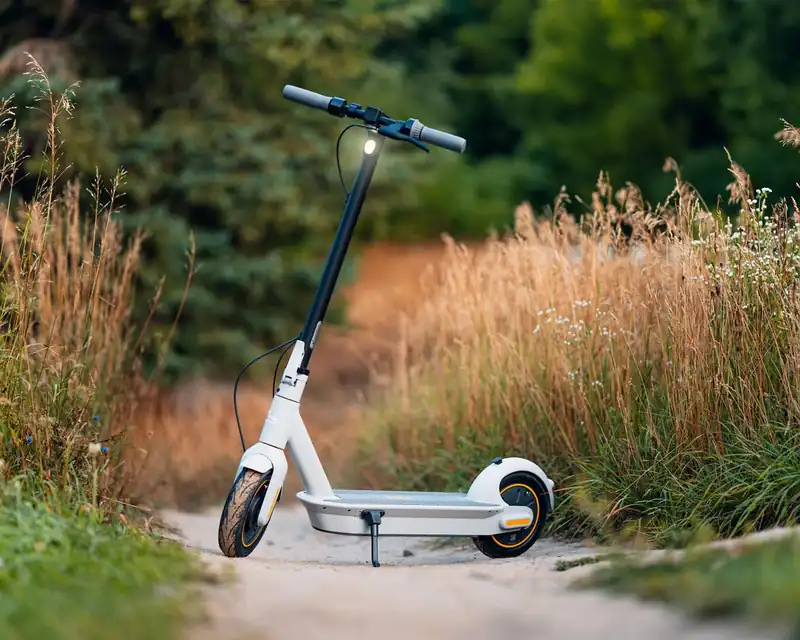
A great example that ticks all of these boxes is the Segway Ninebot MAX G2. With a 265-pound weight capacity, front and rear suspension, big 10-inch tubeless tires, and dual brakes, it’s one of the most forgiving, stable commuter scooters you can buy — a smart pick for newer riders, larger riders, or anyone who values a smooth, worry-free ride.
- Weight capacity with headroom — aim for about 80 percent of the max load
- Suspension for a softer ride that’s kind to joints and balance
- Bigger 10-inch tires for stability and fewer flat tires
- Strong dual brakes for short, confident, fade-free stops
- A wide, low deck that’s easy to step onto and stand on
| Scooter type | Typical max load | Best fit for |
|---|---|---|
| Budget / kids’ commuter | 150-220 lbs | Lighter riders and short trips |
| Standard adult commuter | 220-265 lbs | Most everyday riders |
| Heavy-duty / performance | 265-330 lbs | Larger riders, hills, and cargo |
| Off-road / dual-motor | 330-400+ lbs | Big riders and rough terrain |
| Condition | Why it matters on a scooter | What riders often do |
|---|---|---|
| Heart problems / fainting | Sudden dizziness or a blackout at speed | Get medical clearance; ride slow and close to home |
| Epilepsy / seizures | A seizure means losing control | Ask your doctor; ride only if well-controlled |
| Vertigo / inner-ear issues | Balance is everything on two wheels | Wait until symptoms settle; skip riding during flare-ups |
| Poor eyesight | You must spot hazards fast | Ride with glasses or contacts; avoid low light |
| Diabetes | Low blood sugar causes shakiness | Eat before riding; carry a quick snack |
| Recent surgery / joint pain | Bumps and quick moves strain the body | Wait for clearance; choose a suspension scooter |
Common Mistakes (and How to Fix Them)
Fix: Check your state and city rules before your first ride. Age limits, helmet laws, and sidewalk bans vary widely, and a quick search saves you a fine.
Fix: Pick a scooter rated well above your body weight — aim to be around 80 percent of the max load — so range, speed, and braking all stay strong with a bag on your back.
Fix: If you feel dizzy, drowsy, low on blood sugar, or just off, skip the ride and wait until you feel steady. There’s no trip worth a bad fall.
Fix: Get medical clearance first, especially for heart trouble, seizures, or balance issues. Your doctor knows your situation better than any spec sheet.
Pro Tips
- 💡 Aim to stay around 80 percent of the max weight limit for the best range, speed, and braking.
- 💡 Practice in an empty parking lot until braking and turning feel automatic, not scary.
- 💡 Wear a helmet every single ride — injuries heal slower as we age, and heads don’t get second chances.
- 💡 Ride in daylight and dry weather while you’re still building confidence.
- 💡 Keep a phone and a small snack on you, especially if you have diabetes or plan a longer ride.
A Real-Life Example
Take Marcus, a 58-year-old who weighs 240 pounds. He almost bought a cheap scooter rated for 220 pounds, then realized he’d be over the limit before even packing his laptop bag. He sized up to a model rated for 330 pounds. The result? Quicker starts, longer range, and brakes that don’t fade on his morning hill.
Or Linda, 66, who hadn’t ridden anything on two wheels in years and worried about her balance. Instead of giving up, she practiced in an empty church parking lot for a week, chose a scooter with front and rear suspension, and now rides to the farmers market every Saturday — helmet on, smile wide.
Frequently Asked Questions
In most US states, no — you don’t need a driver’s license for a low-speed electric scooter. A handful of places are stricter; California, for example, asks for a license or learner’s permit, and North Carolina wants your scooter registered. Since rules change by state and city, it’s always worth a two-minute check on your local DMV or transportation website before you ride.
It’s usually 16 in most US states, though a few allow younger riders on low-power models and some cities set it at 18. Manufacturers also rate most adult scooters for ages 16 and up. For younger kids, look for scooters made specifically for their age group, which start around age 8 with slower speeds and smaller decks. Whatever the age, a helmet should be non-negotiable.
Talk to your doctor first — that’s the honest answer. A heart condition that causes fainting, or epilepsy that isn’t well controlled, raises the risk of losing control at speed. Many people with stable, well-managed conditions do ride after getting medical clearance, keeping speeds low and staying close to home at first. Your doctor knows your situation best, so make that call before your first ride.
Most doctors advise against it, mainly because pregnancy changes your balance and center of gravity, which raises the chance of a fall. Even a minor spill can be serious during pregnancy. If you’re early on and have no complications, some doctors may okay short, slow rides on smooth, flat paths — but you should always ask your own provider first rather than guess.
It depends entirely on the model, since each scooter lists its own max load. Budget and kids’ scooters often cap out around 150 to 220 pounds, standard adult commuters handle 220 to 265 pounds, and heavy-duty models carry 330 to 400 pounds or more. The trick is to leave headroom — aim to be around 80 percent of the limit — so you keep good range, speed, and braking, even with a bag on your back.
Yes, you can. Because an electric scooter has a motor, most states treat riding it drunk like driving any other vehicle, with the same 0.08 percent blood-alcohol limit. In many places you can be charged even below that if you seem impaired. Worse, a scooter DUI can affect your regular driver’s license, too. The safe move is simple: if you’ve been drinking, walk or grab a ride instead.
Final Checklist ✅
- ✅ Confirm the minimum riding age and helmet rules in your state and city
- ✅ Check the scooter’s max weight limit and stay under about 80 percent of it
- ✅ Get your doctor’s OK if you have a heart, seizure, balance, or vision condition
- ✅ Put on a helmet (and pads, if you like) before every single ride
- ✅ Practice braking and turning in an empty, flat space first
- ✅ Never ride impaired, exhausted, or during a health flare-up
- ✅ Choose a scooter with suspension and big tires if balance is a concern