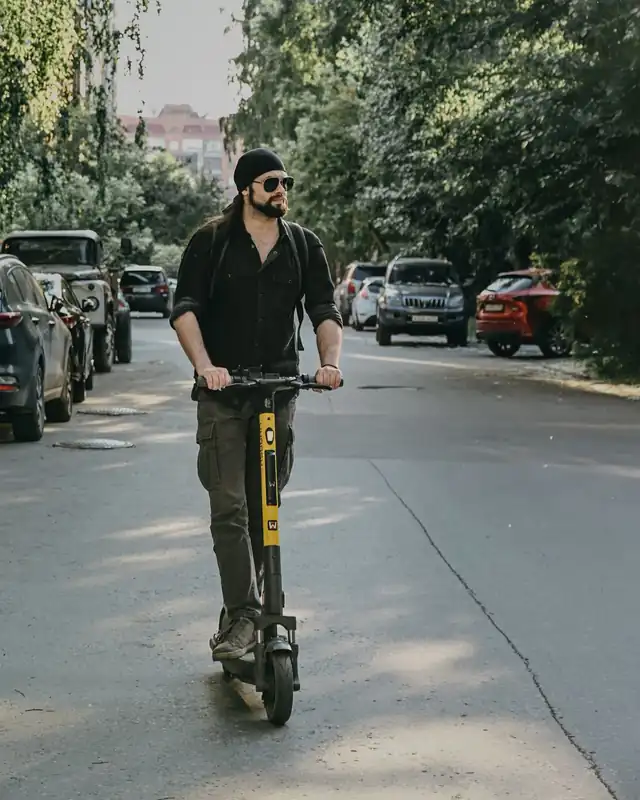
A friendly, real-world guide to picking the right ride for your commute, your budget, and your storage space in 2026.
Trying to decide between an electric scooter vs an electric bike? You’re not alone. Both are brilliant ways to skip traffic, save on gas, and turn a boring commute into the best part of your day. But they solve different problems, and the right pick depends far more on your daily route than on which one wins on paper.
Here’s the honest truth up front: neither one is best for everybody. An electric scooter is light, cheap, and folds up in seconds, which makes it perfect for short city hops and tiny apartments. An electric bike goes farther, climbs hills with ease, and feels more comfortable on longer rides, but it costs more and takes up real space. The best choice is simply the one that fits your life.
In this guide we’ll walk through speed, range, price, running costs, laws, and safety in plain English, like a friend who has owned both. By the end you’ll know exactly which one belongs in your garage, and roughly what to spend to get a good one.
The Short Answer: Scooter or E-Bike?
If you want the two-second version, here it is. Electric scooters are the champions of short, flat, city trips where storage is tight and budget matters. Electric bikes are the champions of longer distances, hills, and comfort, especially if you’d enjoy a little exercise along the way. Everything else is detail.
Think about your one-way commute. Under about 5 miles on mostly flat streets, a scooter almost always makes more sense: it’s cheaper, lighter, and easier to store. Push past 8 to 10 miles, add some hills, or plan to ride in all weather, and an e-bike starts to pull ahead fast. Right in the middle? Then storage, budget, and whether you like sitting or standing become the tie-breakers.
It also helps to be honest about your habits. Will you carry it up stairs? Lock it outside all day? Ride in the rain? Want to arrive without breaking a sweat? Those everyday realities matter more than any spec sheet, and we’ll dig into each one below.
- Pick an electric scooter if: your trip is short, storage is tight, your budget is under $800, or you take a train or bus part of the way.
- Pick an electric bike if: you ride 8+ miles, face hills, want a comfy seated ride, or like the idea of pedaling for exercise and backup range.
- Consider both if: you have a mixed commute, plenty of storage, and room in the budget, some households genuinely keep one of each.
| Feature | Electric Scooter | Electric Bike |
|---|---|---|
| Top speed | 15-22 mph (often capped by law) | 20 mph (Class 1/2), up to 28 mph (Class 3) |
| Real-world range | 15-40 miles | 40-60+ miles |
| Typical price | $300-800 | $1,000-3,500 |
| Weight | 30-55 lbs | 40-70 lbs |
| Ride position | Standing | Seated, with pedals |
| Wheel size | 8-10 inches | 20-28 inches |
| Hills | Can struggle on steep grades | Climbs easily with pedal assist |
| Storage | Folds in seconds, very compact | Bulky; folding models exist but heavy |
| Exercise | None | As much or as little as you want |
Speed, Range, and Real-World Performance
Let’s start with the fun stuff: speed. Most commuter electric scooters cruise between 15 and 22 mph, and many cities legally cap them around 15 to 20 mph anyway. Electric bikes are sorted into classes: Class 1 and Class 2 assist up to 20 mph, while a Class 3 e-bike will pedal-assist all the way to 28 mph. So on paper a fast e-bike is quicker, but in stop-and-go city traffic the difference feels smaller than the numbers suggest.
Range is where e-bikes flex their muscles. A good commuter e-bike will do 40 to 60 miles on a charge, and some sip their battery in eco mode to stretch even further. Scooters usually land between 15 and 40 real-world miles, with budget models closer to 10 to 20. Whatever the box claims, plan for only 60 to 75 percent of that number in real life, because rider weight, hills, cold weather, and speed all drain the battery faster than the lab test did.
Hills are the great equalizer. An e-bike’s motor plus your own pedaling makes climbs feel easy, while a lightweight scooter can bog down on a steep grade, especially with a heavier rider. Ride quality tilts toward bikes too: bigger wheels (20 to 28 inches) roll over cracks and potholes that can jolt a scooter’s small 8- to 10-inch wheels. Suspension helps scooters a lot, which is why comfort-focused models are worth the extra money.
What Each One Really Costs to Own
Upfront price is the biggest, most obvious gap. A genuinely good commuter scooter costs between $300 and $800, with premium long-range models reaching $1,000 or so. A quality commuter e-bike usually starts around $1,000 to $1,500 and climbs to $3,500 for the nice stuff. If your budget is tight, the scooter wins the day you buy it, no contest.
The running costs are surprisingly close, and both are dirt cheap compared to a car. Charging either one costs only pennies, roughly 10 to 50 cents for a full scooter charge and 8 to 22 cents for an e-bike. Batteries are the big long-term expense: a scooter pack runs about $100 to $500 to replace after a few years, while an e-bike battery costs more, often $300 to $1,200. Both typically last 500 to 1,000 charge cycles, or three to five years of daily use.
Maintenance is one area scooters quietly win. With no chain, no gears, and no derailleur, there’s simply less to break or adjust; you mostly watch the tires and brakes. E-bikes have more moving parts, so budget for occasional tune-ups. That said, because e-bikes go farther and last long, riders who cover big miles sometimes find the cost-per-mile works out lower over five years despite the higher sticker. If you ride a lot and far, the bike can pay you back.
Portability, Storage, and Where You Live
Where you keep it and how you carry it might be the most underrated part of this whole decision. A ride you can’t easily store or move is a ride you’ll quietly stop using, so be brutally honest about your space before you spend a dollar.
Apartments and tight spaces
Scooters shine here. Most fold flat in a few seconds and stand in a closet, behind a door, or under a desk. A full-size e-bike needs real floor space and is a pain to wrestle through a doorway. Folding e-bikes like the Lectric XP 3.0 help, but they still weigh 60-plus pounds.
Carrying up stairs
This is a scooter’s home turf. Commuter scooters weigh roughly 30 to 55 pounds and have a carry handle once folded. E-bikes tip the scales at 40 to 70 pounds, and hauling that up a flight of stairs every day gets old very fast.
Mixing with buses and trains
If your commute is part ride, part transit, a folding scooter slips onto a train or bus with almost no fuss. Many transit systems limit or ban full-size e-bikes during rush hour, so check the rules before you commit.
Fitting in a car trunk
Both can work, but scooters and folding e-bikes are far easier. A folded scooter drops into most trunks; a folding e-bike fits many but is heavy to lift. A standard e-bike usually needs a hitch or roof rack.
Which Fits Your Commute and Lifestyle?
Specs are useful, but your daily routine decides the winner. Here’s how the two stack up for the most common types of riders, so you can find yourself on the list and skip the guesswork.
- Short city commuter (under 5 miles): Scooter. Grab it, fold it, go. Cheaper and easier to park.
- Long-distance commuter (8 to 20 miles): E-bike. The range, comfort, and hill-climbing are worth it.
- Hilly area: E-bike. Pedal power plus motor beats a scooter struggling up a grade.
- Want light exercise: E-bike. You choose how hard to pedal, and you still arrive fresh.
- Errands, groceries, or a kid on back: E-bike. Racks, baskets, and cargo models carry real loads.
- Tiny budget or first e-ride: Scooter. Lower price, simple to learn, easy to store.
- Last-mile plus train or bus: Scooter. It folds and rides along with you.
Laws, Helmets, and Staying Legal
The rules of the road are different for each, and they’re a bigger deal than most first-time buyers expect. E-bikes in the U.S. mostly follow a three-class system. Class 1 gives pedal assist up to 20 mph, Class 2 adds a throttle up to 20 mph, and Class 3 offers pedal assist up to 28 mph. Class 1 and 2 bikes are welcome on most bike paths and lanes; Class 3 is often restricted to roads and bike lanes and may carry a minimum age or helmet rule.
Electric scooters live in a messier legal world. Many cities cap them around 15 to 20 mph and ban them from sidewalks, while allowing them in bike lanes and on streets with lower speed limits. A few places treat them almost like e-bikes; others barely regulate them at all. Registration and insurance usually aren’t required for either, but that is starting to change in some states, so don’t assume.
Helmets are the one universal. Some states require them by law, especially for younger riders or Class 3 e-bikes, but you should wear one no matter what the law says. It’s the single cheapest thing you can do to protect yourself, and given how injury numbers are climbing, we don’t treat it as optional.
Safety, Comfort, and Everyday Upkeep
Let’s talk safety honestly, because both machines are faster than they look. E-scooter injuries have climbed sharply, roughly 80 percent between 2023 and 2024 by one national count, and scooter crashes are more likely to cause fractures than bike crashes. Part of that is physics (small wheels and a standing position) and part is behavior (scooter riders wear helmets less often). None of this means scooters are unsafe; it means you should ride one with respect.
An e-bike’s bigger wheels, lower center of gravity, and seated position generally make it feel more planted, especially at speed and on rough roads. A scooter rewards smooth, alert riding: watch for potholes, slow down on wet paint and metal grates, and never outrun your sightlines. Comfort over a long ride also favors the bike, since standing for 30 minutes wears on your legs more than pedaling does.
Weather matters too. Check the IP rating if you’ll ride in rain; something like IPX5 handles a wet commute far better than an unrated budget model, though neither type loves deep puddles. Upkeep is light for both: keep the tires properly inflated, check the brakes, store the battery indoors in extreme cold, and charge to about 80 to 90 percent for daily use to make the pack last longer. Do that, and either ride will serve you for years.
| Cost | Electric Scooter | Electric Bike |
|---|---|---|
| Upfront (good commuter) | $300-800 | $1,000-3,500 |
| Full charge | $0.10-0.50 | $0.08-0.22 |
| Battery replacement | $100-500 | $300-1,200 |
| Battery lifespan | 500-1,000 cycles (3-5 yrs) | 500-1,000 cycles (3-5 yrs) |
| Maintenance | Low (no chain or gears) | Moderate (chain, brakes, tune-ups) |
| Registration/insurance | Usually none (varies by city) | Usually none (some states changing) |
| Class | How it helps | Top assisted speed | Where you can ride |
|---|---|---|---|
| Class 1 | Pedal assist only | 20 mph | Most bike lanes and paths |
| Class 2 | Throttle plus pedal assist | 20 mph | Most bike lanes; some path limits |
| Class 3 | Pedal assist only | 28 mph | Roads and bike lanes; often age/helmet rules |
Common Mistakes (and How to Fix Them)
Fix: Speed is fun, but you’ll rarely use the max, and cities often cap it anyway. Prioritize real-world range, comfort, and good brakes instead.
Fix: Marketing numbers come from ideal lab conditions. Plan for 60 to 75 percent of the claim, and buy more range than your commute needs so you’re not charging every single day.
Fix: Measure your storage spot and be honest about stairs. If you’ll haul it daily, weight and fold size matter more than a few extra miles of range.
Fix: Injuries are rising for both. Wear a helmet every ride and spend five minutes confirming your city’s speed caps, sidewalk rules, and e-bike class limits before you buy.
Pro Tips
- 💡 Ride your exact round-trip route once before buying, then double that distance for a comfortable range target.
- 💡 Charge to about 80 to 90 percent for everyday use and only fill to 100 percent before long rides, it noticeably extends battery life.
- 💡 Buy a good helmet, lights, and a solid lock at the same time as the ride, budget for them, don’t add them ‘later.’
- 💡 If you ride in wet weather, choose a model rated IPX5 or better and add fenders to stay dry.
- 💡 Heavier riders and hilly commutes should size up on motor power and range, both drain a battery faster than the spec sheet admits.
A Real-Life Example
Take two riders on the same street. Maya commutes 3.5 flat miles to a downtown office and lives in a third-floor walk-up. She bought a folding scooter, carries it up in one hand, and slides it under her desk. Total spend was under $600, and she’s never once wished for more.
Her neighbor Devon rides 11 miles each way with two real hills, and he likes arriving without a sweat while still getting a light workout. He chose a Class 3 commuter e-bike. It cost more and lives in his garage, but the range, hill assist, and comfy seat make his longer ride genuinely pleasant. Same street, two right answers.
Frequently Asked Questions
It depends on your distance. For short, flat city trips under about 5 miles, an electric scooter is usually better because it’s cheaper, lighter, and easier to store. For commutes of 8 miles or more, hilly routes, or all-weather riding, an electric bike wins on range and comfort.
Electric scooters are much cheaper to buy, with good commuter models running $300 to $800 versus $1,000 to $3,500 for a quality e-bike. Running costs are similar and tiny for both; e-bikes just cost more up front and more to replace the battery later.
A Class 3 e-bike is typically faster, with pedal assist up to 28 mph, while most commuter scooters cruise 15 to 22 mph and are often capped lower by local law. In stop-and-go traffic, though, the real-world difference is smaller than the numbers suggest.
In most places, neither requires a license or insurance, but that is changing. Some states now regulate faster e-bikes, and New Jersey passed a 2026 law adding licensing and registration. Always check your local city and state rules before buying.
E-bikes tend to feel more stable thanks to bigger wheels, a seated position, and a lower center of gravity, and scooter injuries have risen faster in recent years. That said, either is safe when you wear a helmet, ride at sensible speeds, and stay alert for road hazards.
Light rain is usually fine if your model has a water-resistance rating like IPX5, which many quality commuters do. Avoid deep puddles, slow down on wet paint and metal grates, and dry the ride afterward. Cheaper unrated models are best kept out of the wet.
Final Checklist ✅
- ✅ Measure your round-trip commute and add a 30 percent buffer for real-world range.
- ✅ Be honest about storage and stairs, then weigh the ride you’re considering.
- ✅ Check your city and state rules for scooter speed caps and e-bike classes.
- ✅ Set a full budget that includes a helmet, lights, and a lock.
- ✅ Decide whether you prefer a seated or standing ride for your distance.
- ✅ Confirm the water-resistance (IP) rating if you’ll ride in wet weather.
- ✅ Buy and wear a helmet from day one, every single ride.