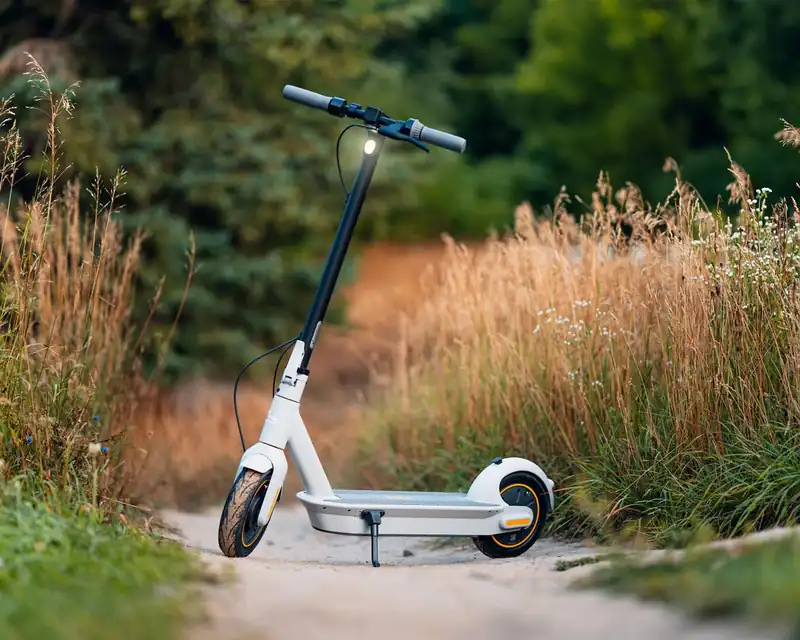
Everything a first-time rider needs before buying an electric scooter — specs, prices, laws, and care, all in plain English.
An electric scooter is one of the easiest and most fun ways to get around a city in 2026. You stand on a deck, twist a throttle with your thumb, and glide past traffic without breaking a sweat. There is no gas to buy, no parking to hunt for, and no gym membership needed. Just charge it overnight, fold it up, and go. If you have ever watched a rider zip past a line of stuck cars and thought “I want that,” this guide is for you.
Here is the honest part. Shopping for your first electric scooter can feel confusing. Every brand throws around big numbers for speed and range, and half of those numbers are measured under perfect lab conditions that you will never see in real life. Prices swing from under $300 to well over $2,000. And the rules about where you can ride change from one city to the next. It is a lot to sort out.
That is exactly what we will untangle here. In plain, friendly English, you will learn what the specs actually mean, how much you really need to spend, which type fits your life, how to stay legal and safe, and how to keep your scooter running for years. By the end, you will shop like someone who already owns three of them.
What Is an Electric Scooter (and Why They’re Everywhere)
An electric scooter is a stand-on ride with two wheels, a tall handlebar, and a small electric motor tucked inside one of the wheels. A rechargeable battery sits in the deck under your feet. You push off, squeeze the throttle, and the motor does the rest. To slow down, you pull a brake lever, just like on a bike. Most models fold flat in about three seconds so you can carry them onto a train, tuck them under a desk, or drop them in a car trunk.
So why are they suddenly everywhere? A big reason is cost. Charging a scooter for a full week costs about the same as a single cup of coffee. You skip gas, parking fees, and bus fares. They are quiet, they produce zero tailpipe fumes, and they turn a boring commute into the best part of your day. For short city trips under five miles, a scooter is often faster than a car once you count traffic and parking.
They are not just for one type of person, either. Riders love them for all kinds of reasons.
- Commuters who want to beat traffic and skip parking headaches
- College students crossing a big campus between classes
- City dwellers running errands without a car
- Anyone pairing a scooter with a train or bus for the ‘last mile’ home
- Folks who just want a cheap, genuinely fun way to get outside
| Model | Top Speed | Real-World Range | Motor | Weight | Approx. Price |
|---|---|---|---|---|---|
| Gotrax GXL V2 | 15.5 mph | ~9-11 mi | 250W | 27 lbs | ~$280 |
| Hiboy S2 | 19 mph | ~15-17 mi | 350W | 27 lbs | ~$380 |
| NIU KQi2 Pro | ~18 mph | ~20-25 mi | 350W | ~40 lbs | ~$500 |
| Segway Ninebot MAX G2 | 22 mph | ~28-30 mi | 450W (1000W peak) | 53 lbs | ~$799 |
| Kaabo Wolf Warrior 11 | ~45 mph | ~50-60 mi | 2x 1200W | ~100 lbs | ~$2,000+ |
The Specs That Actually Matter
Spec sheets look scary, but only a handful of numbers really shape how a scooter feels to ride. Learn these six and you can walk past all the marketing fluff. Here is what each one means in real terms, without the jargon.
Motor and Watts
Watts measure how strong the motor is. A 250W to 350W motor is fine for a lighter adult on flat ground. If you weigh more, face hills, or want quicker starts, look for 500W and up. Big performance scooters use dual motors with 1,000W or more per wheel. More watts means better acceleration and hill climbing, not just a higher top speed.
Battery and Watt-Hours
Battery size is measured in watt-hours (Wh), and it is the single best predictor of range. A budget scooter might have 200 to 280Wh, while a strong commuter has 400 to 550Wh. If you plan to replace short car trips, aim for a 48V pack with at least 15Ah. Bigger battery, longer ride, but also more weight and a higher price.
Top Speed and Range
Top speed is how fast it goes on flat ground; range is how far it travels per charge. Here is the catch: brands test range with a light rider, low speed, and warm weather. Real-world range is usually 60 to 70 percent of the advertised number. If a scooter claims 40 miles, plan for around 25 to 28 in daily life.
Brakes
Brakes keep you alive, so do not skimp here. Electronic and regenerative brakes are smooth but weak on their own. Disc and drum brakes give strong, reliable stopping. Hydraulic disc brakes are the gold standard. The safest setup is a dual system, pairing a disc or drum with an electronic brake so you always have backup.
Tires
You get two main choices. Pneumatic (air-filled) tires ride smooth and grip well but can go flat and need pressure checks. Solid (airless) tires never get flats but feel bumpy on rough streets. The best of both worlds is a tubeless tire pre-filled with sealing gel, like the ones on the Segway MAX G2, which resists most punctures automatically.
Water Resistance (IP Rating)
An IP rating tells you how well the electronics handle water. IP54 means light rain and puddles are fine, which covers most commuters. IP66 can shrug off a real downpour. If there is no IP rating listed at all, treat that scooter as fair-weather only and keep it dry.
Types of Electric Scooters and Who They Suit
Not all scooters are built for the same job. Buying a heavy off-road beast for a two-mile campus hop is a waste, and so is buying a tiny budget model for a hilly ten-mile commute. Once you know the main types, the right one usually picks itself.
Here is the quick breakdown of the categories you will run into, along with who each one fits best.
- Budget and lightweight (under $400): Small motors around 250-350W, 12-17 mile claimed range, and light 26-30 lb frames. Perfect for flat cities, short hops, and first-time riders on a tight budget.
- Commuter (mid-range): The sweet spot for most people. Bigger batteries, 18-22 mph speeds, real 20-30 mile range, and comfort features like suspension. Built to handle daily miles and mild hills.
- Performance and off-road: Dual motors, 30-45+ mph, huge range, and knobby tires. Fast and thrilling, but heavy, pricey, and often too fast for public bike lanes. For enthusiasts and open trails.
- Seated scooters: A removable or fixed seat for longer, more relaxed rides. Great if standing for 30+ minutes bothers your knees or back.
- Kids’ scooters: Speed-limited to around 10-15 mph with smaller decks and lighter frames. Safety-focused and sized for younger riders.
What You’ll Pay: Price Tiers and What You Get
Electric scooters range from cheap toys to serious machines, and the price usually tracks with battery size, build quality, and safety features. You do not need to spend the most to get something great, but spending too little often leads to a scooter that struggles on hills and dies before you get home.
Most first-time buyers are happiest in the $400 to $800 range. That is where you get a genuine commuter with enough range, real brakes, and comfort features that make you actually want to ride. Below is a look at what each budget level buys, followed by a side-by-side of popular 2026 models so you can see how the numbers line up.
One more money tip: budget for gear on top of the scooter. A good helmet, a set of lights, and a solid lock will run you $60 to $120 combined, and every dollar is worth it.
Where You Can Ride: Laws and Safety in 2026
Good news first: electric scooters are now legal to ride in 48 states, and as of 2026 there are no statewide bans left after Delaware reversed its ban in late 2025. Most states treat scooters much like bicycles. That usually means no license and no registration, and you ride in bike lanes or on roads posted around 25 to 35 mph.
The tricky part is that cities pile their own rules on top of state law, so details vary block by block. Sidewalk riding is banned in 17 states and in dense cities like New York, so when in doubt, use the bike lane or road. Speed is commonly capped at 15 to 20 mph on public paths. The most common minimum age is 16, only about six states require any license, and helmet rules usually apply to minors, with just a few states requiring them for every rider.
Whatever the law says, please wear a helmet anyway. It is the single best thing you can do for your safety. Beyond that, a little gear goes a long way, especially after dark.
- Always check your specific city and state rules before your first ride
- Wear a helmet on every trip, even the short ones
- Add front and rear lights plus reflectors for night visibility
- Ride with traffic in the bike lane, not against it
- Signal turns and slow down near pedestrians
- Never ride two people on a one-person scooter
Keeping Your Scooter Healthy: Battery and Maintenance
A little care keeps your scooter feeling new for years, and most of it takes only seconds. The battery is the heart of the machine and the most expensive part to replace, so treat it kindly. The two habits that hurt lithium batteries most are leaving them sitting at a full 100 percent for days and draining them all the way to zero.
For everyday riding, keep the charge roughly between 20 and 80 percent, and only top it up to full right before a long trip when you actually need the range. If you are storing the scooter for a few weeks, park it around 40 to 60 percent charge in a cool, dry spot between 50 and 75 degrees, and give it a top-up every month or two. Cold weather temporarily shrinks your range, but it comes back once the pack warms up, so never charge a battery that is near freezing. And always use the charger that came with it; cheap third-party chargers can quietly cook your cells.
The rest of the scooter is simple to look after. A few minutes each week pays off.
- Check tire pressure weekly if you have air-filled tires
- Wipe down the deck and stem, but never blast it with a hose
- Tighten the folding clamp and stem bolts so nothing wobbles
- Test both brakes before every ride and adjust when they feel loose
- Store it indoors, away from rain and hard freezes
Buying Your First Scooter: A Quick Game Plan
Feeling ready but a little overwhelmed? Take it one step at a time. The goal is to match a scooter to your real life, not to the flashiest spec sheet. Start by writing down your longest regular trip in miles, then double it. That doubled number is the real-world range you should shop for, since advertised range always runs optimistic and batteries lose a little punch over time.
Next, think about the route. Lots of hills or a heavier rider? Lean toward 500W or more. Mostly flat and short? A lighter budget model will do fine and save your back when you carry it. Then check portability honestly: if you climb stairs or lift it onto a train, anything over 40 pounds gets old fast, so know the weight before you buy. Finally, stick with an established brand that offers a US warranty and replacement parts, because a scooter is only as good as the support behind it.
Do that, read a few real owner reviews, and you will land on something you love. The best electric scooter is simply the one that fits your daily route, your budget, and your local rules. Once it clicks, you may never look at your car keys the same way again.
| Budget | Typical Speed | Real Range | Best For |
|---|---|---|---|
| Under $400 | 15-19 mph | 9-17 mi | First-timers, flat cities, short hops |
| $400-$800 | 18-22 mph | 20-30 mi | Daily commuters, mild hills, best all-round value |
| $800-$1,500 | 22-30 mph | 30-45 mi | Longer commutes, comfort, heavier riders |
| $1,500+ | 30-45+ mph | 45-70+ mi | Enthusiasts, off-road, thrill seekers |
| Spec | What It Means | What to Look For |
|---|---|---|
| Motor (Watts) | Power for speed and hills | 250-350W flat; 500W+ for hills |
| Battery (Wh) | Predicts your range | 400Wh+ for real commuting |
| Brakes | How you stop safely | Dual system with disc or drum |
| Tires | Ride comfort and flats | Pneumatic or self-sealing tubeless |
| IP Rating | Water resistance | IP54+ for rain and puddles |
| Weight | How easy it is to carry | Under 40 lbs if you lift it often |
Common Mistakes (and How to Fix Them)
Fix: Assume real-world range is only 60-70 percent of the box number. If you need 20 miles a day, shop for a scooter that claims at least 30, so a heavier rider, hills, and cold weather do not leave you stranded.
Fix: A 250W motor that flies on flat ground can crawl up a slope with a heavier rider. If your route has real hills, choose 500W or more, and check the scooter’s stated max load before you buy.
Fix: Budget for safety gear as part of the purchase, not an afterthought. A good helmet, front and rear lights, and reflectors cost far less than one hospital visit and make night riding dramatically safer.
Fix: Running to zero and then charging to a full 100 percent daily wears the battery out fast. Keep it roughly between 20 and 80 percent, and only charge to full right before a long trip.
Pro Tips
- 💡 Buy more range than you think you need. Real-world distance runs well below the advertised figure, and it shrinks further as the battery ages and the weather turns cold.
- 💡 Charge to about 80 percent for daily use and save the full 100 percent charge for days you actually need the extra miles. Your battery will last years longer.
- 💡 Wear a helmet on every single trip, even the two-minute ones. Most scooter injuries happen close to home on rides people thought were too short to matter.
- 💡 If your scooter has air-filled tires, check the pressure weekly. Correct pressure improves range, comfort, and grip, and it prevents most pinch flats.
- 💡 Before buying online, lift a similar-weight scooter in a store or check the exact pounds. Anything over 40 lbs feels heavy fast if you carry it up stairs or onto transit.
A Real-Life Example
Maya used to spend 35 minutes and $6 a day getting to work, mostly waiting for a bus that was always late. She picked up a mid-range commuter scooter for around $600, and now her trip is a 15-minute glide down the bike lane. She charges it on her desk, folds it under the seat on rainy days, and figures it paid for itself in about four months of skipped fares and parking.
Her one lesson learned the hard way: she first bought a $250 budget model that claimed 15 miles of range. On real streets, with hills and her backpack, it barely made 8 and died on the ride home twice. She swapped it for a scooter with a bigger battery and never got stranded again. Range on the box, she says, is a suggestion, not a promise.
Frequently Asked Questions
Most first-time riders are happiest spending between $400 and $800. That range buys a real commuter with a decent battery, strong brakes, and comfort features like suspension. You can find budget models under $300, but they tend to struggle on hills and run out of charge quickly. Premium and performance scooters climb past $1,500, but you rarely need that much for everyday city riding.
Most everyday electric scooters top out between 15 and 22 mph, which is plenty for city bike lanes and commutes. Budget models sit around 15 to 19 mph, commuters reach about 20 to 22 mph, and high-performance machines can hit 30 to 45 mph or more. Keep in mind that many cities legally cap scooters at 15 to 20 mph on public paths, so the fastest models are often meant for private property or open trails.
Realistically, expect 9 to 30 miles depending on the model, and always plan for less than the advertised number. Brands test range under ideal conditions, so real-world distance usually lands at about 60 to 70 percent of the claim. A budget scooter might do 9 to 12 real miles, while a strong commuter like the Segway MAX G2 comfortably covers 28 to 30. Hills, rider weight, cold weather, and higher speeds all shorten it.
Yes, electric scooters are legal in 48 states as of 2026, with no statewide bans remaining. Most states treat them like bicycles, meaning no license or registration and riding in bike lanes or on lower-speed roads. The catch is local rules: sidewalk riding is banned in 17 states and cities like New York, speed is often capped at 15 to 20 mph, and the common minimum age is 16. Always check your specific city before your first ride.
Light rain is usually fine if your scooter has an IP rating of IP54 or higher, which covers most commuter models. That rating means the electronics can handle puddles and drizzle without damage. Avoid deep water, and never ride through flooding, since submerging the motor or battery can cause serious harm. After a wet ride, wipe it down and let it dry. If a scooter lists no IP rating at all, treat it as a dry-weather ride only.
With good care, a quality battery lasts around five years or more before it noticeably weakens. Batteries lose roughly 2 to 4 percent of capacity per year with normal use, so after five years you can still expect about 80 to 90 percent of the original range. The keys are simple: avoid draining to zero, do not leave it sitting at full charge for days, store it around half charge in a cool dry place, and only ever use the charger it came with.
Final Checklist ✅
- ✅ Write down your longest regular trip in miles, then double it to find the range you actually need
- ✅ Match the motor to your route: 250-350W for flat ground, 500W or more for hills or a heavier rider
- ✅ Check your city and state rules on speed, sidewalks, age, and helmets before buying
- ✅ Confirm the scooter’s weight and make sure you can carry it up any stairs on your route
- ✅ Look for a dual brake system and an IP54 or higher water-resistance rating
- ✅ Budget an extra $60-$120 for a helmet, front and rear lights, and a lock
- ✅ Buy from an established brand with a US warranty and available replacement parts