Dual-certified picks, honest fit tips, and the safety facts that actually matter — from riders who've taken the slams so your head doesn't have to.
Shopping for the best skateboard helmets? Smart move. A helmet is the cheapest insurance you will ever buy for the one part of you that never fully heals. It costs less than a fresh set of wheels, yet it is the single most important piece of gear you own. Whether you are dropping into your first bowl, cruising to class, or bombing hills on an electric board, the right lid changes everything.
Here is the catch most people miss: not every helmet is built for skating. The bike helmet in your garage is made for one big crash, and then it is done. Skateboarding is different. You fall more often, and those falls tend to hit the same spots over and over. That is why a true skate helmet carries a special certification and tougher foam. Grab the wrong one and you might be wearing a lot less protection than you think.
In this guide we will cover the top skateboard helmets for 2026, what those safety stickers really mean, how to measure your head for a glove-like fit, and when to toss an old helmet. No fluff and no jargon, just the stuff that keeps your brain happy. Let’s find you a helmet you will actually want to wear.
Why a Skateboard Helmet Isn’t Just a Bike Helmet
Most people grab whatever bike helmet is lying around and call it a day. For a lot of sports, that is fine. But skateboarding plays by different rules. When you crash on a bike, you usually take one big hit and you are finished. Skateboarding is a slower drip of smaller slams, and they often land on the same corner of your head. A bike helmet is designed for that single huge impact. Its foam crushes once, soaks up the energy, and then it is spent.
That is where the skate standard comes in. A real skateboard helmet meets ASTM F1492, on top of the CPSC standard that every US bike helmet already carries. ASTM F1492 tests for repeated, lower-energy hits, which is exactly the kind of falls you take at the park. Helmets built to it use a harder shell and denser foam that can survive more than one knock. When a helmet carries both CPSC and ASTM F1492, we call it dual certified. For skating, that is the gold standard.
Foam matters too. Plain EPS foam, the crunchy white stuff, crushes once and it is done. Some skate helmets use EPP foam or a dual-density liner that recovers between hits. Others, like the S1 line, use a special Fusion foam that aims to handle both a big single hit and lots of little ones. The bottom line is simple: the sticker inside the helmet tells you far more than the price tag on the outside.
| Helmet | Best For | Certification | Liner / Foam | Price (approx.) |
|---|---|---|---|---|
| S1 Lifer | Overall protection | CPSC + ASTM F1492 | EPS Fusion (multi-impact) | ~$80 |
| Triple 8 Certified Sweatsaver | Value & comfort | CPSC + ASTM F1492 | EPS + dual-density + terrycloth | ~$65 |
| Pro-Tec Classic Certified | Classic street style | CPSC + ASTM F1492 + EN 1078 | ABS shell + EPS | ~$70 |
| Triple 8 Gotham MIPS | Rotational protection | CPSC + ASTM F1492 + MIPS | EPS + MIPS slip-liner | ~$95 |
| Bern Watts 2.0 | Commuting & e-skate | CPSC (+ MIPS option) | EPS + Zip Mold shell | ~$100 |
| TSG Evolution | Vert & bowl | CPSC + ASTM (Solid Color) | Hard ABS + EPS | ~$80 |
| TSG Pass (full-face) | Downhill speed | ASTM downhill / CE | Full-face EPS | ~$220 |
The Best Skateboard Helmets for 2026
Here are the helmets we reach for and recommend most. Every pick below is a real, currently sold model. We put protection first, then comfort, then style, because the best helmet in the world is the one you will actually keep on your head.
S1 Lifer — Best Overall Protection
The S1 Lifer is the pro favorite, and for good reason. It uses S1’s EPS Fusion Foam, which the brand says absorbs far more impact than the soft-foam helmets many of us grew up with, while still surviving repeated hits. It is dual certified (CPSC and ASTM F1492), sits low and clean on your head, and comes in a huge range of colors. At around $80 it is not the cheapest, but it is the one I hand to friends who just say ‘tell me what to buy.’
Triple 8 Certified Sweatsaver — Best Value
This is the crowd favorite and our top value pick. The Certified Sweatsaver pairs a hard ABS shell and EPS foam with plush, sweat-wicking terrycloth liners, and it ships with two liner sets so you can dial in the fit. It is dual certified, comfy for long sessions, and usually sells for around $60 to $70. For most new and returning skaters, this is the sweet spot of price and protection.
Pro-Tec Classic Certified — Best Street Style
Pro-Tec has been making skate helmets since 1973, and the Classic shape is iconic. Just be careful here: the plain Pro-Tec Classic is NOT certified, while the Pro-Tec Classic Certified carries CPSC, ASTM F1492, and EN 1078. Same look, very different protection. Always buy the Certified version. It runs around $70 and nails that timeless, low-profile skate style.
Triple 8 Gotham MIPS — Best With MIPS
Want rotational protection? The Triple 8 Gotham, along with the 3150 Dual Certified MIPS, adds a MIPS slip-liner on top of a dual-certified shell. MIPS lets the helmet rotate slightly during an angled hit, which can cut the twisting forces your brain feels. Expect to pay around $90 to $100 for the extra tech.
Bern Watts 2.0 & TSG — Commuter and Speed Picks
If you also cruise city streets or bomb hills, look wider. The Bern Watts 2.0 is a low-profile multi-sport lid (bike, skate, snow) with a MIPS option and hard-brim style, which makes it great for commuting and electric skating. For park and vert, the TSG Evolution is a tough hardshell classic. And for downhill speed, TSG’s full-face Pass is the go-to.
What to Look For in a Skateboard Helmet
Once you know the big names, here is how to actually choose between them. A handful of things matter far more than the paint job, so run through this quick list before you spend a dime.
- Certification first: look for CPSC and ASTM F1492 together. That dual-certified combo is built specifically for skating.
- Foam type: multi-impact foam (EPP, dual-density, or S1’s Fusion) beats plain single-use EPS if you skate often.
- Fit system: some helmets use swappable liner pads (Triple 8), others use a dial. Pads let you fine-tune, dials adjust fast.
- MIPS or not: a nice extra for angled falls, but a well-fitted dual-certified helmet is still the real foundation.
- Ventilation: park skaters sweat buckets. More vents mean a cooler, drier head on hot days.
- Weight and profile: a low-profile lid feels less bulky, so you are more likely to actually wear it every session.
- Style you like: this genuinely matters. The best helmet is the one you will not ‘accidentally’ leave at home.
How to Measure and Fit Your Helmet
The safest helmet in the world does nothing if it does not fit. The good news is that measuring your head takes about two minutes. Wrap a soft tape measure around the widest part of your head, roughly one inch above your eyebrows and above your ears, and keep it level all the way around. No tape measure? Use a piece of string or a phone charging cable, then hold it against a ruler. Still stuck? Check the size printed inside a hat that fits you well.
Write that number down in inches or centimeters and match it to the brand’s size chart below. Sizes overlap and every brand runs a little different, so treat the chart as a starting point, not gospel. If you land between two sizes, most brands, including Triple 8, suggest sizing up and then adding a thicker liner pad to snug things in. It is much easier to pad a slightly big helmet than to stretch a tight one.
Now for the fit test. The helmet should sit level and low, about one inch above your eyebrows, not tipped back like a bowl. Buckle the strap so only two fingers fit under your chin. Then shake and nod your head hard. A properly sized helmet moves your skin, not itself. If it slides around or rocks front to back, it is too big and you need a smaller size or thicker pads.
Do You Really Need MIPS?
MIPS gets a lot of hype, so let’s keep it simple. MIPS stands for Multi-directional Impact Protection System. It is a thin, slippery layer inside the helmet that lets the shell rotate just a few millimeters during an angled crash. Most real-world falls are not perfectly straight-on. They come in at an angle, and that sudden twist is a big part of what rattles your brain. MIPS is designed to soak up some of that rotation before it reaches you.
Here is the honest take. MIPS is not a certification, and it is not magic. It is a well-regarded add-on that many safety experts believe helps with rotational forces. If two helmets fit you the same and one has MIPS for a little more money, it is a reasonable upgrade. But a perfectly fitted, dual-certified helmet with no MIPS still beats a loose MIPS helmet every single day. Fit and certification come first. MIPS is the cherry on top.
So who should prioritize it? If you ride fast, bomb hills, or you have had a concussion before, the extra rotational protection is worth chasing. If you mostly cruise and do mellow park laps, put your money into great fit and multi-impact foam first, then treat MIPS as a bonus if it fits your budget.
Skateboard Helmets for Electric Riders
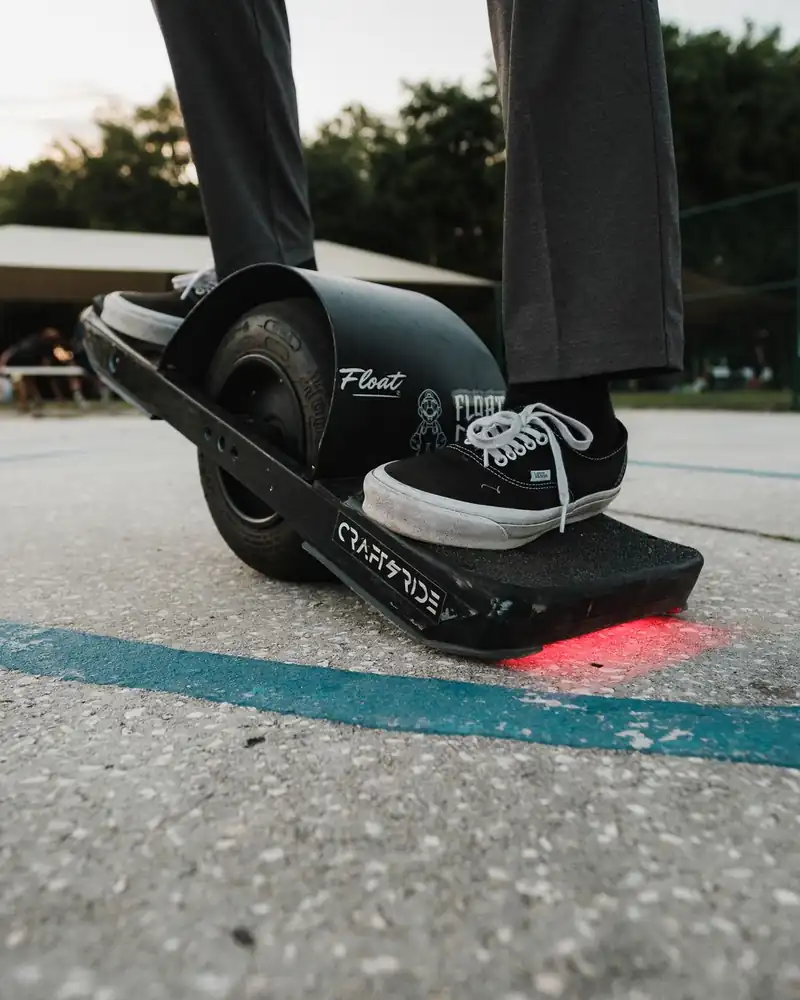
A quick word for our electric crowd. If you ride an electric skateboard, a Onewheel, an e-scooter, or an e-bike, your helmet choice matters even more. Why? Speed. A push skateboard tops out around 8 to 12 mph. An electric skateboard can hit 20, 25, even 30 mph. The faster you go, the harder you hit the ground, and the more helmet you want between the pavement and your skull.
For low-speed electric cruising, a dual-certified skate helmet like the Triple 8 Certified Sweatsaver or the S1 Lifer is plenty, and it looks right at home on a board. As your speeds climb past 20 mph, start thinking about more coverage: a helmet with MIPS, extra protection around the back of the head, or even a full-face lid like the TSG Pass for fast hills and high-speed e-boards. Many electric riders also add wrist guards and knee pads, since your hands and knees usually hit the ground first.
Whatever you ride, the rule stays the same: match the helmet to your top speed, not your average speed. The one time you need it, you will be going faster than you planned. If you are still building your kit, our safety-gear and electric-board guides below are a good next stop.
When to Replace Your Skateboard Helmet
Helmets do not last forever, even the good ones. The two big rules are refreshingly simple. Rule one: replace your helmet after any serious crash, even if it looks totally fine. The foam is designed to crush and stay crushed, and that is exactly how it saves your brain. Once it has taken a real hit, that spot is spent, and you often cannot see the damage from the outside.
Rule two: replace your helmet every three to five years with regular use, even if you have never crashed it. Sweat, sunlight, and plain old time slowly break down the foam and the shell. Watch for warning signs along the way: cracks in the foam, a faded or brittle shell, a strap or buckle that will not stay tight, or a fit that has gone loose and sloppy. Any one of those means it is time for a fresh helmet.
One more tip that quietly adds years: where you store it matters. Do not leave your helmet baking in a hot car or sitting in direct sun for weeks on end. Heat and UV are brutal on foam. Toss it in your bag or hang it up inside, and it will keep protecting you longer.
| Size | Head (inches) | Head (cm) | Roughly Fits |
|---|---|---|---|
| XS / S | 20 – 21.25″ | 51 – 54 cm | Kids, teens, small adults |
| S / M | 21 – 22.5″ | 53 – 57 cm | Many women, smaller-headed adults |
| L / XL | 22.5 – 23.5″ | 57 – 60 cm | Most adult men |
| XL / XXL | 23.5 – 24.5″ | 60 – 63 cm | Larger adult heads |
| Standard | What It’s For | Impact Type |
|---|---|---|
| CPSC 1203 | US bike helmets (required) | One big impact |
| ASTM F1492 | Skateboarding & trick skating | Repeated smaller impacts (multi-impact) |
| EN 1078 | European bike / skate | One big impact |
| MIPS (add-on) | Angled, rotational falls | Not a cert — slip-liner tech |
Common Mistakes (and How to Fix Them)
Fix: Bike helmets are built for one big impact, not the repeated falls of skating. Choose a dual-certified helmet that lists both CPSC and ASTM F1492 on the sticker inside.
Fix: Plenty of look-alike lids skip real certification, and even the plain Pro-Tec Classic isn’t certified. Flip the helmet over and check for an ASTM F1492 sticker before you buy.
Fix: A helmet perched on the back of your head leaves your forehead exposed. Sit it level, about one inch above your eyebrows, and tighten the chin strap so it stays put.
Fix: Crushed foam doesn’t bounce back, even when the shell still looks perfect. Replace any helmet that has taken a serious hit, no exceptions and no wishful thinking.
Pro Tips
- 💡 Do the shake test before your first ride: nod and shake your head hard. A good helmet moves your skin, not itself.
- 💡 If you’re between sizes, size up and add the thicker liner pads. It’s far easier to pad a big helmet than to stretch a tight one.
- 💡 Keep the chin strap ‘two-finger’ tight, snug enough that only two fingers fit between the strap and your chin.
- 💡 Choose a helmet with washable liners, or buy a spare set, so sweaty summer sessions don’t turn it into a science experiment.
- 💡 Never store your helmet in a hot car or in direct sun. Heat and UV quietly wreck the foam long before it ever looks old.
A Real-Life Example
I learned the certification lesson the hard way. My first ‘skate’ helmet was a cheap bike lid I already owned. It felt fine, right up until I caught an edge dropping into a mellow bowl, clipped the coping, and clocked the same corner of my head twice on the way down. The helmet cracked. My skull was okay, but the ringing lasted an hour. I swapped to a Triple 8 Certified Sweatsaver the next weekend and never looked back.
These days I keep two helmets by the door: a low-profile dual-certified lid for the park, and a fuller helmet for when I’m bombing hills on my electric board. Both cost less than a single emergency-room copay. That math makes the choice pretty easy.
Frequently Asked Questions
You can, but you really shouldn’t for regular skating. Bike helmets are certified (CPSC) for a single big impact, while skateboarding involves repeated, smaller falls that often hit the same spot. A dual-certified helmet adds ASTM F1492 and uses tougher foam built for exactly that. If you skate more than once in a blue moon, get a real skate helmet.
Dual certified means the helmet passes both the CPSC bike standard and the ASTM F1492 skate standard. CPSC covers one high-energy hit, while ASTM F1492 covers repeated, lower-energy impacts. Together they make a helmet that’s safe for both cycling and skateboarding, which is the gold standard for skaters.
No, you don’t strictly need MIPS, but it’s a nice extra. MIPS is a slip-liner that reduces the twisting forces of angled falls, and it’s a feature, not a certification. A well-fitted, dual-certified helmet is the real foundation. If you can add MIPS on top for a bit more, it’s a reasonable upgrade.
Measure around the widest part of your head, about an inch above your eyebrows, and match that number to the brand’s size chart. Sizes overlap and vary by brand, so treat the chart as a guide rather than a rule. If you’re between sizes, size up and use thicker liner pads to snug the fit.
Replace it after any serious crash, and every three to five years otherwise. Foam crushes permanently when it does its job, so a helmet that has taken a real hit is finished even if it looks fine. Sun, sweat, and time also break down the materials, so refresh an old helmet even if it’s never been crashed.
Not always, because certification matters far more than price. A $60 dual-certified helmet protects your head better than a $150 lid with no skate rating. Spend up for better foam (like S1’s Fusion), MIPS, or comfort features, but never pay extra for a helmet that skips ASTM F1492.
Final Checklist ✅
- ✅ Check inside for both CPSC and ASTM F1492 certification stickers
- ✅ Measure your head and match it to the brand’s size chart
- ✅ Do the shake-and-nod test for a snug, no-wobble fit
- ✅ Make sure the front sits about one inch above your eyebrows
- ✅ Tighten the chin strap to two fingers under your chin
- ✅ Decide whether you want MIPS for extra rotational protection
- ✅ Write down the purchase date so you know when to replace it (3–5 years)