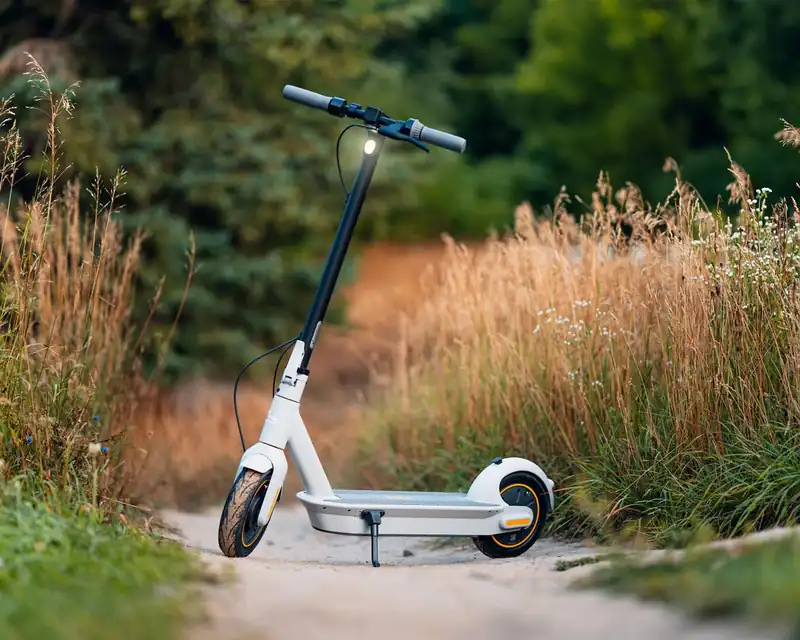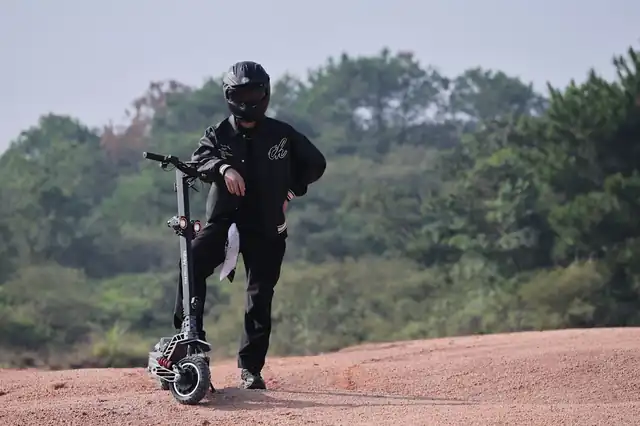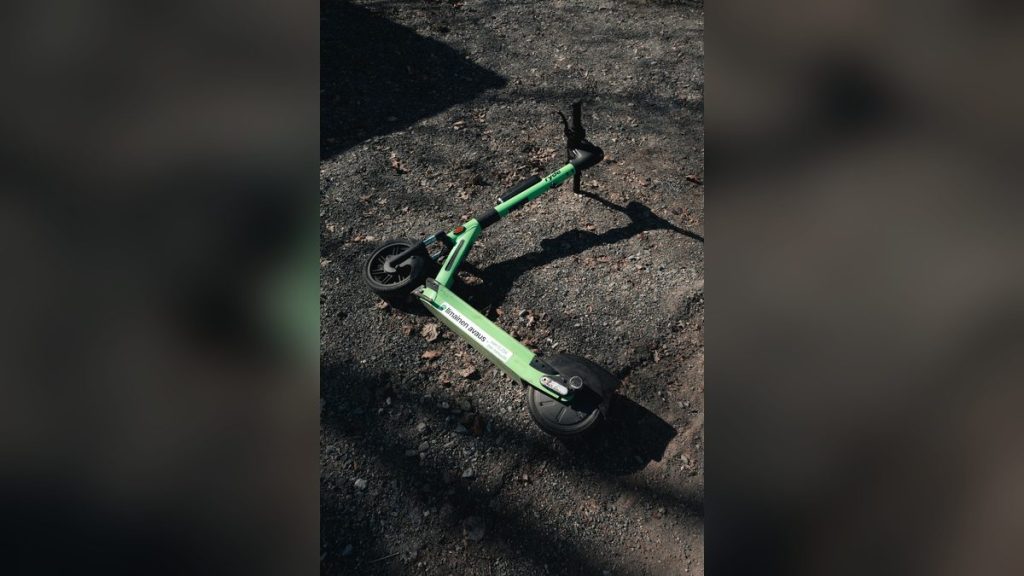
Big tires, real suspension, and serious power. Here's how to pick an all-terrain scooter that actually handles the dirt, matched to your budget and your trails.
Off-road electric scooters for adults are built for the fun stuff. Dirt trails, gravel paths, grassy fields, and bumpy back roads that would rattle a normal commuter scooter to pieces. If pavement bores you, or your ride home crosses rough ground, these rugged machines are made for you. Big air-filled tires, real suspension, and strong motors turn broken terrain into a smooth, grippy ride.
But here’s the catch. The words ‘off-road’ get slapped on a lot of scooters that can’t really handle a trail. Some just have slightly chunkier tires and call it a day. A true all-terrain scooter needs the right mix of tire size, suspension travel, motor power, and water sealing. Get that mix wrong and you’ll bottom out on the first root you hit.
This guide breaks it all down in plain English. We’ll show you the best off-road electric scooters for adults in 2026 across every budget, explain the specs that actually matter, and help you match a scooter to your weight, your terrain, and your wallet. No jargon dumps. Just honest advice from riders who’ve eaten plenty of dirt so you don’t have to.
What Makes an Electric Scooter Truly Off-Road?
It’s easy to slap chunky tires on a scooter and call it ‘all-terrain.’ A real off-road machine is different. It’s built from the ground up to keep rubber on rough ground while soaking up the hits. Four things decide whether a scooter can actually handle dirt: tires, suspension, motor torque, and weather sealing. Go weak in even one area, and the whole ride falls apart.
Tires do the heavy lifting. You want pneumatic (air-filled) tires, somewhere between 10 and 13 inches, with a knobby or hybrid tread. Air tires flex over rocks and roots and grip loose ground far better than solid ones. Suspension is the next must-have. Even the best tires can’t help if the wheels are bouncing off the trail instead of tracking it. After that comes torque to climb, and an IP rating so a little mud or a puddle won’t kill your electronics.
- Tires: 10 to 13 inch air-filled, with knobby or hybrid tread for grip and cushioning
- Suspension: front and rear (spring or hydraulic) to keep the wheels planted on bumps
- Motor torque: dual motors or a strong single motor to climb hills and loose ground
- Weather sealing: at least IP54, ideally IPX5, so mud and rain don’t fry the electronics
Suspension travel matters more than you think
Cheap scooters often list ‘dual suspension’ but give you an inch of soft travel that bottoms out on the first big root. Look for real spring or hydraulic shocks with meaningful travel. Hydraulic setups cost more but stay smooth over repeated hits, which is exactly what trails throw at you.
IP ratings, decoded
IP54 means the scooter shrugs off splashes and dust, which is fine for damp trails and puddles. IPX5 adds protection from low-pressure water jets, so light rain and a gentle rinse are okay. Neither rating means waterproof. No off-road scooter should be ridden through deep water or submerged.
| Model | Peak Power | Top Speed | Claimed Range | Tires | Best For | Street Price |
|---|---|---|---|---|---|---|
| Segway ZT3 Pro | 1,600W | ~25 mph | ~43 mi | 11″ tubeless | Best all-round value | $850 to $1,050 |
| Ausom Gosoul 2 Pro | 2,800W (dual) | ~36 mph | ~56 mi | 10″ tubeless | Budget dual-motor | $799 to $999 |
| Gotrax GX3 | 2,000W (dual) | ~38 mph | ~55 to 60 mi | 11″ pneumatic | Plush ride | $1,500 to $1,700 |
| Hiboy Titan Pro | 2,400W (dual) | ~33 mph | up to 80 mi | 10″ gel-filled | Max range | $1,300 to $1,800 |
| Varla Eagle One Pro | 3,600W (dual) | ~45 mph | ~45 mi | 11″ pneumatic | All-terrain performance | $1,899 to $2,299 |
| Kaabo Wolf Warrior 11 | 5,400W (dual) | ~50 mph | up to 70 mi | 11″ tubeless | Extreme off-road | $1,900 to $2,500 |
The Best Off-Road Electric Scooters for Adults in 2026
There’s no single ‘best’ off-road scooter. The right one depends on your terrain, your weight, and your budget. So we’ve picked standouts across every price tier, from a sub-$1,000 all-rounder to a 50-mph trail monster. Every model below is a real, currently sold scooter with genuine off-road hardware: air tires, suspension, and enough power to leave the pavement behind.
See the comparison table for the specs at a glance. Below, here’s why each one earns its spot, and who it’s really for. If you’re new to off-roading, start near the top of the list. The faster, heavier beasts near the bottom are a lot of machine and a lot of money.
Segway ZT3 Pro: best all-round value
A single rear motor punches out 1,600W in boost mode, giving near-dual-motor pep for around $850 to $1,050. You get 11-inch tubeless tires, a motorcycle-style front fork, a rear monoshock, and UL2272 safety certification. At 65 pounds it’s the lightest pick here, and Apple Find My is baked in. For most adults dipping into light off-road, this is the sweet spot.
Ausom Gosoul 2 Pro: budget dual-motor beast
Dual motors make a combined 2,800W of peak power, and the street price often dips under $800. It’ll hit around 36 mph unlocked, carry riders up to 287 pounds, and climb 33 percent grades. Range is a claimed 56 miles, though plan on 25 to 30 in the real world. Tubeless 10-inch tires keep flats rare. Huge value if you want two motors on a tight budget.
Gotrax GX3: plush ride over rough ground
The GX3 brings 11-inch air tires, adjustable hydraulic suspension, four hydraulic brakes, and dual 1,000W motors that push it to about 38 mph. Range lands around 55 to 60 miles. At 94 pounds it’s no featherweight, and it usually runs $1,500 to $1,700, but few scooters feel this comfy soaking up ruts and roots.
Hiboy Titan Pro: the range king
If you want to ride all day, the Titan Pro claims up to 80 miles per charge. The 2026 version uses Bosch hub motors with 2,400W peak power, 10-inch gel-filled tires, dual hydraulic brakes, and full suspension. Top speed is about 33 mph. It usually sells for $1,300 to $1,800 and suits riders who value distance over outright speed.
Varla Eagle One Pro: all-terrain performance
Nicknamed the ‘Jeep of scooters,’ the Eagle One Pro runs dual 1,000W motors (3,600W peak), hits 45 mph, and climbs 35-degree slopes. Big 11-inch tires, dual shocks, and a 330-pound capacity make it a genuine trail tool. Expect $1,899 to $2,299 and a hefty 90-pound curb weight.
Kaabo Wolf Warrior 11: extreme off-road
This is the deep end. Dual motors make 5,400W peak, top speed hits 50 mph, and range can reach 70 miles. It rides on 11-inch tubeless tires with long-travel suspension and full hydraulic brakes. At 101 pounds and often $1,900 or more, it’s overkill for casual riders but a dream for hardcore trail and hill riders.
How to Choose the Right One for You
Picking an off-road scooter is really about matching hardware to how and where you ride. A packed gravel bike path asks a lot less of a scooter than a rocky, root-strewn hill. Buy more scooter than you need and you’ll haul around extra weight and cost. Buy too little and you’ll bottom out and burn up the motor. The terrain table below pairs common surfaces with the specs that handle them.
Your body weight matters too. Heavier riders lose range and hill-climbing power, so size up on motor and battery if you’re over about 220 pounds. Every scooter lists a max capacity. Respect it, and know that real-world range is usually 30 to 40 percent lower than the sticker number once you factor in your weight, hills, cold weather, and full-throttle fun.
Finally, think about the boring stuff: weight and folding. A 90 to 100 pound scooter is a beast to carry up stairs or lift into a trunk. If you’ll transport it often, a lighter model like the ZT3 Pro makes life much easier, even if it gives up some power. Be honest about how you’ll store and move it before you fall in love with the spec sheet.
- Under 180 lb rider on light trails: a strong single motor like the ZT3 Pro is plenty
- 180 to 250 lb rider on mixed terrain: go dual-motor, 2,000W or more of peak power
- Over 250 lb rider or steep hills: look for 3,000W+ peak and a bigger battery
- Carrying it often: keep weight under about 70 lb and check the folded size
The Specs That Actually Matter
Spec sheets can feel like alphabet soup. Here’s what each number really means for your ride, so you can cut through the marketing and buy on substance. The short version: watts and battery size set your power and range, tires and brakes set your safety, and suspension sets your comfort.
Don’t fixate on top speed. A scooter that does 45 mph sounds thrilling, but on real trails you’ll rarely hold more than 20 to 25. Torque (how hard it pulls from a stop and up hills) and stopping power matter far more day to day than a big top-speed number you’ll almost never use safely off-road.
- Peak watts: 1,000W light trails, 2,000W+ hills, 3,000W+ heavy or aggressive riding
- Battery: aim for 800 to 1,000Wh or more for real trail range
- Tires: 10 to 13 inch tubeless pneumatic with knobby tread
- Brakes: hydraulic disc front and rear for confident stops
Motor watts and torque
Watts measure power. For light trails, 500 to 1,000W is fine. For hills, sand, and heavier riders, look for 2,000W or more of combined peak power. Dual motors add grip and climbing muscle but drain the battery faster and add weight.
Battery and real range
Range comes from battery capacity, measured in watt-hours (Wh). An 800 to 1,000Wh-plus battery is serious. Remember, brands quote best-case range. Cut 30 to 40 percent for real off-road use with hills and a full-size rider.
Tires: tubeless vs tubed
Tubeless air tires are the off-road ideal. They’re grippy, cushioned, and less likely to pinch-flat than tubed tires. Solid tires never go flat but ride harsh on dirt. If a tire uses a tube, carry a spare and a patch kit.
Brakes
At off-road speeds you need real stopping power. Hydraulic disc brakes are best: strong, consistent, and low-maintenance. Drum brakes are sealed and weatherproof but less sharp. Never rely on electronic braking alone.
Staying Safe on Trails and Streets
Off-road scooters are fast and heavy, and dirt is unpredictable. Gearing up isn’t optional. A good helmet is the bare minimum, and at 30-plus mph a full-face or a solid MIPS half-shell is smart. Add gloves, knee and elbow pads, and eye protection, because trail debris and the occasional tumble come with the territory.
Know the law before you ride on public ground. As of 2026, e-scooters are legal in nearly every U.S. state, and most treat them like bicycles, so no license or registration is needed. But public roads and paths usually cap you at 15 to 20 mph, even if your scooter can do triple that. Many powerful off-road models are really meant for private land, OHV trails, and bike parks. Sidewalk riding is banned or restricted in a lot of cities, so always check your local rules first.
- Helmet: a MIPS half-shell for trails, a full-face for high speed
- Gloves: protect your palms in the most common kind of fall
- Knee and elbow pads: cheap insurance on rough ground
- Eye protection: dust, bugs, and branches move fast
- Lights and a bell: important on any shared or mixed-use paths
How Much to Spend, and How to Keep It Running
You can get into real off-roading for under $800 and spend past $3,000 if you chase extreme power. Most adults are happiest in the $900 to $1,500 band, where you get dual motors, genuine suspension, big air tires, and 50-plus miles of claimed range. The budget table below shows what each price band actually buys, so you can aim your money where it counts.
Whatever you spend, a little care keeps it rolling. Off-road riding is hard on hardware. Mud, water, and constant vibration loosen bolts and wear parts faster than street use. Rinse gently after muddy rides (never a pressure washer), dry the scooter off, check tire pressure weekly, and re-torque bolts every month or so. Store the battery indoors, and try not to leave it sitting at 100 percent or bone empty for long stretches. Small habits like these add years to a scooter’s life.
- Check tire pressure weekly; low PSI causes pinch flats and drains your range
- Rinse off mud gently and dry the scooter; skip the pressure washer
- Re-torque the stem, folding, and wheel bolts monthly, since vibration loosens them
- Store the battery indoors at 40 to 80 percent charge; don’t leave it dead or full
- Carry a mini pump, patch kit, and multi-tool on longer rides
| Terrain | Minimum Tire Size | Suspension | Peak Motor Power |
|---|---|---|---|
| Packed dirt and gravel paths | 8.5 to 10″ pneumatic | Rear or dual | 500 to 1,000W |
| Grass and light trails | 10 to 11″ pneumatic | Dual | 1,000 to 2,000W |
| Steep hills and sand | 11″ knobby | Dual, high travel | 2,000W+ |
| Rocky, aggressive off-road | 11 to 13″ knobby tubeless | Full hydraulic, long travel | 3,000W+ |
| Price Range | What to Expect | Example Models |
|---|---|---|
| Under $900 | Single or modest dual motor, 20 to 25 mph, basic suspension, light trails | Segway ZT3 Pro (sale), Ausom Gosoul 2 |
| $900 to $1,500 | Dual motors, 30 to 38 mph, real suspension, 50 to 80 mi range | Hiboy Titan Pro, Ausom Gosoul 2 Pro |
| $1,500 to $2,500 | 40 to 50 mph, high-travel suspension, hydraulic brakes, trail-ready | Gotrax GX3, Varla Eagle One Pro |
| $2,500 and up | Extreme power, 50+ mph, premium build, hardcore terrain | Kaabo Wolf Warrior 11, Wolf King GT |
Common Mistakes (and How to Fix Them)
Fix: On real trails you rarely hold more than 20 to 25 mph. Spend your money on suspension, tire size, and brakes, the things that make rough ground feel good, not on a 45-mph number you’ll seldom use safely.
Fix: Many off-road scooters weigh 90 to 100 pounds. That’s brutal up stairs or into a trunk. If you’ll carry it often, pick a lighter model around 65 pounds even if it gives up some power.
Fix: Brands quote best-case range from eco mode on flat ground. Off-road with hills and a full-size rider, expect 30 to 40 percent less. Buy a scooter rated for well above the distance you actually need.
Fix: Off-road vibration loosens bolts, and low tire pressure causes flats. Check PSI weekly and re-torque key bolts monthly. Five minutes of maintenance prevents most trailside breakdowns.
Pro Tips
- 💡 Let a few PSI out of your tires for loose dirt or sand. A slightly softer tire grips better and cushions more. Just air back up before you hit pavement.
- 💡 Learn the throttle in a lower speed mode first. Dirt is slippery, and easing into the power keeps the rear wheel from breaking loose under you.
- 💡 Rinse and dry your scooter after muddy rides, but never use a pressure washer. It forces water past the seals into the motor and battery.
- 💡 Carry a mini pump, a patch kit, and a multi-tool. A flat two miles out is a long walk pushing 90 pounds of scooter.
- 💡 For daily riding, charge to about 80 to 90 percent to extend battery life. Top off to 100 percent only before a long trip.
A Real-Life Example
Marcus bought his first off-road scooter to shortcut a muddy half-mile trail between his apartment and the train. He almost grabbed a flashy 40-mph model, then realized he’d have to carry it up three flights of stairs every night. He went with a lighter full-suspension scooter instead. Two winters later, it still eats the trail’s ruts and puddles without complaint, and his arms thank him on the stairs.
His one regret? Not buying knobby tires sooner. The stock hybrid tires slipped on wet grass until he swapped them. ‘The scooter was never the problem,’ he says. ‘It was me trying to corner too fast on the wrong rubber.’
Frequently Asked Questions
Mostly yes, but with limits. As of 2026, e-scooters are legal in nearly every U.S. state, and most treat them like bicycles, so no license or registration is needed. The catch is speed: public roads and bike lanes usually cap you at 15 to 20 mph, even if your scooter can go 45. Many high-power off-road models are really meant for private land, OHV areas, and bike parks. Always check your city’s rules, since sidewalk riding is banned or restricted in a lot of places.
It ranges widely. Entry-level off-road scooters top out around 20 to 25 mph, mid-range dual-motor models hit 30 to 38 mph, and extreme machines like the Kaabo Wolf Warrior 11 reach 50 mph. But faster isn’t always better off-road. On dirt and trails you’ll rarely hold more than 20 to 25 mph safely. Torque for climbing and strong brakes matter far more than a big top-speed number.
Light rain and mud, usually yes. Deep water, no. Most off-road scooters carry an IP54 or IPX5 rating, meaning they handle splashes, damp trails, and puddles. But no consumer scooter is truly waterproof. Avoid deep puddles, stream crossings, and pressure washers, all of which can force water into the motor and battery. After a wet ride, rinse gently, dry it off, and store it indoors.
It depends on your terrain and weight. For packed gravel and light trails, a strong single motor of 500 to 1,000W is plenty. For grass, hills, sand, or riders over about 220 pounds, step up to dual motors with 2,000W or more of combined peak power. Serious, steep, or rocky terrain calls for 3,000W and up. More power helps you climb and grip, but it also adds weight and drains the battery faster.
Most adults are well served in the $900 to $1,500 range. That budget buys dual motors, real suspension, big air tires, and 50-plus miles of claimed range, plenty for weekend trails and rough commutes. Under $900 you’ll find capable starters like the Segway ZT3 Pro on sale. Above $2,000 you’re paying for extreme speed and premium build that only hardcore riders truly need.
Less than the sticker says, usually. Brands advertise best-case range, meaning eco mode, flat ground, and a light rider. Real off-road range, with hills, throttle, and a full-size adult, tends to run 30 to 40 percent lower. A scooter rated for 40 miles might give you 25 to 28 on the trail. If you need a reliable 30 miles, shop for a claimed range of 45 to 50 to build in a safe buffer.
Final Checklist ✅
- ✅ Confirm the tires are 10-inch or larger pneumatic (air-filled), ideally tubeless with knobby tread
- ✅ Make sure it has real front and rear suspension, not token one-inch shocks
- ✅ Match motor power to your terrain and weight (2,000W+ peak for hills or heavier riders)
- ✅ Check the claimed range, then subtract 30 to 40 percent for real off-road use
- ✅ Verify the weight capacity covers you plus any gear or cargo you’ll carry
- ✅ Look for hydraulic disc brakes and at least an IP54 water rating
- ✅ Weigh the scooter itself and be honest about whether you can carry and store it