Hover-1 Alpha: Elevate Your Urban Commute
A friendly, honest look at the Hover-1 Alpha electric scooter, and how this budget-friendly commuter can turn a boring city trip into the best part of your day.
The Hover-1 Alpha electric scooter has quietly become one of the most popular ways to get around a busy city without a car. It is affordable, it folds up small, and it looks great doing it. If you are tired of sweaty walks, packed buses, or hunting for parking, this little scooter promises a simpler way to move. And for a lot of riders, it delivers.
But every commute is different. You might live at the top of a big hill. You might need to carry your scooter up three flights of stairs. You might just want to know if it can actually get you to work and back on a single charge. Those are fair questions, and this guide answers them in plain English.
Below, we break down the real specs, the honest range you can expect, how it feels to ride each morning, and the small mistakes that trip up new owners. By the end, you will know exactly whether the Hover-1 Alpha is the right pick to elevate your daily ride, or whether one of its bigger siblings fits you better.
- Why the Hover-1 Alpha Works for City Commuters
- Hover-1 Alpha Specs and Features at a Glance
- What the Daily Ride Actually Feels Like
- Battery, Range, and Charging for Real Commuters
- Brakes, Lights, and Staying Safe on the Street
- Alpha vs Alpha 2.0 vs Alpha Pro: Which One to Buy
- Is the Hover-1 Alpha Worth It for Your Commute?
Why the Hover-1 Alpha Works for City Commuters
Most people who buy the Hover-1 Alpha are not looking for a race machine. They want something easy, cheap, and reliable that turns a short city trip into a quick, fun ride. That is exactly the lane this scooter lives in. It is built for the first and last mile, the kind of trip that is too far to walk but too short to justify a car or a rideshare.
The price is a big part of the appeal. With a list price around $450 and frequent sales that drop it into the $300s, the Alpha costs a fraction of a premium commuter scooter. You get a real 450W motor, air-filled tires, and a folding frame without spending four figures. For a first electric scooter, that is a friendly place to start.
It also fits into a real commute. At about 34 pounds, you can fold it in one motion and carry it onto a train, tuck it under a desk, or stash it in a closet at home. There is no gas, no parking meter, and no oil to change. You charge it overnight and roll out the door.
Here is who tends to love the Alpha most:
- New riders who want an easy, forgiving first scooter
- City commuters with a one-way trip under about 5 miles
- Students getting across a big campus fast
- Anyone pairing a scooter with a bus or train for the last mile
- Budget shoppers who still want name-brand support and safety testing
| Spec | Detail |
|---|---|
| Motor | 450W brushless |
| Top speed | 18 mph |
| Range | Up to 12 miles |
| Battery | 36V / 6.0 Ah lithium-ion |
| Charge time | About 5 hours |
| Tires | 10-inch air-filled (pneumatic) |
| Brakes | Rear disc + electronic brake |
| Max rider weight | 264 lbs |
| Max incline | Up to 15 degrees |
| Scooter weight | 34.4 lbs |
| Extras | Bluetooth speaker, cruise control, LED lights, LCD display |
| Safety | UL 2272 tested |
| Warranty | 90-day limited |
| Typical price | About $300 to $450 |
Hover-1 Alpha Specs and Features at a Glance
Before we talk feel, let us get the numbers on the table. The Hover-1 Alpha runs a 450W brushless motor that pushes it to a top speed of 18 mph. That is plenty quick for city streets, and honestly faster than a lot of new riders will want to go on day one.
Power comes from a 36V lithium-ion battery rated for up to 12 miles of range, with a charge time of about 5 hours. The 10-inch air-filled tires are a standout at this price. Air tires soak up cracks and bumps far better than the small solid tires you find on cheaper scooters, so your ride feels smooth instead of jittery.
Round it out with a rear disc brake, an LED headlight and deck lights, an LCD display for speed and battery, cruise control for long flat stretches, and yes, a built-in Bluetooth speaker if you like a little music on the go. It is also UL 2272 tested, the safety standard for the electrical and charging system, which is reassuring on a budget pick.
The tires make the difference
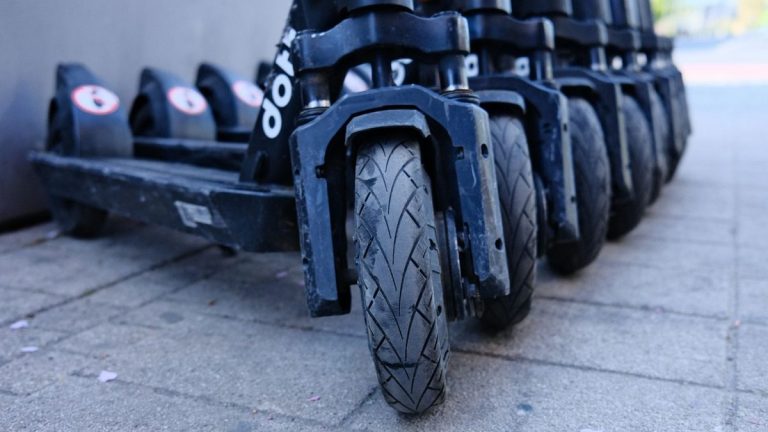
Those 10-inch pneumatic tires are the feature riders notice first. They give the Alpha a planted, cushioned feel that scooters with tiny solid wheels simply cannot match. The trade-off is that air tires can go flat, so you will need to keep an eye on pressure, just like a bike.
Simple, honest features
The Alpha does not try to dazzle you with a phone app or fancy modes. It gives you the basics done well: a clear display, working lights, cruise control, and a folding stem. For a daily commuter, that simplicity is a plus, not a downside.
What the Daily Ride Actually Feels Like
Numbers only tell you so much, so let us talk about the morning ride. Step on, give a light kick to get rolling, then ease into the throttle. The Alpha uses a smooth electronic throttle, so it pulls away gently instead of jerking. New riders pick it up within a block or two.
Around town, the ride feels comfortable and stable. The wide deck gives your feet room, and those air-filled tires quietly eat up manhole covers, sidewalk seams, and small potholes. Compared to a hard-tire budget scooter, the Alpha feels like a small upgrade in class. Riders often describe it as one of the smoothest scooters you can get for the money.
Top speed is 18 mph, but the real story is how usable the lower speeds are. Cruise control lets you hold a steady pace on a long bike lane without keeping your thumb pinned, which saves your hand and a little battery on the way. It is a genuinely nice feature for a longer commute.
Hills are where you will feel the limits. The Alpha handles gentle to moderate inclines up to about 15 degrees, but a heavier rider on a steep hill will feel it slow down and work harder. On mostly flat city streets, though, it holds its speed nicely and gets you where you are going with a grin.
One small note on comfort: there is no suspension. The air tires do a lot of the cushioning work, so keep them properly inflated to get that soft ride. A soft tire turns a smooth commute into a bumpy one fast.
Battery, Range, and Charging for Real Commuters
The Alpha is rated for up to 12 miles per charge, and independent riders often get close to that in ideal conditions. But real range depends on you and your route. A lighter rider on flat, smooth roads in warm weather will sip the battery slowly and get near the full number. Add weight, hills, cold weather, or stop-and-go traffic, and that number drops.
For planning, treat 8 to 10 miles as a safe everyday range for an average adult. That easily covers a round-trip commute of 4 miles each way with charge to spare. If your one-way trip is closer to 6 miles, you may want to charge at work, or step up to the longer-range Alpha Pro instead.
Charging is simple. Plug it in and you are full in about 5 hours, so an overnight charge means you always start the day topped off. Lithium batteries like the Alpha’s are happy with regular top-ups, so you do not need to drain it flat before recharging. In fact, running it dead over and over shortens its life.
Brakes, Lights, and Staying Safe on the Street
Commuting means sharing the road, so braking and visibility matter. The Alpha uses a rear disc brake paired with an electronic brake. Together they bring you to a controlled stop, though the feel is more relaxed than sharp. Give yourself a little extra room at first, and practice a few hard stops in an empty lot so you know how it responds before rush hour.
Some owners mention a bit of squeak or noise from the brake over time. It is usually harmless and can often be helped with a light adjustment, but it is worth knowing so it does not surprise you.
For being seen, the built-in LED headlight and deck lights help, but they are made more to make you visible than to light up a dark road. If you ride before sunrise or after dark, add a brighter handlebar light and a rear blinker. It is cheap insurance in traffic.
A quick reality check on weather: Hover-1 does not publish an official water-resistance rating for the Alpha. Light, unavoidable moisture is usually fine, but you should avoid deep puddles, heavy rain, and wet storage. Water is the enemy of scooter electronics, and it is not covered by the warranty.
- Always wear a helmet, even on short trips
- Practice braking before you ride in traffic
- Add extra front and rear lights for night rides
- Keep both hands ready and scan for car doors and turns
- Skip the ride in heavy rain to protect the electronics
Alpha vs Alpha 2.0 vs Alpha Pro: Which One to Buy
The Hover-1 Alpha now comes in a small family, and it is easy to get confused at checkout. The good news is they all ride in a similar, friendly way. The differences come down to range, brakes, and a few upgrades.
The original Alpha is the classic budget pick. The Alpha 2.0 is the refreshed version, adding full UL 2272 and 2271 certification and a larger, brighter color display, while keeping the same 18 mph speed and 12-mile range. If you want the newest standard model, the 2.0 is the one you will usually find in stores today.
The Alpha Pro is the upgrade for longer trips. It carries a bigger battery for up to 18 miles of range and adds a stronger dual-brake setup for better stopping power, which is worth it if your commute is longer or hillier. Finally, the Alpha Cargo swaps in a torquey setup with larger 12-inch tires and a 15-mile range, trading a little top speed for comfort and a smoother ride on rough roads.
For most city commuters with a trip under 5 miles each way, the standard Alpha or Alpha 2.0 is the sweet spot on price and performance. Step up to the Pro if range or braking is your priority.
Pick the standard Alpha or 2.0 if
Your commute is short to medium, you want the lowest price, and smooth flat-road city riding is your main use. This is the value champ.
Pick the Alpha Pro if
Your one-way trip is 5 miles or more, you ride a few hills, or you simply want the extra braking confidence and range headroom for peace of mind.
Is the Hover-1 Alpha Worth It for Your Commute?
For the right rider, the Hover-1 Alpha is an easy yes. It is affordable, comfortable, and genuinely fun, and it turns a short, annoying trip into something you look forward to. The air-filled tires, cruise control, and folding design punch above the price, which is why it stays a best-seller year after year.
It is not perfect, and that is fine. The range is modest, the brakes are gentle rather than grabby, hills slow it down, and there is no official rain rating. None of that is a dealbreaker for a flat, dry, short city commute, which is exactly what this scooter was built for.
So here is the honest verdict. If your daily ride is under about 5 miles each way on mostly smooth streets, and you want a trusted brand at a beginner-friendly price, the Alpha is one of the best value commuters you can buy. If you need more range, steeper hills, or all-weather toughness, spend up for the Alpha Pro or a higher-end commuter. Match the scooter to your route, and you will be thrilled every morning.
- Great value: real features at a budget price
- Smooth, stable ride thanks to 10-inch air tires
- Light and foldable for stairs, transit, and storage
- Modest range and gentle brakes are the main trade-offs
- Best on flat, dry, short-to-medium city commutes
| Model | Motor | Top Speed | Range | Tires | Best For |
|---|---|---|---|---|---|
| Alpha | 450W | 18 mph | 12 mi | 10″ air | Budget city commuting |
| Alpha 2.0 | 450W | 18 mph | 12 mi | 10″ air | Newest standard, UL certified, brighter display |
| Alpha Pro | 450W | 18 mph | 18 mi | 10″ air | Longer trips, stronger dual brakes |
| Alpha Cargo | 300W | 16 mph | 15 mi | 12″ air | Comfort and bigger tires for rough roads |
| Your Situation | Likely Range | Notes |
|---|---|---|
| Light rider, flat roads, easy pace | 10 to 12 mi | Close to the rated maximum |
| Average adult, mixed city streets | 8 to 10 mi | Typical everyday result |
| Heavier rider or hilly route | 6 to 8 mi | Plan to charge more often |
| Cold weather under 40F | Cut 15 to 25% | Battery weakens in the cold |
Common Mistakes (and How to Fix Them)
Fix: The 10-inch tires are air-filled, so they slowly lose pressure like a bike. Low tires kill your range, hurt the ride, and risk pinch flats. Check and top up the pressure to the recommended PSI every week or two.
Fix: The 12-mile rating is a best-case number. Weight, hills, cold, and stop-and-go traffic all shrink it. Plan around a real-world 8 to 10 miles and keep a charge buffer so you never get stranded.
Fix: Hover-1 gives no official water rating for the Alpha, and water damage is not covered by warranty. Avoid heavy rain and deep puddles, store it indoors, and wipe it dry if it gets splashed.
Fix: Draining a lithium battery to zero over and over shortens its life. Recharge after rides, top up whenever you can, and if you store it for a while, keep it around half charged.
Pro Tips
- 💡 Charge it every night so you always roll out the door with a full battery. Lithium batteries love frequent top-ups, so there is no need to drain it first.
- 💡 Use cruise control on long, flat stretches. It holds your speed, rests your thumb, and helps you squeeze a little more range out of each charge.
- 💡 Fold it and pair it with transit. At 34 pounds it carries onto a bus or train easily, so you can cover the last mile on the scooter and skip the walk.
- 💡 Add a brighter headlight and a rear blinker for early or late rides. The built-in lights help you be seen but are not strong enough to light a dark road alone.
- 💡 Keep a small tire pump and a good lock in your bag. Proper tire pressure protects your range, and a lock lets you park with confidence when you arrive.
A Real-Life Example
Maya lives about three miles from her office in a flat part of town. She used to spend $10 a day on rideshares or wait 20 minutes for a bus that was always packed. She grabbed a Hover-1 Alpha on sale, and now her commute takes 15 minutes door to door. She folds it, carries it up to her desk, and charges it under the counter. On Fridays she rides it to the farmers market instead, speaker playing quietly, and calls it the best cheap upgrade she has made to her week.
Her one lesson learned the hard way: the first week she barely checked the tires, and the ride felt sluggish and mushy. A two-minute top-up with a bike pump brought back the smooth glide and the range she expected. Now a quick pressure check is part of her Sunday routine.
Frequently Asked Questions
Yes, the Hover-1 Alpha is a strong pick for short-to-medium city commutes. It handles flat streets and bike lanes with ease, folds up to carry onto transit or into an office, and its air-filled tires make the daily ride smooth. It works best when your one-way trip is under about 5 miles and your route is mostly flat and dry. If you have a much longer or hillier commute, the Alpha Pro is a better fit.
The Alpha is rated for up to 12 miles, and light riders on flat roads in warm weather can get close to that. In real everyday use, most adults see about 8 to 10 miles per charge. Your weight, hills, the weather, and how fast you ride all affect the number. Cold temperatures can cut range by 15 to 25 percent, so plan for less in winter.
The Hover-1 Alpha has a top speed of 18 mph, powered by its 450W motor. That is quick enough for city streets and faster than most new riders will want at first. Keep in mind that a heavier rider or a steep hill will slow it down, and the smooth electronic throttle makes it easy to hold a comfortable, lower cruising speed.
It is best to avoid it. Hover-1 does not publish an official water-resistance rating for the Alpha, and water damage is not covered under warranty. Light, unavoidable moisture is usually okay, but you should steer clear of heavy rain, deep puddles, and wet storage. If it gets splashed, wipe it dry and let it air out before charging.
A full charge takes about 5 hours from empty. That makes an overnight charge the easy routine, so you always start the day with a full battery. You do not need to wait for it to run flat before plugging in. Frequent top-ups are actually better for the lithium battery’s long-term health.
Yes on both counts, within limits. The gentle throttle, stable deck, and cushioned air tires make it very beginner-friendly, and it supports riders up to 264 pounds. Heavier riders will notice a bit less range and slower hill climbing, which is normal. If you are near the weight limit and face steep hills, consider the Alpha Pro for extra range and stronger brakes.
Final Checklist ✅
- ✅ Confirm your one-way commute is under about 5 miles (round trip under 10)
- ✅ Check your local e-scooter laws, speed limits, and where you can ride
- ✅ Charge the battery fully the night before your first commute
- ✅ Check tire pressure and test the brakes before every ride
- ✅ Wear a helmet and add front and rear lights for low-light trips
- ✅ Plan a dry-weather route and avoid deep puddles and heavy rain
- ✅ Pack a lock if you will park the scooter outside or at work