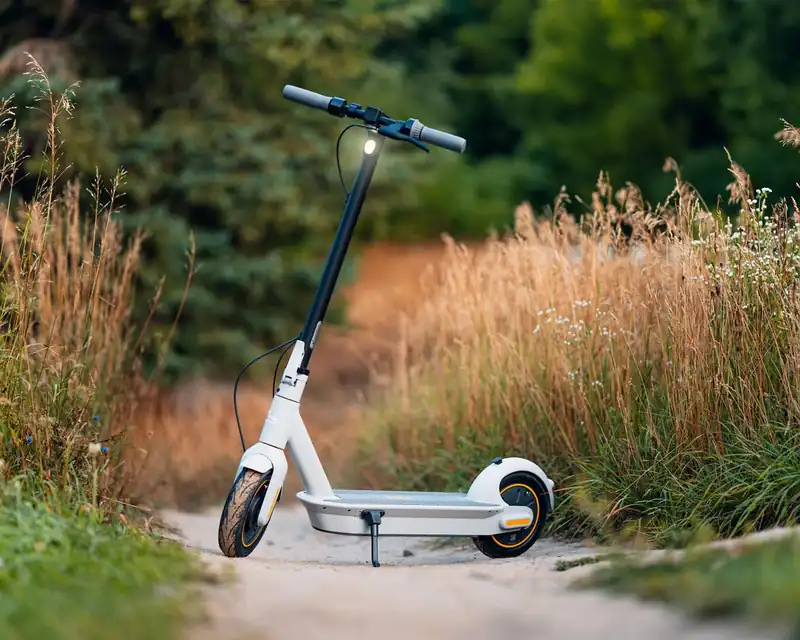
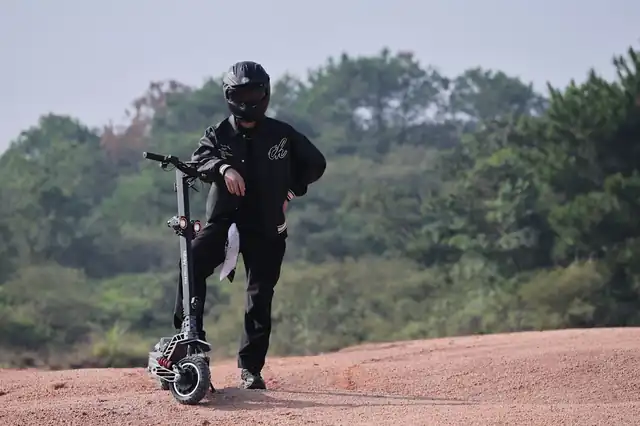
The helmet, wrist guards, pads, and lights that keep you rolling, and how to pick each one right.
Let’s be honest: nobody buys an electric scooter dreaming about pads and helmets. But here’s the truth, the right electric scooter safety gear is the cheapest, smartest insurance you’ll ever own. A scooter throws you forward fast when a wheel catches a crack or clips a curb, and your hands, wrists, and head are what hit the ground first. Good gear puts a hard shell and soft foam between you and the pavement, so a scary moment stays just a story instead of a hospital bill.
The numbers are hard to ignore. The U.S. Consumer Product Safety Commission (CPSC) reports that emergency-room visits tied to micromobility devices jumped from about 37,300 in 2017 to 149,100 in 2024. In 2024, broken bones were the single most common injury, and the head was the most-injured body part. Most of those riders had one thing in common: they weren’t wearing gear.
The good news? You don’t need to dress like a stormtrooper to ride safe. This guide walks you through every piece that matters, from the one item you should never skip to the extras that only fast riders need. We’ll cover what each piece protects, how to pick it, how to fit it, and when to replace it, all in plain English from someone who’s eaten a curb or two.
Why Electric Scooter Safety Gear Matters
Riding a scooter feels a lot safer than it is. You’re standing upright, cruising at bike speed, in normal clothes, so your brain files it under “walking, but faster.” The problem is physics. On a scooter your feet are locked to the deck and your center of gravity sits high, so when the front wheel stops suddenly, you keep going, straight over the bars. There’s no time to step off. You go from upright to face-first in under a second.
That’s why the injury data looks the way it does. Across the CPSC’s 2017 to 2024 numbers, roughly 698,500 people were treated in U.S. emergency rooms for micromobility injuries. Fractures top the list, the head is the most-injured single body part, and the wrists and forearms get hurt in more than half of upper-body cases. Study after study of injured scooter riders finds the same pattern: the large majority weren’t wearing a helmet, and even fewer had wrist protection.
Here’s the encouraging part, gear works. A helmet turns a brain injury into a headache. A rigid wrist guard turns a snapped wrist into a scuffed piece of plastic. Pads turn a skin graft into a scrape you forget by next week. You can’t control the pothole, the car door, or the dog that darts across the path. You can absolutely control what you’re wearing when you meet them.
- Absorbs impact so your bones and brain don’t take the full hit
- Spreads force across a hard shell instead of one small spot of skin
- Lets you slide on asphalt instead of grinding to a stop on bare flesh
- Keeps you visible so drivers see you before it’s too late
| Gear | Protects | Common injury it helps prevent | Priority |
|---|---|---|---|
| Helmet (MIPS) | Head, brain | Concussion, skull fracture | Essential |
| Wrist guards | Wrists, forearms | Wrist fracture (top upper-limb injury) | Essential |
| Gloves | Palms, fingers | Road rash, cuts | High |
| Knee pads | Knees | Kneecap fracture, deep scrapes | High |
| Elbow pads | Elbows | Elbow fracture, road rash | Medium |
| Lights + reflective | Whole body (visibility) | Car collisions in low light | Essential |
| Closed-toe shoes | Feet, toes | Crushed or scraped toes | High |
Start With Your Helmet: The One Piece You Can’t Skip
If you buy only one thing, make it a helmet. Your head is the body part you can least afford to hurt, and it’s the one that hits hardest and most often in scooter crashes. A good helmet won’t stop every knock, but it’s the difference between a life-changing injury and walking away rattled.
Not all helmets are equal, though, and the sticker inside matters more than the price on the box. A skate-shop lid and a $15 novelty helmet can look identical while offering wildly different protection. Look for a recognized safety certification (see the standards below), and strongly favor one with MIPS, a slippery inner liner that lets the shell rotate a few millimeters in an angled fall to cut the twisting force that causes concussions.
Match the helmet to your speed. A standard CPSC bike helmet is fine for scooters that top out around 15 to 20 mph. If your scooter hits 25 mph or more, step up to an NTA-8776 e-bike helmet or a full-face lid, which add coverage and chin protection built for higher-speed impacts. And remember: the safest helmet is the one that actually fits and that you actually wear, so try before you buy.
CPSC certified
The legal baseline for any bike helmet sold in the U.S. It’s tested for impacts at everyday riding speeds and is plenty for scooters under about 20 mph. Check for the CPSC sticker inside the shell, if it’s not there, put the helmet back.
MIPS
Not a standard but an add-on system. A low-friction layer lets the shell slide slightly against your head, reducing rotational force. It’s usually a small upcharge and well worth it, since rotational force is a leading cause of concussions.
NTA-8776
A Dutch e-bike and speed-pedelec standard tested to 28 mph with more coverage around the temples and back of the head. This is the sweet spot for faster scooters in the 20 to 30 mph range.
ASTM F1492 and full-face
The skate standard adds back-of-head coverage and handles repeat impacts. A full-face helmet adds chin and jaw protection, the move for high-speed or aggressive riders who want maximum coverage.
Protect Your Hands and Wrists
When you fall, your hands fly out to catch you. It’s pure instinct, and you can’t train it away. That’s exactly why the wrist is the number-one upper-limb fracture in scooter crashes, with the forearm close behind. The fix is simple and cheap: a rigid wrist guard.
A proper wrist guard has a hard plastic or ABS splint that runs along your palm and often the back of your hand too. When you slam down, the splint takes the load and stops your wrist from bending back past its limit, which is what snaps it. Slide-on styles are quick and low-profile; strap styles let you dial in the fit. Trusted names include the Triple Eight Wristsaver, Ennui braces designed with orthopedic input, and Flatland3D’s one-directional plate, which flexes forward for comfort but locks up against hyperextension.
Gloves are the perfect partner. A padded palm soaks up abrasion and impact, saves you from nasty road rash, and gives you a better grip on the bars, which cuts hand fatigue and vibration on longer rides. You can wear gloves and wrist guards together, or buy a glove with a built-in splint. Just try the combo on together so the two don’t bunch up or fight each other.
- Choose a guard with a firm splint, if it bends easily by hand, it won’t stop a fall
- Slide-on guards are fastest; strap guards fit a wider range of hands
- Padded gloves add grip and cut vibration on top of protection
- For thumb-throttle scooters, make sure the guard doesn’t block your throttle hand
Knee Pads, Elbow Pads, and Body Armor
After your hands, your knees and elbows are next in line to meet the ground. They’re bony, they’re exposed, and they scrape badly on asphalt. A good pad has a hard outer cap that slides across pavement plus a foam layer inside that soaks up the impact. That slide-instead-of-stick design is what keeps a fall from tearing skin.
For everyday commuting, a simple knee-and-elbow set does the job. Look for a full plastic cap over the joint and secure straps that won’t slide down mid-ride, cheap pads that spin around your leg are worse than useless. Many riders buy a three-pack that bundles wrist guards, knee pads, and elbow pads together, which is cheaper than buying each piece alone and means you’re more likely to actually wear the whole kit.
If you ride fast or off-road, consider stepping up to real body armor. Padded shorts protect your hips and tailbone, armored jackets add back and shoulder coverage, and hardier knee guards borrowed from mountain biking handle bigger hits. It’s overkill for a 15 mph sidewalk cruise, but if your scooter pushes 30 mph on open roads, that extra armor earns its keep the first time you go down.
- Hard-cap pads slide on asphalt; soft foam-only sleeves stick and tear
- A 3-pack (wrists, knees, elbows) is the best value for new riders
- Check that straps stay put, saggy pads leave the joint exposed
- High-speed or off-road riders should add padded shorts or an armored jacket
Be Seen: Lights and High-Visibility Gear
Here’s a piece riders forget: being visible is safety gear. A big share of serious scooter crashes happen at dusk, dawn, or night, and a huge number involve a driver who simply “didn’t see” the rider until it was too late. Foam and plastic protect you in a crash; lights and reflective gear help you avoid the crash entirely.
Start with lights. You want a steady or blinking white light up front and a red light in the rear, always, even on a quick evening errand. The catch is that a light mounted low on the deck often disappears behind your own legs from a driver’s angle. The fix is to add a light up high, on your backpack, your belt, or a helmet with a built-in rear LED, so you’re visible from car-window height.
Then add reflective gear. A reflective vest or sash is cheap and works from every angle. Reflective ankle bands are especially clever, because your ankles are always moving, and motion is what catches a driver’s eye first. During the day, bright colors do the work; at night, it’s reflective material that lights up under headlights. Combine both and you go from “hard to spot” to “impossible to miss.”
- Run a white front light and a red rear light on every low-light ride
- Add a high-mounted light (backpack or helmet) so it isn’t hidden by your legs
- Reflective ankle bands stand out because they move as you ride
- Wear bright colors by day and reflective material by night
Build Your Kit by Rider Type and Budget
You don’t need to buy everything on day one. The smartest approach is to match your gear to how and where you actually ride, then upgrade as you rack up miles. A helmet and wrist guards are non-negotiable for everyone; the rest scales with your speed and your commute.
A casual, slow rider cruising a quiet neighborhood at 12 mph can start with a solid helmet, wrist guards, and a rear light, and be genuinely well protected. A daily commuter mixing with traffic should add gloves, knee and elbow pads, and a proper front-and-rear light setup, this is the sweet spot for most people. A high-speed rider on a 30 mph machine needs to think like a motorcyclist: full-face or NTA-8776 helmet, premium wrist protection, hard pads, and ideally body armor and a hi-vis jacket.
Kids and teens deserve special mention. Youth riders account for a fast-rising share of scooter injuries, and they take more risks than they realize. A properly-fitted helmet plus wrist, knee, and elbow pads should be the rule before the scooter ever leaves the garage, no exceptions, no “just this once.”
- Casual/slow: certified helmet + wrist guards + rear light
- Daily commuter: MIPS helmet with light + wrist guards + gloves + knee/elbow set + front & rear lights
- High-speed (25 mph+): NTA-8776 or full-face helmet + premium wrist guards + hard pads + body armor + hi-vis
- Kids/teens: fitted helmet + full wrist, knee, and elbow pad set, every single ride
How to Fit, Care for, and Replace Your Gear
Gear only protects you if it fits right and hasn’t worn out. A helmet that slides back on your head exposes your forehead, the exact spot that hits first. Pads that sag leave your joints bare. Spend five minutes getting the fit dialed: level helmet, snug two-finger chin strap, pads centered on the joint with straps tight enough that they don’t spin.
The most important care rule: replace your helmet after any real crash, even if it looks fine. Helmet foam is designed to crush once to absorb an impact, and once it’s crushed it can’t do the job again. Hairline damage is often invisible from the outside. Even without a crash, foam and straps degrade, so plan to replace a helmet every three to five years, sooner if you ride daily in the sun.
For the rest of your gear, a little upkeep goes a long way. Pull the washable pads out of your helmet and rinse them so it doesn’t reek. Hand-wash knee and elbow pads and let them air dry. Check wrist-guard splints and Velcro for cracks or fuzz that won’t grip anymore. And don’t leave gear baking in a hot car all summer, heat breaks down foam and glue faster than any crash will.
- Replace your helmet after any impact, crushed foam can’t protect twice
- Swap helmets every 3 to 5 years even without a crash
- Rinse helmet liners and hand-wash pads to keep gear fresh and grippy
- Inspect splints, straps, and Velcro regularly, and replace anything worn
| Standard | What it means | Best for |
|---|---|---|
| CPSC | Legal U.S. bike-helmet baseline; impacts up to ~20 mph | Everyday scooters under 20 mph |
| MIPS | Add-on liner that cuts rotational (twisting) force | Any rider; lowers concussion risk |
| NTA-8776 | Dutch e-bike standard; tested to 28 mph, more coverage | Faster scooters, 20 to 30 mph |
| ASTM F1492 | Skate standard; extra rear coverage, multi-impact | Aggressive or mixed skate-scooter riders |
| Full-face (plus above) | Adds chin and jaw protection | High-speed 30 mph+ commuters |
| Kit | What’s in it | Rough price |
|---|---|---|
| Starter | CPSC helmet + basic wrist guards + reflective band + clip-on rear light | $60 to $90 |
| Commuter (recommended) | MIPS helmet with light + wrist guards + padded gloves + knee/elbow set + front & rear lights | $130 to $200 |
| Max protection | NTA-8776 or full-face helmet + premium wrist guards + hard pads + body armor + hi-vis jacket | $300 to $500+ |
Common Mistakes (and How to Fix Them)
Fix: Flip the helmet over and look for a CPSC sticker inside the shell. No sticker means no verified protection, no matter how good it looks. Favor a certified model with MIPS.
Fix: Wrists are the most-broken upper-limb bone in scooter crashes because your hands catch every fall. Add rigid-splint wrist guards, they’re cheap and they prevent the injury you’re most likely to get.
Fix: Sit it level, one to two fingers above your eyebrows, and tighten the chin strap to a two-finger gap. A helmet perched on the back of your head leaves your forehead, the first thing to hit, unprotected.
Fix: Replace it after any impact, since the foam crushes only once, and swap it every 3 to 5 years regardless. Cracked foam you can’t see won’t protect you next time.
Pro Tips
- 💡 Match your helmet to your top speed: a CPSC bike helmet under 20 mph, an NTA-8776 or full-face helmet above 25 mph.
- 💡 Buy a wrist-knee-elbow 3-pack instead of single pieces, it’s cheaper and you’re far more likely to wear the whole set.
- 💡 Add a light high on your body or helmet, not just the deck, deck lights vanish behind your legs from a driver’s viewpoint.
- 💡 Try gloves and wrist guards on together before buying so the splint and glove don’t bunch up and fight each other.
- 💡 Store your gear on the scooter itself so you never talk yourself out of it for a ‘quick’ trip.
A Real-Life Example
Marcus commutes four miles across town on a 25 mph scooter. Six months in, a car nosed out of a driveway, he grabbed the brakes hard, went over the bars, and landed on his hands and left knee. His wrist guards and knee pads were scuffed right down to the plastic, but his wrists and knee were completely fine. ‘The guards looked destroyed,’ he said. ‘That was supposed to be me.’ He was back at work the next morning.
Priya used to ride home from her evening shift with just the scooter’s tiny built-in light. After a car passed close enough to spook her, she added a red light on her backpack and reflective bands on her ankles. ‘Cars give me so much more room now,’ she says. ‘They actually see me coming instead of noticing me at the last second.’
Frequently Asked Questions
It depends on your state, your age, and where you’re riding. Many U.S. states require helmets for riders under 18, and some cities require them for shared rental scooters, but plenty of places have no law for adults. Legal or not, the injury data makes a helmet the smartest thing you can put on, so wear one everywhere regardless of the rule. Always check your local and state regulations, since they change and vary widely.
Yes, a CPSC-certified bike helmet is a solid choice for most scooters that top out around 15 to 20 mph. It’s tested for exactly this kind of impact. If your scooter goes faster than about 25 mph, step up to an NTA-8776 e-bike helmet or a full-face model, which add coverage and are built for higher-speed crashes. Either way, look for MIPS, which reduces the rotational force behind many concussions.
They’re genuinely necessary. When you fall you instinctively throw your hands out, which is why the wrist is the number-one upper-limb fracture in scooter crashes. A rigid wrist guard has a hard splint that stops your wrist from bending back past its breaking point. They’re inexpensive, easy to wear, and they prevent the single injury you’re most likely to suffer, right after a head injury.
Think like a motorcyclist. At 30 mph a fall is far more violent, so upgrade to a full-face or NTA-8776 helmet for chin and extra head coverage. Add premium wrist guards, hard-cap knee and elbow pads, and seriously consider body armor like padded shorts or an armored jacket. High-visibility clothing and strong front-and-rear lights matter even more at speed, because you’ll be sharing faster roads with traffic.
Yes, night riding adds visibility gear to your normal kit. Run a white front light and a red rear light, and add a light mounted high on your body or helmet so it isn’t hidden behind your legs. Reflective ankle bands and a reflective vest make you far easier for drivers to spot. Dusk and dawn are the riskiest times of all, so gear up whenever the light is low.
Absolutely, maybe even more so for kids. Youth riders are a fast-growing share of scooter injuries because they take more risks and often ride without gear. Even at low speeds a fall onto pavement breaks wrists and cracks heads. A properly-fitted helmet plus wrist, knee, and elbow pads should be the rule for young and casual riders before the scooter ever leaves the driveway.
Final Checklist ✅
- ✅ Certified helmet (CPSC minimum, NTA-8776 or full-face for speed) that sits level and snug
- ✅ Rigid-splint wrist guards that don’t bend easily by hand
- ✅ Padded gloves with a good grip
- ✅ Hard-cap knee and elbow pads with straps that stay put
- ✅ White front light and red rear light, fully charged
- ✅ Reflective vest or ankle bands for low-light rides
- ✅ Closed-toe shoes and no loose clothing that can snag