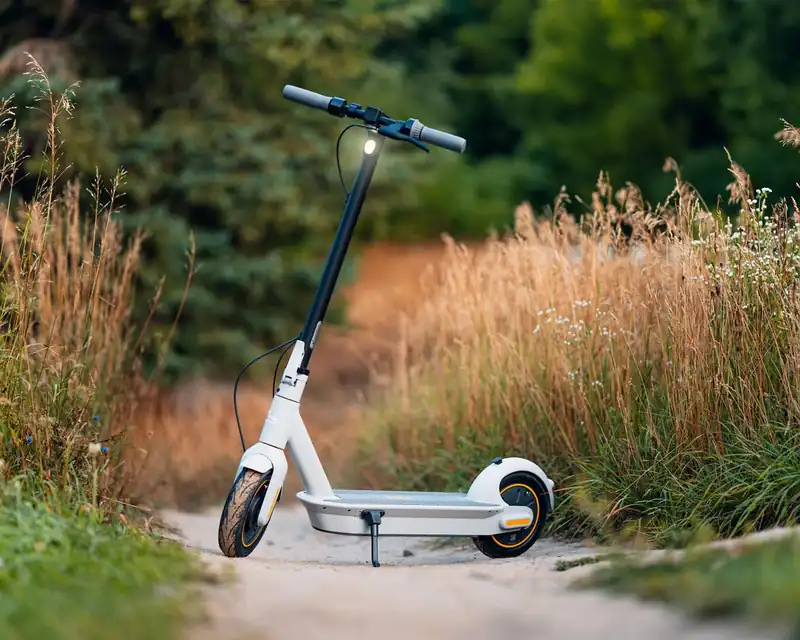
The gear that saves riders, the braking habits that prevent crashes, smart battery care, and the laws you need to know — all in plain English.
Electric scooters are fun, fast, and one of the easiest ways to get around town. But they are also faster and heavier than they look, and one small mistake can end with a nasty scrape or worse. That is exactly why this electric scooter safety guide exists. Whether you just unboxed your first ride or you have been commuting for years, a few smart habits can keep you rolling injury-free.
The numbers are worth a quick look. E-scooter emergency room visits in the US climbed to around 79,300 in 2024, part of a steep rise over the last few years. Nearly one in five of those injuries was to the head. The frustrating part? Survey after survey finds that almost no injured riders were wearing a helmet. In one Austin study, only one hurt rider out of 190 had one on. Yet a helmet alone cuts the risk of a serious brain injury by 65% or more.
None of this is meant to scare you off. Riding is a skill you get better at fast, and most crashes are completely preventable. In this guide we keep things simple and practical. You will learn what gear actually matters, how to brake without flying over the bars, how to charge your battery without starting a fire, and how to stay on the right side of the law. No lectures, just honest rider-to-rider advice.
Why Electric Scooter Safety Matters More Than You Think
Here is the honest truth. Electric scooters feel gentle, but they are not toys. A modern adult scooter can hit 18 to 25 mph and weigh 30 to 60 pounds. That is a lot of speed on wheels that are often smaller than a dinner plate. Small wheels do not roll over cracks, potholes, and wet leaves the way bike wheels do. They stop dead, and you keep going.
The injury numbers back this up. E-scooter emergency room visits in the US reached roughly 79,300 in 2024, and about 18% of those injuries were to the head. Scooter crashes are also more likely to involve broken bones than bike crashes, and they tend to hit younger riders hardest. Sadly, most injured riders were not wearing any protective gear at all.
So why does this happen? Most scooter crashes are not dramatic car collisions. They are single-rider spills, where someone hit a bump too fast, braked wrong, or looked down at a phone for a second. That is actually good news. It means the fixes are mostly in your hands. Respect the machine, wear a little gear, and build a few good habits, and you tilt the odds heavily in your favor.
| Gear | What It Protects | Priority |
|---|---|---|
| Helmet (MIPS if possible) | Head and brain | Must-have |
| Gloves | Palms and fingers | High |
| Wrist guards | Wrists from snapping back | High |
| Knee & elbow pads | Joints on impact | Medium |
| Front & rear lights | Visibility to drivers | Must-have at night |
| Reflective vest or strips | Being seen in low light | Medium |
Gear Up: The Protective Kit That Actually Works
If you only do one thing from this entire guide, wear a helmet. It is the cheapest insurance you will ever buy. Helmets cut the risk of a serious brain injury by 65% to 88%, and models with a MIPS liner add a slip layer inside that helps reduce the twisting forces behind many concussions. For scooters under about 20 mph, a good bike or commuter helmet is perfect. If your scooter is faster than that, step up to a full-face or dual-certified helmet with extra foam around the temples and the back of your head.
Gear is not only about your head, though. Your hands hit the ground first in almost every fall, which is why gloves and wrist guards punch way above their weight. Add knee and elbow pads if you ride hard or commute daily. None of it needs to be bulky or ugly. Modern gear is light, vented, and easy to toss in a bag.
Helmet
Non-negotiable. Look for a CPSC or ASTM sticker, a snug fit that sits level on your forehead, and a chin strap with room for just one finger. Replace it after any real crash, even if it looks fine.
Gloves and wrist guards
Gloves stop road rash and improve your grip on the bars. Wrist guards use a stiff splint to stop your wrist snapping backward. Together they prevent some of the most common scooter injuries of all.
Knee and elbow pads
A hard outer shell slides across asphalt while soft foam inside soaks up the impact. Great for brand-new riders and anyone riding fast or covering real distance.
Lights and reflective gear
Being seen is protection too. Add a white light up front, a red light in back, and reflective strips so drivers spot you early instead of at the last second.
Master Your Brakes and Riding Technique
More new riders get hurt from bad braking than almost anything else. The classic mistake is grabbing a fistful of front brake, which can pitch you straight over the handlebars. The fix is simple. Let your rear brake do most of the work, around 60 to 70%, and add the front gently, around 30 to 40%. Squeeze both smoothly. Never yank.
Your body matters just as much as the levers. As you slow down, shift your weight back over the rear wheel, bend your knees, and keep your arms loose so they soak up the bumps. Keep both feet on the deck until the last second, then set one foot down to steady yourself. This low, balanced stance keeps the scooter flat and keeps you on top of it.
Speed and space are the other half of the equation. Give yourself at least three seconds of following distance from anything ahead. At 20 mph that is roughly 90 feet, which is far more room than most people leave. Scan well ahead for cracks, drain grates, and opening car doors. Slow down before a corner, not in the middle of it. And practice hard stops in an empty parking lot until they feel automatic. Ten minutes a day makes a huge difference in a single week.
- Lead with the rear brake, feather the front brake in gently.
- Weight back, knees bent, arms relaxed every time you slow.
- Keep both feet on the deck; save one-foot cruising for open, empty paths.
- Slow down before the corner, then power gently through it.
- Leave a 3-second gap between you and whatever is in front.
Battery and Charging Safety You Should Not Skip
This is the part riders love to ignore, and it is genuinely important. The battery in your scooter holds a lot of energy, and cheap or damaged ones can catch fire. US safety officials logged over 227 fire, explosion, and overheating incidents from e-scooter and e-bike batteries across 2024 and 2025. The scary part is how fast it happens. Investigators say one of these fires can fill a room with flames in under 20 seconds.
The single best protection is to buy a scooter certified to UL 2272. That label means the whole electrical system, not just the battery cells, was tested for heat, water, vibration, and overcharging. After that, your charging habits are everything. Use only the charger that came with your scooter. Do not leave it charging overnight or while you are out of the house. Unplug it once it is full, and never block a doorway or hallway with a charging scooter.
Keep an eye on the battery over time, too. Charge it in a cool, dry spot, not in freezing cold or blazing heat. If you ever notice swelling, a strange smell, unusual heat, or a hissing sound, stop using it and get it checked by a pro. And never toss a damaged lithium battery in the regular trash. Take it to a proper recycling drop-off instead.
Night Riding, Rain, and Rough Roads
Most scooters can handle a night ride or a light drizzle, but the rules change once the sun goes down or the road gets wet. In the dark, you are hard to see. Turn on your lights, wear something bright or reflective, and slow down so you have time to react to things you spot late. A cheap set of clip-on lights and a reflective vest cost very little and make you far more visible to drivers.
Rain is trickier. Water cuts your grip and stretches your stopping distance, sometimes by a lot. Painted lines, metal grates, manhole covers, and fallen leaves turn as slick as ice when they are wet. If you must ride in the rain, drop your speed, brake earlier and more gently, and steer around those shiny surfaces. Check that your scooter is even rated for wet weather, because plenty of them are not.
Rough roads deserve respect in any weather. Small wheels hate potholes, curbs, and deep cracks. Hit one at speed and it can stop your scooter instantly. Scan the road ahead, ease off before bad patches, and bend your knees so your legs act like shock absorbers. When in doubt, roll over an obstacle slowly and head-on, not at an angle where your wheel can slide out.
Know the Law: Where You Can Legally Ride
Scooter laws in the US are a patchwork, and they change fast. Still, a few patterns hold almost everywhere. Most states cap electric scooters at 15 to 20 mph on public roads and in bike lanes. California and a few others hold the line at 15 mph. Go faster than the legal limit and your scooter may suddenly count as a motor vehicle, which brings a whole new set of rules and paperwork.
Where you can ride matters just as much as how fast. Bike lanes are your friend almost everywhere. Sidewalk riding, on the other hand, is banned in states like California, New York, Delaware, and Georgia, and in the downtown core of many big cities. Streets are usually fine when the posted limit is around 25 to 35 mph. Most states set a minimum rider age of 14 to 16, and shared rental scooters usually require you to be at least 18.
The good news for most riders is that you do not need a license or registration for a normal low-power scooter, since it is treated much like a bicycle. Only a handful of states, such as California and Massachusetts, ask for a license. Helmet rules vary too. Many states only require helmets for riders under 18, but wearing one is smart no matter what the law says. Always check your own city’s rules before you ride, because local laws can be stricter than the state’s.
Your 30-Second Pre-Ride Safety Check
Great riders check their scooter before every trip. It sounds fussy, but it takes about 30 seconds and catches problems before they bite you. An easy way to remember it is ABC: Air, Brakes, and Charge. Squeeze the tires or check the pressure, test both brakes by rolling and squeezing, and glance at your battery level so you are not stranded halfway home.
Then look over the rest of the scooter. Make sure the folding clamp is locked tight, the handlebars do not wobble, and the stem feels solid under your hands. Check that your lights work and your bell or horn is easy to reach. Scan for loose screws, cracked tires, or anything dragging. If your scooter has been sitting out in the cold or rain, give it an extra once-over before you trust it.
Finally, check yourself. Helmet on and strapped. Phone put away so both hands stay on the bars. Shoes that grip, not flip-flops. And a clear head, because riding tired or after a few drinks is a fast track to the ER. Run this quick routine every single time and it becomes second nature. Safe riding is really just a stack of small habits done consistently, and this check is the one that ties them all together.
| State | Sidewalk Riding | Helmet Required | Typical Speed Cap |
|---|---|---|---|
| California | Not allowed | Riders under 18 | 15 mph |
| New York | Not allowed | Riders under 18 | 15-20 mph |
| Texas | Local rules vary | No statewide rule | ~20 mph |
| Florida | Local rules vary | Riders under 16 | ~20 mph |
| Georgia | Not allowed | Riders under 16 | ~20 mph |
| Your Speed | 3-Second Gap | What That Feels Like |
|---|---|---|
| 10 mph | ~44 feet | About 3 car lengths |
| 15 mph | ~66 feet | About 4-5 car lengths |
| 20 mph | ~88 feet | About 6 car lengths |
| 25 mph | ~110 feet | About 7-8 car lengths |
Common Mistakes (and How to Fix Them)
Fix: Most crashes happen close to home on short, familiar rides. Keep your helmet hanging on the handlebar or by the door so putting it on is automatic every single time you head out.
Fix: A hard front-brake-only stop can flip you over the bars. Lead with the rear brake at 60-70% and add the front gently. Practice smooth stops in an empty lot until it becomes muscle memory.
Fix: This is the top cause of scooter battery fires. Use only the original charger, charge while you are awake and nearby, unplug at full, and never block an exit with a charging scooter.
Fix: Small wheels stop dead in potholes and cracks. Scan the road, ease off for rough patches and corners, and keep both feet on the deck so you can react when something surprises you.
Pro Tips
- 💡 Run a 10-second ABC check before every ride: Air (tires), Brakes (both), Charge (battery). It catches most problems before they catch you.
- 💡 Practice emergency stops from 10, then 15, then 20 mph in an empty parking lot. Ten minutes a day and hard braking becomes automatic.
- 💡 Ride like you are invisible. Assume drivers do not see you, make eye contact at intersections, and never dart out from between parked cars.
- 💡 Keep your tires at the recommended PSI. Proper pressure can cut your stopping distance by 15-20% and helps you roll over bumps instead of getting stopped by them.
- 💡 Layer your visibility: a white light up front, a red light in back, plus something reflective. Being seen prevents more crashes than quick reflexes ever will.
A Real-Life Example
Ask around and every rider has a story. Mine happened three weeks after I bought my first scooter. I was cruising a bike lane at maybe 18 mph, glanced down at my phone for a second, and clipped a pothole I never saw coming. The scooter stopped. I did not. I skidded across the asphalt on my palms and hip.
Here is the thing. My helmet had a fresh scrape on it, my gloves were shredded but my hands were fine, and my wrist guards took a hit that would otherwise have meant a cast. I walked away with a bruised ego and a torn shirt. That five-minute habit of gearing up is the only reason it stayed a funny story instead of a hospital bill. Now the helmet goes on before the scooter even leaves the garage.
Frequently Asked Questions
Yes, electric scooters are safe when you ride them responsibly. Most injuries come from a handful of avoidable mistakes: no helmet, braking too hard on the front, riding too fast for the conditions, or hitting a pothole while distracted. Wear basic gear, keep your speed sensible, and stay alert, and you remove most of the risk. Like biking or skating, the machine is only as safe as the rider on it.
It depends on your state, but many only require helmets for riders under 18. Some states have no scooter helmet law at all, while a few require them for everyone. Legal or not, a helmet is the smartest thing you can wear, since it cuts the risk of serious brain injury by 65% or more. Treat it as required for yourself, whatever your local rules happen to say.
Hand, wrist, and arm injuries top the list, followed closely by head injuries. Riders instinctively throw their hands out when they fall, which is exactly why gloves and wrist guards matter so much. Head injuries make up nearly one in five scooter injuries and are the most serious of all, which is why the helmet is non-negotiable. Broken bones are also more common with scooters than with bikes.
No, you should never charge your scooter overnight or leave it plugged in unattended. Most battery fires start during charging, and they can engulf a room in seconds. Charge while you are awake and nearby, unplug it as soon as it is full, use only the original charger, and keep it clear of doorways and exits. Buying a UL 2272 certified scooter gives you the best built-in protection.
Usually not, and in several states it is clearly illegal. California, New York, Delaware, and Georgia ban sidewalk riding, and many big cities do too in their busy districts. Bike lanes are almost always the safest and most legal choice. When you do have to share space with people on foot, slow way down and yield to them. Always check your city’s rules, since they can be stricter than the state’s.
Beginners should stay around 8 to 12 mph until the basics feel natural. Many scooters have a beginner or eco mode that caps your top speed, so use it. Practice starting, stopping, and turning in an empty lot before you head into traffic. As your balance and braking improve you can pick up the pace, but there is no prize for going fast on day one.
Final Checklist ✅
- ✅ Helmet on, level, and strapped with one finger under the chin
- ✅ Tires firm and free of cracks or embedded debris
- ✅ Both brakes tested with a quick roll-and-squeeze
- ✅ Battery charged and the folding clamp locked tight
- ✅ Front and rear lights on for low light or night riding
- ✅ Bright or reflective clothing when visibility is low
- ✅ Phone stowed, both hands on the bars, and a clear head