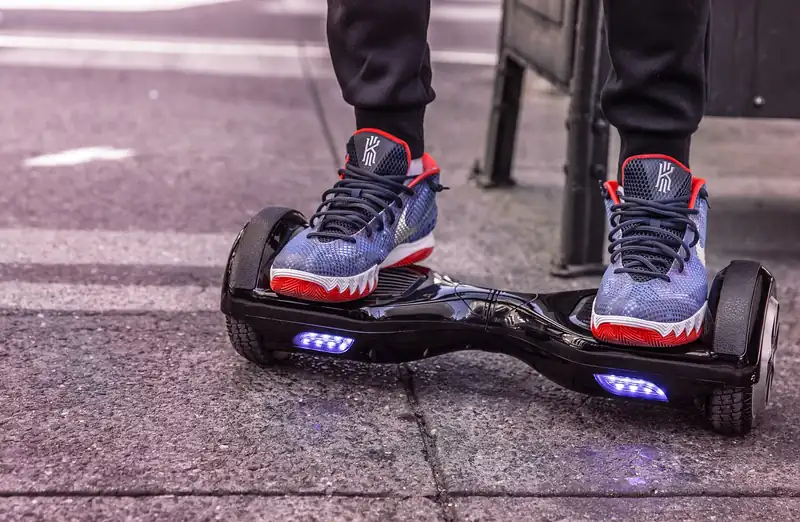
🏢 Best Heavy-Duty Hoverboards for Business Use (2025 Complete Guide)
Looking for a hoverboard that can handle real work? Whether you manage a warehouse, run a delivery service, or oversee a large campus — this guide covers every heavy-duty hoverboard you need to know. We break down load capacity, durability, safety certifications, real-world use cases, and the best models money can buy in 2025.
📋 Table of Contents
- What Is a Heavy-Duty Hoverboard — and Why Does It Matter?
- Top 5 Best Heavy-Duty Hoverboards for Business in 2025
- Full Comparison Table: Business Hoverboards Side by Side
- Weight Capacity: How Much Can a Business Hoverboard Really Handle?
- Key Durability Features for Daily Commercial Use
- Can Hoverboards Be Used for Delivery and Logistics?
- Best Hoverboards for Corporate Campus Commuting
- Hoverboard Safety: What Every Business Owner Must Know
- Battery Life and Range: What to Realistically Expect
- 6 Common Mistakes Businesses Make When Buying Hoverboards
- Expert Pro Tips for Getting the Most from Your Hoverboard Fleet
- Cost vs. Value: Are Rugged Hoverboards Worth the Price?
- Frequently Asked Questions
- Final Buying Checklist for Business Hoverboards
Picture this: your warehouse team is walking 8–12 miles every shift just picking orders. Or your campus security guard is spending half their energy on foot patrol instead of actually watching for threats. Or your delivery courier is slowed down just by getting between stops on a large business property.
A business-grade hoverboard can solve all three problems. These aren’t the wobbly plastic toys you see at the mall. The best heavy-duty hoverboards for business are serious machines — built with reinforced aluminum frames, powerful dual motors, and load ratings up to 420 lbs. They cruise over concrete, asphalt, dirt paths, and even grass without breaking down.
In this guide, we cover everything: the strongest models, how to pick the right one, real-world use cases, safety rules, and expert tips. By the end, you’ll know exactly which hoverboard fits your operation — and how to use it safely every single day.
💡 Key Insight
The global hoverboard market is growing steadily and analysts predict hoverboards will become mainstream in city delivery and logistics roles as safety technology improves. Businesses that adopt them early gain a real competitive edge in workforce efficiency.
What Is a Heavy-Duty Hoverboard — and Why Does It Matter?
A regular hoverboard is fine for a kid in the driveway. A heavy-duty hoverboard is something completely different. It is engineered from the ground up to carry heavier riders, survive rough conditions, and run for hours every day without failing.
Here’s what separates a heavy-duty board from a basic one:
- Frame material: Aircraft-grade aluminum or reinforced steel instead of cheap plastic
- Weight capacity: 260–420 lbs versus the standard 220 lbs or less
- Wheel size: 8.5″ to 10″ all-terrain tires instead of small 6.5″ wheels
- Motor power: 500W–800W combined motors instead of 200–300W
- IP water resistance: IPX4 or IP54 rated so they survive rain and mud
- Battery size: Higher capacity (often 4400mAh+) for longer operational range
- Safety certification: UL 2272 certified for fire and electrical safety
For business use, every one of these points is non-negotiable. A board that fails on the third day of warehouse work costs you time, money, and credibility with your team. Investing in a true heavy-duty model from the start pays for itself quickly.
✅ Pro Tip
Always check the UL 2272 certification before buying. This is the gold standard for hoverboard safety in the US and ensures the battery, wiring, and motor systems have passed strict fire and electrical hazard tests. No UL 2272 = don’t buy it for business use.
🏆 Top 5 Best Heavy-Duty Hoverboards for Business in 2025
These five models have earned their reputation through real-world testing, strong user reviews, and proven durability. We’ve ranked them based on load capacity, durability, safety, and value for commercial use.
1. 🥇 Swagtron T6 Off-Road — Best for Maximum Load Capacity
Max Load: 420 lbs | Range: 12 miles | Speed: 12 mph | Wheels: 10″ tubeless
The Swagtron T6 is the absolute heavyweight champion of the hoverboard world. It holds the claim of being the first consumer hoverboard designed to carry riders over 420 lbs — far beyond what any other board on this list can do. If you have heavy riders or need a board that can take punishment day after day, the T6 is the answer.
The T6 rides on 10-inch nylon-reinforced tubeless tires that handle everything from smooth warehouse concrete to gravel pathways and muddy delivery routes. Its frame uses a combination of ABS plastic shell over an aluminum core to protect the internal electronics. The IPX4 water-resistance rating means puddles and light rain are no problem.
Powered by dual 300W motors and a Samsung 42V lithium battery, the T6 reaches 12 mph and covers up to 12 miles on a single charge. It can also climb slopes up to 30 degrees — double the average hoverboard’s hill-climbing ability. That is a massive advantage on loading docks or uneven terrain.
- ✅ Highest weight limit of any consumer hoverboard (420 lbs)
- ✅ Excellent range (12 miles tested)
- ✅ Handles 30° inclines — ideal for loading docks
- ✅ UL 2272 certified and IPX4 water resistant
- ⚠️ Heavier board at 32 lbs — has built-in carry handles
Best for: Warehouses, large campuses, heavy riders, delivery applications on mixed terrain.
2. 🥈 Halo Rover X — Best for All-Terrain Durability
Max Load: 260 lbs | Range: 6.9 miles (tested) | Speed: 9.8 mph | Wheels: 8.5″ off-road
The Halo Rover X stands out as the most premium all-terrain hoverboard for professional use. It packs 800W of combined motor power — the highest of any board in this guide — into a tough aluminum frame with non-flat 8.5-inch off-road tires that won’t get punctures. It also has the longest real-world tested range among comparable boards at 6.9 miles.
The Rover X includes Bluetooth connectivity, LED lights for low-light visibility, and a mobile app for tracking speed, battery, and distance. These smart features are genuinely useful for businesses that want to monitor usage and set riding limits for employees.
- ✅ 800W motors — the most powerful in its class
- ✅ Non-flat tires (no puncture risk in rough environments)
- ✅ Built-in Bluetooth app for fleet monitoring
- ✅ US Government-approved UL certification
- ⚠️ Premium price around $997 MSRP
Best for: Security patrols, campus transportation, outdoor delivery routes, businesses willing to invest in premium quality.
3. 🥉 TOMOLOO Adult Hoverboard 265LB — Best Value for Business
Max Load: 265 lbs | Range: ~12 miles | Speed: 9.3 mph | Wheels: 8.5″
If you’re outfitting a team and need strong performance at a reasonable price, the TOMOLOO 265LB is a top contender. It uses a solid aluminum alloy frame that is notably more rigid than plastic-framed competitors. The advertised 12-mile range is impressive for daily business tasks, and the Bluetooth app lets riders track battery and set safety parameters.
For businesses buying multiple boards at once, the TOMOLOO hits a great value sweet spot: heavy-duty construction, a trustworthy 265 lb load limit, UL 2272 certification, and a price that doesn’t break the budget.
- ✅ Aluminum alloy frame for strength and longevity
- ✅ Long 12-mile range on a single charge
- ✅ UL 2272 certified — safe for commercial use
- ✅ Great value for fleet purchases
- ⚠️ 265 lb limit (not suitable for heavier riders)
Best for: Small businesses, office campuses, fleet deployments where budget matters.
4. Hover-1 Titan 10″ — Best No-Nonsense Workhorse
Max Load: 265 lbs | Range: ~10 miles | Speed: 8 mph | Wheels: 10″
The Hover-1 Titan 10″ is the no-frills, get-the-job-done board for commercial environments. With 10-inch wheels and a 500W combined motor system, it rides smoothly over rough concrete, curb edges, and uneven flooring common in older warehouses or industrial sites. Gear testers praised it for its “smooth, durable ride” under repeated use conditions.
- ✅ Large 10″ wheels handle rough surfaces very well
- ✅ Proven reliability from a US-based brand
- ✅ UL 2272 certified
- ⚠️ Slower top speed (8 mph) vs. competitors
Best for: Industrial facilities, older warehouse buildings, daily operational use where reliability matters more than speed.
5. Segway Ninebot S2 — Best for Corporate Campus Commuting
Max Load: 220 lbs | Range: 11.3 miles (tested) | Speed: 11.2 mph | Wheels: 10.5″ pneumatic
The Segway Ninebot S2 is built for professional commuters who need smart features and long range. Reviewers consistently call it “all business” — it is utility-oriented, stable, and can cruise mile after mile without fatigue. The 800W motor system gives it real punch, and the pneumatic 10.5-inch tires soak up the imperfections in sidewalks and campus pathways.
With a lab-tested range of 11.3 miles, the Ninebot S2 leads the pack in practical commuting range. It’s the preferred choice for corporate offices, university campuses, and business parks where smooth surfaces are the norm.
- ✅ Longest tested range (11.3 miles) in class
- ✅ Premium Segway engineering and reliability
- ✅ 800W motor — fast, powerful, and stable
- ⚠️ Lower 220 lb weight limit vs. off-road models
- ⚠️ Not suited for rough or off-road terrain
Best for: Corporate campuses, office parks, event venues, anywhere with smooth paved surfaces.
📊 Full Comparison Table: Business Hoverboards Side by Side
Use this table to quickly compare models across the features that matter most for commercial use:
| Model | Max Load | Range | Speed | Motors | Water Resist. | Best For |
|---|---|---|---|---|---|---|
| Swagtron T6 | 420 lbs | 12 miles | 12 mph | 2×300W | IPX4 | Heavy riders, warehouses |
| Halo Rover X | 260 lbs | 6.9 miles | 9.8 mph | 2×400W | Yes | Security, outdoor patrol |
| TOMOLOO 265LB | 265 lbs | ~12 miles | 9.3 mph | Dual | Yes | Fleet purchase, value |
| Hover-1 Titan 10″ | 265 lbs | ~10 miles | 8 mph | 500W total | Limited | Industrial daily use |
| Segway Ninebot S2 | 220 lbs | 11.3 miles | 11.2 mph | 800W total | Yes | Corporate campuses |
Which Board Handles What Terrain?
| Terrain Type | Swagtron T6 | Halo Rover X | TOMOLOO 265 | Hover-1 Titan | Ninebot S2 |
|---|---|---|---|---|---|
| Smooth concrete / floor | ✅ Excellent | ✅ Excellent | ✅ Excellent | ✅ Excellent | ✅ Excellent |
| Gravel / rough asphalt | ✅ Good | ✅ Good | ⚠️ Fair | ✅ Good | ⚠️ Fair |
| Grass / dirt paths | ✅ Yes | ✅ Yes | ⚠️ Possible | ⚠️ Possible | ❌ No |
| Wet / rainy conditions | ✅ IPX4 | ✅ Yes | ⚠️ Limited | ❌ Avoid | ⚠️ Limited |
| Steep inclines (15°+) | ✅ Up to 30° | ✅ Yes | ⚠️ Moderate | ⚠️ Moderate | ⚠️ Moderate |
⚖️ Weight Capacity: How Much Can a Business Hoverboard Really Handle?
This is one of the most important questions for any business buyer — and one that often gets overlooked. Weight capacity is not just about whether the board will hold the rider. It is about how long the board will last under regular use.
Here’s how weight limits break down across the market:
- Standard consumer hoverboards: 220 lbs max — not suitable for most adult business riders
- Entry-level heavy-duty models: 220–265 lbs — suitable for average adult riders doing light business use
- Mid-range heavy-duty boards: 265 lbs — handles most adult riders with a good safety buffer
- Top-tier commercial models: 300–420 lbs — built for large riders and heavy daily use
The Swagtron T6 remains the only consumer hoverboard that officially supports riders over 420 lbs. Other industrial boards in the 260–300 lb range cover the vast majority of commercial applications.
⚠️ Warning
Never ride at or near the maximum rated weight limit every single day. Constant operation at max capacity strains motors and wears down the battery faster. For commercial use, choose a board rated at least 20–30 lbs above your heaviest rider’s weight. This protects the board and extends its lifespan significantly.
What About Cargo Weight?
Many businesses forget that a rider carrying a laptop bag, tools, or small packages adds extra weight to the board. If your rider weighs 200 lbs and carries a 15 lb tool kit, you need a board rated for at least 220–230 lbs to be safe. Always account for everything the rider will have on them when determining the right capacity.
🔧 Key Durability Features for Daily Commercial Use
Not all “heavy-duty” hoverboards are created equal. When buying for business use, you need to look deeper than the marketing claims. Here’s exactly what to check:
1. Frame Material
The frame is the backbone of the board. The best commercial hoverboards use aircraft-grade aluminum alloy frames, which resist bending, cracking, and warping even under heavy loads. Some boards use a hybrid of aluminum inner structure and ABS plastic outer shell (like the Swagtron T6), which offers good impact protection while keeping weight manageable. Avoid boards that are entirely plastic — they crack under repeated stress.
2. Tire Type and Size
For business use, tires make or break the experience. Here’s a quick breakdown:
- 6.5″ tires: Basic, smooth surface only — not suitable for business
- 8.5″ solid rubber tires: No puncture risk, but can be stiff on bumps
- 8.5″ air-filled off-road tires: Better shock absorption, slight puncture risk
- 10″ tubeless nylon-reinforced tires: Best for all-terrain commercial use — puncture resistant AND smooth ride
For warehouse or delivery work, go with 10-inch tubeless tires whenever possible. They absorb the most vibration and are least likely to fail mid-shift.
3. Water and Dust Resistance (IP Rating)
IP ratings tell you how well a board resists water and dust ingress. For business use outdoors or in industrial environments:
- No IP rating: Avoid entirely for outdoor or industrial use
- IPX4: Protected from water splashing from any direction — fine for outdoor use in light rain
- IP54: Protected from dust and water splashing — best for dusty warehouses and wet delivery routes
4. Motor Power
Heavy-duty boards use dual motors totaling 500W to 800W. This gives them the torque to carry heavier riders up inclines, accelerate quickly from a stop, and maintain speed even on uneven ground. Under-powered motors bog down under heavy use and burn out faster. For business, never go below 400W combined motor power.
5. Battery Quality and Safety Certification
The battery is the most critical safety component of any hoverboard. Cheap lithium-ion batteries in uncertified boards have caused fires. Premium boards use Samsung or LG batteries with built-in temperature monitoring and automatic shutoff. Always buy UL 2272 certified boards — this certification covers the entire electrical system, not just component parts.
🔥 Critical Warning
The majority of hoverboard fires in past years were caused by cheap, uncertified lithium-ion batteries from no-name manufacturers. These boards skipped the temperature control circuit that prevents overheating. Never buy a hoverboard for business use — or any use — without UL 2272 certification on the complete product (not just components).
🚚 Can Hoverboards Be Used for Delivery and Logistics?
Yes — and this use case is growing quickly. Industry forecasts show hoverboards and self-balancing scooters moving into inner-city delivery and cargo applications as safety and battery technology improves. Several companies already use scooters and self-balancing boards to speed up last-mile logistics within large facilities.
Here are real-world scenarios where hoverboards are already being used in logistics:
- Warehouse order picking: Workers cover 30–50% more ground per shift on a hoverboard vs. walking — dramatically improving pick rates
- Campus mail delivery: Internal mail and parcel delivery between buildings in office parks or university campuses
- Security patrols: Security teams patrol large facilities, parking garages, and event spaces faster and with less fatigue
- Inventory checks: Warehouse managers doing quick stock checks across large floor plans
- Event venue staff: Crew members at stadiums, convention centers, and trade shows move quickly between stations
What to Look for in a Delivery Hoverboard
For delivery and logistics, prioritize these features specifically:
- Rugged all-terrain tires (10″): Curbs, transitions, and uneven dock floors require big wheels
- High torque motors (500W+): Carrying extra weight (tools, packages) demands more power
- IPX4 or IP54 water resistance: Outdoor deliveries happen in all weather
- Long battery life (10+ miles): Workers shouldn’t stop mid-shift to recharge
- Wide footpad: More stable when stepping on/off repeatedly throughout a shift
- LED lights: Visibility in loading areas with poor lighting is a safety essential
💡 Key Insight
A well-run warehouse that integrates electric scooters or hoverboards for internal transport can see meaningful return on investment through reduced walk time and improved order accuracy. Studies of lean warehouse operations show worker efficiency gains of 20–40% when foot travel is replaced with personal electric transport.
🏙️ Best Hoverboards for Corporate Campus Commuting
Corporate campus commuting has different needs than warehouse work. Here, you want comfort, range, and smooth ride quality over maximum load capacity. Riders on campuses typically travel on paved paths between buildings — so big off-road tires matter less than a stable platform and a long battery.
The Segway Ninebot S2 is the clear winner for this use case. Testers describe it as “all business” — it is built for utility commuting with a stable platform, powerful 800W motors, and a tested range of 11.3 miles. That means an employee can commute all day on a single charge across a large corporate campus without stopping.
Other good options for campus use include boards with steering columns or handles, which make longer rides more comfortable and reduce leg fatigue. The Jetson Jupiter and boards in the Hover-1 series offer steering bars that are useful for riders who need to travel half a mile or more at a time.
Corporate Commuting Checklist
- ✅ Range of 10+ miles per charge
- ✅ Pneumatic tires (8.5″ minimum) for comfort over sidewalk cracks
- ✅ Top speed of 10+ mph for quick inter-building travel
- ✅ Optional steering column or handlebar for longer rides
- ✅ Bluetooth app to set speed limits for new employees
- ✅ LED lights for early morning or evening use in dimly lit areas
- ✅ UL 2272 certification (required for any business purchase)
🛡️ Hoverboard Safety: What Every Business Owner Must Know
Safety is not optional for business use. When employees ride hoverboards on company property, you are responsible for their wellbeing. Here’s a complete safety overview that every business deploying hoverboards must follow:
🔒 Battery and Charging Safety
- Never charge overnight or when unattended — overcharging is the #1 cause of battery fires
- Let the board cool for at least one hour after a ride before plugging in
- Store and charge in a dry, open area away from any flammable materials
- Only use the included charger — third-party chargers may not have the correct voltage regulation
- Inspect charging cables regularly for fraying or damage
⛑️ Rider Safety Rules
- Helmets are mandatory — no exceptions in a business setting
- Knee pads and wrist guards are strongly recommended for new riders
- Train all employees on proper mounting, dismounting, and emergency stopping
- Set speed limits using the Bluetooth app on boards that support it
- Never exceed the board’s rated weight capacity
- Designate clear hoverboard pathways in warehouses to prevent collisions with foot traffic or forklifts
📋 Operational Rules for Business Environments
- Post clear signage in hoverboard zones (speed limit, one-way paths, no-ride zones)
- Inspect boards weekly for tire pressure, frame cracks, and battery condition
- Keep a maintenance log for each board
- Remove from service any board that shows physical damage, unusual sounds, or battery swelling
- Check local regulations — some jurisdictions restrict hoverboard use on public sidewalks or roads
✅ Pro Tip
Before deploying hoverboards to your team, run a 30-minute guided training session with each employee. Teach them how to mount, balance, turn, stop, and dismount safely. New riders fall most often in the first 15 minutes — supervised practice prevents injuries and damages.
🔋 Battery Life and Range: What to Realistically Expect
Every hoverboard manufacturer advertises a range that sounds impressive. The reality is often different. Here’s what you actually need to know:
Advertised range vs. real-world range: Lab-tested range figures are measured under ideal conditions — flat surface, light rider, constant moderate speed. In real business use (heavier riders, frequent starts and stops, varied terrain), expect about 60–75% of the advertised range.
- Swagtron T6: Advertises 12 miles → expect 7–9 miles in warehouse use
- Halo Rover X: Lab-tested at 6.9 miles → expect 5–6 miles in mixed conditions
- TOMOLOO 265LB: Advertises 12 miles → expect 8–10 miles in light business use
- Segway Ninebot S2: Lab-tested at 11.3 miles → expect 8–9 miles in campus use
Factors That Drain Battery Faster
- Heavier rider (the closer to max capacity, the faster the drain)
- Hilly or uneven terrain (motors work harder)
- Frequent acceleration from a stop (high torque demands)
- Cold temperatures (lithium batteries lose capacity in cold)
- High speeds (sustained top speed drains battery much faster)
Maximizing Battery Life for Business Use
- Charge to 80% rather than 100% when possible for long battery health
- Don’t let the battery drain completely — recharge at 20% remaining
- Store boards in a room-temperature environment, not a cold warehouse corner
- Use training mode (speed-limited) for new riders — it uses less power
❌ 6 Common Mistakes Businesses Make When Buying Hoverboards
These mistakes cost businesses money, cause injuries, and lead to boards that fail within months. Avoid every one of them:
Mistake #1: Buying Based on Price Alone
The problem: A $150 hoverboard looks like a bargain. But cheap boards use inferior batteries, weak frames, and untested electronics that fail under commercial use — often within weeks.
The fix: Budget $300–$600 minimum for a board that will last in daily business use. Calculate cost per day over 1–2 years to see the true value.
Mistake #2: Ignoring UL 2272 Certification
The problem: Non-certified boards have caused serious fires. Deploying them in your business creates liability and insurance issues.
The fix: UL 2272 is non-negotiable. Make it the first thing you check before any purchase.
Mistake #3: Choosing the Wrong Weight Capacity
The problem: Buying a 220 lb board for a 210 lb employee means the board is constantly at its limit — leading to faster motor burnout and safety risks.
The fix: Always add 20–30 lbs of buffer above your heaviest rider’s weight. If riders carry tools or packages, factor that in too.
Mistake #4: Not Providing Safety Training
The problem: Most workplace hoverboard injuries happen in the first few days of use. Untrained riders fall, collide with equipment, or panic-dismount incorrectly.
The fix: Run a mandatory 30-minute training session. Practice mounting, basic turns, and emergency stops before any employee uses a board on the job.
Mistake #5: Using Indoor-Only Boards Outdoors
The problem: Many business buyers don’t check IP ratings. A board without water resistance taken into a wet or dusty environment will fail quickly — sometimes dangerously.
The fix: Match the board to its environment. Outdoor or mixed-use applications need IPX4 or better. Indoor smooth surfaces only? Standard boards are fine.
Mistake #6: Skipping Maintenance
The problem: Businesses deploy hoverboards, use them hard, and never inspect them. Slowly, tires wear down, wheel bolts loosen, and battery health degrades — until the board fails mid-shift.
The fix: Create a simple weekly maintenance checklist. Check tire condition, inspect the frame, test the battery, and clean the footpads. 10 minutes a week prevents expensive breakdowns.
🏆 Expert Pro Tips for Getting the Most from Your Business Hoverboard Fleet
🏆 Expert Tips
- Buy one more board than you need. Always have a spare. Boards break, need charging, or go in for maintenance. A fleet of 4 when you need 3 keeps operations running smoothly.
- Label and track each board separately. Assign boards to specific employees or work areas. This creates accountability and makes it easier to track wear patterns.
- Use app-based speed limiting for new riders. Set new employees to training mode (lower speed limit) for their first two weeks. It reduces fall risk dramatically.
- Charge a fleet on a staggered schedule. Don’t plug all boards in at once overnight. Stagger charging so someone is always watching — or use smart power strips that shut off at full charge.
- Document a pre-ride inspection routine. Like a pilot’s checklist, a simple 60-second pre-ride check (tires, footpads, power on, battery level) prevents most issues before they happen.
- Store boards elevated off cold concrete floors. Cold ground drains lithium batteries faster during off hours. Use a simple shelf or pallet to keep boards at room temperature.
- Negotiate extended warranties for fleet purchases. Many brands offer business pricing and extended coverage when you buy 3 or more units. Always ask.
💰 Cost vs. Value: Are Rugged Hoverboards Worth the Price?
Yes — when you buy the right one. Here’s how to think about the investment:
A premium heavy-duty hoverboard costs $300–$1,000. That sounds like a lot compared to a $150 basic board. But consider the math:
- A $150 board that fails after 3 months of business use = $600/year
- A $500 board that lasts 2+ years of daily commercial use = $250/year
- The premium board is actually cheaper in the long run — and much safer
Beyond the board itself, think about the productivity value. If a hoverboard helps one warehouse worker cover more ground each shift, the productivity gain quickly outweighs the purchase price. In logistics contexts, even a 10–15% improvement in movement efficiency translates to measurable cost savings over a full year of operations.
“The most durable hoverboards for business use have premium features that justify their investment — they last longer, perform better under load, and ultimately cost less per day of use than cheaper alternatives.”
The Halo Rover X at ~$997 sounds expensive. But it includes 800W motors, a non-flat tire system, a Bluetooth monitoring app, and US Government-approved UL certification. For a business deploying it daily, that’s less than $1.50 per day over two years of use.
❓ Frequently Asked Questions
❓ Can hoverboards be used legally inside a commercial warehouse?
In most jurisdictions, hoverboards used inside private commercial property are not subject to road laws. However, OSHA workplace safety regulations do apply. You need to ensure riders wear appropriate protective gear, that paths are clearly marked and free of obstacles, and that the equipment is properly maintained. Always check your local regulations and consult your insurance provider before deploying hoverboards commercially.
❓ How long do heavy-duty hoverboards last with daily business use?
A quality heavy-duty hoverboard from a reputable brand can last 2–4 years with daily use, assuming proper care. The battery is typically the first component to degrade after 300–500 full charge cycles. Tires on rough surfaces may need replacement after 6–12 months of intense outdoor use. Frames and motors on aluminum-frame boards rarely fail if the board is not overloaded.
❓ What is the fastest a business hoverboard can go?
Most heavy-duty business hoverboards top out between 8–12 mph. The Swagtron T6 is the fastest commercial board at 12 mph. The Segway Ninebot S2 reaches 11.2 mph. For business use, most operators set boards to training mode (6–7 mph) to reduce fall risk and comply with workplace safety rules. High-speed operation significantly increases battery drain and fall risk.
❓ Do I need insurance to use hoverboards in my business?
Your general commercial liability insurance may or may not cover hoverboard-related injuries. Check your policy specifically. Many insurers will require UL 2272 certified equipment and documented safety training for coverage to apply. Talk to your insurance broker before deploying hoverboards to employees — this is a step that many small businesses skip and later regret.
❓ Can a hoverboard replace a golf cart or electric scooter in a large warehouse?
For light mobility tasks — moving between picking stations, doing stock checks, patrolling aisles — a hoverboard is an effective and much cheaper alternative to a golf cart. However, for hauling heavy loads, transporting multiple workers at once, or covering very large distances (1+ mile routes), electric scooters, golf carts, or ride-on pallet jacks are better suited. Think of hoverboards as complementary tools for personal mobility, not full cargo transport.
❓ How do I choose between air-filled and solid tires for business use?
Air-filled (pneumatic) tires provide a much smoother, more comfortable ride — ideal for long shifts or bumpy surfaces. However, they can get punctures. Solid rubber tires never go flat but transmit more vibration to the rider, which can be tiring over a long shift. The best option for business use is tubeless nylon-reinforced tires (like the Swagtron T6’s 10″ tires) — they combine puncture resistance with good shock absorption.
✅ Final Buying Checklist for Business Hoverboards
Before you pull the trigger on any hoverboard for your business, run through this checklist. Every item should be a YES before you buy:
✅ Complete Business Hoverboard Buying Checklist
Safety & Certification
- ✅ Board has full UL 2272 certification (not just components)
- ✅ Battery is from a reputable brand (Samsung, LG, or equivalent)
- ✅ Board has built-in temperature management and auto-shutoff
Performance & Load Capacity
- ✅ Rated weight is at least 20–30 lbs above your heaviest rider
- ✅ Combined motor power is 400W or more
- ✅ Wheel size matches your terrain (8.5″ minimum; 10″ for rough surfaces)
- ✅ Tested range covers your full work shift with buffer
Durability & Environment
- ✅ Frame is aluminum alloy (not all-plastic)
- ✅ IP rating matches your environment (IPX4 for outdoor/wet use)
- ✅ Tires are appropriate for your specific surface type
Business Readiness
- ✅ Safety training plan is in place for all riders
- ✅ Helmets and protective gear have been ordered
- ✅ Weekly maintenance checklist has been created
- ✅ Charging safety protocol is documented and posted
- ✅ Insurance coverage has been confirmed with your provider
- ✅ Local regulations have been checked for your business location
🏁 Conclusion: The Right Heavy-Duty Hoverboard Makes Work Easier
A business-grade hoverboard is not a toy. It is a legitimate productivity tool that can transform how your team moves around large spaces. The key is choosing the right board for your specific environment, training your riders properly, and maintaining the equipment consistently.
For maximum load capacity, the Swagtron T6 is unmatched. For all-terrain premium performance, the Halo Rover X is worth every penny. For best value in fleet purchases, the TOMOLOO 265LB delivers. For corporate campus commuting, the Segway Ninebot S2 is the clear choice.
Always verify UL 2272 certification before buying. Always build in weight capacity buffer. Always train your team before deployment. Do those three things and you’ll get years of reliable, productive use from your business hoverboard investment.
🏁 Quick Decision Guide
- ✅ Heaviest riders (up to 420 lbs): Swagtron T6 Off-Road
- ✅ Outdoor / all-terrain durability: Halo Rover X
- ✅ Best value for fleet purchase: TOMOLOO 265LB
- ✅ Industrial / daily workhorse: Hover-1 Titan 10″
- ✅ Corporate campus commuting: Segway Ninebot S2
Last updated: April 2026. This guide is based on publicly available product specifications, independent testing data, and expert reviews. Always verify current specifications with manufacturers before purchasing, as product details may change.

I’m the founder of HoverboardsGuide.com, a comprehensive website dedicated to electric scooters and hoverboards. With a deep-rooted passion for electric gadgets, I’ve accumulated extensive experience in this field. I aim to assist users in selecting the best gadgets and providing reliable guidance.
I’ve tested and reviewed numerous models, gaining in-depth knowledge about their features, performance, and overall quality. Feel free to reach out to me with any queries, as I’m dedicated to addressing your concerns promptly. Join me on this exciting journey of exploring the world of electric rides and making informed decisions