Why Do Hoverboards Keep Exploding? Real Reasons
The honest, non-scary breakdown of what makes a hoverboard catch fire, and the simple habits that keep yours cool, safe, and fun to ride.
If you have ever asked why do hoverboards explode, you are already thinking like a smart rider. Those viral clips of a board bursting into flames on someone’s living-room floor are real, and they scared a lot of families away from the whole idea. But the full story is more hopeful than those videos suggest. Almost every hoverboard fire comes down to a handful of clear, preventable reasons, and once you know them, you can spot a dangerous board and ride a safe one with total confidence.
In this guide we will walk through exactly what makes a hoverboard catch fire, the famous recalls that forced the industry to clean up its act, and the heartbreaking tragedy that changed the rules for good. Then we will cover the simple charging and storage habits that keep your board cool and out of trouble.
Here is the reassuring part. Hoverboards in 2026 are far safer than the ones that made headlines back in 2015 and 2016. As of early 2026, there has not been a single hoverboard recall in over two years, which is the longest quiet stretch since the fires first started. Buy the right board and treat its battery with a little respect, and your risk drops to almost nothing.
- The Real Reason Is Almost Always the Battery
- The 7 Real Reasons Hoverboards Keep Exploding
- The Recalls and the Tragedy That Changed the Industry
- UL 2272: The Certification That Made Boards Safe Again
- How To Charge Your Hoverboard Without Starting a Fire
- Warning Signs Your Hoverboard Could Be Dangerous
- What To Do If Your Hoverboard Catches Fire
The Real Reason Is Almost Always the Battery
Here is the simple truth. A hoverboard does not really explode like a bomb. What happens is a battery fire, and it can look and sound violent enough to feel like one. Every board is powered by a lithium-ion battery, the same kind that runs your phone and laptop. These batteries pack a huge amount of energy into a tiny space. That is exactly what makes for a fun, zippy ride, and it is also exactly why a bad one can be so dangerous.
Inside every battery are small cells. Each cell has a thin sheet called a separator that keeps its two sides apart. When that separator fails, the two sides touch and short out. That creates heat. The heat damages more of the cell, which makes even more heat. Engineers call this loop thermal runaway. Once it starts, it is very hard to stop. A single cell can hit temperatures hot enough to melt metal in seconds, and then it spreads to the cell next to it like a row of dominoes.
So when people ask why hoverboards catch fire, the honest answer is that a weak or damaged battery slips into thermal runaway. Everything else on this page, the cheap parts, the bad chargers, the drops, the overcharging, is really just a different way of nudging a battery toward that tipping point. Understand the battery and you understand the whole problem.
| Brand / Model | Recall Date | Units | Reason |
|---|---|---|---|
| 10 retailers (Swagway, Razor & more) | Jul 2016 | ~501,000 | Battery packs overheating; fire and explosion risk |
| Razor Hovertrax 2.0 | Aug 2021 | 237,300 | Battery can overheat and catch fire |
| Jetson Rogue (42-volt) | Mar 2023 | 53,000 | Fire hazard; two deaths reported |
| Hover-1 Helix (Camo & Galaxy) | Dec 2023 | 25,000 | Lithium battery fire hazard |
| Total since 2016 | 23 recalls | ~1,115,200 | Mostly battery overheating |
The 7 Real Reasons Hoverboards Keep Exploding
Fires almost never come out of nowhere. They usually trace back to one of these seven problems, and very often a couple of them stacked together. The scary early-days boards were mostly cheap imports that hit several of these at once, which is why they failed so spectacularly.
1. Cheap, low-grade battery cells
The number one cause. Bargain boards use no-name cells with thin separators, sloppy welds, and uneven quality. One weak cell is all it takes to start a fire, and you cannot see the problem from the outside.
2. No real battery management system
A good board has a battery management system, or BMS, that acts like a tiny brain. It stops overcharging, balances the cells, and cuts power when things get too hot. Dirt-cheap boards often skip it entirely to save a few dollars.
3. Overcharging and charging overnight
Leaving a board plugged in for eight hours means hours of extra heat with nobody watching. If the charge controller fails, there is nothing to catch it. Most fires in the news started with a board left charging unattended.
4. The wrong or a counterfeit charger
That random replacement charger from a marketplace may push the wrong voltage into your pack. Too much voltage cooks the cells. Always use the exact charger that came with your board.
5. Drops, curbs, and hard crashes
A big impact can dent or puncture a cell inside the case. The board may seem fine for days or weeks, then fail suddenly while charging. Internal damage is invisible but very real.
6. Water, puddles, and damp storage
Water and electronics do not mix. Riding through puddles or storing a board in a damp garage can short the wiring and corrode the battery contacts, both of which can spark a fire.
7. No safety certification
Notably, none of the boards recalled by the CPSC carried UL 2272 certification. An uncertified board has never passed a real fire-safety test, so you are simply trusting the seller’s word.
The Recalls and the Tragedy That Changed the Industry
Rewind to the 2015 holiday season and hoverboards were the must-have gift, but they were also catching fire at an alarming rate. Between December 2015 and February 2016 alone, the CPSC logged 52 separate hoverboard fires and more than two million dollars in property damage. Since 2015, incidents have added up to 13 burn injuries, three smoke-inhalation injuries, and over four million dollars in damage. That wave of fires triggered a recall of more than 500,000 boards from ten different sellers in early 2016.
The most painful chapter came later. In the early hours of April 1, 2022, a fire tore through a home in Hellertown, Pennsylvania. Fire investigators traced the origin to a 42-volt Jetson Rogue hoverboard that had been charging. Two sisters, ages 10 and 15, did not make it out, and their parents suffered smoke-inhalation injuries. In March 2023 the CPSC and Jetson recalled about 53,000 of those boards. It is the clearest, most sobering reminder of why the boring safety steps in this guide matter so much.
Since 2016 there have been 23 hoverboard recalls covering roughly 1,115,200 units, and battery overheating was the reason nearly every time. But here is the encouraging trend: the most recent recall was in December 2023, and as of early 2026 the industry has gone more than two years without a new one. Tighter standards and real certification are finally working.
UL 2272: The Certification That Made Boards Safe Again
In 2016, the safety group Underwriters Laboratories created a standard built specifically for personal e-mobility devices like hoverboards. It is called UL 2272, and it is the single most important thing to look for when you buy. A board carrying this mark has passed a punishing battery of tests on its battery, charger, wiring, and electronics.
The tests are no joke. UL 2272 checks the whole electrical system for overcharge protection, short-circuit protection, overheating, water exposure, drops, vibration, and even crush and impact stress. In short, it deliberately tries to make the board fail in every way a real fire might start, and the board has to survive all of it to earn the mark. This is why certified boards so rarely show up on recall lists.
One honest caveat: certification is not a magic force field, and no standard can promise a board will never overheat. But the pattern is impossible to ignore, since not one of the boards the CPSC recalled had been UL 2272 certified. Treat the mark as your baseline. If a listing does not clearly state UL 2272, or a price looks too good to be true, walk away and find one that does.
How To Charge Your Hoverboard Without Starting a Fire
Charging is the single riskiest moment in a hoverboard’s life. Almost every fire that made the news happened while a board sat plugged in, often overnight, often unattended. The good news is that safe charging is easy and free, and it comes down to a short list of habits.
Follow these rules every single time and you remove most of your fire risk:
- Use only the original charger that came in the box, never a cheaper replacement.
- Charge on a hard, bare surface like tile or concrete, never on carpet, a bed, or a couch.
- Stay home and awake while it charges, and unplug it the moment it hits 100 percent.
- Let the board cool for 30 to 60 minutes after a ride before you plug it in.
- Keep it away from curtains, paper, and anything else that burns easily.
- Charge in a spot with a working smoke alarm nearby, not a closed closet or garage.
Warning Signs Your Hoverboard Could Be Dangerous
Here is something comforting: batteries usually warn you before they fail. A pack rarely goes from perfectly fine to bursting into flames with zero notice. If you know what to watch and feel for, you can catch a dying battery long before it becomes a fire. Make a quick inspection part of your routine every few weeks.
Stop using and stop charging your board right away if you notice any of these:
- A swollen, bulging, or warped shell, especially on the bottom near the battery.
- A sweet, chemical, or plastic-burning smell during or after charging.
- The board or charger getting very hot to the touch, not just warm.
- Hissing, popping, or clicking sounds coming from inside the case.
- Charging that suddenly takes much longer than it used to, or will not finish.
- Frayed wires, a damaged charging port, or leaking fluid.
What To Do If Your Hoverboard Catches Fire
First, do not try to be a hero. If your board is smoking, sparking, hissing loudly, or showing flames, get every person and pet out of the room and shut the door behind you. A lithium battery fire throws off toxic gas and can grow shockingly fast. Call 911 from outside, and tell them it is a lithium battery fire so they arrive with the right equipment.
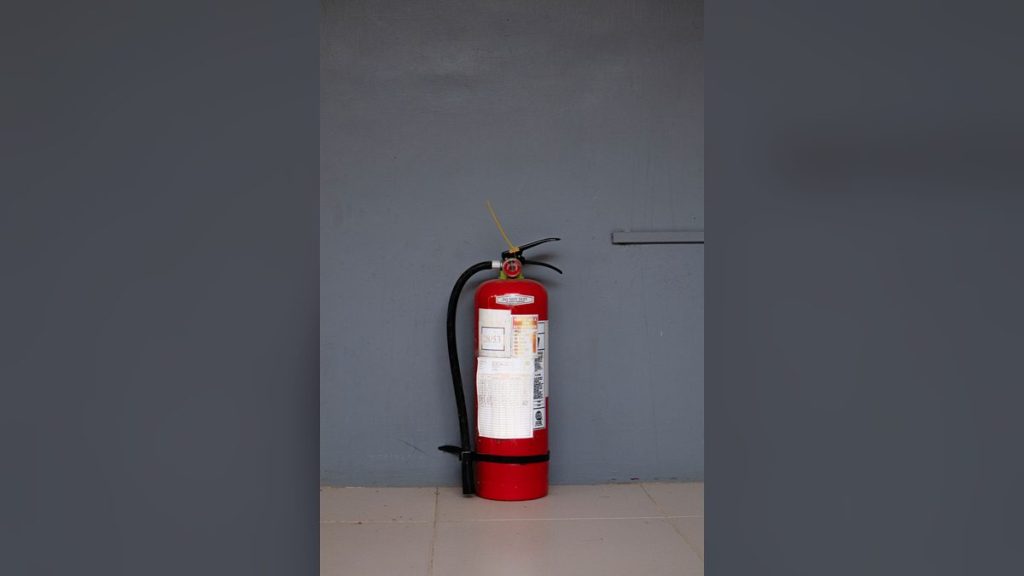
You may have heard confusing advice about extinguishers, so here is the plain version. A regular home ABC extinguisher can knock down the flames around a board, and that is worth doing only if the fire is tiny and you have a clear, safe path to the door. But the battery cells themselves can keep heating and reignite minutes later, even after the flames look out. Firefighters cool these fires with large amounts of water for exactly that reason. You simply cannot out-water a battery fire in your living room, so let the professionals handle anything bigger than a spark.
Two more things. Never pick up a burning board and run with it, because cells can burst and spray molten material. And never toss a swollen or damaged battery in your regular trash. Take it to an e-waste or battery recycling drop-off so it does not start a fire in a garbage truck or landfill.
| Cause | Why It Is Risky | How To Prevent It |
|---|---|---|
| Cheap battery cells | Thin separators short out and ignite | Buy a UL 2272 board from a known brand |
| No battery management system | Nothing stops overcharge or heat | Choose boards that list a BMS and UL 2272 |
| Overnight charging | Hours of extra heat with no one watching | Charge while awake; unplug at 100% |
| Wrong or fake charger | Wrong voltage cooks the pack | Use only the original charger |
| Drops and crashes | Hidden cell damage fails later | Inspect after hard hits; retire damaged packs |
| Water exposure | Shorts the wiring and electronics | Avoid puddles; store somewhere dry |
| Feature | UL 2272 Certified | Uncertified / No-Name |
|---|---|---|
| Battery cell quality | Tested, traceable cells | Unknown, often recycled |
| Overcharge protection | Required and tested | Frequently missing |
| Fire-safety testing | Passed 200-plus tests | Never tested |
| Recall history | Very low | High |
| Typical price | $150 to $400 | $60 to $120 |
| Peace of mind | High | Low |
Common Mistakes (and How to Fix Them)
Fix: Charge only while you are awake and nearby, then unplug the moment it reaches 100 percent. Set a timer so you never forget. Hours of unwatched charging is the single most common thread in hoverboard fires.
Fix: Always use the exact charger that shipped with your board. A mismatched charger can push the wrong voltage into the pack and overheat it. If you lose yours, buy the official replacement for your specific model.
Fix: A bulging shell or a board that feels hot after charging is a battery begging to fail. Stop using it immediately, move it outside away from anything flammable, and replace it. Never keep riding a swollen pack.
Fix: Skip any board that does not clearly state UL 2272 certification. The $60 no-name boards are the ones that ended up on recall lists. Spend a bit more on a certified model from a known brand and your fire risk drops dramatically.
Pro Tips
- 💡 Charge your board on tile, concrete, or a metal tray, never on carpet, a bed, or a couch where a spark could spread fast.
- 💡 Let the battery cool for 30 to 60 minutes after a hard ride before you plug it in; charging a hot pack stresses the cells.
- 💡 Keep a working smoke alarm in the room where you charge, and never charge near your only exit door.
- 💡 Register your board with the manufacturer and check the CPSC recall list once a year so you catch any recall early.
- 💡 Do a quick monthly check: press around the shell for swelling, sniff for odd smells, and look the charging port over for damage.
A Real-Life Example
In April 2022, a fire broke out overnight in a home in Hellertown, Pennsylvania, and investigators traced it to a Jetson Rogue hoverboard that had been left charging. Two sisters, ages 10 and 15, did not make it out, and their parents were injured. Nearly a year later, in March 2023, the CPSC and Jetson recalled 53,000 of those boards. It is a devastating story, and it is the clearest reason the plain, boring safety steps on this page are worth taking seriously every single time.
On a lighter note, a reader named Marcus told us his kid’s three-year-old board suddenly started taking twice as long to charge and felt warm afterward. When he looked closely, the bottom shell was bulging slightly. Instead of shrugging it off, he stopped charging it, carried it out to the patio, and replaced it that week. That swollen pack was a fire waiting to happen, and catching it early is exactly the kind of win we want for every rider.
Frequently Asked Questions
Very rarely, and far less than they used to. The last hoverboard recall was in December 2023, and the industry has now gone over two years without a new one. Nearly all remaining fires involve old, cheap, or uncertified boards. Buy a UL 2272 certified model and charge it carefully, and your risk is extremely low.
Charging is when the battery takes on the most heat and stress, so a weak cell or a failed charge controller is most likely to tip into thermal runaway then. That is why fires so often start with a board left plugged in overnight. Staying nearby and unplugging at 100 percent removes most of the danger.
No, you should never charge a hoverboard overnight. It means hours of extra heat building up with no one awake to notice a problem. Most boards fully charge in two to three hours, so charge during the day while you are home and unplug it as soon as it is done.
Look for three things: a clear UL 2272 certification mark, a recognizable brand, and a battery in good shape with no swelling, odd smells, or heat. Then check the CPSC recall list for your exact model. If it passes all four, it is very likely safe to ride and charge.
Yes, by a wide margin. The bargain no-name boards cut costs on the exact parts that prevent fires, using low-grade cells and skipping the battery management system. Every model on the major recall lists was uncertified. Spending a little more on a UL 2272 board is the best safety investment you can make.
Treat it as an emergency right away. If you can safely unplug it, do so, but do not linger. Get everyone out of the room, shut the door, and call 911 from outside, telling them it is a lithium battery fire. Do not pick up a smoking board, because the cells can burst without warning.
Final Checklist ✅
- ✅ Confirm the board is UL 2272 certified before you buy or ride it.
- ✅ Use only the original charger that came with your board.
- ✅ Charge on a hard, bare floor, never on carpet, a bed, or a couch.
- ✅ Stay home and awake while it charges, and unplug it at 100 percent.
- ✅ Let the board cool for 30 to 60 minutes after a ride before charging.
- ✅ Inspect it monthly for swelling, cracks, odd smells, or frayed wires.
- ✅ Check the CPSC recall list and register your board for safety alerts.