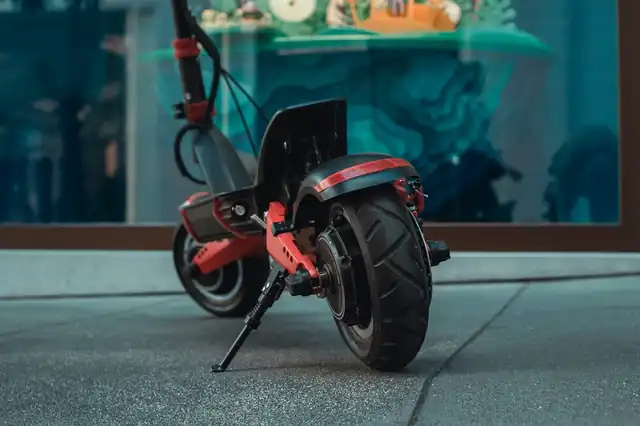
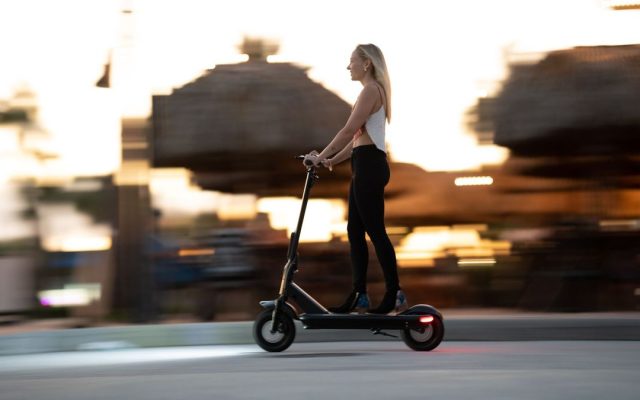
True 40 mph for under a grand is rare. Here's the one scooter that actually delivers it, plus how to spot the fakes before you buy.
So you want one of the 40 mph electric scooters under $1000. I get it, that number sounds like the perfect mix of thrill and value. Forty miles per hour feels wild on a machine you can fold and carry, and staying under a grand means you’re not remortgaging the house for the fun. But here’s the honest truth: real 40 mph scooters at this price are rare. Most “budget speed demons” you see advertised top out closer to 25 to 30 mph once an actual person stands on them.
That doesn’t mean you’re out of luck. A small handful of dual-motor scooters genuinely reach 40 mph and still sneak in under $1000, and the clear standout is the Ausom L2 Max Dual Motor, which independent testers have clocked at a real 40 to 41 mph. In this guide I’ll show you the ones that are real, the ones that only pretend, and exactly how to tell the difference before you spend a dollar.
I’ll also keep it real about the stuff the sales pages skip: how far you’ll actually go at top speed (spoiler, nowhere near the big number on the box), what gear you truly need at 40 mph, and where you can legally open it up. Let’s find you a fast scooter that won’t let you down.
This article is part of our electric scooter buying guide, which brings together every scooter guide on the site.
Can You Really Get 40 MPH for Under $1000?
Short answer: yes, but only just. Forty miles per hour is the ragged edge of what a budget scooter can do. To hit it, you need two motors, a beefy battery, and a frame that stays planted at speed. All of that costs money. That’s why most scooters under $1000 top out somewhere between 20 and 33 mph, not 40.
Here’s what the price ladder really looks like in 2026. Spend $500 to $700 and you’re in commuter territory, think 18 to 25 mph, single motor, great for errands but not for thrills. Spend $800 to $1000 and a few genuine dual-motor speedsters appear. Cross $1000 to $1500 and true 40-plus mph becomes normal.
The scooter that bends this rule is the Ausom L2 Max Dual Motor. At around $899 it packs two 1000W motors and a big 48V battery, and reviewers at respected sites like Electric Scooter Guide and Rider Guide have clocked it at a real 40 to 41 mph on flat ground. That makes it the rare “under $1000, actually 40 mph” unicorn. Most of its rivals at the same price, like the GOTRAX GX1, are excellent scooters but cap out around 30 mph.
So when a no-name listing screams “45 MPH!” for $600, your alarm bells should ring. Physics doesn’t do discounts. Either the number was measured downhill, converted sloppily from km/h, or it’s a peak-lab figure you’ll never see in real life. The good news? Once you know what real 40 mph hardware looks like, the fakes are easy to spot, and I’ll walk you through all of it below.
| Scooter | Top Speed | Motors | Battery | Claimed Range | Weight | Price |
|---|---|---|---|---|---|---|
| Ausom L2 Max Dual Motor | 40 mph (tested) | Dual 1000W | 48V 20.8Ah (~1000Wh) | Up to 56 mi | 73 lb | ~$899 |
| GOTRAX GX1 | 30 mph | Dual 600W | 48V 15Ah (720Wh) | Up to 25 mi | 76 lb | ~$999 |
| Ausom DT2 Pro (stretch pick) | 42 mph | Dual 1100W | 52V 23.4Ah | Up to 71 mi | ~77 lb | ~$1,099 |
The Real 40 MPH Contenders (and Near-Misses)
Let me introduce the short list. This isn’t a padded top-ten stuffed with rebranded clones. It’s the small handful of scooters worth your attention if 40 mph is the goal and $1000 is the ceiling.
The Ausom L2 Max Dual Motor is the headliner. Two 1000W motors, adjustable suspension front and rear, fat 10-inch tubeless tires, and dual disc brakes with electronic ABS. Testers love how stable it feels at speed, which is a big deal, because a twitchy scooter at 40 mph is genuinely scary. It’s heavy at around 73 lbs and the turn signals are a gimmick, but for real 40 mph on a budget, nothing else touches it.
Right below it sits the GOTRAX GX1. It doesn’t hit 40, it’s a 30 mph scooter, but it’s such a well-built, well-supported dual-motor ride at $999 that I’d be doing you a disservice not to mention it. If you decide 40 mph is more than you need, and honestly many riders do, this is the safer, saner pick.
If you can stretch a little past your budget, the Ausom DT2 Pro is the natural step up: a genuine 42 mph, a huge 52V battery, hydraulic brakes, and up to 71 miles of claimed range for around $1,099. It’s the “I want room to grow” option.
- Ausom L2 Max Dual Motor: the one true 40 mph pick under $1000, and the best all-round value for speed.
- GOTRAX GX1: 30 mph, rock-solid build and support, the sensible near-miss for most riders.
- Ausom DT2 Pro: a genuine 42 mph if you can stretch to about $1,099, with more battery and hydraulic brakes.
- Avoid: no-name listings promising 40 to 45 mph for $500 to $700, because the specs almost never hold up.
What It Takes to Hit 40 MPH
Forty mph isn’t a spec you bolt on, it’s the result of several parts working together. Once you understand the recipe, you can look at any listing and know in ten seconds whether the speed claim is believable. Here’s what real 40 mph hardware requires.
Two motors, not one
A single hub motor, even a big 1000W one, usually stalls out around 28 to 33 mph. True 40 mph almost always means dual motors, roughly 1000W each or 2000W-plus combined. The Ausom L2 Max uses exactly this setup, and it’s the reason it can hold speed where single-motor rivals fade.
48 volts or more
Voltage is the closest thing a scooter has to a speed dial. Budget 36V scooters simply can’t spin fast enough to reach 40. Look for 48V at a minimum. The fastest sub-$1000 scooters, and the step-up DT2 Pro at 52V, all live in this range.
A big battery, 800 to 1000Wh and up
Speed is thirsty. Holding 40 mph drains a pack fast, so you want at least 800 to 1000 watt-hours if you don’t want your range to vanish. The L2 Max carries roughly 1000Wh, from its 48V 20.8Ah pack.
Brakes that can actually stop you
At 40 mph you need dual disc brakes. Hydraulic is best, mechanical is the minimum, and electronic ABS helps prevent wheel lock-ups in a panic stop. Never trust a single brake or a weak foot brake at these speeds.
10-inch tires and real suspension
Small solid tires get skittish and dangerous at speed. You want 10-inch or bigger pneumatic or tubeless tires, plus front and rear suspension, so a pothole doesn’t buck you off the deck at full throttle.
The Speed Claims Trap: How Brands Fudge the Numbers
Here’s the part the sales pages don’t want you thinking about. The electric scooter world has a speed-inflation problem, especially in the budget aisle. Learning the four common tricks will save you from a very expensive disappointment.
First, km/h dressed up as mph. Lots of scooters are built for markets that measure in kilometers. A “45” scooter is 45 km/h, which is about 28 mph. Sloppy listings, or hopeful shoppers, read “45” and picture 45 mph. Always ask which unit you’re looking at.
Second, peak versus real. Brands love quoting peak motor watts and lab-perfect top speeds, measured with a featherweight rider, a full battery, and maybe a slight downhill. Stand a real 180-pound human on flat ground and the number drops.
Third, downhill numbers. Almost any scooter will hit a scary speed pointed down a hill. That’s gravity, not the motor. Honest specs are measured on the flat.
Fourth, the rebrand shuffle. The same generic scooter shows up under five brand names, each claiming something different. Real reviews never accumulate, so no one calls out the gap between the claim and reality. The fix is simple: trust independent, hands-on testing over any sales page. When Electric Scooter Guide or Rider Guide puts a GPS on a scooter and it reads 40 mph, like they did with the Ausom L2 Max, that’s real. When a listing shows only a glossy studio photo and a big number, treat it as fiction until proven otherwise.
Range Reality: Why 56 Miles Becomes 20
Speed and range are enemies. This is the single most misunderstood thing about fast scooters, so let me be blunt: the range number on the box is a best-case lab fantasy you will almost never see in real riding.
Take the Ausom L2 Max. The listing says up to 56 miles. That figure is measured in the gentlest possible way, single motor engaged, lowest eco speed, a light rider, flat smooth ground, warm weather. Real testers riding it hard in dual-motor mode near top speed got closer to 20 miles. That’s not a defect, it’s true of every scooter. Speed simply eats battery.
Why so dramatic? Wind resistance climbs sharply as you go faster. Riding 40 mph doesn’t use twice the energy of 20 mph, it uses roughly four times as much per mile. Add two motors both pulling hard and the pack empties fast.
So how should you plan? A good rule of thumb: assume about 35 to 45 percent of the advertised range if you ride mostly at high speed, and maybe 60 to 70 percent at a relaxed cruise. If you need 25 real miles at speed, shop for a scooter that claims 50-plus. Cold weather trims another chunk, so pad your estimate in winter. The upside: if you cruise at 20 to 25 mph most of the time and only sprint in bursts, you’ll land much closer to that headline number. Speed is a treat you spend battery on, not a setting you leave on all day.

Staying Safe (and Legal) at 40 MPH
Let’s talk about the part that actually matters: 40 mph on a scooter is fast. You’re standing upright, exposed, on small wheels, with none of the crumple zones a car gives you. This isn’t meant to scare you off. Fast scooters are a blast, but you have to respect the speed.
Gear comes first. At 40 mph a bicycle helmet is not enough. Get a certified full-face helmet, many riders use a motorcycle or downhill-mountain-bike lid, plus gloves, knee and elbow protection, and closed sturdy shoes. Road rash at 40 mph is a hospital visit, not a scrape. Budget $100 to $200 for gear on top of the scooter. It’s not optional.
Now the legal side, and this catches people off guard. In most US states and cities, e-scooters are capped for public roads and bike lanes somewhere around 15 to 28 mph, and some places require 20 mph or less. A 40 mph scooter is often faster than the law allows on public paths. That doesn’t make the scooter illegal to own, it means you should ride full speed only on private land, closed courses, or areas where it’s clearly permitted, and stick to legal speeds in traffic. Laws vary a lot by state and city, so check yours before your first ride.
- Certified full-face helmet, motorcycle or downhill rated, never just a bike helmet.
- Padded gloves with wrist protection for the most common fall injury.
- Knee and elbow guards, plus closed shoes, never sandals at speed.
- Bright clothing and front and rear lights so drivers actually see you.
How to Choose Your 40 MPH Scooter
Ready to pull the trigger? Let me boil it down to a simple decision. First, be honest about whether you truly need 40 mph. If your riding is mostly commuting and neighborhood cruising, a 30 mph scooter like the GOTRAX GX1 will be lighter, cheaper to maintain, and easier to live with. Forty mph is a thrill, but it comes with weight, cost, and risk.
If you genuinely want the speed and $1000 is your hard ceiling, the Ausom L2 Max Dual Motor is the clear pick in 2026. It’s the one scooter in this price range that independent testers actually clocked at 40 mph, and it gets there with stable, confident handling rather than a white-knuckle wobble.
Whatever you choose, buy from a brand with real reviews, a warranty, and available spare parts. A fast scooter you can’t get a replacement brake pad or battery for is a paperweight in waiting. Match the machine to your real riding, gear up properly, and you’ll have a blast.
If speed is everything
Ausom L2 Max Dual Motor, the true 40 mph pick under $1000. Dual 1000W motors, big battery, stable at speed, around $899.
If you value calm and value
GOTRAX GX1, a superbly built 30 mph dual-motor scooter with great support and parts, around $999. Plenty fast for most people.
If you can stretch the budget
Ausom DT2 Pro, a genuine 42 mph with a larger 52V battery and hydraulic brakes, around $1,099. Buy this if you want headroom.
| Scooter | Marketed Vibe | Real Top Speed | Watch Out For |
|---|---|---|---|
| Ausom L2 Max Dual | 40 mph | 40-41 mph | Legit, independently GPS-tested |
| iScooter iX6 | Fast off-roader | ~28 mph | 45 km/h reads like “45 mph” |
| isinwheel GT2 | Rugged off-road | ~28 mph | Looks fast, tops out at 28 |
| Varla Falcon | “Falcon” name | 22 mph | It’s a commuter, not a speedster |
| Hiboy Titan Pro | Flagship beast | 33 mph | And it costs around $1,500 |
| Component | Minimum for True 40 mph | Why It Matters |
|---|---|---|
| Motors | Dual ~1000W (2000W+ combined) | Single hubs stall around 28-33 mph |
| Voltage | 48V or higher | More volts means more top-speed headroom |
| Battery | 800-1000Wh and up | Holding 40 mph drains packs fast |
| Brakes | Dual disc (hydraulic ideal) | 40 mph needs serious stopping power |
| Tires | 10-inch pneumatic or tubeless | Grip and stability at speed |
| Suspension | Front and rear | Bumps at 40 mph can throw you off |
Common Mistakes (and How to Fix Them)
Fix: Sales pages inflate top speed. Only trust a figure an independent reviewer measured with GPS on flat ground, like the 40 mph testers verified on the Ausom L2 Max. If nobody neutral tested it, assume the number is optimistic.
Fix: A “45” scooter is often 45 km/h, which is only about 28 mph. Convert every foreign-market number before you compare: divide km/h by 1.6 to get mph. That one habit filters out most fake 40 mph claims.
Fix: That 56-mile number is a gentle-lab figure. At a real 40 mph, plan for roughly 35 to 45 percent of it. If you need serious range, buy a scooter that claims far more than your target and expect the cold to trim it further.
Fix: Never buy a 40 mph scooter with a single brake, and never ride one in just a bike helmet. Confirm dual disc brakes before you buy, and budget $100 to $200 for a certified full-face helmet, gloves, and pads.
Pro Tips
- 💡 Only use top-speed mode on smooth, open, legal ground. Save the sprints for where it’s safe and cruise at 20 to 25 mph the rest of the time to stretch your battery way further.
- 💡 For daily rides, charge to about 80 to 90 percent to protect long-term battery health. Top off to a full 100 percent only right before a long trip.
- 💡 Break your scooter in gently for the first 30 miles, then check the folding latch, stem bolts, and tire pressure every week. Vibration at speed loosens hardware over time.
- 💡 Use the P-settings (the parameter menu) to cap the top speed while you’re still learning, then raise the limit once you feel fully in control.
- 💡 Keep tire pressure toward the high end of the range for the best top speed on pavement, and drop it a little for extra grip on loose or off-road ground.
An Example Scenario
Illustrative example: a composite of situations riders often describe, not a real customer story.
Picture a rider named Marcus learning this the hard way. He grabbed a no-name “off-road 45 MPH” scooter off a marketplace ad for $560, sure he’d found a steal. It felt quick for a week, until his GPS app showed it maxing at 26 mph on flat pavement and the “huge range” died at 14 miles. The “45” was km/h. He’d been comparing a 28 mph scooter to real 40 mph machines the whole time.
He ended up selling it at a loss and picking up the Ausom L2 Max Dual Motor instead. First ride, his GPS locked onto a real 39 to 40 mph, and he actually eased off the throttle because it pulled so much harder than the fake ever did. His takeaway, now taped to the garage wall: if nobody independent tested it, the number is fiction.
Frequently Asked Questions
Yes, but only a couple. Genuinely reaching 40 mph needs dual motors and a big battery, which is expensive, so most sub-$1000 scooters top out around 25 to 33 mph. The clear standout that testers have actually clocked at 40 mph is the Ausom L2 Max Dual Motor at around $899. Treat almost every other 40 mph claim in this price range as marketing until you see independent proof.
It’s genuinely fast, think fast-moving city traffic on a machine you can fold and carry. You stand upright and exposed on small wheels, so 40 mph feels far more intense than the same speed in a car. Most riders find 25 to 30 mph is plenty for daily use and only open up to 40 in short, safe bursts on smooth, clear ground.
Because the numbers are usually inflated. Common tricks include quoting km/h as if it were mph (45 km/h is only 28 mph), measuring speed pointed downhill, or using a peak-lab figure with a tiny rider and a fresh battery. Stand a normal adult on flat ground and the real speed is often 10 to 15 mph below the headline.
It’s legal to own, but usually not to ride at a full 40 mph on public roads. Most US states and cities cap e-scooters on streets and bike paths somewhere around 15 to 28 mph, and some require 20 mph or less. That means you should keep to legal speeds in traffic and save full speed for private land or areas where it’s clearly allowed. Always check your specific state and city rules first.
Far less than the box claims when you ride fast. Advertised range is measured in the gentlest way possible, low speed, light rider, flat ground. At a real 40 mph, expect roughly 35 to 45 percent of that number. So a scooter rated for 56 miles may give you around 20 at top speed. Cruise slower and you’ll get much closer to the big number.
In most US states you don’t need a driver’s license or insurance to own a standard e-scooter, but rules vary and some places are tightening them, especially for faster models. A few cities require registration or treat high-speed scooters differently. Check your local DMV or city transportation site before you buy, and never assume the seller’s page reflects your local law.
Final Checklist ✅
- ✅ Confirm the 40 mph claim comes from independent, hands-on testing, not just the sales page
- ✅ Check for dual motors (about 1000W each) and a 48V-or-higher battery
- ✅ Verify dual disc brakes plus both front and rear suspension
- ✅ Convert any km/h numbers to mph before comparing (divide by 1.6)
- ✅ Budget $100 to $200 for a certified full-face helmet, gloves, and pads
- ✅ Look up your state and city e-scooter speed and road laws
- ✅ Plan for about 35 to 45 percent of the advertised range when riding at top speed