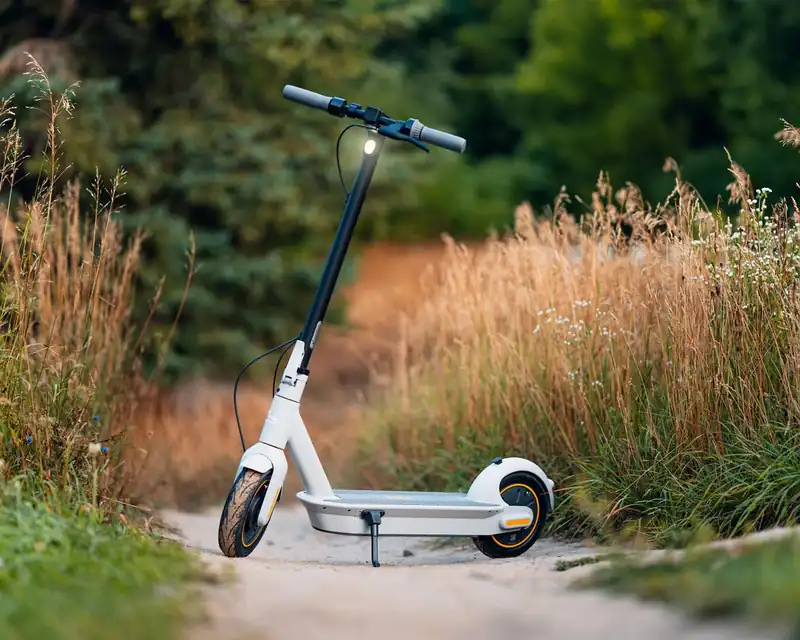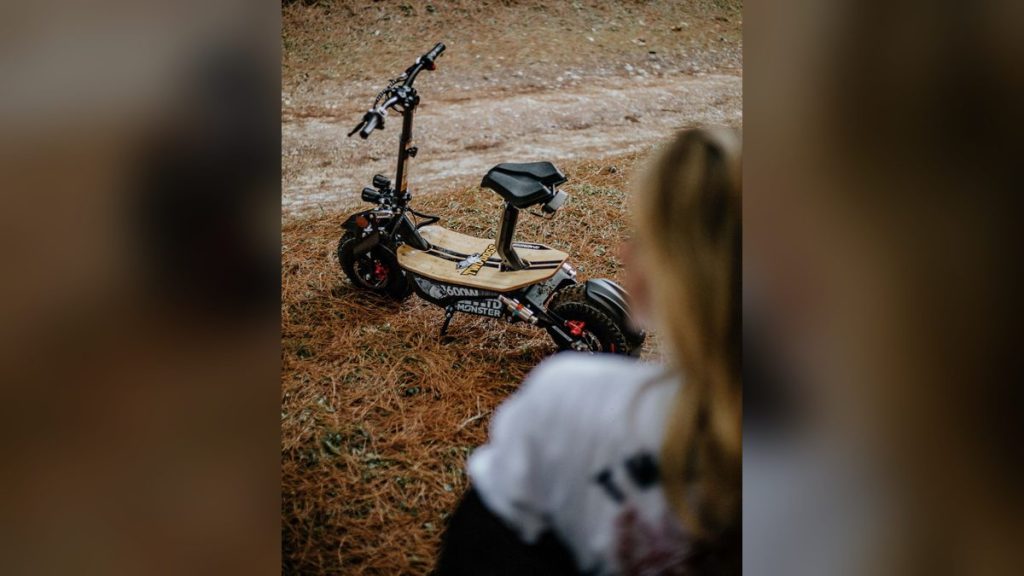
The real 19-20 mph budget scooters worth buying, with honest specs, prices, and the trade-offs nobody warns you about.
If you want the fastest adult electric scooters under $200, here’s the honest truth up front: “fast” at this price means somewhere between 15 and 20 mph. That may not sound like much on paper. But 20 mph on a standing scooter feels genuinely quick, more than enough to keep pace with traffic on quiet streets and turn a sweaty 30-minute walk into a breezy 10-minute glide.
The quickest scooters in this budget are usually Amazon-native brands like Caroma, SISIGAD, and isinwheel, which advertise a real 19 to 20 mph. Big names like Gotrax and Hiboy tend to cap their cheapest models near 15.5 mph, trading a little speed for stronger build quality and easier support. Neither path is wrong. It just depends on what matters most to you.
This guide breaks down the fastest models you can actually get for the money, what their speed and range numbers really mean once you’re on the road, what corners get cut to hit that price, and how to squeeze every mile per hour out of whatever you buy. No hype, no fake specs, just straight talk from riders who’ve spent the $200.
What “Fast” Really Means Under $200
Let’s set expectations, because the word “fast” does a lot of heavy lifting in the budget scooter world. Under $200, the quickest scooters you can buy top out around 19 to 20 mph. The big-name models in this price range, think Gotrax or Hiboy, usually cap out lower, near 15.5 mph. Neither number sounds thrilling on paper. But speed feels very different when you’re standing up in the open air instead of sitting in a car.
Here’s a good rule of thumb. At 15 mph you’ll comfortably keep pace with a relaxed cyclist and glide right past walkers. At 20 mph you’re moving with traffic on quiet neighborhood streets, and the wind is loud enough that you’ll want to zip up your jacket. For turning a long walk into a short, fun ride, both speeds are plenty. Most people who think they want 30 mph quickly realize 18 to 20 is already exciting on small wheels.
Why does $200 cap out around 20 mph? It comes down to parts. A faster scooter needs a bigger battery, a stronger motor, and a smarter controller, and those cost money. At this price, brands give you a single 250 to 350-watt motor and a modest battery, which is exactly enough for a zippy, flat-ground commute. Push past 20 mph and prices climb quickly into the $300, $500, and $700 tiers.
| Model | Top Speed | Claimed Range | Tires | Max Load | Typical Price |
|---|---|---|---|---|---|
| Caroma 350W | 20 mph | Up to 20 mi | 9″ solid | 265 lbs | ~$180-$220 |
| SISIGAD 350W | 19-22 mph | Up to 20 mi | 10″ solid | 265 lbs | ~$190-$250 |
| isinwheel S9 | 19 mph | 12-19 mi | 8.5″ air | 220 lbs | ~$190-$260 |
| EVERCROSS EV10Z | 19-20 mph | Up to 22 mi | 8″ solid | 330 lbs | ~$230-$250 |
| Gotrax GXL V2 | 15.5 mph | Up to 12 mi | 8.5″ solid | 220 lbs | ~$200-$249 |
| Gotrax G2 | 15.5 mph | Up to 11 mi | 8″ air | 220 lbs | ~$200-$230 |
The Fastest Electric Scooters You Can Get Under $200
No single scooter wins for everyone, so here are the strongest fast-and-cheap picks right now. A quick note on price: a couple of these bounce right around the $200 line and dip under during sales, so grab them when they’re marked down. Amazon-native brands like Caroma, SISIGAD, and isinwheel tend to be the speed champs, while Gotrax trades a little pace for a trusted name and easy US support.
- Want the most speed? Caroma 350W or SISIGAD.
- Rough roads or longer rides? SISIGAD or isinwheel S9.
- Heavier rider? Caroma (265 lb) or EVERCROSS (up to 330 lb).
- Want a trusted brand and support? Gotrax GXL V2.
Caroma 350W: Fastest Speed for the Money
This is the pick if raw speed is your goal. The Caroma 350W advertises a true 20 mph and backs it with a high 265 lb weight limit, so heavier riders still get real pep. Flat-free 9-inch tires mean almost zero upkeep, and the app adds cruise control and speed modes. It’s our featured pick below.
SISIGAD 350W: Best for Comfort and Range
SISIGAD’s adult models pair a 19 to 22 mph top speed with big 10-inch tires and a peak motor near 600W. The larger wheels smooth out the cracks and bumps that rattle smaller scooters, and claimed range stretches to 20 miles or more. A great choice if your commute has rough pavement.
isinwheel S9: Smoothest Ride, Known Brand
The isinwheel S9 hits 19 mph on 8.5-inch air-filled tires, which soak up bumps better than solid ones. It’s light at under 28 lbs, folds easily, and has a solid reputation and app support. The trade-off is you’ll need to check tire pressure and risk the occasional flat.
EVERCROSS EV10Z: Highest Weight Limit
EVERCROSS offers 19 to 20 mph models with up to 22 miles of claimed range, and some versions carry up to 330 lbs, which is rare at this price. Build quality is basic and it often sits just above $200, but it dips under during sales and suits bigger riders well.
Gotrax GXL V2 and G2: Best Trusted Name
If you’d rather have a well-known brand with easy support and parts, Gotrax is the safe bet. The GXL V2 (15.5 mph, solid tires) and G2 (15.5 mph, air tires) are slower than the speed champs but feel more polished and reliable. Ideal for first-timers who value peace of mind over top speed.
Speed Is Only Half the Story: Range, Tires, and Hills
A scooter that hits 20 mph for two miles and then dies isn’t much of a commuter. That’s why range matters just as much as speed, and why you should never fully trust the range number on the box. Those figures come from a light rider, on flat ground, at a gentle speed, with a brand-new battery. In the real world, plan on getting roughly half to two-thirds of the advertised range.
So a scooter that claims “20 miles” will realistically do 10 to 13 for an average adult riding at full speed. That’s still fine for most commutes, but do the quick math: take your daily round trip, double it, and make sure the real-world range clears that number with charge to spare. Batteries also fade over a year or two, so a little buffer today saves you from a dead scooter next winter.
Tires and hills are the other two things budget shoppers forget. Solid tires never go flat, which is wonderful, but they pass every crack in the sidewalk straight to your feet. Air-filled tires ride smoother and grip better, at the cost of the occasional puncture. As for hills, this is where cheap scooters struggle most. A 250 to 350W motor will slow to a crawl on a steep grade, especially under a heavier rider. If your route has a big climb, get the highest-wattage motor you can afford and don’t expect miracles.
- Real range is usually 50-65% of the advertised number.
- Double your daily round trip, then match it to real range.
- Solid tires mean no flats but a firmer ride.
- Air tires ride smoother and grip better but need pressure checks.
- Steep hills will slow any sub-$200 motor, so plan for it.
What You Give Up to Stay Under $200
Buying smart means knowing the trade-offs. A $200 scooter and a $700 scooter can both say “20 mph” on the box, but they’re built very differently. The savings come from somewhere, and it helps to know where before you’re surprised on the road.
The biggest cutbacks are in the battery, suspension, and brakes. Budget batteries are smaller, so range is shorter and they wear out faster. Most cheap scooters have little or no suspension, so a bumpy road is felt through your feet and hands. Brakes are often a single disc or a basic electronic brake rather than the dual setups on pricier models. Build materials are lighter-duty too, which is why weight limits hover around 220 to 265 lbs and why these scooters can feel a little flexy at speed.
None of this makes a budget scooter bad. It makes it a budget scooter. For a flat, two-to-five-mile commute on decent pavement, these compromises barely matter. But if you’re a heavier rider, your roads are rough, or you have real hills, spending another $100 to $200 buys noticeably better brakes, suspension, and battery life. Be honest about your route and body weight, and you’ll pick the right tier the first time.
Is It Worth Spending a Little More?
Sometimes the smartest budget move is to stretch it slightly. The under-$200 world is real and useful, but the jump to the $200-$400 tier is one of the best-value upgrades in all of micromobility. For an extra hundred bucks or so, top speeds climb toward 22 mph, real range roughly doubles, and you get proper brakes and tougher frames from brands like Hiboy, Gotrax, and NIU.
Look at the budget table above and be honest with yourself. If your commute is two flat miles and you just want to stop walking, a $180 Caroma is genuinely all you need, and spending more is wasted money. But if you’re riding five-plus miles a day, carrying a heavier load, or facing hills, the $200-$400 scooters will make you far happier over the next few years. They hold their speed better, need fewer charges, and simply last longer.
Our advice: figure out your route and weight first, then buy the cheapest scooter that comfortably clears both, not the cheapest scooter, period. A slightly pricier model that fits your real life beats a rock-bottom bargain that leaves you kicking up hills or charging twice a day.
Ride Fast, Ride Legal: Speed Laws and Safety
Good news for budget riders: the speed limits that matter most keep you safely inside the law. In the large majority of US states, an electric scooter under 750 watts and 20 mph is treated a lot like a bicycle. That means no license, no registration, and no insurance for the vast majority of riders, and it’s exactly why so many scooters are capped right at 20 mph.
Where the rules get local is on where you can ride. Most places want you in the bike lane or on the road, not the sidewalk, and dense cities like New York ban sidewalk riding outright. Some towns set their own lower speed limits on shared paths. Helmet rules vary too: many states require them for riders under 18, and a few require them for everyone. None of this is hard to follow, but a five-minute check of your city’s rules before you buy will save you a ticket later.
Safety-wise, treat 20 mph with respect. Wear a helmet every single time, because it’s the one piece of gear that truly matters. Add lights and reflective gear if you’ll ride at dusk or in the dark, since drivers aren’t looking for a small, quiet scooter. And give yourself a few days in an empty parking lot to practice braking and turning before you mix with traffic.
How to Actually Hit and Keep Your Top Speed
Once you’ve picked your scooter, a few simple habits help you reach that advertised speed more often and keep it as the scooter ages. The best part is that most of them are free.
Start with the battery, because voltage is speed. A fully charged scooter is noticeably quicker than one at half battery, so top it off before any ride where you want full pace. If your scooter has ride modes, put it in the fastest one, since modes 1 and 2 usually cap speed to save battery and protect new riders. Keep air tires pumped to the pressure printed on the sidewall, because soft tires quietly steal 2 to 3 mph and a big chunk of your range.
Your body and the weather matter too. Lighter riders on flat ground get closest to the rated number, so if you’re heavier, expect a little less and don’t fight it. In cold weather, keep the battery indoors until you leave, because cold cells lose voltage, which costs you both speed and miles. Finally, update the app or firmware if your model has one, since brands sometimes unlock a slightly higher speed cap or smoother acceleration in updates. None of these turn a budget scooter into a race machine, but together they make sure you’re getting every mile per hour you paid for.
- Charge to 100% right before a full-speed ride.
- Use the highest ride mode (Sport or mode 3).
- Keep air tires at their labeled pressure.
- Expect a little less speed if you’re heavier or climbing.
- Keep the battery warm in winter and update firmware when offered.
| Budget | Typical Top Speed | Typical Real Range | Example Models |
|---|---|---|---|
| Under $200 | 15.5-20 mph | 8-14 mi | Caroma 350W, Gotrax GXL V2 |
| $200-$400 | 18-22 mph | 15-25 mi | Hiboy S2, Gotrax G4, NIU KQi2 Pro |
| $400-$700 | 20-28 mph | 25-40 mi | Segway Max G2, Apollo Air |
| $700 and up | 28-40+ mph | 40-60 mi | Kaabo Mantis, Apollo City |
| Feature | Solid Tires | Air / Pneumatic Tires |
|---|---|---|
| Flats | Never, puncture-proof | Can go flat |
| Ride comfort | Firmer, feels bumps | Softer, absorbs shocks |
| Maintenance | Almost none | Check pressure often |
| Grip in rain | Fair | Better |
| Found on | Caroma, GXL V2, SISIGAD | isinwheel S9, Gotrax G2/G4 |
Common Mistakes (and How to Fix Them)
Fix: Rated speeds come from light test riders on flat, smooth ground with a full battery. Expect 2 to 5 mph less in real life, and more if you’re a heavier rider or climbing a hill. Judge a scooter by its real-world speed, not the sticker.
Fix: A 265 lb limit doesn’t mean full speed at 260 lbs. The closer you get to the max, the more acceleration and top speed suffer. Stay 20 to 30 lbs under the rated limit to keep the scooter feeling quick.
Fix: Twenty mph needs real stopping power. Skip single-brake models and insist on a dual braking system, a disc or drum brake paired with an electronic or EABS brake, so you can stop fast when traffic surprises you.
Fix: Advertised range assumes ideal conditions. Cut the number roughly in half, then make sure it still covers your daily round trip with charge to spare, so you’re never stranded on the way home.
Pro Tips
- 💡 Charge to 100% right before any ride where you want full speed, because voltage drops and so does your top end as the battery drains.
- 💡 If your scooter has ride modes, use Sport or mode 3 to unlock full speed. Modes 1 and 2 cap it for safety and battery life.
- 💡 Keep air tires at the pressure printed on the sidewall. Soft tires can quietly rob you of 2 to 3 mph and half your range.
- 💡 Ride with a slight knee bend and your weight centered. It steadies you at speed and lets you brake harder when you need to.
- 💡 In cold weather, keep the battery indoors until you ride. Cold cells lose voltage, which shaves both miles and mph off your day.
A Real-Life Example
When I swapped my $189 budget scooter in for a friend’s $700 model, I braced for a huge gap. Honestly? For my 2-mile ride to the train, the cheap one held its own. It hit a real 18 mph on flat pavement, folded small enough to carry up the station stairs, and got me there without breaking a sweat. The difference only showed up on the big hill near my apartment, where the budget motor slowed to a crawl and I had to kick a little. For flat-city commuting, the money I saved bought a lot of coffee.
The one thing I wish I’d known sooner: my “20 mph” scooter only hit that number on a full charge, on smooth flat ground, with a bit of luck. At 210 lbs and with the battery half-drained, I cruised closer to 15 to 16 mph. That’s still plenty fast for a bike lane. I just stopped trusting the box and started trusting the road.
Frequently Asked Questions
The fastest scooters under $200 top out around 19 to 20 mph, and they’re almost always Amazon-native brands like Caroma, SISIGAD, and isinwheel rather than the big names. The Caroma 350W and SISIGAD 350W both advertise a true 20 mph on flat ground. Gotrax and Hiboy usually cap their sub-$200 models at 15.5 mph, trading a little speed for stronger build quality and easier support.
Yes, for most flat-city commuting and errands. A 250 to 350W motor easily carries a 150 to 200 lb adult at 15 to 20 mph on level ground, which is enough to keep pace with bike-lane traffic. Where budget scooters struggle is on steep hills and with very heavy riders, so match the motor and weight limit to your real needs.
For most riders, 15 to 18 mph is the commuting sweet spot. It’s fast enough to make a real dent in your travel time and keep up with bike traffic, but slow enough to feel in control on small wheels. Many people think they want 25 mph and then find that 18 already feels plenty lively on a standing scooter.
They can be, as long as you respect their limits and gear up. Look for a dual braking system, keep the tires in good shape, and always wear a helmet. The biggest risks come from riding faster than the brakes and tires can handle, or from riding in the dark without lights, both of which are easy to avoid.
Almost always because of weight, battery level, terrain, or tire pressure. Rated speeds assume a light rider, a full charge, flat ground, and properly inflated tires. Add a heavier rider, a half-empty battery, a slight incline, or soft tires, and you can easily lose 3 to 5 mph off the number on the box.
In most US states, no. An electric scooter under 750 watts and 20 mph is generally treated like a bicycle, which means no license, registration, or insurance for the vast majority of riders. Rules on sidewalks, bike lanes, and helmets vary by city, though, so check your local laws before you ride.
Final Checklist ✅
- ✅ Confirm the top speed is realistic for an adult at your weight, not just a light test rider.
- ✅ Check the weight limit and leave a 20 to 30 lb buffer to keep real speed.
- ✅ Match the real-world range to at least double your daily round trip.
- ✅ Decide between solid tires (no flats) and air tires (smoother ride).
- ✅ Look for dual brakes (disc plus electronic), not a single fender brake.
- ✅ Check your state and city speed and sidewalk rules before you buy.
- ✅ Grab a certified helmet and lights before your first commute.