A 500W mid-drive commuter-meets-mountain e-bike with 27.5-inch tires, a removable battery, and app tracking. Here is everything worth knowing before you buy.
If you have been hunting for an electric bike that can handle both your morning commute and a weekend trail, the H-1 Pro Series Compass e-bike deserves a close look. Made by Hover-1, a brand many riders already know from hoverboards and scooters, the Compass is a mid-drive electric mountain bike built to feel balanced, planted, and easy to live with. It rolls on big 27.5-inch tires, hides a removable battery in the frame, and even talks to a phone app.
What makes the Compass stand out in a crowded field is that 500W mid-drive motor. Instead of hiding the motor in the rear wheel like most budget e-bikes, Hover-1 mounts it low and center. That one change affects almost everything about how the bike rides, from how it climbs hills to how long the battery lasts. Add a 20 mph top speed, a throttle for lazy days, and UL 2849 safety certification, and you have a machine that punches above its price.
In this guide, we will walk through the Compass from tire to tail. You will learn exactly what the specs mean in plain English, how far that battery will really take you, who this bike suits best, and the small mistakes that trip up new owners. By the end you will know whether the Compass belongs in your garage. No sales pitch, just honest plain-English advice.
This article is part of our guide to electric rideables, which covers electric unicycles, Onewheels, electric skateboards, kick scooters and mopeds.
What Is the H-1 Pro Series Compass E-Bike?
The H-1 Pro Series Compass is a Class 2 electric mountain bike from Hover-1, the same company behind a huge range of hoverboards and electric scooters. “Class 2” simply means it has both pedal assist and a throttle, and it is capped at 20 mph. You can pedal with a helping hand from the motor, or twist the throttle and let the bike do the work without pedaling at all. That flexibility makes it friendly for new riders and handy on days when you would rather cruise than sweat.
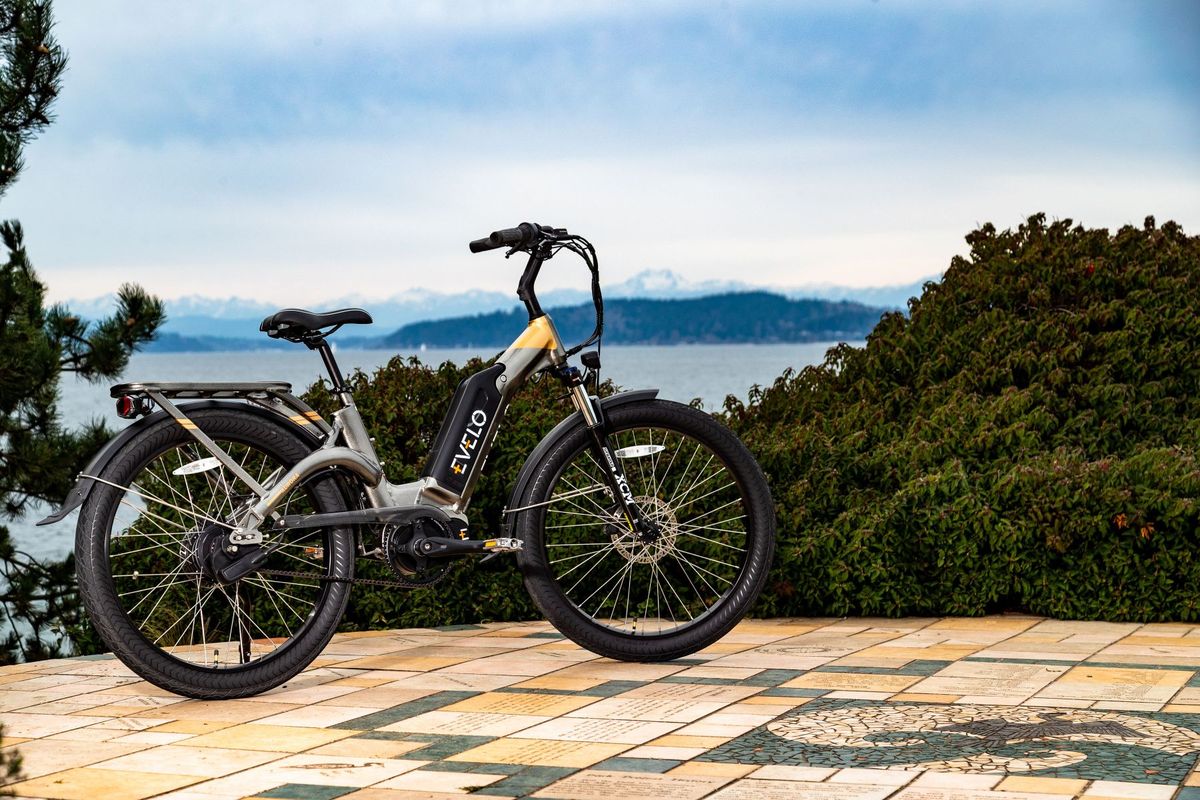
Physically, the Compass looks like a rugged hardtail mountain bike. It has a front suspension fork, chunky 27.5-inch tires, and a frame designed to carry the battery low and centered. It weighs about 55.8 pounds, which is fairly typical for an e-bike in this class, and it supports riders up to 264 pounds. Hover-1 recommends it for ages 16 and up.
Where the Compass tries to separate itself is the mix of features at its price. You get a mid-drive motor, a removable battery, app connectivity with GPS, dual LED lighting, and UL 2849 safety certification, a combination you usually see on pricier bikes. It is not a hardcore trail slayer, and it is not trying to be. Think of it as a do-a-bit-of-everything e-bike: comfortable on pavement, capable on light trails, and easy enough for a beginner to trust.
| Spec | Detail |
|---|---|
| Motor | 500W brushless mid-drive |
| Top speed | 20 mph (Class 2) |
| Battery | 48V / 9.6Ah lithium-ion (about 461Wh), removable |
| Charge time | About 5 hours |
| Range | Up to 51 mi pedal assist / 31 mi throttle |
| Pedal assist | 5 levels (plus 0/off) |
| Tires | 27.5-inch pneumatic mountain |
| Suspension | Front spring fork (hardtail) |
| Brakes | Dual mechanical disc (front & rear) |
| Lights | Dual LED headlight + LED taillight |
| Display | Mid-mounted LED (speed, battery, trip, assist) |
| App | H-1 Pro Series (iOS/Android), GPS, password lock |
| Safety | UL 2849 certified |
| Bike weight | 55.8 lbs |
| Weight capacity | 264 lbs |
| Recommended age | 16+ |
| MSRP | $2,399.99 (often discounted) |
Key Specs and What They Actually Mean
Spec sheets can feel like alphabet soup, so let us translate the important numbers into real riding. The Compass runs a 48V/9.6Ah battery, which works out to roughly 461 watt-hours of energy. That is a modest battery by e-bike standards, so the headline range figures are best-case numbers you will only hit under ideal conditions. The 500W mid-drive motor is strong enough for confident starts and moderate hills, though Hover-1 does not publish a torque rating, so do not expect it to yank you up the steepest grades like a high-torque premium system.
The 20 mph top speed is standard for a Class 2 bike and plenty for commuting or bike-path cruising. The 27.5-inch tires strike a nice balance: big enough to roll over bumps and curbs smoothly, but not so huge that the bike feels sluggish. Charging takes about five hours from empty, and because the battery pops out, you can carry it inside to charge instead of parking the whole bike next to an outlet. The full spec table below lays it all out.
- 48V/9.6Ah battery (about 461Wh): enough for real commutes, but plan to recharge every couple of days.
- 500W mid-drive motor: smooth, balanced power that favors efficiency over raw punch.
- 20 mph top speed: the legal Class 2 limit and fast enough for most streets and paths.
- 55.8 lb weight: liftable in a pinch, but you will feel it on stairs. Pull the battery to lighten the load.
- 264 lb weight capacity: covers most riders plus a loaded backpack or pannier.
The 500W Mid-Drive Motor: Why It Changes Everything
Here is the single biggest reason to care about the Compass: the motor sits in the middle of the bike, not in the rear wheel. This is called a mid-drive, and it is the same basic layout used on high-end e-bikes that cost two or three times as much. Most affordable e-bikes use a hub motor tucked into the back wheel instead. Both get you moving, but they feel very different.
A mid-drive sends its power through the bike’s chain and gears. That means the motor gets to use your gears just like your legs do. In a low gear it can multiply its force for climbing. On flat ground in a high gear it spins efficiently and sips battery. Because the weight sits low and centered, the bike also feels more balanced and planted, especially in corners and on loose surfaces.
There is a trade-off. Mid-drives put more stress on the chain and gears, so those parts wear a little faster and need slightly more care. For most riders that is a small price to pay for better climbing, longer range, and a more natural ride feel. The table further down shows exactly how mid-drive and hub motors stack up.
Better hill climbing
By pushing through the gears, a mid-drive turns a modest 500W motor into a surprisingly capable climber. Drop into a low gear before the hill starts, keep pedaling lightly, and let the motor and gearing do the work together.
Longer real-world range
Mid-drives are usually more efficient than hub motors because they run in their sweet spot more often. That efficiency is a big reason Hover-1 can claim up to 51 miles from a fairly small battery.
More balanced handling
With the heaviest part of the bike low and centered, the Compass feels stable rather than tail-heavy. That makes it easier to control at low speed and more confident on light trails.
Real-World Range: How Far 51 Miles Really Goes
Hover-1 rates the Compass at up to 51 miles on pedal assist and about 31 miles on throttle alone. Those are the numbers on the box, and like every e-bike range claim, they come from ideal conditions: a light rider, flat ground, low assist, mild weather, and gentle pedaling. Your real-world number will almost always be lower, and that is completely normal. It is true of every e-bike, not just this one.
The battery holds about 461 watt-hours, which is on the smaller side, so how you ride matters a lot. Lean on the throttle and blast around at 20 mph and you might see 18 to 25 miles. Pedal actively in a low-to-medium assist level on mostly flat ground and 35 to 45 miles is realistic. Hills, headwinds, cold weather, heavier riders, and low tire pressure all take their cut. The range table below breaks it down by riding style.
The good news is that the battery is removable, so charging is easy, and you can build a habit of topping up at work. For a daily commute of 10 to 20 miles round trip, the Compass has comfortable headroom. For 40-plus-mile adventures, plan your route around your real range, not the box number.
Comfort, Tires, and Stopping Power
Comfort is where the Compass quietly shines for everyday riding. The spring suspension fork up front soaks up cracks, curbs, and gravel so your wrists and shoulders are not rattled on a rough commute. It is a hardtail, meaning there is no rear suspension, so big trail hits will still reach your seat. But for pavement, bike paths, and mellow dirt, the front fork is plenty.
Those 27.5-inch mountain tires do a lot of the comfort work too. They are wide enough to grip loose surfaces and roll over bumps, and they add a bit of natural cushioning. This tire size is a sweet spot: nimble enough to feel lively, big enough to feel stable. Curbs and potholes that would jolt a small-wheeled scooter are far less dramatic here.
Disc brakes are a big safety win on a heavier, faster e-bike. Because the Compass weighs around 56 pounds and can hit 20 mph, you need real stopping power, and discs deliver it in the wet and dry far better than old-style rim brakes. Give them a gentle break-in period during your first few rides. A series of controlled stops from moderate speed helps the pads bed in and bite harder.
Mechanical disc brakes, front and rear
The Compass uses cable-actuated (mechanical) disc brakes at both wheels. They deliver strong, reliable stopping and are easy to service and adjust yourself. They are not quite as effortless as hydraulic brakes, so expect to squeeze a little harder and to check cable tension now and then.

Smart Features: App, Display, Lights, and Safety
The Compass is more connected than most bikes near its price. It pairs with the H-1 Pro Series app on iOS and Android, where you can track your riding distance and time, use GPS navigation, tweak settings, and even set a password to help protect the bike from casual thieves. It is not a substitute for a good lock, but the password layer is a nice extra.
On the bike itself, a mid-mounted LED display keeps the important stuff in front of you: current speed, battery level, odometer, trip distance, trip time, and which assist level you are in. It is clear and simple rather than fancy, which is exactly what you want at a glance while riding.
For riding after dark, the Compass comes with dual LED headlights and an LED taillight built in, so you are not scrambling to buy and mount your own. Being seen is half of staying safe, and integrated lights mean you never forget them at home.
- UL 2849 certified: the whole electrical system (battery, charger, and controller) has been tested to a recognized safety standard, which lowers fire risk.
- Removable battery: charge it indoors, away from the bike, and keep it out of extreme heat or cold.
- Integrated lights: front and rear LEDs are built in, not afterthoughts.
- App password lock: adds a simple anti-theft layer on top of a physical lock.
Who Should Buy the Compass (and Who Shouldn’t)
The Compass is a strong pick for commuters, casual riders, and anyone who wants a taste of mid-drive performance without paying premium-brand prices. If your rides mix pavement with the occasional gravel path, if you want a throttle for easy days, and if you like the idea of app tracking and built-in lights, it checks a lot of boxes. Beginners will appreciate how balanced and approachable it feels, and the UL 2849 certification adds peace of mind.
It is not for everyone, though. Hardcore trail riders will want full suspension and more torque, and long-haul riders should know the modest battery limits real range. At roughly 56 pounds it is also not something you will happily carry up three flights of stairs every day.
Priced at a $2,399.99 MSRP but frequently discounted, the Compass makes the most sense when you catch it on sale. At that point the mid-drive motor, removable battery, and safety certification make it a genuinely smart buy. Go in with realistic range expectations and a willingness to keep the brakes and chain happy, and the Compass will reward you with a comfortable, confident ride for years.
- Great fit: commuters riding 10 to 20 miles round trip who want efficiency and comfort.
- Great fit: riders who want mid-drive balance and hill help on a budget.
- Great fit: new e-bikers who want a throttle as a safety net.
- Maybe skip: hardcore trail riders who need full suspension and high torque.
- Maybe skip: riders who need a true 50-plus real miles per charge.
- Maybe skip: anyone who wants a featherweight bike that is easy to carry upstairs.
| Feature | Mid-Drive (Compass) | Rear Hub Motor (typical budget e-bike) |
|---|---|---|
| Motor location | Center of frame, at the cranks | Inside the rear wheel |
| Hill climbing | Strong, uses the gears | Weaker, one fixed ratio |
| Efficiency / range | Higher, runs in its sweet spot | Lower, especially on hills |
| Handling / balance | Low, centered weight | Rear-heavy |
| Maintenance | Chain and gears wear a bit faster | Very low, simple |
| Flat-tire fixes | Easy, motor stays put | Trickier, wires in the wheel |
| Typical cost | Higher | Lower |
| Riding style | Assist / mode | Estimated real range |
|---|---|---|
| Throttle-heavy, top speed | Full throttle, flat ground | 18 to 25 miles |
| Mixed city riding | Assist 3, some stops and hills | 25 to 35 miles |
| Efficient commuting | Assist 1 to 2, flat, active pedaling | 35 to 45 miles |
| Manufacturer claim | Pedal assist, ideal conditions | Up to 51 miles |
Common Mistakes (and How to Fix Them)
Fix: The 51-mile figure is a best-case pedal-assist number. On full throttle at top speed, plan for roughly 18 to 25 real miles, and pedal along to stretch it further.
Fix: Because it is a mid-drive, ease off the pedals for a moment as you shift. Shifting while mashing the pedals grinds the chain and wears the drivetrain fast.
Fix: Cable brakes stretch over time. If the lever pulls toward the bar or braking feels soft, turn the barrel adjuster or get a quick tune-up. Do not wait until they fade.
Fix: Heat and hard cold both hurt lithium batteries. Pop the battery out and charge and store it indoors at room temperature to protect range and lifespan.

Pro Tips
- 💡 Drop into a low gear before a hill starts, not halfway up it. The mid-drive climbs best when the gearing is already working with it.
- 💡 Keep your tires at the pressure printed on the sidewall. Soft tires feel cushy but quietly steal range and make flats more likely.
- 💡 Use a lower assist level for daily rides and save full throttle for when you actually need it. Your battery will last noticeably longer.
- 💡 Bed in the brakes during your first rides with several firm, controlled stops from moderate speed. They will bite better afterward.
- 💡 Set up the app password lock right away, and always pair it with a solid physical lock for real-world security.
An Example Scenario
Illustrative example: a composite of situations riders often describe, not a real customer story.
Take Marcus, a nurse who swapped a 12-mile round-trip car commute for the Compass. On assist level 2 he rolls into work barely breaking a sweat, then charges the removable battery at his locker so he never worries about the ride home. Three months in, he says the mid-drive’s smooth help on the one nasty overpass on his route sold him for good.
His only real adjustment? He learned to feather off the pedals when shifting after a few clunky gear changes, and he added a heavier lock once he noticed how many people eyed the bike at the rack.
Frequently Asked Questions
Yes, it is a Class 2 e-bike. That means it has both pedal assist and a twist throttle, and the motor cuts out at 20 mph. Class 2 bikes are legal on most U.S. roads and many bike paths, but rules vary by city and trail, so check your local regulations before your first ride.
Realistically, expect 18 to 45 miles depending on how you ride. Hover-1’s 51-mile claim assumes ideal conditions and light pedal assist. Lean on the throttle at top speed and you will see the low end; pedal actively in a low assist level on flat ground and you will approach the high end. Hills, cold weather, and heavier loads all reduce range.
No, you do not have to pedal. Because it is a Class 2 bike with a throttle, you can twist and go without pedaling at all, up to 20 mph. That said, pedaling with assist dramatically increases your range and is the best way to enjoy the mid-drive motor’s smooth, efficient power.
Light rain is generally fine, but heavy downpours and deep puddles are not. Like most e-bikes, the Compass is water-resistant, not waterproof. Wipe it down afterward, avoid submerging the motor or battery, and store it somewhere dry. Remember that wet conditions lengthen braking distances, so slow down and brake earlier.
About five hours from empty to full. Because the battery is removable, you can carry it inside and charge it at your desk or by any wall outlet, away from the bike. Charging indoors at room temperature is also better for the battery’s long-term health than leaving it out in the cold or heat.
Yes, within reason. The mid-drive motor uses the bike’s gears, so it climbs moderate hills better than many budget hub-motor bikes. Just shift to a low gear before the climb. It supports riders up to 264 pounds. For very steep hills or the heaviest riders, you will get the best results by pedaling along in a low gear rather than relying on throttle alone.
Final Checklist ✅
- ✅ Confirm your local laws allow Class 2 (20 mph, throttle) e-bikes on the roads and paths you plan to ride.
- ✅ Check the current price and compare it against the $2,399.99 MSRP, then buy when it is discounted.
- ✅ Charge the battery fully before your first ride and set up the H-1 Pro Series app.
- ✅ Set the app password lock and buy a sturdy physical lock for real-world security.
- ✅ Inflate the 27.5-inch tires to the pressure printed on the sidewall.
- ✅ Take a few slow test rides to bed in the mechanical disc brakes before riding in traffic.
- ✅ Plan your commute around a realistic 25 to 35 mile range, not the 51-mile best case.