The blunt truth about American-made hoverboards in 2026 — and how to buy the most US-built board you actually can.
If you’re hunting for a hoverboard made in USA, here’s the honest answer before you spend a dime: almost none of the two-wheel boards you’ll see on Amazon are actually built in America. The self-balancing scooter was invented and mass-produced in Shenzhen, China back around 2013, and that’s still where the vast majority roll off the line today — even the ones sold by well-known American companies.
But that’s not the whole story, and it’s not all bad news. There is one genuine, designed-and-assembled-in-America self-balancing board: the Onewheel, built by Future Motion in Santa Cruz, California. And for classic two-wheel hoverboards, plenty of solid US-based brands stand behind their products with American warranties, support, and safety testing, even when the factory itself sits overseas.
In this guide we’ll cut through the marketing. You’ll learn which boards are truly made in the USA, which brands are American companies building abroad, and — most importantly — why a UL 2272 safety sticker matters far more than a ‘Made in USA’ one. By the end, you’ll know exactly how to buy the most American board that fits your budget.
This article is part of our hoverboard buying guide, which brings together every hoverboard guide on the site.
So, Are Any Hoverboards Actually Made in the USA?
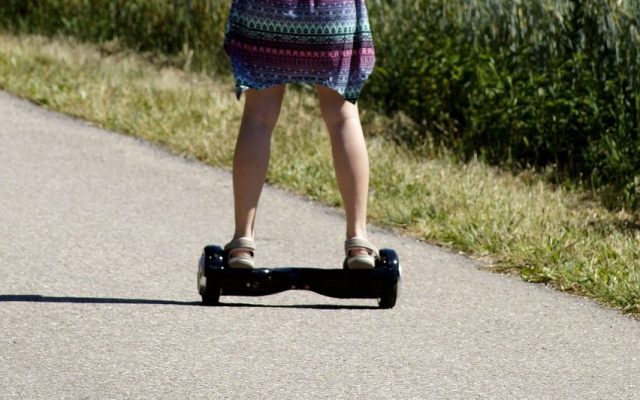
Let’s get the blunt answer out of the way first. If you mean a classic two-wheel hoverboard — the kind you stand sideways on and steer with your feet — then no, essentially none of the popular ones are made in the USA. The device came out of the sprawling factory hubs of Shenzhen, China, and that’s where nearly every board is still built. Brands you recognize like Swagtron, Hover-1, Gotrax, and Jetson are American companies, but the actual boards are manufactured in Chinese factories and shipped over.
So why does every other listing seem to shout ‘USA’? Because the word gets used loosely. A brand headquartered in Indiana can honestly call itself an American company while its product is built abroad. That’s not lying, exactly, but it’s easy to misread. For two-wheel boards, ‘American’ almost always means an American brand, not American assembly.
There is one real exception, and it’s a big one. The Onewheel, made by Future Motion, is genuinely designed and assembled in the United States. It’s shaped nothing like a normal hoverboard — it rides on a single fat tire in the middle — but it lives in the same self-balancing family, and it’s the only mainstream board you can honestly call made in the USA.
| Brand | Company HQ | Where It’s Built | UL 2272? |
|---|---|---|---|
| Onewheel (Future Motion) | Santa Cruz, CA | Designed & assembled in USA | Yes |
| Swagtron | South Bend, IN | Designed in USA, built in China | Yes |
| Hover-1 (DGL Group) | Edison, NJ | Designed in USA, built in China | Yes |
| Gotrax | Dallas, TX | Designed in USA, built in China | Yes |
| Jetson | New York, NY | Designed in USA, built in China | Yes |
| Razor | Cerritos, CA | Designed in USA, built in China | Yes |
| EPIKGO | USA | Designed in USA, built in China | Yes |
Onewheel: The One Board Truly Assembled in America
The Onewheel started as a Kickstarter project in 2014, dreamed up by inventor Kyle Doerksen. When it took off, Future Motion made the decision that still defines the company: instead of shipping production to Asia like everyone else, they built the board in the United States, close to where the prototype was born. Today the company runs a 60,000-square-foot headquarters and factory in Santa Cruz, California, and calls itself the largest maker of light electric vehicles in the country.
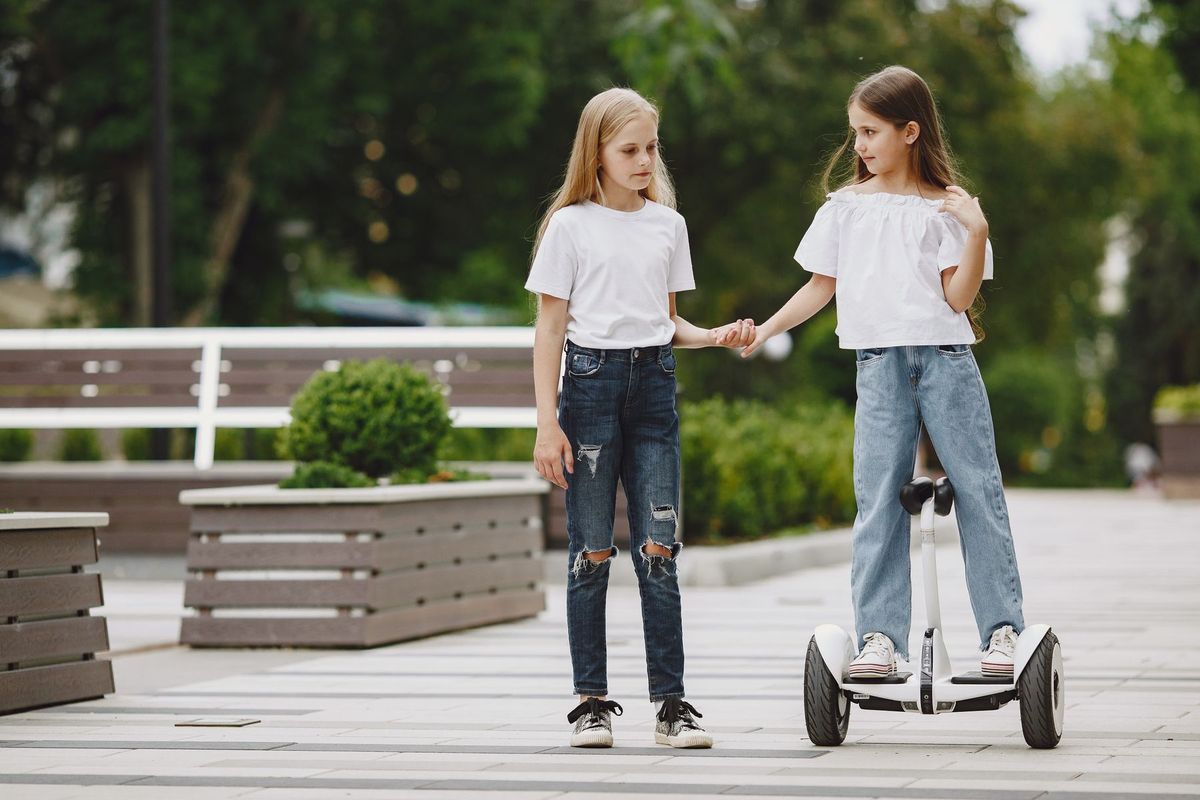
The Onewheel isn’t a two-wheel hoverboard. It’s a single-wheel, self-balancing board that feels a lot like snowboarding or surfing on pavement. You lean forward to go, lean back to slow down, and carve turns with your whole body. Riders love it, and it has a cult following for a reason — it’s a genuinely different experience from a standard hoverboard.
There are two honest catches. First, price: the lineup runs from around $1,050 for the entry Pint up to $3,500 for the top GT S-Series Rally XL, so it costs far more than a typical hoverboard. Second, distribution: Future Motion sells direct through onewheel.com and a network of authorized dealers. You generally won’t find it on Amazon, and the factory warranty only covers boards bought from authorized US sellers — so skip random third-party listings.
Who makes it
Future Motion, an American company based in Santa Cruz, California. Every Onewheel is designed and assembled at their US factory, not overseas.
What it costs
Roughly $1,050 for the Pint up to about $3,500 for the GT S-Series Rally XL. You pay a premium for US assembly, build quality, and the unique ride.
Where to buy it
Only from onewheel.com or an authorized dealer. Buying elsewhere can void the warranty and risks getting a used or counterfeit board.
US-Based Hoverboard Brands Worth Knowing
Here’s the good news for two-wheel fans: even though the boards are built in China, buying from a US-based brand still matters a lot. When something goes wrong — a wobbly sensor, a dead charger, a warranty claim — you want a real American company with a phone number, a support desk, and replacement parts, not a faceless overseas seller that vanishes after the sale. A US brand also has to answer to the Consumer Product Safety Commission, which means recalls actually reach you.
These brands design their boards in the States, set the safety and quality specs, handle US warranties, and put their name on the line. That accountability is worth real money when you’re trusting a lithium battery to sit under your feet. Below are the American companies you’ll run into most often.
Any of these is a safer bet than a no-name board with a brand you can’t even pronounce. The factory may be in Shenzhen, but the company you’re actually dealing with is right here.
- Swagtron (South Bend, Indiana) — a US brand famous for launching the world’s first UL 2272 board for US retail; some models use safer LiFePO4-style battery protection.
- Hover-1 (Edison, New Jersey, by DGL Group) — a huge presence in big-box stores like Walmart and Target, with wide model range and easy US support.
- Gotrax (Dallas, Texas) — known for affordable, dependable boards and scooters, all UL 2272 certified.
- Jetson (New York, New York) — a long-running US brand offering light-up, app-connected boards popular with kids and teens.
- Razor (Cerritos, California) — the classic American scooter brand; its Hovertrax line brought a trusted name to hoverboards.
- EPIKGO (USA) — a US brand focused on rugged, higher-capacity all-terrain boards.
Why UL 2272 Safety Beats a ‘Made in USA’ Sticker
If you remember one thing from this whole guide, make it this: UL 2272 certification matters far more than where a board is made. Back in 2015 and 2016, cheap no-name hoverboards started catching fire — in living rooms, on charging cords, even under kids. The problem was never the country of origin. It was garbage batteries and chargers with no real safety testing.
In response, the safety-science organization UL created the UL 2272 standard in early 2016, and Swagtron became the first brand to certify a board for US retail under it. UL 2272 puts the whole electrical system through four kinds of testing — electrical, mechanical, environmental, and materials — with a heavy focus on the battery pack and charger. A certified board is dramatically less likely to overheat, short out, or ignite.
One honest limit: UL 2272 covers fire and electrical safety, not riding safety. It won’t stop you from wiping out, so a helmet still matters. And no certification is a 100% guarantee. But a board with a genuine UL 2272 listing has cleared a serious bar that the exploding 2016 boards never could. A cheap import made anywhere, with no UL mark, is the real danger — not a China-built board from a reputable US brand that passed the test.
Decoding the Labels: ‘Made in USA’ vs ‘US Brand’
Marketing language around ‘American’ products is slippery, so let’s decode the exact phrases you’ll see. Getting these straight will save you from overpaying for a claim that doesn’t mean what you think it means. The Federal Trade Commission actually regulates the strict version of this, which is why real ‘Made in USA’ claims are rarer than the internet makes them sound.
Once you know the difference between these terms, the listings get a lot easier to read. In this category, ‘designed and assembled in the USA’ — which is the Onewheel’s honest claim — is about as American as a self-balancing board gets.
Made in USA
The strict, FTC-regulated claim. It means all or virtually all of the product is made in America. Almost no two-wheel hoverboard qualifies. Treat any board making this exact claim with healthy skepticism unless it can back it up.
Assembled in USA
Weaker. Parts may come from anywhere, but final assembly happens here. It’s legitimate, but it doesn’t mean the components — including the battery — are American.
US brand / Designed in USA
The most common reality. The company is American and designed the board, but it’s built in China. This is Swagtron, Hover-1, Gotrax, and the rest. Still a solid choice for support and safety.
Designed and assembled in USA
The strongest realistic claim in this space, and the Onewheel’s actual status. Engineering and final assembly both happen in California.
How to Choose the Most American Hoverboard for You
So how do you actually decide? Start with a simple question: is genuine US assembly a must-have, or do you mostly want an American brand you can trust? Your budget usually answers it for you. Truly made-in-USA means the Onewheel, which starts around $1,050 and rides very differently from a standard board. If that’s out of range or not the ride you want, a US-brand two-wheel board with UL 2272 is the smart, affordable move.
From there, match the board to the rider, not the flag. Weight capacity, top speed, tire size, and certification decide whether you’ll actually be happy. A featherweight board rated for 220 pounds won’t serve a 250-pound adult no matter who makes it, and a fast board is the wrong gift for a first-time eight-year-old.
Finally, protect your purchase. Buy from the brand’s own store or an authorized seller, register the serial number so recalls and warranty claims reach you, and keep your receipt. Do that, and you’ll get the most American — and most importantly, the safest — board your money can buy.
- Want true US assembly and have the budget? Get a Onewheel from onewheel.com or an authorized dealer.
- Want a classic two-wheel board with US support? Pick a UL 2272 model from Swagtron, Hover-1, Gotrax, or Jetson.
- Always confirm the genuine UL 2272 holographic mark before buying.
- Match weight capacity, speed, and tire size to the actual rider and terrain.
- Register the serial number and keep your receipt for warranty and recall coverage.
| Model | Top Speed | Range | Starting Price |
|---|---|---|---|
| Onewheel Pint | 16 mph | 6-8 miles | ~$1,050 |
| Onewheel Pint X | 18 mph | 12-18 miles | ~$1,300 |
| Onewheel Pint S | 20 mph | 12-18 miles | ~$1,400 |
| Onewheel GT | 20 mph | 20-32 miles | ~$2,300 |
| Onewheel GT S-Series | 25 mph | 16-25 miles | ~$2,900 |
| GT S-Series Rally XL | 25 mph | 18-28 miles | ~$3,500 |
| What You’re Checking | UL 2272 Certified | ‘Made in USA’ |
|---|---|---|
| What it guarantees | Battery & charger fire-safety testing | Country of final assembly |
| Regulated? | Recognized safety standard | Yes, by the FTC |
| Prevents battery fires? | Directly tested for it | Not necessarily |
| Easy to verify? | Holographic UL mark | Often vague marketing |
| Should you prioritize it? | Absolutely, every time | Nice to have, not essential |
Common Mistakes (and How to Fix Them)
Fix: Check where it’s actually assembled, not just where the company is based. Nearly every two-wheel hoverboard is built in China regardless of the brand’s home country. If true US assembly is the goal, the Onewheel is the only mainstream option.
Fix: Flip your priorities. UL 2272 is what actually prevents battery fires — country of origin doesn’t. Always confirm the genuine holographic UL mark before you buy, and treat any board without it as a hard no.
Fix: Purchase only from onewheel.com or an authorized dealer. Future Motion’s warranty doesn’t cover boards bought from unauthorized sellers, and off-brand listings risk used or counterfeit units.
Fix: Ask the seller directly and look for specifics. ‘Assembled in USA’ can still mean foreign parts and batteries. The strict, FTC-regulated ‘Made in USA’ claim is rare in this category — verify before you pay a premium for it.
Pro Tips
- 💡 Verify the UL 2272 holographic mark on the box and board, not just a printed line in the listing — fakes copy the words but not the hologram.
- 💡 If genuine American assembly is non-negotiable, the Onewheel is your only real pick, so budget from about $1,050 and up.
- 💡 Favor brands with a real US phone number and warranty desk — Swagtron in Indiana or Hover-1 in New Jersey — so parts and returns are painless.
- 💡 Register your board’s serial number right after purchase so warranty claims and any recall notices actually reach you.
- 💡 For kids, weight limit, top speed, and UL 2272 certification matter far more than which country stamped the frame.

An Example Scenario
Illustrative example: a composite of situations riders often describe, not a real customer story.
Here’s a common surprise: a parent buys a Swagtron, sure it’s American-made because the brand feels so US. It’s not — it’s built in China like almost all of them. But when the charger dies months later, a US-based support line that ships a replacement under warranty gets the kid riding again within a week. That’s the real value of a US brand: someone actually picks up the phone.
Others go the other direction and save up for a Onewheel Pint. It costs more than four cheap hoverboards combined, but it’s assembled in Santa Cruz rather than overseas, and owners often credit the build quality for years of daily rides.
Frequently Asked Questions
Yes, but only one mainstream model: the Onewheel by Future Motion, which is designed and assembled in Santa Cruz, California. Classic two-wheel hoverboards are almost all built in China, even the ones sold by American brands. So if you want a board literally made in the USA, the Onewheel is realistically your only choice.
Yes — the Onewheel is genuinely designed and assembled in the United States. Future Motion runs a factory in Santa Cruz, California, and chose to build there instead of shipping production overseas like other brands. It’s a single-wheel board rather than a two-wheel hoverboard, but it’s the closest thing to a truly American-made self-balancing ride you can buy.
Yes, both are US-based companies — Swagtron is headquartered in South Bend, Indiana, and Hover-1 is based in Edison, New Jersey. However, their hoverboards are manufactured in China. You’re buying an American brand with US warranty and support, not an American-built board, which is still a meaningful advantage over no-name imports.
Not by itself — UL 2272 certification is what actually makes a hoverboard safe. That standard tests the battery and charger for fire and electrical hazards, which is the real risk with these boards. A China-built board with UL 2272 is far safer than any board, from anywhere, without it. Always prioritize the certification over the country of origin.
Because the self-balancing scooter was invented and first mass-produced in Shenzhen, China, around 2013. The factories, supply chains, and battery sourcing all grew up there, so it remains by far the cheapest and most established place to build them. American brands design their boards and set the specs, then have them manufactured in those same Chinese factories.
Not the truly American-made one — the Onewheel is sold through onewheel.com and authorized dealers, not Amazon, and buying elsewhere can void the warranty. You can, however, buy UL 2272 two-wheel boards from US-based brands like Swagtron and Hover-1 on Amazon. Those give you a US company’s support even though the board itself is built overseas.
Final Checklist ✅
- ✅ Confirm the board carries a genuine UL 2272 holographic mark before anything else.
- ✅ Decide your goal: truly US-assembled (Onewheel) or a US-brand two-wheel board (Swagtron, Hover-1).
- ✅ Check the company’s headquarters and that it offers a US warranty and support line.
- ✅ Match the weight capacity, top speed, and tire size to the actual rider and terrain.
- ✅ For a Onewheel, buy only from onewheel.com or an authorized dealer to keep the warranty valid.
- ✅ Register the serial number after purchase so recalls and warranty claims reach you.
- ✅ Budget realistically — roughly $150-$300 for a US-brand two-wheel board, $1,050 and up for a Onewheel.