Everything parents need to keep kids safe on hoverboards, electric scooters, e-bikes, and boards — from the right helmet to smart speed limits and battery care.
If your child has been begging for a hoverboard, an electric scooter, or an e-bike, you are not alone, and neither is your worry. Kids electric vehicle safety has quickly become one of the biggest questions parents ask, and for good reason. These little machines are faster, heavier, and far more powerful than the bikes and kick scooters we grew up with. The good news? With the right gear, the right rules, and a ride that actually matches your child’s age and skill, most of the risk melts away.
Emergency rooms are seeing the proof. Across U.S. children’s hospitals, injuries from e-scooters and e-bikes have climbed sharply. One hospital treated more injured kids in 2025 than in the previous three years combined, and at another, these devices accounted for nearly a third of all pediatric trauma calls. Federal data shows the number of children under 14 hurt on e-scooters more than doubled between 2020 and 2024. Yet study after study points to the same fixable problem: most seriously injured kids were not wearing a helmet.
This guide walks you through it all, step by step. You’ll learn how to pick a ride that fits your child, the safety gear that genuinely prevents injuries, the battery fire risk hiding in cheap devices, the ground rules to set before ride one, and the local laws that catch families off guard. No scare tactics, just the practical stuff that keeps a kid rolling, learning, and grinning.
This article is part of our electric scooter safety and laws hub, which links every safety gear and legal guide.
Why Kids Electric Vehicle Safety Matters More Than Ever
Walk through almost any neighborhood in 2026 and you’ll see them everywhere: kids gliding on hoverboards, zipping past on electric scooters, and cruising on e-bikes. They’re fun, they’re wildly popular, and they’re also sending more children to the emergency room than ever before. One large children’s hospital reported treating more kids for e-scooter and e-bike injuries in 2025 than in the three years before it combined. At another, e-rides made up nearly a third of all pediatric trauma responses. This is not a reason to panic. It is a reason to prepare.
Here is what has changed. The bikes and kick scooters of our childhood topped out at whatever our legs could produce. Today’s electric rides deliver instant power and real speed. Some models marketed to kids hit 15 mph, and e-bikes go faster still. Add a heavier machine and a young rider whose balance and judgment are still developing, and a simple tumble turns into a harder hit. A fall at 12 mph onto pavement is a very different event than sliding off a pedal bike into the grass.
The injuries that worry doctors most are the ones to the head. Federal data shows head injuries made up nearly one in five e-scooter ER visits, and researchers keep finding that most seriously hurt kids had no helmet on. That is actually the hopeful part. The biggest risks are the ones parents can control. The right ride, the right gear, and a few firm rules turn most of that danger back into plain old fun.
- Speed: many reach 12 to 20 mph, which is sidewalk-highway fast for a child.
- Weight: a heavy board or bike is harder to control and hurts more if it lands on a leg.
- Instant torque: motors surge the moment a thumb hits the throttle, catching new riders off guard.
- Battery power: a cheap or abused lithium pack can overheat and, in rare cases, catch fire.
| Device | Typical Min Age | Safe Starter Speed | Must-Have Feature |
|---|---|---|---|
| Hoverboard | 8+ (some 12+) | 6-8 mph | Beginner / learning mode |
| Kids electric scooter | 8+ (toy models) | 6-10 mph | Speed limiter + hand brake |
| Street e-scooter | 16+ (AAP guidance) | 12-15 mph, capped | App speed lock |
| E-bike (Class 1/2) | 14-16+ (state law) | Pedal-assist only to start | UL 2849 + strong brakes |
| Electric skateboard / onewheel | Teens, advanced only | Slowest ride mode | Full pads + wrist guards |

Match the Ride to the Age (and the Skill)
The age printed on the box is a starting point, not a promise. It assumes an average child with average coordination who follows the rules. But you know your kid. A careful, rule-following 8-year-old might handle a beginner hoverboard beautifully, while an impulsive 11-year-old could be a handful on a faster scooter. Size matters too. A child needs to comfortably reach the ground, work the brakes, and control the machine’s momentum before they have any business riding it.
As a general rule, the gentler the ride, the younger the appropriate age. Hoverboards and kid-specific electric scooters with beginner modes are the classic first rides. Full-speed street scooters, e-bikes, and electric skateboards are a big jump in speed and skill, and they belong to older kids and teens. The American Academy of Pediatrics recommends that children under 16 not operate powerful e-scooters at all, and many U.S. states write that same age minimum into law.
Hoverboards (usually 8 and up)
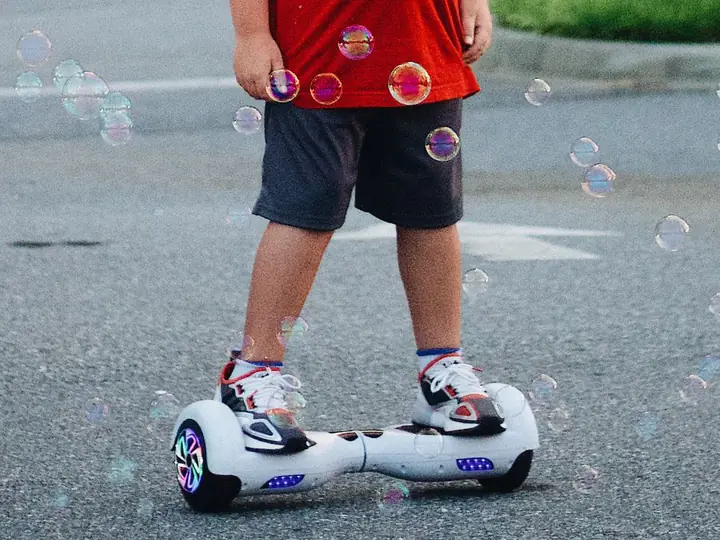
Most kids’ hoverboards are rated for ages 8 and up, with a few set at 12+. Look for a low top speed of 6 to 8 mph and a learning or beginner mode that keeps things slow while your child finds their balance. A self-balancing board is genuinely one of the easier first rides, but it still deserves a helmet and wrist guards from day one.
Electric scooters (kids’ models 8+, street models 16+)
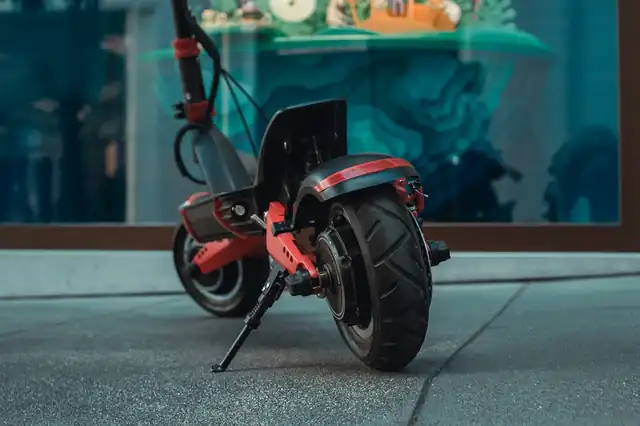
Toy-grade kids scooters with speed limiters are fine for younger riders around 8 to 12 at 6 to 10 mph. Powerful commuter scooters that hit 15 to 20 mph are a different animal, and pediatricians and many state laws set the minimum at 16. If a scooter has an app or beginner mode, use it to cap the speed while your child learns.
E-bikes (teens, and check the class)
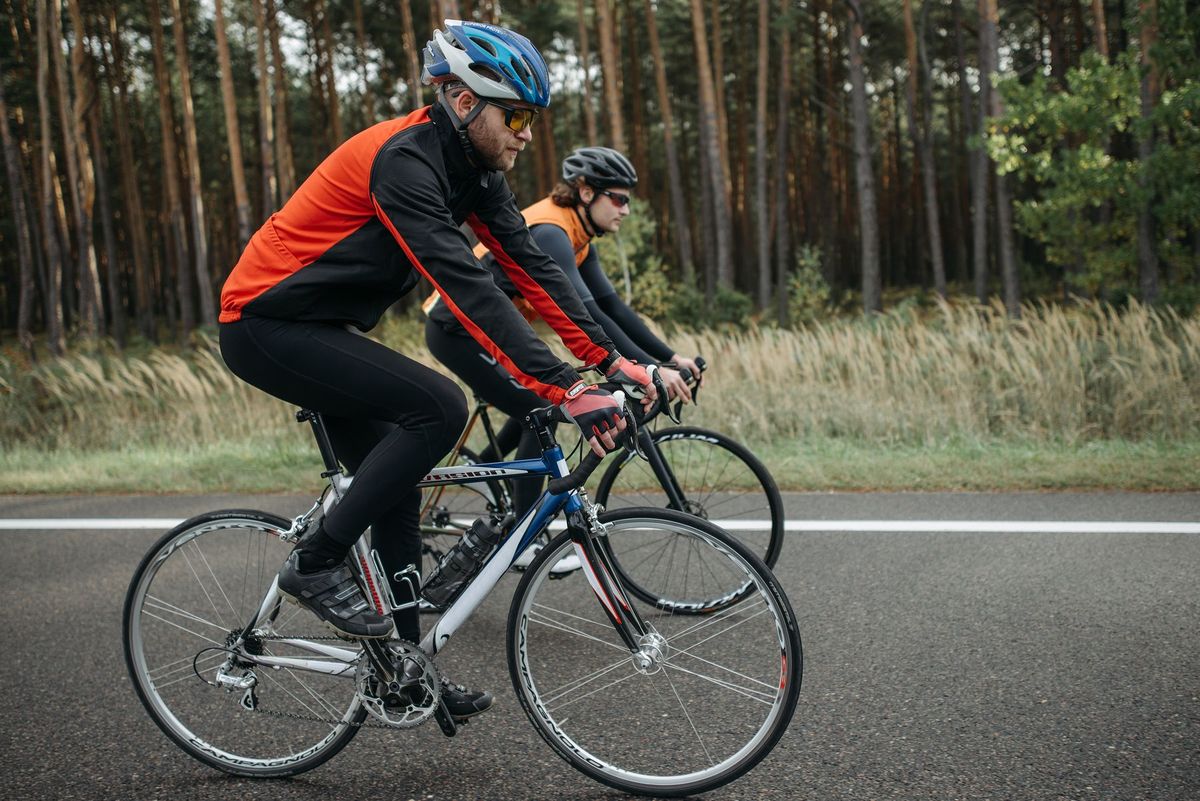
E-bikes come in classes. Class 1 (pedal-assist) is the tamest, while Class 2 (throttle) and Class 3 (28 mph assist) are faster and often carry a legal minimum age of 16. Choose an e-bike certified to UL 2849, make sure your teen can plant both feet and brake confidently, and start them in pedal-assist-only mode.
Electric skateboards and onewheels (older kids and teens)
These demand the most balance and the fastest reflexes, and a fall comes with no handlebars to grab. Reserve them for experienced older kids and teens, start in the slowest ride mode, and insist on a full set of pads plus wrist guards every single time out.
The Safety Gear That Actually Prevents Injuries
If you buy one thing, buy a helmet, and make wearing it as automatic as buckling a seatbelt. For most electric rides, a helmet that meets the CPSC standard (the certification legally required for U.S. bike helmets) is the baseline. For faster riding or skate-style boards, step up to a dual-rated helmet that also meets ASTM F1492, which is built for skateboarding-type falls. In Europe the equivalent mark is EN 1078. Fit matters as much as the label. The helmet should sit level, about two finger-widths above the eyebrows, and shouldn’t slide more than an inch when your child shakes their head.
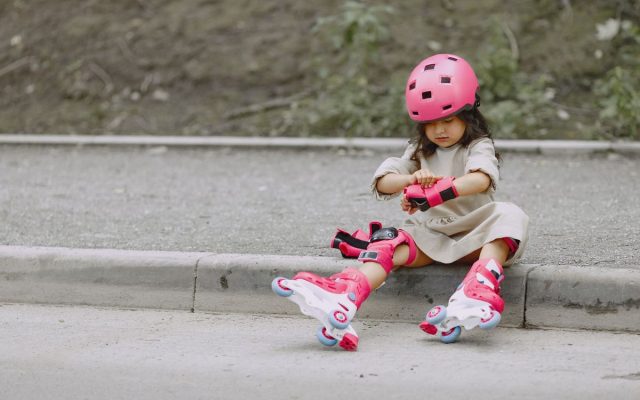
After the helmet, protect the parts of the body that hit the ground first. Wrist guards top the list, because the most common riding fracture comes from instinctively throwing out a hand to break a fall. Knee and elbow pads save skin and joints on scooters, boards, and hoverboards alike. Gloves add grip and protect palms in a slide. And because so many crashes involve a driver who simply didn’t see the rider, visibility gear belongs on the list too: a bright jacket, reflective strips, and front and rear lights for any street riding.
- Helmet: CPSC-certified at minimum; ASTM F1492 dual-rated for skate and onewheel use.
- Wrist guards: the cheapest way to prevent the most common riding fracture.
- Knee and elbow pads: essential for scooters, boards, and hoverboards.
- Gloves: better grip and palm protection when a slide happens.
- Visibility: bright colors, reflective strips, and front and rear lights for street riding.
- Closed-toe shoes: never sandals or bare feet near a spinning wheel or motor.
Fire Safety: The Battery Risk Parents Miss
The risk parents picture is falling. The risk they often miss is fire. Every hoverboard, scooter, and e-bike runs on a lithium-ion battery, and a battery that’s cheap, damaged, overcharged, or paired with the wrong charger can overheat and, in rare cases, catch fire. It is not common, but it is serious. The Fire Safety Research Institute has shown that an e-bike battery fire can fill a room with flames in under 20 seconds. The single best protection is to buy certified in the first place.
Look for a UL certification on the listing and on the device itself. UL 2272 covers hoverboards and personal e-mobility devices, UL 2849 covers complete e-bikes, and UL 2271 covers the batteries inside them. These marks mean the electrical system was tested against overheating, drops, and misuse. UL 2272 even includes dropping the device from about a meter, the way a kid actually would. A certified ride is no guarantee of zero risk, but it is dramatically safer than an uncertified bargain-bin board.
How you charge matters just as much as what you buy. Charge only when you are awake and home, never overnight. Use the original charger, since cheap replacements are a leading cause of failures. Charge on a hard, non-flammable surface, away from beds, exits, and anything that burns, and unplug the moment it reaches full. Stop using any battery that is swollen, hot to the touch, hissing, or smells odd, and don’t charge a device that has been in a hard crash until you’re sure it’s fine.
Ground Rules to Set Before the First Ride
Gear protects the body, but rules protect the ride. Before your child ever powers on, agree on where, when, and how fast, and write the non-negotiables down if that helps them stick. The first and biggest rule is simple: no helmet, no ride. Make it boring and absolute so there is no negotiating at the door. The second rule is start slow. Use the beginner mode or speed limiter until your child has clearly earned more, and raise it only when they’ve proven they can handle it.
Where and when matter enormously. New riders should stick to smooth, wide, car-free pavement. An empty parking lot or a quiet cul-de-sac is perfect. Keep them off busy streets, steep hills, and wet or leaf-covered ground until their skills are solid. Daylight only for beginners, because night riding stacks on a whole new layer of risk. And keep the distractions out entirely: no phone in hand, no earbuds, and no passengers. These machines are built for a single rider, and a second body wrecks both the balance and the braking.
- No helmet, no ride, every time, no exceptions.
- Beginner or limited-speed mode until skills are clearly proven.
- Smooth, car-free areas only for the first few weeks.
- Daylight riding for beginners; add lights before you allow dusk.
- One rider per machine, always.
- No phone and no earbuds; both hands and both eyes on the ride.
- Quick check of tires, brakes, and battery charge before every outing.

Teaching Your Kid to Ride Safely
Kids often get the hang of these rides faster than we expect, which is exactly why a little structure helps. Start every early session with a full gear check, then keep things slow and simple in an open space. Have them practice the boring fundamentals first: stepping on and off, starting gently, and most important of all, stopping on command. A rider who can brake smoothly and step off safely is a rider who can get out of trouble. Only once those moves are automatic should you let them add speed.
Build up in layers. Master balance and braking, then add gentle turns, then add mild challenges like a crack in the pavement, a slight slope, or a cone to steer around. Save real-world complexity such as driveways, pedestrians, and any traffic for last, and supervise until you are genuinely confident. Praise the calm, controlled stuff, not speed or tricks. The kid who feels proud of stopping smoothly is the kid who stays safe.
One quiet truth ties it all together: kids copy what they see. If you hop on a scooter or e-bike yourself, wear your own helmet, respect the speed, and stop at intersections. When safe riding just looks like how our family does it, you won’t have to nag. It becomes the habit that sticks long after they’ve outgrown the beginner mode.
Rules of the Road: Laws, Sidewalks, and School Bans
The last piece is the law, and it varies far more than most parents realize. Cities and states each set their own rules for who can ride, where, and how fast, and my kid is careful won’t help if they’re breaking a local ordinance. Many places ban electric rides from sidewalks, cap speeds, require lights after dark, and set minimum ages. For e-bikes, the class matters: Class 1 and 2 usually top out at 20 mph, while Class 3 reaches around 28 mph and often carries a 16-and-up rule.
Schools have entered the conversation too. After the recent surge in crashes, a growing number of schools have banned e-scooters and e-bikes from campus or set strict rules for parking and riding on school grounds. Before your child commutes on one, check two things: your city or state vehicle code for the age and equipment rules, and your school’s own policy. A five-minute search now beats a confiscated scooter, or a ticket, later. When in doubt, keep young riders on private property and quiet residential streets, where the rules are simplest and the cars are fewest.
| Standard | Applies To | What It Proves |
|---|---|---|
| CPSC | Bike & multi-sport helmets | Legally required impact protection for cycling |
| ASTM F1492 | Skate / aggressive helmets | Rated for skateboarding-style falls |
| EN 1078 | Helmets (Europe) | European helmet impact standard |
| UL 2272 | Hoverboards & e-scooters | Electrical system won’t fire or shock in normal use |
| UL 2849 | E-bikes | Whole-bike electrical and battery safety |
| UL 2271 | Batteries | Cells tested against overheating and thermal runaway |
| What the data shows | Figure |
|---|---|
| Kids under 14 hurt on e-scooters (2020 to 2024) | 8,159 rose to 17,641 |
| Share of 2024 e-scooter ER injuries that were head injuries | About 18% (nearly 1 in 5) |
| Seriously injured kids who were NOT wearing a helmet (2025) | Roughly 55% |
| Extra head-injury risk for e-bike riders with no helmet | Nearly 2 times |
| Time for an e-bike battery fire to engulf a room | Under 20 seconds |
Common Mistakes (and How to Fix Them)
Fix: Age labels assume an average, confident kid. Factor in your child’s balance, coordination, and how well they follow rules. A cautious 8-year-old may handle a beginner hoverboard better than a reckless 11-year-old on a fast scooter, so match the ride to the rider, not just the birthday.
Fix: Most crashes happen close to home on short trips. Make the rule simple and non-negotiable: no helmet, no ride, every single time, even to the end of the driveway. Boring and absolute beats flexible and forgotten.
Fix: Charge only when you’re awake and home, on a hard surface away from bedroom doors and exits. Unplug the moment it’s full, use only the original charger, and never leave a cheap replacement charger plugged in and walk away.
Fix: A helmet that wobbles or tilts back does little. Tighten the dial, level it two fingers above the eyebrows, and buckle the strap snug. Replace any helmet after a real impact, since the foam only protects once.
Pro Tips
- 💡 Lock the speed before you hand it over. Use the beginner mode or parent app to cap the top speed while your child learns, then raise it as their skills grow.
- 💡 Buy the helmet in the same cart as the ride. If the gear arrives the same day as the hoverboard, wearing it becomes normal from the very first minute.
- 💡 Don’t skip wrist guards. The most common riding fracture comes from landing on an outstretched hand, and wrist guards are cheap insurance against a broken wrist.
- 💡 Do the first hour in an empty parking lot. Smooth, wide, car-free pavement lets kids master starting, stopping, and turning before any traffic is in the picture.
- 💡 Only buy UL-certified rides and batteries. Look for UL 2272, UL 2849, or UL 2271 on the listing, since it’s your best defense against a battery fire.
An Example Scenario
Illustrative example: a composite of situations riders often describe, not a real customer story.
Picture a nine-year-old who gets a hoverboard for a birthday and has it figured out in an afternoon, which is exactly the problem. Two weeks later a driveway corner taken too fast turns into a spill, and wrist guards and a helmet turn it into a good story instead of an injury. A $25 pad set is some of the best money a parent can spend.
A family down the street learned the fire lesson the hard way. Their bargain scooter charger got hot enough overnight to scorch the outlet, and the smell woke them up. Nobody was hurt, but it rattled them. Now they charge everything in the garage, during the day, and never leave it plugged in once the light turns green.
Frequently Asked Questions
For a full-speed street e-scooter, pediatric experts say 16 is the safe minimum, and many states set the legal limit there too. Lower-powered toy scooters built for kids are usually rated 8 and up, with speeds capped around 6 to 10 mph. Whatever the label says, match it to your child’s balance and judgment, not just their birthday.
Yes, a helmet is the single most important piece of safety gear, even for slow indoor hoverboarding. Falls happen backward and sideways with no warning, and head injuries make up nearly one in five e-scooter and hoverboard ER visits. A CPSC-certified helmet costs about the price of a pizza night and dramatically lowers that risk.
They can be, but almost always when the battery or charger is cheap, damaged, or misused. Stick to models certified to UL 2272 for hoverboards and scooters or UL 2849 for e-bikes, use only the charger that came with it, and never charge unattended or overnight. A certified battery charged correctly is very unlikely to fail.
A kids-specific hoverboard or electric scooter with a beginner mode is usually the safest starting point. Look for a low top speed of 6 to 8 mph, a learning mode, a low deck that’s easy to step onto, and UL 2272 certification. Save faster scooters, e-bikes, and electric skateboards for older, more experienced riders.
It depends on your state and your school. Many states require riders of throttle e-bikes (Class 2 and 3) to be at least 16, and a growing number of schools have banned e-bikes and e-scooters from campus after a rise in crashes. Check your local vehicle code and your school’s policy before letting your child commute on one.
For younger kids around 8 to 10, aim for a top speed of 6 to 8 mph in a beginner mode. Pre-teens who’ve proven they can start, stop, and steer confidently can move up to 10 to 15 mph on a proper kids scooter. Anything faster belongs to teens and adults with real experience and full protective gear.
Final Checklist ✅
- ✅ Confirm the ride is certified to UL 2272, UL 2849, or UL 2271 before you buy.
- ✅ Get a CPSC-certified helmet that fits snug and level, and make it a no-helmet-no-ride rule.
- ✅ Add wrist guards, plus knee and elbow pads, for at least the first months of riding.
- ✅ Set the beginner mode or app speed limit to match your child’s age and skill.
- ✅ Practice starting, stopping, and turning in an empty, car-free lot first.
- ✅ Charge only while awake and home, on a hard surface, and unplug when full.
- ✅ Check your city’s rules on age, sidewalks, and where e-rides are allowed.