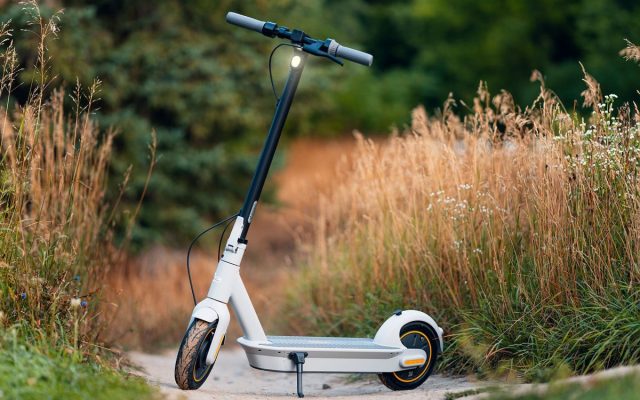
A smooth, long-range commuter scooter that punches above its price. Here is everything we learned after living with the Max G2.
If you are reading this Segway Ninebot Max G2 review, you are probably staring at that sub-$1,000 price tag and wondering if it is the real deal. Good news: it mostly is. The Max G2 is Segway’s grown-up commuter scooter, and it takes the wildly popular old Max G30 and adds the two things riders begged for most, real suspension and a bit more muscle. The result is one of the smoothest, most planted rides you can buy without spending scooter-nerd money.
We have dug through the official specs, real-world range tests, and long-term owner feedback to give you the honest picture, not just the marketing sheet. The short version? This is a comfort-first daily driver built for adults who want to skip traffic, arrive un-rattled, and not think about their scooter much. It is heavy, and the 36-volt battery has one quirk we will be blunt about, but for most commuters it nails the basics.
Below we break down speed, range, the ride quality, the smart features, and whether the Max G2 still makes sense in 2026 now that a pricier Max G3 sits above it. By the end you will know exactly who should buy this scooter and who should look elsewhere.
This article is part of our best electric scooters and reviews hub, which lists every scooter review on the site.
The Max G2 in Plain English
Think of the Max G2 as a comfortable commuter car in scooter form. It is not the fastest thing on the bike path, and it is not trying to be. Instead, Segway poured its budget into the stuff you feel on every single ride: a stable frame, big cushy tires, and a genuine suspension system. Roll it off the box and the first thing you notice is heft. At 53.5 pounds it feels like a serious machine, and once you are moving, that weight translates into a calm, glued-to-the-road feel that cheaper scooters just cannot match.
The G2 is the direct successor to the legendary Max G30, the scooter that basically defined the value commuter category. Segway kept the winning formula (huge range, tank-like build) and fixed the biggest complaint by adding suspension front and rear. It also bumped the motor, added turn signals, threw in traction control, and swapped to self-healing tubeless tires. In other words, it is the same trusted recipe with a fresh coat of comfort and safety on top.
Here are the headline numbers you actually care about:
- Motor: 450W nominal, up to 1,000W peak power
- Top speed: 22 mph (about 22.4 mph in independent tests)
- Range: 43 miles claimed, roughly 30 miles in normal riding
- Tires: 10-inch self-healing tubeless pneumatic
- Suspension: Triple system (hydraulic front, dual rear springs)
- Weight: 53.5 lbs, supports riders up to 265 lbs
| Spec | Detail |
|---|---|
| Motor | 450W nominal / 1,000W peak |
| Top speed | 22 mph (22.4 mph tested) |
| Range (claimed / real) | 43 miles / about 30 miles |
| Battery | 551Wh (36V, 15.3Ah) |
| Charge time | About 6 hours |
| Tires | 10-inch self-healing tubeless |
| Brakes | Front drum + regenerative electronic |
| Suspension | Triple (hydraulic front, dual rear springs) |
| Weight / max load | 53.5 lbs / 265 lbs |
| Water resistance | IPX5 (battery IPX7) |
| Hill climb | Up to 22% grade |
| Safety cert | UL-2272 certified |

Real-World Range and Battery Life
Segway advertises up to 43 miles of range, and like almost every scooter on the market, that number lives in a lab. It assumes a light rider, flat ground, mild weather, and a slow, steady pace. In the real world you should plan around a very different figure. Independent range tests landed at about 29.8 miles in normal riding mode, 21.3 miles when you ride flat-out in speed-priority mode, and around 33.4 miles if you baby it in the eco setting.
The heart of the system is a 551Wh battery (36 volts, 15.3Ah). That is a big tank for this price class, and it is exactly why the Max name is famous for range. A full charge takes about 6 hours from a standard wall charger, which is slow but normal. If you commute daily, just plug it in overnight and forget about it. Segway’s app also lets you set an 80 percent charge limit, which is a smart way to protect the battery’s long-term health.
Now the honest catch. The Max G2 runs on a 36-volt battery, and testers noticed that performance drops off once you dip below about 50 percent charge. The scooter still runs fine, but acceleration and hill power soften as the voltage sags. Pricier 48-volt rivals hold their full punch deeper into the battery. For flat commutes this is a non-issue. If you face a steep climb at the tail end of a long ride, keep it topped up.
Speed, Power, and Climbing Hills
The Max G2 tops out at 22 mph, which is a genuinely useful commuter speed. It is fast enough to keep pace with slow city traffic and blow past pedestrians and bikes, but not so fast that it feels twitchy or scary for a newer rider. That 450W motor peaks at a punchy 1,000 watts, and it gets you off the line with authority. In independent testing it hit 15 mph in about 4.65 seconds, roughly 23 percent quicker than the old Max G30. From a standstill at a green light, you will not feel left behind.
There are three ride modes you can flip through on the deck or in the app. Eco keeps things gentle and stretches range, Standard is the everyday sweet spot, and Sport (speed priority) unlocks the full 22 mph and the strongest acceleration. Most riders park it in Standard and only reach for Sport when they want a little extra fun or need to merge quickly.
Hills are a mixed bag, and it depends on your battery. Segway rates the G2 for inclines up to 22 percent, and on a moderate 8 percent grade it held a healthy 14.7 mph average. With a full battery it climbs confidently. The catch, again, is that voltage sag below 50 percent. If you live at the top of a big hill and your ride home is mostly uphill on a half-empty battery, you will feel the motor working harder. Flat and rolling terrain? No complaints at all.
The Ride: Suspension, Tires, and Brakes
This is where the Max G2 earns its money. Comfort and control are the whole point of this scooter, and the hardware backs it up. If you have only ridden a rigid budget scooter, hopping on the G2 feels like upgrading from a skateboard to a plush cruiser.
Triple suspension that actually works
The G2 uses a hydraulic shock up front and dual springs in the rear, and both are adjustable. This is not the token, wobbly suspension some scooters bolt on for the spec sheet. It genuinely soaks up cracks, expansion joints, and driveway bumps, so your hands, wrists, and lower back are not taking the beating. Reviewers repeatedly call it the most comfortable ride you can get under $1,000, and after a few miles of rough pavement you understand why.
Self-healing tubeless tires
Those chunky 10-inch pneumatic tires are tubeless and self-healing, meaning a built-in sealant plugs small punctures before they flatten your tire. Combined with the suspension, they give a soft, grippy footprint on the road. Flat tires are the number-one hassle with air-filled scooters, so this feature quietly saves you a lot of roadside frustration.
Dual braking for confident stops
Braking comes from a front drum brake paired with a regenerative electronic brake, and it stops short and predictably, about 11.7 feet from 15 mph in independent testing. The drum setup is low-maintenance (no exposed pads to wear or squeal) and the regen even feeds a little energy back to the battery. It is smooth and drama-free, exactly what you want in stop-and-go traffic.
Smart Features: App, Turn Signals, and Apple Find My
The Max G2 is genuinely clever for a commuter scooter, and most of the brains live in the Segway-Ninebot app. Pair it over Bluetooth and you can switch ride modes, set that battery-saving 80 percent charge limit, tweak the cruise-control behavior, turn the zero-start feature on or off, lock the scooter electronically, and pull down firmware updates that occasionally add or refine features. It is one of the more polished scooter apps out there, and it makes the scooter feel like a connected device rather than a dumb appliance.
On the safety side, Segway added built-in turn signals, and they are surprisingly bright and useful in real traffic. Being able to flick a blinker instead of taking a hand off the bars to gesture is a small thing that makes riding around cars noticeably safer. There is also a new Traction Control System (TCS) that helps keep the rear wheel from slipping on wet paint, sand, or gravel, plus a headlight, reflective taillight, and an electronic horn.
The standout trick is Apple Find My integration. The Max G2 shows up right inside the same Find My app you use to track your iPhone, AirPods, and keys. Pair that with the Bluetooth lock and you have a real deterrent against theft and a fighting chance of recovering the scooter if someone does walk off with it. For a scooter you will be parking at offices, gyms, and cafes, that peace of mind is worth a lot.
- Full app control: ride modes, cruise control, zero-start, and electronic lock
- Battery care: set an 80% charge ceiling to extend pack life
- Built-in dual turn signals for safer lane changes
- Traction Control System (TCS) for slippery surfaces
- Apple Find My tracking plus Bluetooth locking for theft protection

Portability, Build Quality, and Weather
Let us be real about the biggest downside: the Max G2 is heavy. At 53.5 pounds it is not a scooter you want to lug up four flights of stairs every day. The folding mechanism is solid, and it collapses down to a manageable 47 by 22 by 24 inches, but the fold latch sits a little off-center, which makes it slightly awkward to balance when you carry it. If you have a ground-floor entry, an elevator, or a car trunk you can roll it into, this is a non-issue. If you are a walk-up apartment dweller, the weight deserves serious thought before you buy.
The flip side of that weight is confidence-inspiring build quality. The G2 feels overbuilt in the best way, with a stiff stem, minimal deck flex, and the kind of solid, rattle-free construction Segway is known for. It is UL-2272 certified for electrical and fire safety, which is a certification you genuinely want on any scooter with a big lithium battery. This is a machine built to survive years of daily commuting, not a toy that loosens up after a month.
For weather, the Max G2 carries an IPX5 water-resistance rating, with the battery sealed to a tougher IPX7 standard. Translation: it easily handles rain and wet roads, so getting caught in a surprise shower is fine. It is not waterproof, though, so do not ride through deep puddles, submerge it, or blast it with a pressure washer. Wipe it down and store it dry and it will reward you.
Is the Max G2 Worth It in 2026?
Here is the bottom line. The Segway Ninebot Max G2 is one of the best value commuter scooters you can buy, and in 2026 it is often a steal. Its list price hovers around $1,000, but Segway runs frequent sales that drop it to roughly $700, and it has dipped even lower during big seasonal events. At $700, the combination of real suspension, 30-plus miles of usable range, self-healing tires, turn signals, and Apple Find My is genuinely hard to beat. Very few scooters near this price ride this smoothly.
It is worth knowing that Segway now sells a newer, more premium Max G3 above the G2. The G3 chases higher performance and fancier features for more money. But for most everyday commuters, the G2 remains the smarter buy, because you get about 90 percent of the practical experience for a lot less cash. The G2 has not been discontinued or made obsolete, it has simply become the value pick in the lineup.
So who should buy it? Comfort-focused commuters on flat-to-rolling terrain who want a reliable, low-drama daily ride, and who have an easy way to store it without hauling it up stairs. Who should skip it? Riders who need to carry their scooter constantly (it is too heavy), speed junkies who want 30-plus mph, and anyone facing long, steep climbs on a low battery. For everyone else, the Max G2 is an easy recommendation.
- Buy it if: you want the comfiest ride under $1,000 for daily commuting
- Buy it if: you can catch it on sale near $700
- Skip it if: you must carry the scooter up stairs often
- Skip it if: you need serious hill power late in the battery cycle
| Riding Mode | Tested Range | Best For |
|---|---|---|
| Speed priority (Sport) | About 21 miles | Max fun and speed, shorter trips |
| Standard (normal) | About 30 miles | Everyday commuting sweet spot |
| Range priority (Eco) | About 33 miles | Longest rides and saving battery |
| Claimed (ideal lab) | 43 miles | Perfect conditions only |
| Feature | Max G2 | Max G30P |
|---|---|---|
| Nominal motor | 450W | 360W |
| Top speed (tested) | 22.4 mph | 18.4 mph |
| Range (normal, tested) | About 30 miles | About 30 miles |
| Suspension | Triple (hydraulic front) | None |
| Turn signals | Yes | No |
| Self-healing tires | Yes | No |
| Braking distance (15 mph) | 11.7 ft | 12.6 ft |
| Weight | 53.5 lbs | 41.2 lbs |
Common Mistakes (and How to Fix Them)
Fix: Plan your commute around roughly 30 real-world miles, and expect even less in cold weather, on hills, or with a heavier rider. Treat 43 miles as a best-case lab number, not a promise.
Fix: The 36V battery loses some punch below 50 percent charge. If you have a big hill or need strong acceleration at the end of your trip, keep the battery topped up rather than running it down.
Fix: Self-healing only handles small punctures, not low pressure. Check your tire pressure about once a month so you keep the full range, grip, and ride comfort the scooter is capable of.
Fix: Before buying, make sure you have an easy way to store or transport it. If you face daily stairs, either commit to the workout or consider a lighter scooter, because the weight is the G2’s main downside.
Pro Tips
- 💡 Turn on the app’s 80 percent charge limit for daily commuting. Keeping the battery from constant 100 percent charges meaningfully extends its lifespan over the years.
- 💡 Dial in the adjustable rear springs and front shock to match your weight. A quick tweak makes the ride noticeably plusher and stops it from bottoming out on big bumps.
- 💡 Keep the firmware updated through the Segway-Ninebot app. Updates occasionally smooth out acceleration, braking feel, and app features at no extra cost.
- 💡 Register the scooter in Apple Find My the day it arrives. It takes two minutes and gives you a real shot at recovering it if it is ever stolen.
- 💡 Carry it by the stem near the folding hinge, not the handlebars. The fold latch sits slightly off-center, so gripping low keeps it balanced and easier on your back.
An Example Scenario
Illustrative example: a composite of situations riders often describe, not a real customer story.
Picture a 9-mile round-trip commute through patchy downtown streets and one long, smooth bike path. The suspension is what owners notice every day: where a rigid scooter hammers your wrists over every expansion joint, the G2 floats over the same road. Charging about twice a week covers a normal week without range worries.
The weight is the main gripe, especially when it has to come inside and up a half-flight of stairs; at 54 pounds it’s a genuine lift. Otherwise owners describe it as reliable, the turn signals add confidence around cars, and Find My tracking takes some of the stress out of parking it outside a coffee shop. On sale, it’s an easy scooter to love.
Frequently Asked Questions
No, it is water-resistant, not waterproof. The scooter carries an IPX5 rating and the battery is sealed to a tougher IPX7 standard, so it easily handles rain and wet roads. That means a surprise shower is no problem. Just avoid riding through deep puddles, submerging it, or spraying it with a pressure washer, and always store it somewhere dry.
The Max G2 tops out at 22 mph and travels about 30 miles on a realistic normal-mode charge. Segway advertises up to 43 miles, but that is a best-case lab figure. In everyday riding expect roughly 30 miles in Standard mode, closer to 21 miles if you ride flat-out, and up to about 33 miles in the battery-saving Eco setting.
Yes, it climbs well as long as your battery is reasonably full. Segway rates it for inclines up to 22 percent, and it holds a solid pace on moderate grades thanks to its 1,000W peak motor. The one caveat is that the 36-volt battery loses some power below 50 percent charge, so keep it topped up if your route ends with a steep climb.
Buy the Max G2 if comfort and safety matter to you, because it adds real suspension, turn signals, traction control, and self-healing tires that the G30 never had. It is also faster and accelerates quicker. The trade-off is weight, since the G2 is over 10 pounds heavier. If ultimate portability is your priority and you do not need suspension, the lighter G30 still makes sense.
A full charge takes about 6 hours from the standard included charger. That is on the slower side, but it is easy to manage by simply plugging it in overnight. For daily commuters, we recommend using the app’s 80 percent charge limit most of the time to protect long-term battery health, and only topping to 100 percent before an unusually long ride.
Yes, especially on sale. Segway released a newer premium Max G3, but the G2 remains the smart value pick and has not been made obsolete. Its list price is around $1,000, yet it frequently drops near $700 during sales. At that price, the mix of suspension, long range, self-healing tires, and Apple Find My is very hard to beat for a daily commuter.
Final Checklist ✅
- ✅ Confirm your daily round trip fits within about 25 to 30 real-world miles
- ✅ Check that you and your gear stay under the 265-pound weight limit
- ✅ Make sure you can store or lift the 53.5-pound scooter without daily stairs
- ✅ Download the Segway-Ninebot app and set up Apple Find My tracking
- ✅ Turn on the 80 percent charge limit to protect the battery over time
- ✅ Check tire pressure and test the brakes before your first real ride
- ✅ Wear a helmet and confirm your local speed and sidewalk scooter laws