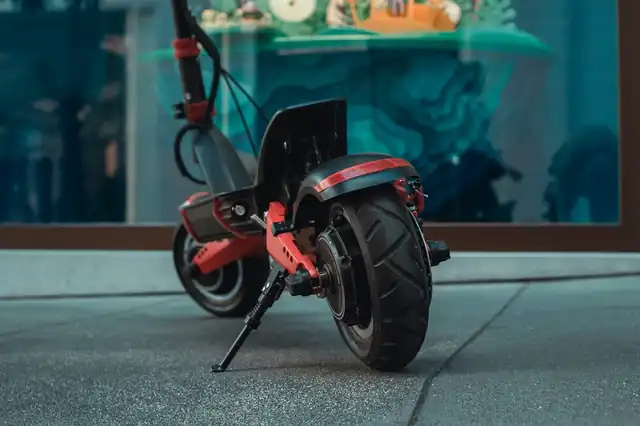
A budget foldable commuter with a 350W motor, 19 mph top speed, and never-flat tires. Here is how it really rides, and who should actually buy one.
If you have been shopping for a cheap way to skip traffic, you have probably seen the Roinside electric scooter pop up all over Amazon. It sits right in that tempting budget zone, often under $200, with a foldable frame, airless tires, and a phone app. But is a scooter this affordable actually any good? That is exactly what this Roinside electric scooter review is here to answer, in plain language, rider to rider.
Roinside plays in the same sandbox as Gotrax, Hiboy and isinwheel. It is not a premium Segway, and it does not pretend to be. Instead, it aims to get you to work, class, or the train station without draining your wallet, and it leans hard on a low price to do it.
In this guide, I will walk you through how the Roinside really rides, how far it actually goes on a charge, where it quietly cuts corners, and who should (and should not) buy one. No hype and no fluff. Just a straight look at what your money gets you so you can decide with your eyes open.
This article is part of our best electric scooters and reviews hub, which lists every scooter review on the site.
The Roinside Electric Scooter at a Glance
Roinside is a budget-first electric scooter brand that lives almost entirely on Amazon. You will not spot it in big-box stores or in flashy commercials. Instead, it competes on one thing: price. It quietly undercuts better-known names like Gotrax, Hiboy, and Segway, often by a hundred dollars or more. The deal you are making is simple. You get honest, basic hardware, and you skip paying for a famous badge.
The lineup can feel a little confusing at first, because Roinside lists many scooters that look almost the same. Most of them share the same 8.5-inch frame, a 350W motor, and a 19 mph top speed. What actually changes from listing to listing is the battery. That one part sets the range anywhere from about 12 miles up to a claimed 23 miles. Above those, Roinside also sells bigger models with 10-inch and 14-inch wheels, a stronger 500W motor, and much longer range for riders who want more muscle.
So think of Roinside less as a single scooter and more as a family of cheap commuters. The core promise stays the same across the whole range: fold it, charge it, and use it to skip short car trips, dodge traffic, and roll to the bus or train. It is transportation first and toy second, and that focus is a big part of why it sells so well.
- Motor: 350W brushless hub (500W on the bigger models)
- Top speed: 19 mph (up to about 22 mph on 10-inch models)
- Range: 12 to 23 miles claimed, depending on the battery
- Tires: 8.5-inch solid, airless design that never goes flat
- Weight: around 30 lbs with a one-click fold
- Price: usually between $150 and $260
| Spec | Detail |
|---|---|
| Motor | 350W brushless hub |
| Top speed | 19 mph |
| Range (claimed) | Up to 23 miles |
| Range (realistic) | 12 to 16 miles |
| Battery | 441Wh (36V) |
| Charge time | 4 to 5 hours |
| Tires | 8.5-inch solid, airless |
| Max load | 265 lbs |
| Scooter weight | About 30 lbs |
| Brakes | Rear disc + front EABS regenerative |
| Water resistance | IP65 |
| Certification | UL2272 |
| App | Bluetooth, 3 speed modes, cruise, lock |
| Warranty | 1 year |

How the Roinside Electric Scooter Rides
Twist the throttle and the Roinside pulls away with a friendly, steady push rather than a wild kick. The 350W motor is peppy enough for bike lanes, park paths, and quiet neighborhood streets. It cruises comfortably at its 19 mph top speed, which honestly feels plenty fast when you are standing on a small deck a few inches off the ground. Most new riders end up spending their time in the middle speed mode, not flat out.
Hills are where a budget 350W motor shows its limits. Gentle slopes and highway overpasses are no problem, and the scooter will grind up them at a slower pace. But steep climbs, especially with a heavier rider on board, will slow it to a crawl. If your daily route has one big hill, this is the moment to look at the 500W 10-inch Roinside instead. That extra power makes a real, noticeable difference on grades.
The ride itself is stable and easy to learn. The deck has room for both feet, and the handlebar sits at a comfortable height for most adults. At low speed it feels planted and forgiving, which is great for beginners finding their balance. Push toward the top speed on rough pavement, though, and you will feel every bump, because there is no suspension to soak up the road. This scooter rewards smooth, relaxed riding far more than aggressive sprints.
Top speed and acceleration
The 19 mph top speed is average for a budget commuter and quick enough to keep up in bike lanes. Acceleration is smooth rather than snappy, which actually makes the scooter easier for first-timers to control.
Climbing hills
The 350W motor handles mild inclines fine but struggles on steep hills, especially for riders near the 265 lb limit. For hilly cities, the 500W 10-inch model is the smarter pick.
Battery Life and Real-World Range
Here is the honest truth about range, and it applies to almost every cheap scooter, not just Roinside. The big number on the box is a best-case lab figure. Roinside advertises up to 23 miles on its longer-range 8.5-inch model, which uses a 441Wh battery. In the real world, plan for closer to 12 to 16 miles per charge. That gap is not Roinside lying to you. It is just physics and the way these numbers are measured.
Your true range depends on a handful of things. A heavier rider pulls more power. Hills, cold weather, stop-and-go riding, and holding full throttle all drain the battery faster. The advertised number assumes a light rider, flat ground, mild weather, and eco mode all at once. Change any of those and the miles drop. My rule of thumb is simple: take the claimed range, cut it by about a third, and plan your commute around that safer figure.
Charging is straightforward. A full top-up takes about 4 to 5 hours from empty, so an overnight charge easily covers a normal work day. To keep the battery healthy for the long haul, try not to run it to zero every single time, and avoid leaving it fully drained for weeks. Storing and charging it indoors at room temperature will noticeably help both your range and the battery’s lifespan over the years.
Brakes, Tires, and Safety Features
Stopping power is one area where the Roinside genuinely punches above its price. It uses a dual braking system: a physical disc brake on the rear wheel plus an electronic EABS regenerative brake up front. Squeeze the lever and it slows down quickly and predictably, even from top speed. The regenerative brake also feeds a little energy back to the battery, which is a nice bonus. For city riding where you stop and start constantly, reliable brakes matter more than raw speed.
The tires are the classic budget-scooter compromise. Roinside uses 8.5-inch solid, airless tires. The huge upside is that you will never, ever fix a flat. No pumps, no punctures, no roadside repairs on a cold morning. The downside is comfort. Solid tires pass more of the road into your feet and hands, so cracks and rough pavement feel harsher than they would on air-filled tires. They also offer slightly less grip on wet surfaces, so ease off the speed when it is raining.
On the safety front, you get the essentials done right. An IP65 water-resistance rating means light rain and damp roads are fine, though you should never ride through deep puddles or leave it out in a storm. A front LED headlight and a rear brake light help you see and be seen at dusk. Many Roinside models also carry UL2272 certification, which is the safety standard for the electrical and charging system, and that is a certificate worth looking for on any cheap scooter.
- Dual brakes: rear disc plus front EABS regenerative
- 8.5-inch solid tires that never go flat
- IP65 rating for light rain and damp roads
- Front LED headlight and rear brake light
- UL2272 electrical safety certification on most models
Folding, Portability, and the App
Portability is a big reason people choose a scooter over a bike, and the Roinside does well here. The stem drops with a one-click folding latch, and the whole scooter collapses in just a few seconds. At around 30 pounds it is not featherlight, but it is manageable for short carries up stairs, into a car trunk, or onto a train. Folded, it tucks neatly into a closet or under a desk, which makes it a great fit for apartment and dorm living.
Build quality is fair for the price, with an aluminum-alloy frame that feels solid when you stand on it. Be honest with your expectations, though. Like most budget scooters, the folding joint can develop a little stem wobble over months of use. It is usually a quick fix with the included tool, and checking the folding bolts every couple of weeks keeps everything tight and rattle-free for the long run.
The companion app is a pleasant surprise at this price. Pair it over Bluetooth and you can switch between speed modes, turn on cruise control, check your speed and battery level, and lock the scooter so it will not roll away if someone grabs it. Some riders skip the app entirely and just ride, which is totally fine. But it is worth setting up once, because the cruise control alone makes longer flat stretches much easier on your thumb.

Roinside vs Other Budget Scooters
The obvious question is how the Roinside stacks up against better-known budget names. On paper, it holds its own. A 350W motor, a 19 mph top speed, and solid tires put it right in the same class as the Gotrax GXL V2 and the Hiboy S2, and it usually costs less than both. Against the Gotrax, the Roinside is often faster and cheaper. Against the isinwheel and the Gotrax G4, it gives up some range and wheel size but saves you real money at checkout.
Where the established brands pull ahead is track record and support. Gotrax, Hiboy, and Segway have been around for years, with wide parts availability, active owner communities, and easier warranty service. Roinside is newer and smaller, so if something breaks in year two, you may have a harder time finding a specific replacement part or a fast answer from support. That is the quiet risk you take to save money up front.
So the choice comes down to what you value most. If you want the lowest price for a scooter that covers a short daily commute, Roinside is a smart, no-nonsense buy. If you plan to ride hard for years and want the safety net of a big brand, spending an extra hundred dollars on a Hiboy or Segway may be worth it. Neither choice is wrong. It simply depends on your budget and how long you plan to keep the scooter.
Is the Roinside Electric Scooter Worth It?
After weighing it all up, the Roinside electric scooter earns a clear place in the market: it is one of the cheapest ways to get a real, usable commuter scooter under your feet. It is not going to thrill a speed junkie or conquer steep hills, and it does not have the long-term brand safety net of a Segway. But for short city trips, first-time riders, students, and anyone testing whether scooter life is for them, it delivers a genuine lot for the money.
Buy it if your commute is short, mostly flat, and you want to spend as little as possible without ending up with junk. Look elsewhere if you face big hills, a long daily ride, or you want a scooter you will lean on hard for five years straight. Set your expectations at the price you are paying, and the Roinside becomes very easy to recommend as an honest value pick.
- Pros: very low price, never-flat tires, strong dual brakes, handy app, easy one-click fold
- Cons: modest hill power and no suspension for a firm ride on rough roads
- Cons: optimistic range claims and a smaller brand with a shorter support track record
- Best for: short, mostly flat commutes and budget-minded first-time riders
| Model | Motor | Top Speed | Claimed Range | Best For |
|---|---|---|---|---|
| 8.5-inch (short range) | 350W | 19 mph | 12 miles | Short hops on a tight budget |
| 8.5-inch (mid range) | 350W | 19 mph | 16 miles | Daily 5 to 7 mile commutes |
| 8.5-inch (long range) | 350W | 19 mph | 23 miles | Longer flat commutes |
| 10-inch | 500W | 22 mph | 27 miles | More power and comfort |
| 14-inch (touring) | 500W+ | 22+ mph | Up to 62 miles | Heavier riders and long rides |
| Scooter | Approx. Price | Motor | Top Speed | Claimed Range |
|---|---|---|---|---|
| Roinside 8.5-inch | $150 to $260 | 350W | 19 mph | 12 to 23 mi |
| Gotrax GXL V2 | ~$300 | 250W | 15.5 mph | 12 mi |
| Hiboy S2 | ~$330 | 350W | 19 mph | 17 mi |
| isinwheel S9 Max | ~$300 | 500W | 21 mph | 25 mi |
| Gotrax G4 | ~$400 | 350W | 20 mph | 25 mi |
Common Mistakes (and How to Fix Them)
Fix: Cut the advertised range by about a third when you plan. If the box says 23 miles, build your commute around 12 to 16 real-world miles so you never get stranded far from home.
Fix: Pair the scooter to the Roinside app once. It unlocks cruise control, lets you switch speed modes, and adds a lock feature, all of which make daily riding easier and a bit safer.
Fix: Bend your knees and steer around potholes and sharp cracks. Solid tires do not cushion impacts, so let your legs act as the suspension on rough pavement.
Fix: If your commute has real hills, choose the 500W 10-inch Roinside instead. The base 350W motor bogs down on steep climbs, especially for heavier riders.

Pro Tips
- 💡 Charge to about 80 to 90 percent for daily rides and save full 100 percent charges for days you need maximum range. It is gentler on the battery over time.
- 💡 Learn to brake mainly with the rear disc and ease into the front regenerative brake, so you stop smoothly instead of lurching forward.
- 💡 Store and charge the scooter indoors. Cold garages sap lithium battery range and can shorten the battery’s overall life.
- 💡 Check the folding latch and stem bolts every couple of weeks with the included tool to prevent that common budget-scooter wobble.
- 💡 Add a cheap phone mount and a portable lock so your Roinside is ready for real errands, not just test laps around the block.
An Example Scenario
Illustrative example: a composite of situations riders often describe, not a real customer story.
Picture a rider named Marcus who is tired of paying for parking on his 3-mile ride to the train station. A Roinside 8.5-inch can basically replace that morning car trip: charge it overnight, fold it on the platform, and carry it onto the train without a fuss. The main trade-off is a firm ride over rough stretches of old sidewalk.
His honest take matched mine. For a short, flat commute it just works, and the low price meant he was not stressed about scratches or leaving it locked outside a coffee shop. He did add that he wished he had bought the longer-range version, because on weekends he now wants to ride it much farther than his little commuter battery likes to go.
Frequently Asked Questions
Yes, for the price it is a solid budget commuter. It gives you a 350W motor, a 19 mph top speed, strong dual brakes, and never-flat tires for often under $200. It will not match a premium Segway, but for short, mostly flat city trips it does the job well and saves you a lot of money.
The standard 8.5-inch Roinside tops out at 19 mph. The larger 10-inch model with a 500W motor reaches about 22 mph. Most riders cruise a few miles per hour below the max, and beginners can cap the top speed in the app until they feel confident.
Expect about 12 to 16 real-world miles from the longer-range 8.5-inch model, even though the listing may claim up to 23. Your actual range drops with heavier riders, hills, cold weather, and full-throttle riding. Always plan your commute around the lower, realistic number, not the max on the box.
It is water resistant, not waterproof. The IP65 rating means light rain, damp roads, and small splashes are fine. You should never ride through deep puddles, submerge it, or leave it out in a heavy storm, since water damage is usually not covered by the warranty.
Yes, up to the 265 lb weight limit. Heavier riders can still use it, but they will notice slower acceleration, weaker hill climbing, and shorter range. If you are near the limit or ride hilly routes, the stronger 500W Roinside model is a better and more comfortable choice.
Roinside is a legitimate budget brand that sells mainly through Amazon, and its scooters carry UL2272 safety certification. The main trade-off versus Gotrax, Hiboy, or Segway is a shorter track record and a thinner support and parts network. For a low-cost, short-commute scooter it is a reasonable pick; for heavy long-term use, a bigger brand offers more peace of mind.
Final Checklist ✅
- ✅ Confirm your round-trip commute is under about 12 to 15 miles
- ✅ Check that your weight is comfortably under the 265 lb limit
- ✅ Pick the right model: 350W for flat routes, 500W for hills
- ✅ Download the Roinside app and pair it over Bluetooth
- ✅ Give it a full 4 to 5 hour charge before your first ride
- ✅ Wear a helmet and test the brakes in a safe, open space
- ✅ Register your warranty and save your Amazon receipt