Best Hoverboard Spots in Los Angeles: Where to Ride
From the Venice boardwalk to a hidden Burbank rail-trail: where to cruise, who each spot suits, and how to stay legal on two wheels.
Looking for the best hoverboard spots in Los Angeles? You picked a great city for it. LA has miles of flat beach paths, sunny park loops, quiet parking lots, and smooth rail-trails that feel almost made for a self-balancing board. But it also has a patchwork of local rules, cracked sidewalks, and thick weekend crowds that can turn a fun cruise into a headache fast.
This guide walks you through the real, ride-worthy places around town, from the buzzing Venice boardwalk to a hidden Burbank rail-trail most riders never hear about. We will be honest about where hoverboards are welcome, where they are flat-out banned (looking at you, Santa Monica), and how to stay legal and safe while you are out there.
Whether you are a nervous first-timer hunting for an empty lot to practice in, or a confident rider who wants a scenic coastal glide, there is a spot here with your name on it. Let’s roll.
- First Things First: Are Hoverboards Legal in LA?
- The 8 Best Hoverboard Spots in Los Angeles
- Beach Boardwalks: Venice, the Strand, and the Marvin Braude Trail
- Best Spots by Rider Type
- How to Pick a Great Riding Spot Anywhere in LA
- Ride Smart: Gear, Board Choice, and Etiquette
- Best Time of Day and Year to Ride in LA
First Things First: Are Hoverboards Legal in LA?
Yes, but with a few important asterisks. California treats hoverboards as “electrically motorized boards,” a category the state created with a law called AB 604 back in 2016. That law says hoverboards are allowed in public, so you are not breaking some secret rule just by rolling out your front door.
The main requirements are easy to remember. You need to be at least 16 years old. You have to wear a bike helmet whenever you ride on a public path, bikeway, sidewalk, or trail. You can only ride on streets where the speed limit is 35 mph or lower. And you should not ride faster than 15 mph, though most boards are capped well below that anyway, since they cannot legally be built to top 20 mph.
Here is the part that catches people out: cities and parks are allowed to add their own rules on top of the state law, and several LA-area spots have. Santa Monica bans every kind of electric device, hoverboards included, on its famous beach bike path, on the Pier, and in all its city parks. The Ballona Creek Bike Path bans motorized vehicles too. So the honest answer is that hoverboards are legal across most of Los Angeles, but the exact ‘where’ changes block by block. When you see a ‘no motorized devices’ sign, believe it, and roll somewhere else.
| Rule | What It Means for You |
|---|---|
| Legal category | Treated as an “electrically motorized board” under CA law (AB 604) |
| Minimum age | 16 years or older to ride |
| Helmet | Required on any public path, bikeway, sidewalk, or trail |
| Max riding speed | Do not ride faster than 15 mph |
| Streets | Only roads posted 35 mph or slower |
| Board limit | Cannot be built to exceed 20 mph; UL2272 strongly advised |
| Local rules | Cities and parks can ban them, so always check signage |
The 8 Best Hoverboard Spots in Los Angeles
Los Angeles is huge, and ‘good hoverboard terrain’ is scattered all over it. To save you the guesswork, here are eight spots riders actually love: a mix of iconic coastal paths, quiet rail-trails, urban streets, and beginner-friendly lots. Some are pure scenery, some are pure practice, and a couple are hidden gems most tourists never find. For each one, we will tell you who it suits and what to watch for before you commit.
1. Venice Beach Boardwalk
The classic LA ride. Ocean Front Walk is flat, wide, and packed with murals, street performers, and salty ocean air. It is iconic, but it is also crowded, so keep your speed to a stroll and go early (before 9am) for open pavement. The surface has cracks and the odd sandy patch, so bigger 8.5-inch tires make the ride much smoother.
2. Griffith Park
For scenery, it is hard to beat. Griffith Park has wide, well-paved roads and lower loops with views of the Observatory and the Hollywood Sign. Stick to the flatter sections, since some roads climb hard and will drain your battery fast. Check posted signs, as rules vary by area within the park.
3. Chandler Bikeway (Burbank)
A hidden gem. This flat, tree-lined path was built on an old rail line and runs about two miles through Burbank, dotted with public art. It is smooth, calm, and low-traffic, basically the perfect place to build confidence or take a relaxed family cruise.
4. Downtown Arts District
If you like an urban vibe, the Arts District has smooth streets, warehouse murals, and coffee stops on every corner. It is quiet on weekend mornings, which is the sweet spot for cruising. Watch for cars and delivery trucks once the day gets going.
5. The South Bay Strand
The stretch through Hermosa and Manhattan Beach is flatter and often calmer than Venice, with the same gorgeous ocean views. It is a lovely long cruise. Rules vary by city here, so glance at the signs and keep a courteous pace around walkers and cyclists.
6. Empty Parking Lots
The unglamorous champion of beginner spots. School, church, and business-park lots sit empty on weekends and offer huge, smooth, obstacle-free space to practice, for free. Just get permission where it is needed, and clear out before events start.
7. Long Beach Shoreline
The waterfront path near Belmont Shore gives you miles of flat, wide pavement and a more laid-back feel than the busier LA beaches. It is great for a longer, mellow ride. As always, yield to people on foot and check local signage.
8. Your Neighborhood Cul-de-Sac
Never underestimate a quiet dead-end street or a plaza like the ones around Exposition Park. Low traffic, short distances, and a soft place to bail make these ideal for warming up, testing a new board, or squeezing in a quick evening spin.
Beach Boardwalks: Venice, the Strand, and the Marvin Braude Trail
The Marvin Braude Bike Trail is the crown jewel of LA riding, 22 miles of paved path running from Will Rogers State Beach down to Torrance. It is beautiful. But it passes through many different cities, and each one sets its own rules, which is where riders get tripped up.
Santa Monica’s slice bans motorized devices entirely, and so does the Ballona Creek connector. Other stretches, through Venice, Playa del Rey, and parts of the South Bay, are more relaxed, though technically still a gray area for motorized boards. The realistic move is to treat the boardwalk like a shared sidewalk, not a racetrack. Keep to a walking-to-jogging pace when people are around, yield to pedestrians, and hop off if it is shoulder-to-shoulder.
Timing changes everything. Early mornings before 9am and weekday afternoons are night-and-day calmer than a Saturday at noon. Watch the surface, too. Beach paths collect sandy patches, expansion-joint cracks, and the odd puddle, and small 6.5-inch wheels catch on all of it. This is exactly where a bigger 8.5-inch all-terrain board earns its price and keeps you upright.
Best Spots by Rider Type
Not every spot fits every rider. The fastest way to a fun, frustration-free session is matching the location to your comfort level and your goal for the day. A nervous first-timer and a seasoned commuter want completely different pavement. Here is a simple way to sort it out.
- Total beginners: Empty parking lots, the Chandler Bikeway, and quiet cul-de-sacs. Smooth, flat, forgiving, and free of surprises.
- Families (riders 16+): The Chandler Bikeway and low-crowd park loops give everyone room without heavy traffic.
- Scenic cruisers: The Venice boardwalk (early morning), the South Bay Strand, and the Long Beach shoreline serve up the postcard views.
- Confident urban riders: The Downtown Arts District streets and flatter Griffith Park loops reward good balance and control.
How to Pick a Great Riding Spot Anywhere in LA
The eight spots above are proven, but LA has thousands of streets and paths. Once you know what makes a spot good, you can find your own favorite. Five things matter most, and you can size them up in about ten seconds.
- Surface: Smooth concrete or asphalt wins. Avoid brick, loose gravel, deep sand, and beat-up sidewalks that catch small wheels.
- Crowds: Fewer people means a safer ride and more legal breathing room. Early mornings are magic.
- Hills: LA is hilly. Flat ground is easier on your balance and your battery, and safer for stopping.
- Legality: Scan for ‘no motorized devices’ signs before you unload. When unsure, choose a quieter, lower-stakes spot.
- Shade and timing: Midday sun here is no joke. Shady paths and golden-hour rides are far more pleasant.
Ride Smart: Gear, Board Choice, and Etiquette
A great spot is only half the equation. The other half is showing up prepared, because the right gear and the right board turn a sketchy ride into a smooth one. Start with safety, since LA pavement is unforgiving and the ER visit is never worth it.
Your board matters as much as your gear. LA’s cracked boardwalks, sandy beach paths, and hilly parks punish cheap little wheels, so a sturdier all-terrain board pays off almost immediately. And a few simple manners keep you welcome on shared paths instead of becoming the rider everyone complains about.
- Helmet, always. It is legally required on public paths and it is the single best protection you have. Add wrist guards while you are learning.
- Get seen. Clip on lights or wear bright colors for early-morning and golden-hour rides. Cars and cyclists cannot dodge what they cannot see.
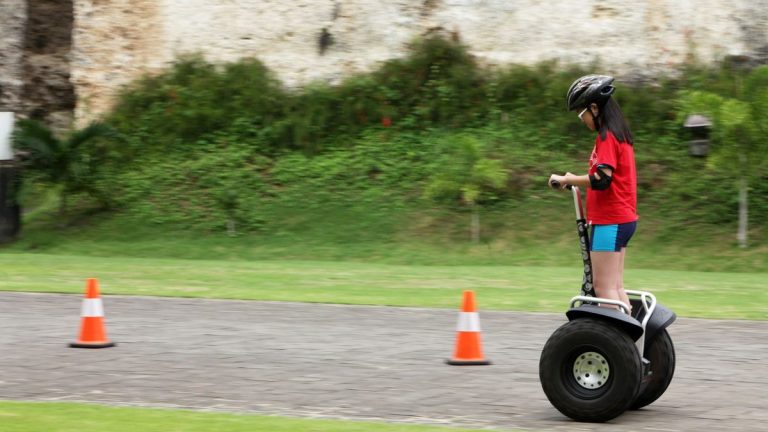
- Choose the right board. For LA’s cracked boardwalks and sandy paths, 8.5-inch all-terrain tires beat small 6.5-inch wheels, and never buy a board without UL2272 certification.
- Mind your manners. Pass on the left, slow down near kids and dogs, and do not blast music through a quiet neighborhood at dawn.
Best Time of Day and Year to Ride in LA
Los Angeles gets sunshine almost year-round, so the question is not really which season, it is which hour. Timing your ride well is the difference between an easy glide and a sweaty, crowded slog.
Mornings are the golden window. Before 9am, the beach paths are nearly empty, the pavement is cool, and the light is gorgeous. Golden hour in the evening is a close second, though you will want lights as the sun drops. Midday, especially in summer, brings brutal sun, hot decks, and the thickest crowds, so skip it if you can.
One local quirk to know: the coast often wakes up under a damp gray blanket called the ‘marine layer,’ or ‘June Gloom’ in early summer. It leaves beach paths slightly slick, so ease off your speed until the sun burns it off. Weekdays beat weekends everywhere, and winter mornings can be genuinely chilly by LA standards, so a light layer helps.
| Spot | Best For | Surface | Crowds | Watch Out For |
|---|---|---|---|---|
| Venice Boardwalk | Scenic people-watching | Flat, some cracks | Heavy on weekends | Pedestrians, ride slow |
| Griffith Park | Views and longer rides | Smooth roads | Medium | Steep hills on some loops |
| Chandler Bikeway | Beginners and families | Flat, smooth | Light | Street crossings |
| DTLA Arts District | Urban cruising | Smooth streets | Light in AM | Traffic later in the day |
| South Bay Strand | Coastal cruising | Flat, some sand | Medium | Sandy patches |
| Empty parking lots | Practice and beginners | Very smooth | None | Get permission first |
| Long Beach shoreline | Long relaxed rides | Flat, wide | Light to medium | Check local signage |
| Location | Motorized Allowed? | Notes |
|---|---|---|
| Santa Monica beach path and Pier | No | All electric devices banned and enforced |
| Santa Monica city parks | No | Motorized devices prohibited |
| Venice / Ocean Front Walk | Gray area | Widely ridden; keep to walking pace, yield to people |
| Ballona Creek Bike Path | No | Motorized vehicles prohibited |
| South Bay Strand (Hermosa/Manhattan) | Check signage | Rules vary by city; ride courteously |
| Long Beach shoreline path | Check signage | Generally relaxed; still yield to pedestrians |
Common Mistakes (and How to Fix Them)
Fix: It is banned for all motorized devices and actively enforced with fines. Start your coastal ride in Venice or the South Bay instead, and always check signage first.
Fix: California requires one on public paths, and it is your best protection on hard pavement. Keep a helmet clipped to the board so you never ‘forget’ it at home.
Fix: Little wheels catch on boardwalk cracks and sand and pitch you forward. Use an 8.5-inch all-terrain board for beach and park riding, or stick to smooth lots.
Fix: It earns tickets, dirty looks, and crashes. Slow to a walking pace near pedestrians, or ride early mornings when the paths are still empty.
Pro Tips
- 💡 Ride the Venice boardwalk before 9am. You will get open pavement, cool air, and the best light of the day before the crowds wake up.
- 💡 Empty school and church parking lots on weekends are free, smooth, and low-stakes, the ideal place to practice or test a new board.
- 💡 LA is spread out, so know your range before you commit to a route. Plan a loop that gets you back before the battery dies, not a one-way you have to walk home from.
- 💡 Download a bike-path map (Marvin Braude, Chandler, Long Beach shoreline) to find the smooth, flat Class I paths locals actually use.
- 💡 Throw your board in the trunk and chase the right conditions. A ten-minute drive from a banned beach to a friendly one can change your whole day.
A Real-Life Example
I learned the Santa Monica lesson the hard way. On my first LA hoverboard outing I rolled straight onto the beach path near the Pier, felt great for about four minutes, then got waved down by an officer who politely explained that motorized boards are not allowed there. No ticket, just a warning, but lesson learned. The next weekend I drove ten minutes south, started my ride in Venice around 7am, and cruised toward Playa del Rey on nearly empty pavement. Total night and day.
These days my routine is simple. I charge the board the night before, throw it in the trunk, and hit the Chandler Bikeway or a quiet lot when I want to relax, saving the Venice boardwalk for early weekend mornings when the light is best and the crowds are still asleep. Knowing where, and when, to ride turned hoverboarding in LA from stressful into my favorite part of the weekend.
Frequently Asked Questions
Yes, hoverboards are legal in most of Los Angeles, but with conditions. California treats them as ‘electrically motorized boards,’ so you must be 16 or older, wear a helmet on public paths, ride only on streets posted 35 mph or slower, and keep your speed under 15 mph. On top of that, individual cities and parks can ban them, and Santa Monica does, so always check local signage before you ride.
In practice, yes, hoverboards are a common sight on the Venice boardwalk, though it sits in a legal gray area for motorized devices. The key is to ride respectfully: keep to a walking or light jogging pace, yield to pedestrians, and go early in the morning when the crowds are thin. On a packed weekend afternoon, it is safer and smarter to hop off and walk the busiest stretches.
No, Santa Monica bans all electric and motorized devices, including hoverboards, on its portion of the beach bike path, on the Santa Monica Pier, and in its city parks. This rule is enforced, so do not risk a fine. If you want to ride near the coast, head to the Venice stretch just south, or explore the South Bay Strand through Hermosa and Manhattan Beach instead.
Yes, California law requires a properly fitted bike helmet whenever you ride a hoverboard on a public path, bikeway, sidewalk, or trail. Beyond the legal requirement, it is simply the smartest thing you can wear, since LA pavement is hard and a fall at even low speed can hurt. New riders should add wrist guards too, since hands take the brunt of most tumbles.
Empty parking lots and the Chandler Bikeway in Burbank are the two best beginner spots in LA. Parking lots at schools, churches, and business parks sit empty on weekends and give you huge, smooth, obstacle-free space to practice for free. The Chandler Bikeway is flat, calm, and low-traffic, making it perfect once you are ready to ride in a straight line for a while.
California law says you should not ride a hoverboard faster than 15 mph, and the board itself cannot legally be built to exceed 20 mph. Most consumer hoverboards top out somewhere between 6 and 10 mph anyway, so you are usually well within the limit. Near crowds, like on the Venice boardwalk, a walking pace is both the courteous and the legal choice.
Final Checklist ✅
- ✅ Confirm your board is UL2272 safety certified before you ride.
- ✅ Charge fully the night before and know your board’s real range.
- ✅ Pack and wear a bike helmet, since it is required on public paths.
- ✅ Scan the spot for ‘no motorized devices’ signs before unloading.
- ✅ Start in an empty lot or quiet street if you are still learning.
- ✅ Add lights or bright clothing for morning and evening rides.
- ✅ Keep under 15 mph, and slow to a walking pace around people.