Electric Scooters: The Complete Buyer’s Guide
Your plain-English guide to picking, riding, and caring for an electric scooter in 2026 without falling for the marketing hype.
Electric scooters have quietly become one of the easiest ways to get around a city. They fold up, they cost far less than a car, and they turn a sweaty 25-minute walk into a breezy five-minute glide. Whether you want to skip traffic on your commute, cover that awkward last mile from the train, or just have fun on a Saturday, there is an electric scooter built for it.
But here is the honest part: the market is crowded and confusing. Brands throw around big range numbers and top speeds you will almost never hit in real life. Prices run from under $300 to well past $2,000. It is easy to overpay for power you do not need, or to buy a cheap model that leaves you stranded halfway home.
This guide cuts through the noise. We will walk through the main types of scooters, the specs that actually matter, what you should really pay in 2026, and how to stay safe and legal. By the end, you will know exactly which kind of scooter fits your life, and you will sidestep the traps that catch most first-time buyers.
What Is an Electric Scooter (and Are They Worth It)?
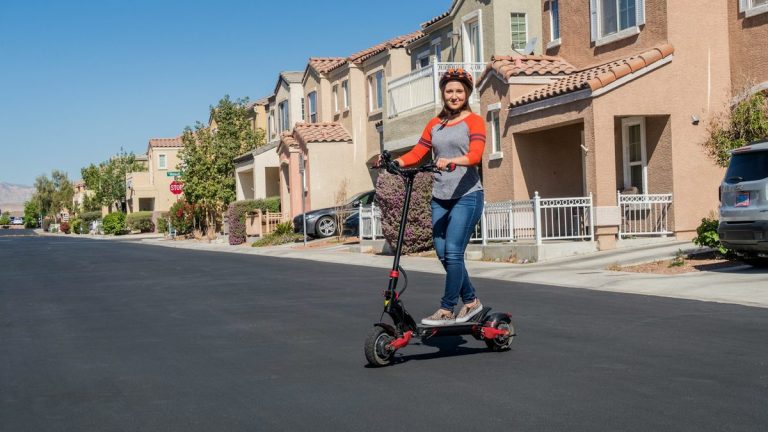
An electric scooter is basically the kick scooter you remember from childhood, grown up and given a battery. It has a deck you stand on, handlebars to steer, a motor in one or both wheels, and a thumb throttle to make it go. Squeeze the brake to stop, and fold the stem down to carry or store it. Most adult models weigh between 25 and 65 pounds and charge from a normal wall outlet, just like your phone.
So are they worth it? For most people who travel one to ten miles at a time on paved roads, yes. Charging one costs just a few cents, there is no gas, no parking, and no insurance headaches in most states. You skip traffic, glide past parked cars, and arrive without breaking a sweat. They are also genuinely fun, which is why so many owners end up riding for errands they used to drive.
They are not perfect, though. Small wheels do not love deep potholes, rain cuts your traction and can void some warranties, and range anxiety is real if you buy the wrong model. You also have to carry the thing when the battery dies. Go in knowing the trade-offs and you will be happy. Buy on hype alone and you may be disappointed.
- Cheap to run: a full charge usually costs 5 to 15 cents
- Fold flat to store under a desk or carry onto a train
- No gas, no parking, and no registration in most states
- Quiet, clean, and honestly a lot of fun to ride
| Type | Best For | Typical Price | Claimed Range | Top Speed |
|---|---|---|---|---|
| Budget / Lightweight | Students, short flat trips, last mile | $250-$450 | 12-20 mi | 15-19 mph |
| Commuter (mid-range) | Daily 5-10 mile commutes | $500-$1,000 | 25-45 mi | 20-25 mph |
| Performance / Long-Range | Speed, hills, long distances | $1,200-$2,500 | 40-70 mi | 28-40 mph |
| Off-Road / All-Terrain | Trails, gravel, rough roads | $1,000-$3,000 | 30-60 mi | 25-40 mph |
| Seated / Kids | Comfort riders and children | $150-$700 | 10-25 mi | 10-19 mph |
The Main Types of Electric Scooters
Not all electric scooters are built for the same rider. A featherweight model made for a college campus is a very different animal from a 65-pound beast built to climb hills. Knowing the five main categories makes the rest of your search far easier, because it narrows hundreds of options down to a handful that actually fit you.
Budget & Lightweight
These cost roughly $250 to $450 and weigh under 30 pounds. Expect a top speed around 15 to 19 mph and real range of 8 to 15 miles. Perfect for students, short flat commutes, and last-mile trips. You give up suspension and hill power, but they are cheap and easy to carry.
Commuter (the sweet spot)
For $500 to $1,000 you get the scooters most adults should buy. Think 20 to 22 mph, 25 to 35 real miles, suspension, app control, and better brakes. Models like the Segway Ninebot MAX G2 and NIU KQi 300X live here. Comfortable enough for daily 5 to 10 mile rides.
Performance & Long-Range
Spend $1,200 to $2,500 and you unlock dual motors, 28 to 40 mph, and 40 to 70 miles of range. These are heavy (50 to 80 pounds) and overkill for a flat two-mile commute, but they eat steep hills and long distances for breakfast.
Off-Road & All-Terrain
Built for trails, gravel, and rough streets, these have big knobby pneumatic tires and serious suspension. The Segway ZT3 Pro is a good example. Expect 25 to 40 mph and a hefty frame. Great fun, less practical for hauling up stairs.
Seated & Kids
Some scooters add a seat for comfort on longer rides, and kid-sized models cap speed at 10 to 15 mph with lower decks. If you are buying for a child, choose a model actually designed for their age and weight, not a downtuned adult scooter.
The Specs That Actually Matter
Once you know the type you want, the spec sheet is where deals are won or lost. Here are the numbers that genuinely change your daily ride, and the ones brands love to exaggerate. Learn these six and you can read any listing like a pro.
Motor Power (Watts)
A 250 to 350W motor is fine for flat ground; 500W handles gentle hills; 800W and up (or dual motors) climbs steep grades and carries heavier riders. Watch for ‘peak’ watts, a short burst number, versus ‘nominal’ watts, the honest continuous rating.
Battery & Range (the 60% rule)
Range is the most exaggerated spec in the industry. Independent testing shows scooters deliver about 61% of their claimed range on average. Hills, cold, your weight, and speed all shrink it. Take the advertised number, multiply by 0.6, and make sure it still covers your round trip.
Top Speed
Fun to brag about, rarely the most important spec. Most cities cap you at 15 to 20 mph anyway. A smooth, stable 20 mph beats a twitchy 30 mph for commuting. Save the big speeds for experienced riders with full safety gear.
Tires
Pneumatic (air-filled) tires soak up bumps and grip better, but can go flat. Solid or honeycomb tires never puncture, but transmit every crack in the road. If your streets are rough, air tires plus suspension make a huge comfort difference.
Brakes
Your most important safety feature. Look for dual braking, such as a disc or drum brake paired with an electronic or regenerative brake. Single-brake budget models stop far more slowly, which matters a lot at 20 mph in traffic.
Weight & Portability
A scooter you cannot lift is a scooter you will not use. Under 30 pounds is easy; 40 to 55 pounds is a workout on stairs; 60-plus pounds is a two-hand heave. Match the weight to how often you will carry it onto transit or into your home.
How to Choose the Right Electric Scooter for You
The best scooter is the one that matches how you actually ride, not the one with the biggest numbers. Start with your real trips, then work backward to the specs. Here is a quick way to map your needs to a category.
Write down your longest regular round trip, then double it. That is the real-world range you should shop for. Do the same with hills: if any part of your route makes you downshift on a bike, lean toward more motor power. This five-minute exercise saves most buyers from either overspending on a heavy performance machine or under-buying a scooter that cannot handle their route.
- Short flat commute (under 5 miles): a lightweight commuter with 15 to 20 real miles is plenty. Save your money.
- Longer commute (5 to 12 miles): choose a mid-range model with suspension and 30-plus claimed miles.
- Hilly area: prioritize motor power, 500W nominal or higher, or dual motors.
- Rough roads or trails: get pneumatic tires and real suspension, or a dedicated off-road model.
- Carrying onto a train or up stairs: keep it under 40 pounds and make sure it folds fast.
- Taller or heavier riders: check the weight capacity (aim for 265-plus pounds) and a wide, long deck.
What Electric Scooters Cost in 2026
Electric scooter prices in 2026 run from about $250 to well over $2,500. The average model sold costs around $1,113, but here is the good news: most people do not need to spend anywhere near that. A solid commuter that will serve you for years sits in the $500 to $1,000 range.
What changes as you spend more? Mostly range, build quality, suspension, and hill power, plus safety extras like better brakes and turn signals. The jump from $300 to $700 buys a big leap in comfort and reliability. The jump from $1,000 to $2,000 mostly buys speed and distance that most commuters will never actually use.
Watch for seasonal sales, since prices tend to drop in late fall and around major shopping holidays. And remember to budget another $50 to $150 for essentials: a good helmet, a bright set of lights, and a sturdy lock. Those are not optional if you plan to ride in traffic or park in public.
Riding Safe and Legal
The rules for electric scooters have settled down a lot. As of 2026, they are legal to ride in 48 states, and there are no more statewide bans. Most states treat a scooter like a bicycle: no license, no registration, and you ride in bike lanes or on roads posted around 25 to 35 mph.
Speed and sidewalks are where cities get strict. Many places cap scooters at 15 to 20 mph on public roads, and sidewalk riding is banned in states like California, New York, Delaware, and Georgia, plus the business districts of big cities like Chicago, Miami, and Denver. The minimum age is usually 16, and only a handful of states require a driver’s license.
Helmet laws vary. Most states only require one for riders under 16 or 18, but wearing one is smart no matter your age. A basic certified helmet, front and rear lights, and bright or reflective clothing dramatically cut your risk, especially at night when most serious scooter crashes happen.
- A certified helmet (look for a CPSC or similar safety label)
- A white front light and red rear light for any low-light riding
- A reflective vest or bright clothing so drivers see you
- A sturdy lock if you ever park in public
Making Your Scooter Last: Battery & Care Tips
A little care keeps a scooter running for years. The battery is the heart of the machine, and lithium-ion packs typically last 2 to 3 years, or about 300 to 500 charge cycles, before they noticeably weaken. Higher-grade cells can reach 800 to 1,000 cycles. How you charge makes a real difference.
Beyond the battery, the basics are simple. Check tire pressure weekly if you have air tires, because low pressure kills range and invites flats. Keep the folding latch and stem bolts tight, since a loose stem is both annoying and dangerous. Wipe it down after wet or dusty rides, test your brakes before every ride, and get any squeal or grind looked at early. None of this takes more than a few minutes, and it is the difference between a scooter that lasts one season and one that lasts five years.
- Keep the charge between about 20% and 80% for daily use, and avoid draining it to zero.
- Use only the original charger; the wrong voltage can damage or even overheat the pack.
- Let the scooter cool for 30 minutes after a ride before you plug it in.
- Charge and store indoors at room temperature, never in direct sun or freezing cold.
- If storing for weeks, leave the battery around 50% and top it up once a month.
| Model | Top Speed | Real-World Range | Weight | Approx. Price |
|---|---|---|---|---|
| Gotrax GXL V2 | 15.5 mph | ~10-12 mi | 27 lbs | $300 |
| Hiboy S2 Pro | 19 mph | ~18-22 mi | 37 lbs | $400 |
| NIU KQi 300X | 20 mph | ~28-32 mi | 49 lbs | $700 |
| Segway Ninebot MAX G2 | 22 mph | ~28-33 mi | 53 lbs | $800 |
| Segway ZT3 Pro | 24.9 mph | ~33-38 mi | 66 lbs | $900 |
| Budget | What You Get | Range & Speed |
|---|---|---|
| Under $400 | Basic commuter, solid tires, light frame, single brake | 10-20 mi, 15-19 mph |
| $400-$800 | Suspension, bigger battery, app, dual brakes | 20-35 mi, 19-22 mph |
| $800-$1,500 | Dual suspension, pneumatic tires, real hill power | 30-45 mi, 22-28 mph |
| $1,500+ | Dual motors, huge range, off-road capability | 40-70 mi, 30-40 mph |
Common Mistakes (and How to Fix Them)
Fix: Assume you will get about 60% of the number on the box. Hills, cold, speed, and your weight all cut into it, so buy a scooter whose claimed range comfortably exceeds your longest trip.
Fix: Most cities cap you at 15 to 20 mph anyway. Prioritize strong dual brakes, good tires, and stability over a headline top speed you will rarely use safely.
Fix: If you will haul it up stairs or onto a train, check the weight before buying. Anything over 50 pounds gets old fast; aim for under 40 pounds if portability matters.
Fix: Do not run it flat or leave it at 100% for weeks. Keep it between 20% and 80%, use the original charger, and store it around 50% to protect long-term life.
Pro Tips
- 💡 For everyday rides, charge to about 80 to 90% and save full 100% charges for days you need maximum range. It is much easier on the battery.
- 💡 Pick your tires for your streets: air-filled tires ride smoother and grip better, while solid tires never go flat. Suspension helps either way.
- 💡 Test the brakes in the first 30 seconds of every ride. If they feel soft or the scooter pulls to one side, stop and check before you build up speed.
- 💡 Start in eco mode. It stretches your range and gives you time to learn the throttle and brakes before switching to a faster mode.
- 💡 Check tire pressure weekly on pneumatic tires. Low pressure quietly kills your range and makes pinch flats far more likely.
A Real-Life Example
Maya, a nurse in Denver, bought a mid-range commuter to cover the 3.5 miles between her apartment and the light-rail station. She had been driving and paying about $12 a day to park. Six months in, the scooter folds under her desk at work, charges overnight for pennies, and has completely replaced those parking fees. Her only regret is not buying one two years earlier.
Her one early mistake was range math. She nearly bought a budget model advertising ’18 miles’ before a friend pointed out she would realistically get closer to 11, barely enough for her round trip with no margin on cold mornings. She stepped up to a scooter with a bigger battery, and now finishes her commute with charge to spare, even in January.
Frequently Asked Questions
Expect about 60% of the advertised range in real life. A scooter that claims 40 miles usually delivers 24 to 28 for an average rider, and less on hills, in cold weather, or at higher speeds. Budget commuters often get 10 to 20 real miles, while long-range models can top 40. Always match the honest number to your round trip with margin to spare.
Most adult electric scooters top out between 15 and 25 mph. Budget models cruise around 15 to 19 mph, commuters hit 20 to 22 mph, and performance machines can reach 30 to 40 mph. That said, most cities legally cap you at 15 to 20 mph on public roads, so a stable 20 mph is plenty for daily riding.
Yes on most roads, but usually not on sidewalks. As of 2026, scooters are legal in 48 states, and most treat them like bicycles, so you ride in bike lanes and on slower streets. Sidewalk riding is banned in states like California, New York, Delaware, and Georgia, and in many city business districts. Always check your specific city rules too.
In most states, no. Scooters are treated like bicycles, so no license, registration, or insurance is required. Only about six states ask for a driver’s license or permit, and the typical minimum age to ride is 16. Rules vary, so confirm your own state’s requirements before you ride.
Most last 2 to 3 years, or about 300 to 500 charge cycles. Higher-quality lithium-ion packs can reach 800 to 1,000 cycles. You will notice the range slowly shrinking as the battery ages. Keeping the charge between 20% and 80%, using the original charger, and avoiding extreme heat or cold all help it last longer.
Light rain is usually fine if your scooter has a water-resistance rating of IPX4 or higher, but heavy rain is risky. Water reduces tire grip and braking power, and puddles can hide potholes. Many warranties also do not cover water damage. If you must ride wet, slow down, brake earlier, and avoid standing water.
Final Checklist ✅
- ✅ Write down your longest regular round trip and double it to find the range you truly need.
- ✅ Confirm the scooter’s weight capacity covers you plus a backpack or any cargo.
- ✅ Match motor power to your hills: 500W nominal or more if your route climbs.
- ✅ Check your state and city rules for speed caps, sidewalks, and helmet laws.
- ✅ Look for UL 2272 safety certification on the battery and charger.
- ✅ Compare braking systems and choose dual brakes if you will ride in traffic.
- ✅ Budget for a helmet, front and rear lights, and a lock before your first ride.