Electric Scooter Protective Gear: Stay Safe Every Ride
From helmets to wrist guards, here’s the gear that turns a nasty spill into a scraped glove — plus what to buy first.
Electric scooter protective gear is the cheapest insurance you will ever buy. A helmet, a set of pads, and a good pair of gloves cost less than one tank of gas, and they can keep a small mistake from turning into a hospital visit. Scooters feel gentle and fun, but you are still standing up high on small wheels, moving faster than you can run. When something goes wrong, it happens fast.
Here is the hard part. Study after study shows most riders skip the gear. In recent crash reports, fewer than one in ten injured scooter riders was wearing a helmet. That is a shame, because a helmet alone can cut the risk of a serious brain injury by well over half. The good news? Staying safe is simple once you know what to look for.
This guide walks you through every piece of gear worth owning, from the must-haves to the nice-to-haves. We will keep it plain and practical: real gear, real prices, and honest advice about what actually matters. You do not need to look like a stormtrooper. You just need the right kit that fits well and that you will actually wear.
Why Protective Gear Matters More Than You Think
An electric scooter can hit 15, 20, even 30 miles per hour. That does not sound like much until you picture falling off at that speed. You are standing tall, so your head is a long way from the ground. The small wheels catch on potholes, wet paint, gravel, and curbs that a car would never notice. Most crashes are solo, with no other vehicle involved. One second you are cruising, the next you are on the pavement.
The numbers back this up. Researchers tracking scooter injuries through 2026 have watched the count climb every year as more people ride. Head injuries are among the most common and the most serious. Yet helmet use stays shockingly low. In many injury studies, only about 2 to 8 percent of hurt riders had one on. That gap matters, because helmets are proven to reduce the chance of a brain injury by roughly 65 to 88 percent. Wrists, hands, and forearms get hurt a lot too, because we all throw our arms out to catch a fall.
Here is the simple takeaway. You cannot control the pothole, the car door, or the dog that darts out. You can control what you are wearing when you meet them. Protective gear does not stop every crash, but it changes the ending: a scraped glove instead of a broken wrist, a scuffed helmet instead of a concussion.
| Gear | What It Protects | Priority | Typical Price |
|---|---|---|---|
| Certified helmet | Head and brain | Must-have | $40-$150 |
| Wrist guards | Wrists and palms | Must-have | $15-$30 |
| Gloves | Hands and grip | High | $20-$45 |
| Knee and elbow pads | Joints | High | $25-$45 |
| Front and rear lights | Visibility | High | $20-$40 |
| Hi-vis / reflective gear | Being seen | Nice to have | $10-$25 |
| Armored jacket or shorts | Torso and hips | Fast riders | $80-$250 |
The Helmet: Never Ride Without One
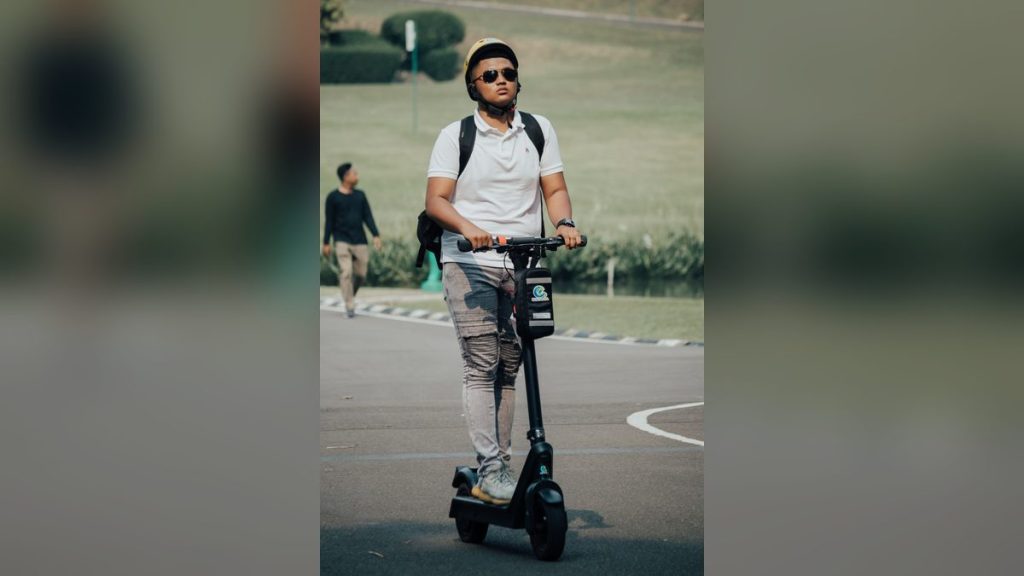
If you buy one piece of gear, make it a helmet. Your brain is the one part of you that does not heal like skin or bone. A good helmet is light, comfortable, and easy to forget you are wearing, right up until the day you really need it. Skip the cheap novelty lids and look for a real safety certification printed on a sticker inside.
Real options worth a look: the Retrospec CM-1 is a solid budget pick around $45. The Thousand Heritage 2.0 looks sharp for about $99 and even hides a bike-lock slot. For fast scooters, Bern’s Hudson MIPS and the Lumos Ultra add e-bike-rated protection, and the Lumos builds bright LED lights right into the shell.
CPSC vs. NTA 8776
CPSC is the classic bike-helmet standard in the U.S. It is fine for slower scooters and casual riders, but it was written decades ago for pedal bikes under about 15 mph. NTA 8776 is the newer standard built for e-bikes and e-scooters that go up to 28 mph. It covers more of your head, including the back and the temples, and passes tougher drop tests. If your scooter is quick, look for NTA 8776.
What MIPS Adds
MIPS is a thin layer inside the helmet that lets it slide a little on impact. That tiny slide soaks up the twisting force behind many concussions. It adds only about 10 to 15 grams of weight and usually 20 to 40 dollars to the price. For most riders, it is money well spent.
Fit Is Everything
The safest helmet is the one that fits. It should sit level, one or two fingers above your eyebrows, snug enough that it does not rock side to side. Always buckle the strap. A loose helmet flies off in a crash and protects nothing at all.
Protect Your Hands and Wrists First
After your head, your hands are what you should protect next. It is pure instinct. When you fall, your arms shoot out to catch you. That is why wrist injuries are one of the most common scooter injuries of all. A bent-back wrist at 15 mph can crack or sprain in a heartbeat. Two pieces of gear guard against this: wrist guards and gloves.
Wrist guards have a hard plastic splint on the palm side. That splint stops your wrist from bending too far backward, which is what causes most fractures. They slide over your hand like a fingerless glove and strap tight. If you have ever roller-skated, you know the type. They feel a little stiff at first, then you forget they are there.
Gloves do a different job. They save your palms from road rash, cut down on handlebar buzz, and give you a better grip in the rain. The best scooter gloves add padded palms and hard knuckle protection, from brands like Fox, ILM, and Giro. Some riders wear thin gloves under their wrist guards for the best of both. In cold weather, insulated touchscreen gloves keep your fingers working the throttle.
- Wrist guards: hard ABS or plastic splint, snug straps, worn under or over gloves
- Everyday gloves: padded palm, breathable fabric, touchscreen fingertips
- Cold-weather gloves: insulated and windproof, but still let you feel the throttle
- Full protection: hard-knuckle gloves plus a separate pair of wrist guards
Knee Pads, Elbow Pads, and Body Armor
Knees and elbows are next in line. They stick out, they hit first, and pavement does not forgive them. If you have ever seen a scooter rider with a bandaged knee, you know why pads matter. They are especially smart if you ride fast, ride at night, or are still learning to balance and brake.
Good pads have a hard cap over foam. The hard shell slides across the ground instead of grabbing it, so your joint keeps moving straight instead of twisting. Skate-style pads from brands like Triple 8, 187, and Pro-Tec are cheap, tough, and easy to find. A three-pack that bundles knee pads, elbow pads, and wrist guards is the simplest way to cover your whole upper and lower body in one buy.
If you ride a powerful scooter that hits 25 mph or more, think about stepping up to real body armor. Lightweight motorcycle-style jackets with elbow, shoulder, and back protection are made for exactly this speed range. Padded shorts guard your hips and tailbone. You do not need any of this for a slow cruise to the coffee shop, but a fast rider on open roads should not treat a scooter like a toy.
Be Seen: Lights and High-Visibility Gear
A huge share of scooter crashes come down to one thing: a driver never saw the rider. You can be the safest rider alive, but if a car cannot see you at dusk, none of it matters. Being visible is protective gear too. It stops the crash before it ever happens.
Start with lights. A steady white light on the front and a red light on the back are the basics, just like a bicycle. Many scooters have weak built-in lights, so a clip-on set is a cheap upgrade. A blinking rear light grabs attention even in daylight. Some commuter helmets, like the Lumos Ultra, build the lights right in, so your head, the highest point on you, lights up.
Then add reflective and bright gear. A hi-vis vest, a reflective sash, or ankle bands cost a few dollars and make you pop in headlights. Reflective material on your moving ankles is especially eye-catching, because that up-and-down motion reads instantly as a person to a driver’s brain. Neon colors help by day, reflectives help by night. Together they make you very hard to miss.
How to Pick Gear You’ll Actually Wear
Here is the honest truth about protective gear: the best set is the one you will put on every single time. Fancy armor that lives in a closet protects no one. So comfort and fit are not luxuries, they are the whole point. Gear that pinches, sweats, or looks silly to you will get left at home, and then it does nothing.
Fit comes first. A helmet should be snug but not tight, level on your head, with the strap forming a Y under each ear and just enough room for two fingers under your chin. Pads should hug your joints without cutting off circulation. Wrist guards should let your fingers move freely. When you buy online, measure with a tape and follow the brand’s size chart instead of guessing.
Then think about your real life. Do you ride to work in nice clothes? Look for slim pads and a clean-looking helmet. Ride in a hot climate? Prioritize vents and breathable mesh. Big head, small hands, somewhere in between? Try things on if you can. Break in new gloves and pads on a few short rides before a long one, so the stiff parts soften up. Gear should feel like part of your outfit, not a costume.
- Measure your head, hands, and knees before buying online
- Two-finger rule: two fingers above the eyebrows, two under the chin strap
- Pick vents and mesh if you ride in heat
- Choose slim, low-profile pads if you ride in work clothes
- Break gear in on a few short rides first
Build Your Kit: Gear for Every Budget
You do not have to buy everything at once. Start with the essentials and add pieces as your riding grows. Even a bare-bones setup, a certified helmet and a pair of gloves, puts you miles ahead of the average rider who wears nothing at all.
A starter kit for a casual, low-speed rider might be a CPSC helmet and padded gloves, for around $60 to $80 total. That covers your head and hands, the two spots that get hurt most. It is affordable, and it is plenty for slow rides on quiet paths.
A commuter kit adds a three-pack of skate pads and a set of lights, landing near $120 to $160. Now your wrists, knees, and elbows are covered, and drivers can see you at night. A fast-rider kit steps up to an NTA 8776 helmet, hard-knuckle gloves, wrist guards, and maybe an armored jacket, for $250 and up, but matched to speeds where a bad fall is far more serious. Buy for the scooter you actually ride.
| Standard | Built For | Coverage | Choose It If |
|---|---|---|---|
| CPSC | Pedal bikes (~15 mph) | Standard bike coverage | You ride slow, casual scooters |
| NTA 8776 | E-bikes and e-scooters (to 28 mph) | Extra back-of-head and temple | Your scooter is fast |
| MIPS layer | Any helmet, any speed | Adds a rotational slip layer | You want top concussion protection |
| ASTM F1492 | Skate and multi-impact | Multi-hit hard shell | You skate-park and scoot |
| Rider Type | Recommended Gear | Approx. Total |
|---|---|---|
| Casual / low speed | CPSC helmet + padded gloves | $60-$80 |
| Daily commuter | Helmet + gloves + 3-pack pads + lights | $120-$160 |
| Fast / long distance | NTA 8776 helmet + wrist guards + hard-knuckle gloves + armored jacket | $250+ |
| Kids and teens | CPSC helmet + full pad set + bright colors | $70-$100 |
Common Mistakes (and How to Fix Them)
Fix: Most crashes happen close to home at low speed. Put the helmet on even for the two-minute ride to the store, because that is exactly when riders get caught out.
Fix: A helmet that rocks around or hangs unbuckled can fly right off in a crash. Adjust it snug and level on your head, then clip the strap every single time.
Fix: Your arms hit the ground first in almost every fall. Add wrist guards with a hard splint plus padded gloves, and do not rely on a helmet alone.
Fix: A helmet is built to take one big hit, then it is done, even if it looks fine. Replace any helmet or cracked pad after a real impact, no exceptions.
Pro Tips
- 💡 Do the two-finger check: two fingers above your eyebrows, two under the chin strap. Pass both and the helmet fits right.
- 💡 Match your helmet to your speed. Slow cruisers are fine with CPSC, but scooters over 20 mph deserve an NTA 8776 rated lid.
- 💡 Wear a blinking rear light even in daylight. It is one of the cheapest ways to stop a driver from missing you.
- 💡 Break in new gloves and pads on a couple of short rides so the stiff spots soften before a long trip.
- 💡 Keep reflective ankle bands in your bag. Moving ankles catch a driver’s eye faster than almost anything else you can wear.
A Real-Life Example
Mia rides her scooter two miles to the train every morning. One rainy Tuesday her front wheel slipped on a painted crosswalk line and she went down hard, hands first. Her wrist guards took the hit, and she walked away with a bruised palm and a scuffed glove instead of a cast. ‘I almost left them home because it was such a short ride,’ she said. ‘Now I never do.’
Her helmet had a scrape on the side she never even felt during the fall. She replaced it that weekend, no questions asked. Thirty-five dollars of pads and a fresh helmet cost her far less than a missed month of work ever would have.
Frequently Asked Questions
Yes, a helmet is the one piece you should never skip, even at low speed. Most scooter crashes are solo falls that happen close to home on familiar routes. A certified helmet can lower the risk of a serious brain injury by well over half, and it costs less than a single doctor’s visit. There is simply no ride short enough to justify skipping it.
Look for CPSC at a minimum, and NTA 8776 if your scooter is fast. CPSC is the standard U.S. bike-helmet rating and is fine for slow, casual riding. NTA 8776 is newer and built for e-bikes and e-scooters up to 28 mph, with more coverage at the back of the head and temples. Adding MIPS gives extra protection against the twisting forces that cause many concussions.
They do different jobs, so the best setup uses both. Wrist guards have a hard splint that stops your wrist from bending too far back, which is the motion behind most scooter wrist fractures. Gloves protect your palms from road rash, dampen handlebar buzz, and improve grip. Many riders wear thin gloves with wrist guards over them, or choose hard-knuckle gloves plus a separate guard for full coverage.
It depends on where you live, but helmets are often required for younger riders and always a smart idea for everyone. Some cities and states mandate helmets under a certain age, and many treat scooters like bikes at night, requiring a front light and rear reflector. Check your local rules, but do not let the law be your only guide, since gear protects you whether or not it is required.
Yes, a certified bike helmet is a perfectly good start for most scooter riders. A CPSC-rated bike helmet covers the basics and beats no helmet by a mile. If you ride a fast scooter above 20 mph, consider upgrading to an NTA 8776 e-bike helmet, which covers more of your head for higher-speed impacts. A skate-style helmet rated ASTM F1492 is another good multi-impact option.
You can build a solid kit for well under $150, and a basic setup for around $60. A certified helmet ($40 to $100) and padded gloves ($20 to $45) are the core. Add a three-pack of skate pads (about $36) and a set of lights ($20 to $40) for full commuter protection. Spend more only if you ride fast or long, where an armored jacket starts to make sense.
Final Checklist ✅
- ✅ Certified helmet (CPSC or NTA 8776) that sits level and snug
- ✅ Chin strap buckled with room for just two fingers
- ✅ Wrist guards with a hard splint on the palm side
- ✅ Padded gloves with grip and, ideally, knuckle protection
- ✅ Knee and elbow pads for faster or nighttime rides
- ✅ Front white light and rear red light, plus reflective gear
- ✅ Inspect gear for cracks before rides and replace it after any crash