The honest, rider-friendly guide to snow and ice — which scooters cope, which tires grip, and how to keep your battery alive all winter.
Winter does not have to park your ride. If you have been hunting for electric scooters for snow, you already know the roads turn tricky the moment the temperature drops. Slush, black ice, and salted pavement are hard on any two-wheeler. The good news is that some scooters really can handle a snowy commute, and with the right setup you can keep rolling long after your neighbors have put their bikes away for the season.
Here is the honest part. A cheap commuter scooter with small, hard tires is a bad idea on snow. It will slide, the motor will strain, and water can creep into places it should not. But a purpose-built all-terrain scooter with wide air-filled tires, real water resistance, and strong torque is a different animal. It will not turn snow into summer, yet it can get you to work on a frosty morning without drama.
In this guide we walk through what actually matters for winter riding, show you real scooters that cope with the cold in 2026, and cover the tires, battery habits, and riding tricks that keep you upright. No hype and no fake specs, just practical advice from riders who have skidded around a few icy corners so you do not have to.
This article is part of our electric scooter buying guide, which brings together every scooter guide on the site.
Can You Really Ride an Electric Scooter in Snow?
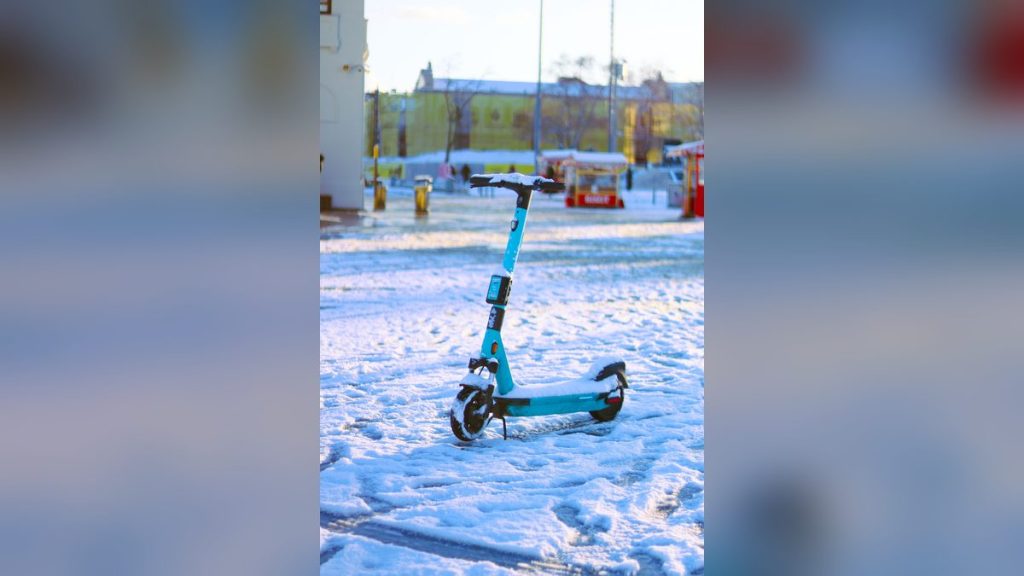
Yes, you can ride an electric scooter in snow, but with big asterisks. The type of snow matters, the scooter matters, and your riding style matters even more. A light dusting on packed pavement is very different from six inches of fresh powder or a sheet of glare ice. On packed snow and slush, a capable scooter with good tires will get you there. On ice, even the best scooter can slide out from under you in a heartbeat.
Your machine matters just as much. Most budget commuter scooters were built for dry bike lanes, not blizzards. They have small tires, weak single motors, and only basic splash protection. Push one through snow and you risk slipping, straining the motor, and letting melted snow seep into the electronics. Water damage is almost never covered by warranty, so that mistake gets expensive fast.
The scooters that shine in winter are the heavier all-terrain models. They pair wide pneumatic tires with strong dual motors and better sealing, so they claw for grip instead of spinning helplessly. Add the right tires and careful habits, and a snowy commute becomes doable. Just keep your expectations sensible: winter riding is slower, shorter, and more about caution than top speed.
| Scooter | Motor (peak) | Top Speed | Range | Tires | Water Resistance | Price |
|---|---|---|---|---|---|---|
| EMOVE Cruiser V2 | 1000W (single) | ~33 mph | Up to 62 mi | 10″ tubeless pneumatic | IPX6 | ~$1,399 |
| Kaabo Mantis King GT | 2200W (dual) | ~43 mph | Up to 56 mi | 10″ all-terrain pneumatic | IPX5 | ~$1,899 |
| Varla Eagle One V2.0 | 3200W (dual) | 40 mph | Up to 42 mi | 10 x 3.5″ tubeless pneumatic | IP54 | ~$1,599 |
| Hiboy Titan Pro | 2400W (dual) | 33 mph | Up to 80 mi | 10″ gel-filled tubeless | IP54 | ~$1,400 |
| Hiboy Titan (budget) | 800W | 25 mph | Up to 28 mi | 10″ pneumatic | IP54 | ~$600 |
What Makes an Electric Scooter Good for Snow
Not every scooter is cut out for the cold. When you shop for a winter machine, a handful of features separate the ones that cope from the ones that quit. Here is what actually matters, roughly in order of importance, so you know where to spend your money.
- Must-have: 10-inch or larger pneumatic tires
- Must-have: IP54 or higher water resistance
- Strongly wanted: dual motors and hydraulic disc brakes
- Nice to have: swappable tires so you can add studs for ice
Pneumatic Tires
Wide, air-filled tires are the number one winter feature. They flex, grip, and spread your weight over more surface than small solid tires. Look for at least 10-inch tires, and ideally the option to fit knobby or studded winter treads.
Water Resistance (IP Rating)
Snow melts into water, and water is your scooter’s enemy. Aim for IP54 at the very least. IPX5 or IPX6 is much better for slush and wet snow. The higher the number, the more sealed the electronics stay when the road gets wet.
Motor and Torque
Snow adds resistance, and hills get harder when they are slick. Dual motors and strong torque let you keep moving without the motor bogging down. Single 250W commuters struggle the moment the surface turns soft.
Brakes
Disc brakes, especially hydraulic ones, keep working when it is freezing. Foot brakes and cheap drums fade or clog with slush. Reliable braking is non-negotiable when your stopping distance can easily double on snow.
Battery Size
Cold weather steals range, so a bigger battery gives you breathing room. If a scooter claims 40 miles in summer, plan for closer to 20 to 28 on a cold day, and buy more battery than you think you need.
Ground Clearance and Lights
A little extra deck height keeps you above shallow snow, and bright lights matter because winter days are short and gray. Reflective touches help drivers spot you in low light and falling snow.
Best Electric Scooters for Snow in 2026
No single model is the one true snow scooter, but a few earn their keep when the weather turns. These are real, currently sold machines in 2026, chosen for their tires, sealing, torque, and brakes. Prices bounce around with sales, so treat the numbers below as ballpark rather than gospel.
EMOVE Cruiser V2 – the all-weather value king
If one scooter has a winter reputation, it is the EMOVE Cruiser. The V2 carries a rare IPX6 water-resistance rating, so it shrugs off slush and heavy rain that would kill a lesser scooter. Add self-sealing tubeless tires, quad suspension, hydraulic brakes, and up to 62 miles of range for about $1,399. It is not the fastest, but it may be the most weatherproof value you can buy.
Kaabo Mantis King GT – power with all-terrain grip
The Mantis King GT brings dual 1100W motors, roughly 43 mph, and 10-inch all-terrain pneumatic tires that dig into loose, slushy surfaces. ZOOM hydraulic disc brakes stay strong in the cold, and you can buy off-road or studded winter tires separately. Its IPX5 rating handles wet roads well. Around $1,899, it suits riders who want muscle and grip in one package.
Varla Eagle One V2.0 – the balanced pick
The Eagle One V2.0 is our featured choice below. It blends dual 1000W motors (3200W peak), wide 10 x 3.5-inch pneumatic tires, independent dual suspension, and IP54 sealing for around $1,599. It is a sweet spot of torque, comfort, and grip that handles slush and packed snow with real confidence.
Hiboy Titan Pro – long range, fair price
The Titan Pro pairs dual motors, 10-inch self-sealing gel tires, dual suspension, and a big 48V battery good for up to 80 summer miles, which leaves plenty of cushion once winter cuts into range. Often found near $1,400, it is a lot of all-terrain scooter for the money.
Hiboy Titan (budget) – a winter starter
Testing the winter waters? The base Hiboy Titan gives you 10-inch pneumatic tires, an 800W motor, and IP54 sealing for roughly $600. It will not conquer deep snow, but with careful riding it handles light snow and slush far better than any small-wheeled commuter.
Tires and Traction: the Single Biggest Upgrade
If you change one thing for winter, change your tires. Grip lives where rubber meets road, and in snow that contact is everything. Hard solid tires, the kind on many cheap scooters, are the worst choice. They are slippery, bouncy on frozen ruts, and have no give to bite into snow. Air-filled pneumatic tires flex and grip far better, which is why every serious winter scooter uses them.
For real ice, studded snow tires are the gold standard. These have metal pins hammered into the rubber that dig into ice and packed snow like tiny claws. You can buy them for common 10-inch scooters. Brands like BAIBIKING sell studded snow tires that fit popular models such as the Zero 10X, Kugoo M4, and Kaabo Mantis. Fit them only for winter, though, because the studs wear down fast on bare pavement.
Snow chains and fat-tire snow straps are a cheaper stopgap. They help on packed snow but slip on glare ice, where studs still win. One more trick: drop your tire pressure a few PSI in winter. A slightly softer tire spreads out, creating a bigger contact patch and a little more grip. Do not overdo it, or you risk pinch flats and sluggish, draggy rolling.
Cold Weather and Your Battery
Your battery hates the cold even more than you do. In freezing temperatures the liquid inside thickens, making it harder for energy to flow. The result is a real 30 to 50 percent drop in range on a truly cold day. A scooter rated for 40 miles in July might give you 20 in January. That is normal physics, not a broken battery.
Here is the rule that saves batteries: never charge a freezing-cold pack. Charging a battery at or below 32°F (0°C) causes lithium plating, which permanently reduces capacity and can even create internal shorts. Always let your scooter warm up to room temperature indoors before you plug it in, which usually takes about an hour.
Store the scooter, or at least the battery, indoors somewhere between 50 and 75°F. For long winter breaks, leave the pack at around 40 to 60 percent charge and top it up every month or two so it does not slowly drain to a damaging low. Only take the scooter out into the cold right before you actually ride.

How to Ride Safely on Snow and Ice
Winter riding rewards patience. Everything you do should be smoother and slower than in summer. The goal is to keep the tires calm and predictable, because sudden inputs are exactly what break traction and put you on the ground.
Dress for the wind chill, too. At 20 mph a cold day feels brutal, so windproof gloves, a helmet-friendly balaclava, and warm layers are not luxuries, they keep your hands responsive on the controls. Cold, stiff fingers brake slower, and in winter that half-second really matters.
- Slow down and give yourself double the usual stopping distance.
- Use a lower-speed riding mode for gentler, more controllable throttle.
- Squeeze the brakes early and gently, and favor light rear braking to avoid locking the front wheel.
- Take turns wide and upright, because leaning hard is how you slide out.
- Keep both feet on the deck and your knees slightly bent to absorb bumps.
- Avoid shiny patches, frozen puddles, and packed tire ruts, which are usually hidden ice.
- Steer with your body weight, not sharp jerks of the handlebar.
- Light yourself up with front and rear lights plus reflective gear for short, dark days.
After the Ride: Drying and Winter Care
What you do after the ride protects your scooter as much as anything. Snow carries road salt, and salt is brutal on metal and electronics. When you get home, wipe down the deck, stem, and wheels with a dry cloth. Pay attention to seams, the charge port cover, and around the motor where slush likes to collect.
Make sure the charge port is bone dry before you plug in, and keep that rubber cover closed whenever you are not charging. Every couple of weeks, add a drop of lubricant to the folding hinge and brake pivots so salt does not seize them up. Check tire pressure often too, since cold air makes tires read lower than they really are.
Finally, store it inside. A warm, dry corner of the house or a heated garage keeps the battery healthy and the metal rust-free. A scooter that is dried, lubed, and kept warm will shrug off winter and be ready to rip the moment spring arrives.
| IP Rating | What It Handles | Good for Snow & Slush? |
|---|---|---|
| IPX4 / IP54 | Light splashes from any direction (IP54 also blocks dust) | OK for light snow, but dry it after every ride |
| IPX5 | Low-pressure water jets and slush spray | Good for wet snow and slushy streets |
| IPX6 | Strong high-pressure jets from every angle | Best rating on real scooters; handles heavy snow |
| IP67 | Full dust seal plus brief shallow submersion | Rare and overkill, but bombproof if you find it |
| Temperature | What Happens | What To Do |
|---|---|---|
| Above 40°F (5°C) | Near-normal range and power | Ride normally; still dry off any slush |
| 32-40°F (0-5°C) | Battery weakens; roughly 10-20% range loss | Warm the battery indoors before charging |
| Below 32°F (0°C) | Electrolyte thickens; 30-50% range loss; do not charge the pack | Keep trips short; charge only after it warms up inside |
| Below 5°F (-15°C) | Hard limit for most scooters; risk of damage | Skip the ride and keep the battery warm indoors |
Common Mistakes (and How to Fix Them)
Fix: Bring the scooter indoors and let the pack reach room temperature, about an hour, before plugging in. Charging below 32°F causes permanent lithium plating damage that quietly kills your range.
Fix: Switch to pneumatic tires, or add studded snow tires for ice. Solid tires have almost no grip on snow and bounce dangerously over frozen ruts and packed-snow ridges.
Fix: Check your IP rating first. If it is below IP54, keep the scooter home on wet days, and always dry any scooter thoroughly after riding through snow or slush.
Fix: Brake early and gently, favor the rear wheel, and keep the scooter upright through slow, wide turns. Sudden inputs break traction and cause slides on slick surfaces.
Pro Tips
- 💡 Drop tire pressure a few PSI in winter for a bigger, grippier contact patch, just not so low that you risk pinch flats.
- 💡 Keep the battery indoors and only take the scooter out right before you ride, so the pack starts warm and gives you more range.
- 💡 Ride in eco or low-speed mode; the softer throttle response is much easier to control on slick, snowy surfaces.
- 💡 Wipe road salt off after every ride to stop corrosion on the frame, bolts, brake parts, and electronics.
- 💡 Charge indoors only, after the battery warms up, and never leave it charging in a freezing garage or shed.
An Example Scenario
Illustrative example: a composite of situations riders often describe, not a real customer story.
Marcus commutes three miles to a hospital job in Minneapolis and refused to give it up when winter hit. He fitted his all-terrain scooter with 10-inch studded tires, dropped the pressure a touch, and started riding in the low-speed mode. On packed snow he says it feels planted, almost like riding on gravel. The one morning he hit a hidden patch of black ice, the studs saved him: the scooter twitched but did not wash out from under him.
His two habits made all the difference. He keeps the battery inside overnight and never charges it until it has warmed up, and he wipes the salt off the moment he parks. Two winters in, his scooter still runs like new, while a coworker who left his in a cold shed is already shopping for a second battery.
Frequently Asked Questions
Yes, but only the right scooter in the right snow. All-terrain models with pneumatic tires, IP54 or higher sealing, and strong dual motors can handle packed snow and slush. Deep powder and glare ice are unsafe for any scooter, so ride slow, keep trips short, and stay off the ice.
Aim for IP54 at a minimum, and IPX5 or IPX6 if you can get it. IP54 blocks light splashes, IPX5 handles slush spray, and IPX6, like the EMOVE Cruiser, shrugs off heavy wet snow. Whatever the rating, always dry your scooter after a snowy ride, because melting snow finds every seam.
Expect to lose 30 to 50 percent of your range on a freezing day. Cold thickens the battery’s electrolyte, so a scooter rated for 40 miles in summer may only manage 20 to 28 in the cold. Buy more battery than you think you need, and keep the pack warm until you ride.
For packed snow, good pneumatic tires are often enough; for ice, studded snow tires are worth every penny. Studs are metal pins that bite into ice like tiny claws. Brands like BAIBIKING make studded tires for popular 10-inch scooters. Fit them only in winter, since studs wear fast on bare pavement.
No, never charge a battery that is at or below freezing. Charging a cold pack causes lithium plating, which permanently reduces capacity and can be dangerous. Bring the scooter inside, let it warm to room temperature for about an hour, then charge it indoors.
The EMOVE Cruiser V2 is the standout for pure weatherproofing, thanks to its rare IPX6 rating and sealed build. If you want more power and grip, the Kaabo Mantis King GT and Varla Eagle One V2.0 are excellent all-terrain choices. The best one is whichever fits your budget and lets you add winter tires.
Final Checklist ✅
- ✅ Confirm your scooter has pneumatic tires and IP54 or higher water resistance.
- ✅ Fit studded snow tires or chains before riding on ice or packed snow.
- ✅ Drop tire pressure a few PSI for extra grip, and check it often in the cold.
- ✅ Charge the battery indoors only, after it has warmed to room temperature.
- ✅ Store the scooter and battery inside, ideally between 50 and 75°F.
- ✅ Gear up with warm windproof gloves, bright lights, and reflective clothing.
- ✅ Wipe off snow and road salt, and dry the charge port after every ride.