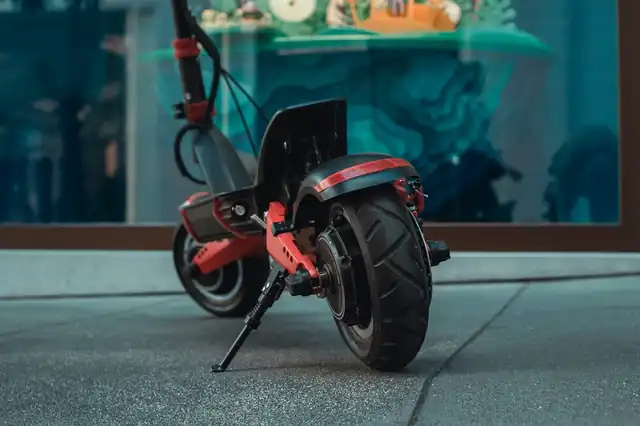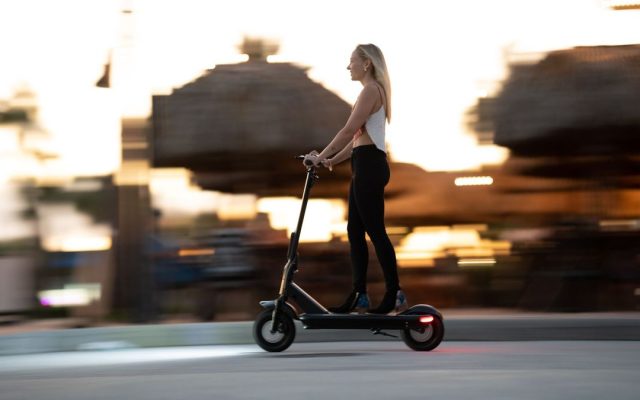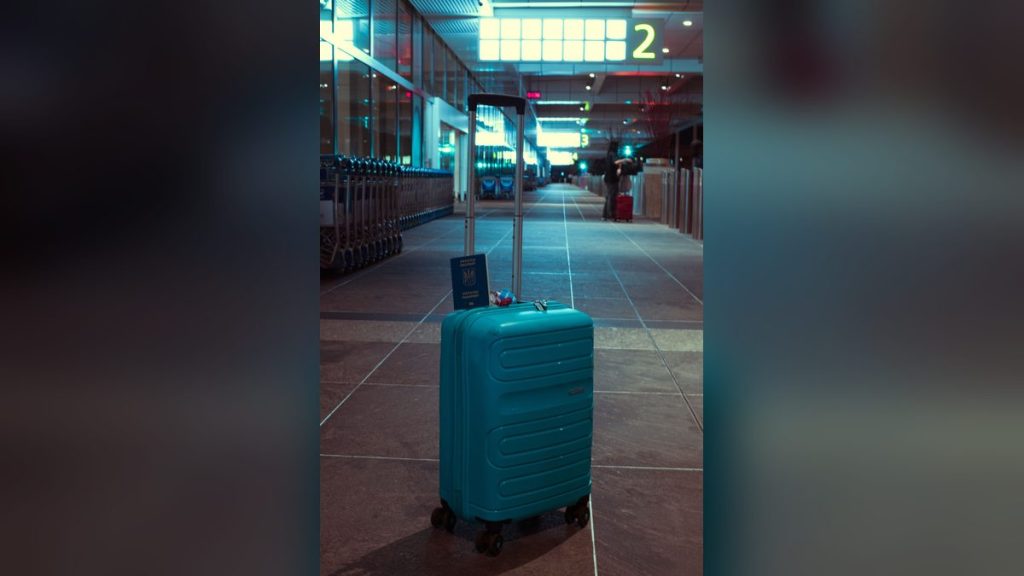
Ride your carry-on through the airport at up to 8 mph. Here's how rideable electric luggage really works, what's airline-legal, and how to pick the right one.
An electric scooter suitcase for adults is a carry-on you can sit on and ride — a hard-shell bag with a small motor, a battery, and wheels that turn the long walk to your gate into a smooth, sit-down cruise. Instead of dragging your luggage behind you, the luggage carries you, usually at a comfortable 6 to 8 mph. It sounds like a gadget from the future, but these bags are real, they are on sale right now, and the 2026 models are more practical than ever.
If you have ever sprinted across a giant terminal to make a tight connection, or nursed a sore knee down an endless concourse, you already understand the appeal. A rideable suitcase — also called motorized luggage or a luggage scooter — is built for exactly those moments. It is not a commuter scooter and it is not a mobility scooter. It is a clever middle ground designed for one job: getting you and a carry-on across an airport fast and easily.
But there is a catch, and it is a big one: airline battery rules. Get them wrong and your fancy bag gets left at the gate. In this guide we will walk through how these suitcases work, which ones are worth buying in 2026, exactly what the airlines allow, and how to ride one without becoming the person who runs over someone’s foot. Let’s roll.
This article is part of our electric scooter buying guide, which brings together every scooter guide on the site.
What Is an Electric Scooter Suitcase?
An electric scooter suitcase is a hard-shell carry-on with a small motor, a battery, and a set of wheels that let you sit on top and ride it like a tiny scooter. You perch on the padded lid, grip a fold-out handlebar, press a throttle, and glide forward. Most models cruise between 6 and 8 mph — about as fast as a slow jog — which is plenty for covering a long airport terminal in a couple of minutes.
These bags go by a lot of names: rideable luggage, motorized suitcase, ride-on carry-on, or luggage scooter. They all do the same core job. The idea started as a novelty a few years back, but the newer 2026 models are genuinely useful travel tools with removable airline-safe batteries, USB charging ports, and built-in TSA locks.
Who is it for? Frequent flyers who hate the long walk to a far gate. Travelers with a bad knee, a hip issue, or low energy who still want to move quickly. Parents wrangling kids and bags at once. And honestly, anyone who thinks zipping past the moving walkway sounds fun. It will not replace a mobility scooter or a real commuter scooter, but for the specific task of moving you and a carry-on across a big terminal, it shines.
| Model | Motor / Speed | Range | Max Rider | Storage | Approx. Price |
|---|---|---|---|---|---|
| Airwheel SE3S | 250W / ~8 mph | 5-6 mi (8-10 km) | 242 lb | 20L | ~$500 |
| Modobag | 250W / ~8 mph | ~6 mi | 260 lb | ~30L (1,800 cu in) | ~$1,495 |
| Pursonic Rideable | 250W / ~7.5 mph | 6-9 mi | 242 lb | ~26L | ~$450 |
| Space Suitcases | 250W / ~8 mph | ~5 mi | 242 lb | 26L | ~$430 |
| Hsenowi 22-inch | 250W / ~8 mph | ~6 mi | 260 lb | 30L | ~$400 |
How These Rideable Suitcases Actually Work
Under the shell, an electric scooter suitcase is surprisingly simple. Four parts do all the work: the motor, the battery, the wheels, and the controls. Once you understand these, you understand every model on the market.
The motor
Most adult models use a 250-watt hub motor tucked inside one of the wheels — the same power class as a basic commuter scooter. It is strong enough to pull a 240-pound rider on flat ground, but it is not built for steep hills or rough pavement. Keep it on smooth indoor floors and paved paths.
The battery
A removable lithium battery, usually around 73 to 98 watt-hours, snaps out of the frame with no tools. It gives you roughly 5 to 6 miles of riding and often includes USB ports, so you can charge your phone while you wait at the gate. That removable design is not just handy — it is what makes the bag legal to fly.
The wheels
You will see four to six wheels. Front drive wheels do the pushing, while smaller caster wheels keep the bag balanced when you roll it normally. Solid or air-filled tires handle smooth terminal floors well. None of them are happy on gravel, grass, or cobblestones.
The controls
A fold-out handlebar holds a thumb throttle and a brake lever. Many bags add a phone app for setting speed limits, checking battery health, and locking the bag. Beginners should always start in the lowest speed mode until steering and stopping feel natural.
Can You Fly With One? Airline and Battery Rules
This is the part that trips people up, so read it carefully. The suitcase itself is welcome on almost every plane. The battery is what airlines care about. Lithium batteries are a fire risk in the cargo hold, so the rules are strict, and they are not optional.
Two rules cover almost everything. First, the battery must be removable without tools. Luggage with a sealed-in battery was effectively banned by major airlines back in 2018, and that ban still stands today. Second, the battery must be small enough — under 100 watt-hours is the magic number that every major U.S. carrier allows in the cabin without special approval.
At the airport the routine is simple: pop the battery out, carry it with you in the cabin, and either gate-check or overhead-stow the empty suitcase. Never put a lithium battery in checked baggage, full stop.
- Under 100Wh: allowed in carry-on on American, Delta, Southwest, JetBlue, and Alaska.
- 100 to 160Wh: allowed only with airline approval — call ahead before you fly.
- Over 160Wh: banned on passenger planes entirely.
- The battery must come out and ride in the cabin with you, never in checked bags.
- United Airlines bans rideable and motorized luggage completely — even with a legal removable battery.
What to Look For When Buying
Not all rideable luggage is built the same, and the gap between a great one and a gimmick is wide. Here is what actually matters when you compare models side by side.
A removable, airline-legal battery
This is non-negotiable. If the battery does not pop out and sit under 100Wh, you cannot fly with it. Confirm the exact watt-hour rating before you buy — a good product listing states it clearly and proudly.
Weight capacity
Check the maximum rider weight, not just the empty bag weight. Most adult models top out around 240 to 260 pounds. If you are near that limit, the motor will feel sluggish on inclines and the frame will wear out faster.
Range and speed
Five to six miles of range and a 6 to 8 mph top speed is the typical sweet spot, and it is more than enough for any airport. Do not overpay for huge range numbers you will never actually use riding indoors.
Build quality
Aerospace-grade aluminum frames and a solid handlebar hinge matter. The most common failure point owners report is the handlebar or its release button snapping, so read durability reviews closely before you spend.
Size, storage, and extras
Confirm it fits the 22 x 14 x 9 inch carry-on limit, then check the liters — 20L covers a weekend, 30L stretches to most of a week if you pack light. A TSA-approved lock, USB charging ports, and app-based speed limiting are the extras frequent travelers genuinely use.
Top Electric Scooter Suitcases Compared for 2026
The market has grown fast, and a handful of models now dominate. Here is an honest look at the ones worth knowing, from budget-friendly to premium.
The Airwheel SE3S is the one most people land on. It hits the sweet spot: a 250-watt motor, a genuinely airline-legal 73Wh removable battery with USB ports, a TSA lock, and a price around $500. It is not flawless — taller riders feel a little cramped, and a few owners report handlebar durability issues — but for most travelers it is the best balance of price and function you can buy.
At the premium end sits the Modobag, the original motorized carry-on. It offers more storage (around 1,800 cubic inches), app connectivity, and a go-kart-style ride, but it costs roughly $1,500 — about three times the Airwheel. Budget and mid-range options like the Pursonic, Space Suitcases, and various Airwheel SE3 variants fill the gap, usually with 250W motors, 5 to 9 miles of range, and similar 240-pound capacities.
The specs across these models are close enough that battery legality, build quality, and seller support should drive your decision more than raw numbers. A bag you can actually fly with beats a slightly faster one you have to leave at home.

Riding Safely and Politely in a Crowd
An airport terminal is full of distracted people, rolling bags, and kids darting around. A motorized suitcase is fun, but it is still a vehicle, and you are responsible for it. A little courtesy goes a long way — and it keeps security from asking you to get off and walk.
Most riding mishaps come from going too fast in a tight space. Keep it slow indoors, leave plenty of room to stop, and treat the throttle gently. The brake on these bags is modest compared with a real scooter, so always give yourself extra stopping distance.
- Start in the lowest speed mode until riding feels completely natural.
- Keep both feet ready to touch down — think of them as your emergency brake.
- Slow to a walking pace near gates, security lines, and any crowd.
- Watch for wet floors near entrances; solid tires can slip.
- Yield to people on foot, always. You are the fast one here.
- Never let kids ride it unsupervised — most models are rated for adults only.
Is an Electric Scooter Suitcase Worth It?
So, should you buy one? The honest answer is that it depends on how you travel. If you fly often, walk long terminals, and either dislike or struggle with that walk, a rideable suitcase can genuinely change your travel days. Gliding to a far gate while everyone else trudges is a real quality-of-life upgrade.
If you fly rarely, travel light through small airports, or mostly check your bags, the value is thinner. You are paying $400 to $600 and carrying an extra 15 pounds of motor and battery for a feature you might use only a few times a year. And if your main airline is United, it is a non-starter until their policy changes.
There is also the storage trade-off. The motor and battery eat into packing space, so a rideable carry-on holds less than a normal bag of the same size. For a two or three day trip that is fine. For a long haul, you will want a second bag anyway.
Our take: for frequent flyers, mobility-limited travelers, and gadget lovers who value the fun and the saved energy, it is worth it — as long as you buy a model with a removable, airline-legal battery and you confirm your airline allows it. For everyone else, a good lightweight spinner is still the smarter buy.
| Airline | Rideable Luggage Allowed? | Battery Rule |
|---|---|---|
| American | Yes | Removable, under 100Wh, carried in cabin |
| Delta | Yes | Removable, under 100Wh, carried in cabin |
| Southwest | Yes | Removable, under 100Wh, carried in cabin |
| JetBlue | Yes | Removable, under 100Wh, carried in cabin |
| Alaska | Yes | Removable, under 100Wh, carried in cabin |
| United | No | Banned entirely, even with a legal battery |
| Battery Size | Allowed on Plane? | Where It Goes |
|---|---|---|
| 0 to 100 Wh | Yes, no approval needed | Carry-on only, in the cabin |
| 101 to 160 Wh | Only with airline approval | Carry-on, call ahead |
| Over 160 Wh | No, banned on passenger flights | Not allowed at all |
| Any size | Never in checked bags | Must stay with you in the cabin |
Common Mistakes (and How to Fix Them)
Fix: Lithium batteries are banned from the cargo hold. Always pop the battery out and carry it with you in the cabin — never check it, even if the bag itself gets gate-checked.
Fix: United bans rideable luggage outright, and policies shift often. Check your specific airline’s current rules before you book, and screenshot the policy to show a gate agent if needed.
Fix: Non-removable-battery luggage was banned by major airlines years ago. Only buy a model whose battery pops out without tools and stays under 100 watt-hours.
Fix: Use the lowest speed mode indoors, keep both feet ready to touch down, and slow to a walking pace near gates, security lines, and busy areas.

Pro Tips
- 💡 Charge it the night before, and use the battery’s USB ports to top off your phone while you wait at the gate.
- 💡 Do a ten-minute practice ride in an empty driveway or hallway before your trip so the throttle feels natural at the airport.
- 💡 Screenshot your airline’s battery and rideable-luggage policy so you can show a gate agent if they question it.
- 💡 Pack heavier items low and centered in the bag — it keeps the ride stable and the steering smooth.
- 💡 Put your name and phone number on the removable battery; it travels separately and is easy to leave behind at security.
An Example Scenario
Illustrative example: a composite of situations riders often describe, not a real customer story.
Picture landing at a huge hub like Atlanta or Dallas with 20 minutes to make a connection three concourses away. Everyone else is speed-walking or waiting for the tram. You snap the battery back into your Airwheel, sit down, and cruise the moving walkways at a steady 6 mph with your phone charging off the battery’s USB port. You reach the gate relaxed instead of sweaty and out of breath.
The flip side is real too. One frequent traveler shared that their rideable bag drew a crowd of curious kids and a few raised eyebrows from staff, and that they still had to gate-check it on a small regional jet with tiny overhead bins. These suitcases shine in big terminals and feel like overkill in small ones.
Frequently Asked Questions
Yes, on most airlines — as long as the battery is removable and under 100 watt-hours. You take the battery out, carry it in the cabin, and stow or gate-check the empty suitcase. The big exception is United Airlines, which bans rideable luggage entirely, so always check your carrier’s policy first.
Most adult models cruise between 6 and 8 mph, roughly the speed of a slow jog. That is fast enough to cross a long terminal in a couple of minutes but slow enough to stay safe indoors. Many have a low-speed mode for crowds and a faster mode for open spaces.
Expect to pay $400 to $600 for a solid mainstream model like the Airwheel SE3S or Pursonic. Premium options such as the Modobag run around $1,500. The higher price usually buys more storage, app features, and better build quality — not dramatically more speed.
Around 5 to 6 miles on a full charge for most models, with some rated up to 9 miles. That is far more than you will ever ride inside an airport, so real-world range is rarely a problem. You can recharge the removable battery in about 2 hours at a gate or hotel.
No — they are much easier than a hoverboard or a standing scooter because there is nothing to balance. You simply sit on top, hold the handlebar, and squeeze the throttle, like a slow electric go-kart. Ten minutes of practice is enough for most adults to feel confident.
United Airlines is the main U.S. carrier that bans motorized and rideable luggage outright, even with a removable, airline-legal battery. Most others — American, Delta, Southwest, JetBlue, and Alaska — allow it if the battery is removable and under 100Wh. Policies change, so confirm before every trip.
Final Checklist ✅
- ✅ Confirm the battery is removable and rated under 100 watt-hours
- ✅ Check your specific airline’s rideable-luggage policy before booking
- ✅ Verify the maximum rider weight fits you with a little margin to spare
- ✅ Measure the bag against the 22 x 14 x 9 inch carry-on limit
- ✅ Charge the battery fully the night before you fly
- ✅ Practice riding in a safe, empty space before your first airport run
- ✅ Label the removable battery with your name and phone number