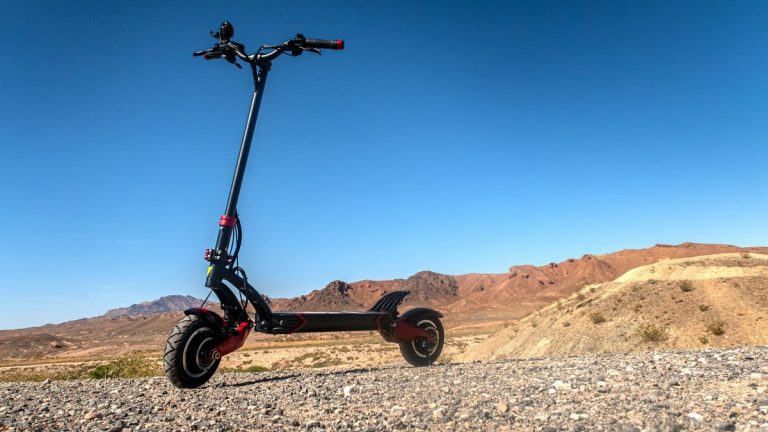
Best Budget-Friendly Electric Scooter Models
Real electric scooters that won’t drain your wallet — honest specs, true 2026 prices, and smart picks for every kind of rider.
If you want a real electric scooter but not a $1,500 price tag, you are in luck. Budget-friendly electric scooter models have come a long way, and in 2026 you can grab a safe, solid commuter for well under $500. Some of the best ones even dip near $300. The tricky part is knowing which cheap scooters are actually good, and which ones will leave you stranded with a dead battery two miles from home.
A few years ago, cheap meant flimsy. That is not true anymore. Trusted brands like NIU, Gotrax, Hiboy, Segway, and NAVEE now build affordable scooters with suspension, phone apps, brighter lights, and real safety certification. You still give up a little speed and range compared to the pricey models, but for most everyday riders, that trade is totally worth it.
This guide walks you through the top budget scooters selling right now, with honest 2026 prices and specs we double-checked. We will also show you exactly how to pick the right one for your commute, what specs really matter, and how to make a cheap scooter last for years. No hype, just friendly advice from one rider to another.
- What “Budget-Friendly” Really Means for Scooters
- The Best Budget-Friendly Electric Scooter Models
- Budget Scooter Specs That Actually Matter
- How to Match a Budget Scooter to Your Commute
- Staying Safe and Legal on a Cheap Scooter
- How to Make Your Budget Scooter Last for Years
- Budget vs. Premium: When to Spend More
What “Budget-Friendly” Really Means for Scooters
In the electric scooter world, “budget” usually means anything under about $700. But the real sweet spot, where you get a genuinely good scooter without overpaying, sits between $300 and $500. That is where most riders should focus.
Here is the honest breakdown. Under $300, you get a bare-bones commuter: slower speeds, shorter range, and no suspension. It works fine for short, flat trips. In the $300 to $500 range, things get exciting. You start seeing suspension, bigger tires, app features, and enough range for a real daily commute. Push toward $500 to $700 and you get near-premium comfort, longer range, and better build quality for not much more money.
One more tip that saves real cash: watch the sale price, not just the sticker price. Big brands slash prices hard around holidays. A scooter with a $429 list price often drops to $300 during a sale. Patience here can save you a hundred bucks or more on the exact same model.
- Under $300: short, flat commutes and students on a tight budget
- $300 to $500: the value sweet spot with suspension and real range
- $500 to $700: near-premium comfort, longer range, better parts
- Always compare the current sale price against the list price
| Model | Top Speed | Range (Advertised) | Tires | Weight | Typical Price |
|---|---|---|---|---|---|
| NIU KQi 100P | 17.4 mph | Up to 18 mi | 9.5″ air-filled | ~40 lbs | ~$429 |
| Gotrax GXL V2 | 15.5 mph | Up to 12 mi | 8.5″ air-filled | 27 lbs | ~$298 |
| Hiboy S2 | 19 mph | Up to 17 mi | 8.5″ solid | ~30 lbs | ~$399 |
| NAVEE GT3 | 20 mph | Up to 31 mi | 10″ air-filled | ~46 lbs | ~$499 |
| Segway Ninebot E2 Plus | 15.5 mph | Up to 16 mi | 9″ tubeless | ~30 lbs | ~$430 |
| NIU KQi2 Pro | 17.4 mph | Up to 25 mi | 10″ tubeless | ~41 lbs | ~$550 |
The Best Budget-Friendly Electric Scooter Models
These are the budget scooters we would actually recommend to a friend in 2026. Each one earns its spot for a different kind of rider, so read the short notes and match one to your needs. Prices shown are typical 2026 street prices and often drop lower during sales.
NIU KQi 100P — Best Overall Budget Pick
If we had to crown one budget champ, this is it. For around $429, and often on sale near $300, you get front dual-spring suspension, 9.5-inch air-filled tires, and a smooth 17.4 mph top speed. Advertised range is about 18 miles, closer to 12 to 14 in the real world. It even holds riders up to 265 pounds. That is rare comfort and quality for the price.
Gotrax GXL V2 — Best Under $300
The GXL V2 is the classic first scooter, and it still sells for under $300. It keeps things simple with a 250W motor, a 15.5 mph top speed, and about 12 miles of range on 8.5-inch air-filled tires. At just 27 pounds, it is easy to fold and carry up stairs. It is not fast or fancy, but it is honest, dependable, and cheap.
Hiboy S2 — Best for No Flat Tires
The Hiboy S2 is the low-maintenance favorite. Its 8.5-inch honeycomb tires are solid rubber, so you will never patch a puncture. A 350W motor pushes it to 19 mph, with up to 17 miles of range and rear suspension to soften bumps. At around $399, it is a great worry-free daily driver for smooth city streets.
NAVEE GT3 — Most Scooter for the Money
Want the most features for your dollar? The NAVEE GT3 brings suspension, 10-inch tubeless tires, traction control, and IPX5 water resistance for roughly $499. It tops out near 20 mph with up to 31 miles of advertised range, or about 19 in real riding. It is heavier at around 46 pounds, but it rides like a much pricier scooter.
Segway Ninebot E2 Plus — Trusted-Brand Safe Pick
Segway’s E2 Plus is the reliable, easy choice for new riders. It cruises to 15.5 mph with about 16 miles of range on 9-inch tubeless tires. You also get Segway’s polished app, cruise control, and strong build quality for around $430. It is not the fastest, but Segway’s support and reputation are worth a lot when you are just starting out.
NIU KQi2 Pro — Best If Your Budget Stretches
If you can push toward $550, the KQi2 Pro is widely called the best value commuter under $600. It offers 10-inch tubeless tires, a slick app with an anti-theft alarm, a 17.4 mph top speed, and up to 25 miles of range. Reviewers routinely call it one of the most reliable entry-level scooters ever made.
Budget Scooter Specs That Actually Matter
Spec sheets can trick you. Brands love to shout about top speed, but the numbers that decide whether you love or hate a cheap scooter are usually range, tires, and weight. Let us cut through the noise.
The biggest myth is range. That “up to 18 miles” number comes from a lightweight rider going slow on flat ground in warm weather. In real life, plan on about 60 to 70 percent of the advertised figure. A heavier rider, hills, cold days, and full-speed riding all drain the battery faster. So if you need 10 real miles, buy a scooter rated for at least 15.
Top speed matters less than you think. Most budget scooters top out between 15 and 20 mph, and honestly, 15 mph feels plenty fast on a small standing scooter. What matters more is whether the motor can climb the hills on your route. A 250W motor struggles on steep grades, while a 350W to 600W-peak motor handles them much better.
- Range: expect 60 to 70 percent of the advertised number
- Motor: 350W or higher climbs hills far better than 250W
- Tires: solid means no flats; air means a smoother, grippier ride
- Weight: lighter is better if stairs or transit are involved
- Brakes: dual braking (electronic plus disc or drum) is safest
Tires: Solid vs. Air-Filled
Solid honeycomb tires never go flat, which means zero maintenance, but they ride firmer and feel every bump. Air-filled (pneumatic) tires are smoother and grip better, especially in the wet, but they can puncture and need pressure checks. Rough roads favor air tires; smooth paths and hassle-free ownership favor solid ones.
Weight: Can You Actually Carry It?
Budget scooters range from about 27 to nearly 50 pounds. If you climb stairs, load it into a car trunk, or carry it onto a train, a lighter scooter like the Gotrax GXL V2 is a blessing. If it mostly lives at ground level, a heavier scooter with suspension is fine.
How to Match a Budget Scooter to Your Commute
The best budget scooter is the one that fits your actual ride, not the one with the flashiest spec sheet. Before you buy, run through a few honest questions about your daily trips. It only takes a minute and it saves you from buyer’s remorse.
Start with distance. Measure your real round-trip and add a buffer. A 4-mile daily loop is easy for almost any budget scooter, but a 12-mile round trip needs a longer-range model like the NAVEE GT3 or NIU KQi2 Pro. Then think about hills. If your route has steep climbs, lean toward a stronger motor and skip the weakest 250W options. Finally, factor in your weight, since heavier riders get less range and slower hill climbs than the box promises.
- Short, flat trips under 8 miles: Gotrax GXL V2 or Hiboy S2
- Longer commutes of 10 to 18 miles: NAVEE GT3 or NIU KQi2 Pro
- Hilly routes: pick 350W or higher, avoid the weakest motors
- Stairs or transit every day: choose a lighter, easy-fold model
- Rough or bumpy roads: prioritize suspension and air-filled tires
- Rainy climates: look for an IPX4 or higher water rating
Staying Safe and Legal on a Cheap Scooter
A budget price should never mean a budget approach to safety. The good news is that the trusted brands above all take safety seriously, and a few simple habits keep you protected on any scooter.
The single most important thing to check is UL 2272 certification. This is the safety standard for the scooter’s whole electrical system, and it protects against the battery fires you sometimes read about with no-name imports. Every model we recommend carries it. Beyond that, always wear a helmet, use the front and rear lights at night, and make sure the scooter has dual braking so you can stop quickly.
Laws matter too, and they vary a lot by city and state. Many places cap scooter speed around 15 to 20 mph, set a minimum age of 16, ban riding on sidewalks, and require you to stick to bike lanes or roads. A few minutes checking your local rules before you buy saves you from fines and surprises later.
How to Make Your Budget Scooter Last for Years
A cheap scooter does not have to be a short-lived scooter. With a little care, a $400 model can serve you well for two to four years and thousands of miles. The battery is the heart of the scooter, so most of your care goes there.
Treat the battery kindly and it will repay you. Try not to leave it sitting at a full 100 percent or a dead 0 percent for long. For everyday riding, charging to about 80 to 90 percent is gentler and still gets you where you need to go. Let the scooter cool down before charging, and never store it in freezing or blazing-hot spots like a car in summer. If you are storing it for weeks, park the battery around half charge and keep it indoors.
The rest is easy. Check tire pressure monthly if you have air-filled tires, tighten the folding mechanism and bolts now and then, wipe it down after wet rides, and install app or firmware updates when they appear. Five minutes of upkeep a month prevents almost every common breakdown.
- Charge to 80 to 90 percent for daily use; save 100 percent for long trips
- Never store the scooter fully dead or in extreme heat or cold
- Check air-tire pressure monthly and keep bolts snug
- Wipe down and dry the deck and stem after riding in the wet
- Keep the app and firmware updated for the latest fixes
Budget vs. Premium: When to Spend More
Here is the honest truth: for most riders, a good budget scooter is genuinely enough. If your commute is under 10 miles, your roads are reasonably smooth, and your hills are gentle, you simply do not need to spend $1,000 or more. The models in this guide will make you happy for years.
So when should you spend more? A few situations justify it. If you face long, steep hills every day, a dual-motor scooter climbs far better. The Hover-1 Journey Max, for example, is one of the cheapest dual-motor options and still lands around $412. If your commute runs past 15 miles each way, you will want a bigger battery than budget scooters offer. Heavier riders, off-road trails, and highway-adjacent speeds are other reasons to level up.
But if none of those apply to you, save your money. Put the difference toward a good helmet, a solid lock, and bright lights. A dependable budget scooter plus quality safety gear beats an expensive scooter with none. Buy for the ride you actually take, and a budget model will rarely let you down.
- Stick with budget: commutes under 10 miles, smooth roads, gentle hills
- Consider spending more: steep daily hills, 15-plus mile commutes, heavier riders
- A cheap dual-motor like the Hover-1 Journey Max is a smart middle step for hills
- Spend saved cash on a helmet, lock, and lights instead
| Price Range | Typical Top Speed | Real-World Range | Suspension | Best For |
|---|---|---|---|---|
| Under $300 | 12 to 16 mph | 7 to 11 mi | Rare | Short, flat commutes and students |
| $300 to $500 | 16 to 20 mph | 11 to 18 mi | Sometimes | Daily 5 to 10 mile commutes |
| $500 to $700 | 18 to 22 mph | 16 to 25 mi | Usually | Longer commutes, hills, comfort |
| Feature | Solid (Honeycomb) Tires | Air-Filled (Pneumatic) Tires |
|---|---|---|
| Flat tires | Never happen | Possible, need patching |
| Ride comfort | Firmer, bumpier | Softer, smoother |
| Maintenance | None | Check pressure, fix flats |
| Wet grip | Decent | Better |
| Best for | Smooth city paths | Rougher roads and comfort |
Common Mistakes (and How to Fix Them)
Fix: Top speed is fun on paper but rarely the thing you need most. On a small standing scooter, 15 to 18 mph already feels quick. Prioritize real range, strong brakes, and the right tires for your commute instead of a couple extra miles per hour.
Fix: Heavier riders lose both range and hill-climbing power. Pick a scooter rated at least 40 to 60 pounds above your body weight, and expect around 65 to 70 percent of the advertised range so you are never caught short.
Fix: This certification covers the scooter’s whole electrical system and guards against battery fires. Only buy scooters (and use the charger) that clearly list UL 2272. If a cheap listing does not show it, walk away.
Fix: A scooter can weigh anywhere from 27 to nearly 50 pounds. If you climb stairs, use transit, or live in a small apartment, check the folded size and weight before buying. A lighter, easy-fold model saves your back every day.
Pro Tips
- 💡 Shop last year’s model or wait for a holiday sale. It is often the exact same scooter for a hundred dollars less.
- 💡 Charge to about 80 to 90 percent for everyday rides, and only top up to 100 percent right before a long trip. This protects the battery and keeps it healthy for years.
- 💡 Match your tire choice to your roads: solid tires for rough curbs and zero maintenance, air-filled tires for comfort and better wet grip.
- 💡 Do a fold-and-carry test before you commit if stairs or a train are part of your routine. A scooter that is a pain to lift will quietly ruin the experience.
- 💡 Spend five minutes a month checking tire pressure and tightening bolts. This small habit prevents most breakdowns and keeps the ride tight and safe.
A Real-Life Example
Take my neighbor Priya. She spent months eyeing a $1,200 scooter before grabbing a NIU KQi 100P on a holiday sale for $299. Her commute is four flat miles each way to the train station. The scooter handles it on a single charge with power to spare, folds into her closet, and she has had zero problems in eight months. She told me the only thing she would change is buying it sooner.
The lesson is simple: match the scooter to your real ride, not the spec sheet. Priya did not need 40 miles of range or 30 mph. She needed something dependable, light, and affordable, and a budget model nailed it. A cheap scooter that fits your commute beats an expensive one that is overkill every single time.
Frequently Asked Questions
The Gotrax GXL V2 is the cheapest scooter we would still happily recommend, usually under $300. It keeps things simple with a 15.5 mph top speed and about 12 miles of range, and at 27 pounds it is light and easy to carry. It is not fast or fancy, but it is honest and reliable for short, flat commutes. If you can stretch a little, the NIU KQi 100P often drops near $300 on sale and adds suspension and better tires.
Plan on about 60 to 70 percent of the advertised range in real riding. Those big “up to” numbers assume a light rider going slow on flat ground in warm weather. Your weight, hills, cold days, and riding at full speed all shorten the range. So if a scooter claims 18 miles, count on roughly 12 in normal use, and buy one rated well above your actual round-trip distance.
Yes, as long as they carry UL 2272 certification and you ride smart. That certification covers the battery and electrical system and is the key thing that separates safe budget scooters from risky no-name ones. Every model we recommend has it. Add a helmet, use your lights at night, choose a scooter with dual braking, and follow your local speed and lane rules, and a cheap scooter is perfectly safe.
It depends on your roads and how much maintenance you want to deal with. Solid honeycomb tires never go flat and need zero upkeep, but they ride firmer and feel bumps more. Air-filled tires are smoother and grip better, especially in the wet, but they can puncture and need occasional pressure checks. Choose solid for smooth city paths and hassle-free ownership, and air for rougher roads and a comfier ride.
A well-cared-for budget scooter typically lasts two to four years, or roughly 1,500 to 3,000 miles, before the battery noticeably fades. The battery is almost always the first thing to wear out. You can stretch its life by charging to 80 to 90 percent for daily use, never leaving it fully dead or in extreme heat, and storing it indoors at about half charge when you are not riding for a while.
Light rain is usually fine if the scooter has a water-resistance rating like IPX4 or higher, which most of our picks do. Wipe it down and dry it afterward. That said, avoid deep puddles, standing water, and heavy downpours, since water can seep into the battery or motor over time. When in doubt, check your scooter’s IP rating in the manual and treat wet riding as occasional, not a daily habit.
Final Checklist ✅
- ✅ Measure your real round-trip distance and add about 30 percent as a range buffer
- ✅ Confirm the scooter is UL 2272 certified before you buy
- ✅ Check that the payload rating is at least 40 pounds above your body weight
- ✅ Decide between solid and air-filled tires based on your roads and upkeep tolerance
- ✅ Weigh your carry-and-store needs if you deal with stairs, transit, or a small space
- ✅ Look up your city and state rules for scooter speed, age, and sidewalk use
- ✅ Compare the current sale price against the list price to catch the best deal