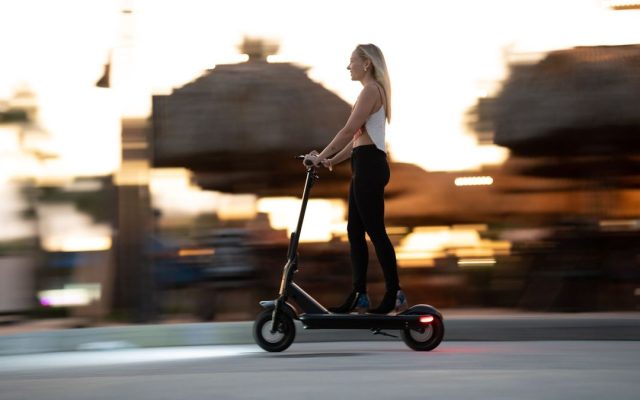
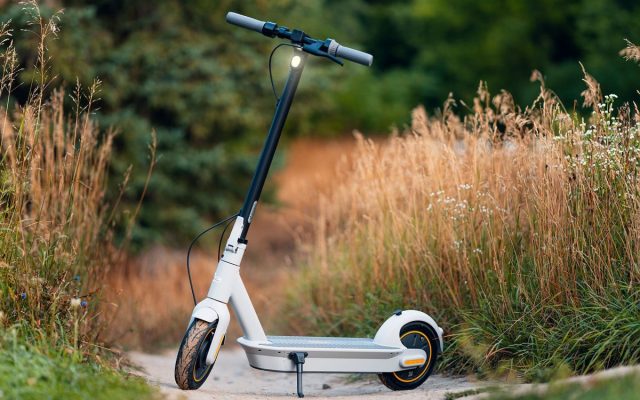
We checked the specs, the range, and owner reports on the real ride, so here's the honest take on this light, foldable, sub-$300 budget commuter scooter.
If you’ve been hunting for an honest Maxshot V1 electric scooter review, you’re in the right place. The Maxshot V1 has quietly become one of the most talked-about budget scooters around, the kind of ride that sells for about $250 but performs like something pricier. In this review we’ll dig into the real numbers: how fast it actually goes, how far it really travels, how it handles hills and bumps, and who should (and shouldn’t) buy it.
Here’s the short story. The Maxshot V1 is a light, foldable commuter with a 350-watt motor, a 375Wh battery, and 8.5-inch solid tires that never go flat. Maxshot claims 19 mph and 21 miles of range. Independent testing landed at a real 17.5 mph and 18.2 miles, which is genuinely impressive for the price.
We’ll walk through performance, comfort, battery life, the surprisingly handy app, and how the V1 compares to its Pro and S Pro siblings. By the end you’ll know exactly whether this little scooter fits your commute, or whether you should spend a bit more.
This article is part of our best electric scooters and reviews hub, which lists every scooter review on the site.
Maxshot V1 Review: The Quick Verdict
Short on time? Here’s the honest bottom line. The Maxshot V1 is one of the best-value electric scooters you can buy under $300. It pairs a 350-watt motor (with a 500-watt peak) and a 375Wh battery in a frame that weighs just 27.5 pounds. On paper Maxshot claims 19 mph and 21 miles of range. In independent testing by TechGearLab, it hit a real 17.5 mph and rolled 18.2 miles on a charge. Those are strong numbers for a scooter that often sells near $200 to $250.
So who is it for? Think city commuters, college students, and anyone who wants a light, foldable scooter for trips under 10 miles. It’s not built to climb steep hills fast or soak up rough pavement. There’s no suspension on the base model, and the solid tires pass bumps straight to your feet. But if your route is mostly smooth and short, the V1 gives you speed, range, and portability that usually cost a lot more.
- Best for short daily commutes, campus runs, and first-time riders on a budget
- Great if you want a light scooter to carry up stairs or onto a bus
- Skip it if your roads are rough or hilly, or you need to ride in the rain
- Skip it if you weigh over 264 lbs or need 25+ mph
| Spec | Details |
|---|---|
| Motor | 350W brushless (500W peak) |
| Top speed | 19 mph claimed / 17.5 mph tested |
| Range | Up to 21 mi claimed / ~18 mi tested |
| Battery | 36V 375Wh lithium |
| Charge time | About 4.2 hours |
| Tires | 8.5″ solid honeycomb (no flats) |
| Brakes | Rear drum + eABS regenerative |
| Weight | 27.5 lbs |
| Max rider load | 264 lbs |
| Folded | 3-second fold, latches to fender |
| Typical price | $250-$300 (often on sale near $200) |
Real-World Performance: Speed, Range and Hills
Let’s talk about how the Maxshot V1 actually rides, because the spec sheet and the real world don’t always match. The good news is the V1 gets closer than most budget scooters. Here’s what to expect from speed, range, and hills.
Top Speed
Maxshot lists a 19 mph top speed. In testing, the V1 settled at about 17.5 mph on flat ground with an average-weight rider. That’s quick for this price, plenty for keeping up in bike lanes and on side streets. Heavier riders will see a little less. It reaches cruising speed in about 5 seconds, so it feels peppy off the line without being scary.
Range
The headline is 21 miles, but plan your life around 15 to 18 miles instead. TechGearLab measured 18.2 miles in mixed testing, and that’s a realistic best case. Cold weather, hills, heavier riders, and full-throttle riding all pull that number down. Expect closer to 12 to 14 miles in tough conditions. For a 3 to 6 mile each-way commute, you’ll charge every couple of days.
Hill Climbing
This is the V1’s weak spot. The 350-watt motor handles gentle inclines and highway overpasses fine, but steep hills will slow it to a crawl. On sharp grades you’ll want to give a kick or two to help it along. If you live somewhere hilly like San Francisco or Seattle, look at a dual-motor scooter instead. This one is happiest on flat-to-rolling city streets.
Tires, Braking and Ride Comfort
The Maxshot V1 rolls on 8.5-inch solid honeycomb tires. The big win here is peace of mind: solid tires can never go flat. No pumping, no patch kits, no roadside blowouts. For a daily commuter, that’s a genuinely nice thing to not worry about.
The trade-off is comfort. Solid tires are firmer than air-filled ones, and with no suspension on the base V1, you feel cracks, seams, and cobblestones through the deck. On smooth bike paths it’s totally fine. On broken pavement it gets buzzy and tiring. If comfort matters most to you, the V1 Pro and V1 S Pro add suspension for a smoother ride.
Braking is better than you’d expect for the money. The V1 uses a rear drum brake paired with an electronic eABS regenerative system up front. Together they give you steady, controlled stops in dry conditions, and the regen even feeds a little charge back to the battery. Squeeze both smoothly rather than grabbing hard, especially on loose or damp ground.
Battery, Charging and the Maxshot App
The V1 carries a 36V 375Wh lithium battery. A full charge takes about 4.2 hours from empty, so you can top it up over dinner or overnight and be ready by morning. That’s average for the class, not fast and not slow.
What surprises people is the app. The Maxshot V1 connects to your phone over Bluetooth, which is rare at this price. Through the app you can lock and unlock the scooter, set a custom speed limit (handy for new riders or lending it to a friend), turn on cruise control, and check your battery and stats. It’s a genuinely useful feature, not just a gimmick.
A couple of tips. Charge the battery fully before your first ride, and try not to leave it sitting empty for weeks, because lithium batteries last longest when stored partly charged. In winter, bring the whole scooter indoors to a warmer spot, since cold saps both range and battery health.
Portability and Daily Commuting
Portability is where the Maxshot V1 shines. At 27.5 pounds, it’s one of the lighter commuter scooters out there. The folding system snaps down in about 3 seconds. You drop the stem, and it latches onto the rear fender so you can carry it like a suitcase or roll it beside you.
That makes it a great fit for apartment dwellers, students, and multi-modal commuters. You can fold it at the bus stop, carry it onto a train, tuck it under your desk, or drop it in a car trunk. If you’ve ever wrestled a 50-pound scooter up a flight of stairs, the V1 feels featherlight by comparison.
One number to respect is the 264-pound rider weight limit. That covers most people plus a backpack, but if you’re near the top of that range, you’ll notice slower acceleration, softer hill climbing, and shorter range. Riders over that limit should look at a heavier-duty scooter built for more weight.

Maxshot V1 vs V1 Pro vs V1 S Pro (and Rivals)
Maxshot sells the V1 in a few flavors, and it’s easy to get them mixed up. Here’s the simple version. The base V1 is the value pick: solid tires, no suspension, 19 mph. The V1 Pro adds front and rear suspension for a smoother ride at a similar speed. The V1 S Pro is the top model. It steps up to a stronger motor, dual suspension, and bigger 10-inch (up to 14-inch) tire options, pushing top speed to around 22 mph and range even higher.
How does it stack up against other budget names? Compared with the Gotrax GXL V2 (about 15.5 mph and 12 miles), the Maxshot V1 is both faster and longer-range. It trades blows with the Hiboy S2 (around 19 mph and 17 miles), but the Hiboy usually costs more and uses air-filled tires, which are smoother yet can go flat. Against the Segway Ninebot E2, the V1 wins on speed and range for a similar price. For flat, short commutes where value matters most, the V1 is tough to beat.
So which should you buy? If your roads are smooth and your budget is tight, the base V1 is the smart money. If you hit rough pavement every day, spend a bit more on the V1 Pro or S Pro for the suspension and comfort.
Pros, Cons and Who Should Buy the Maxshot V1
After weighing everything, the Maxshot V1 earns its reputation as a budget standout. It does the important things, speed, range, weight, and price, better than almost anything else near $250. You’re not paying for a badge. You’re paying for a scooter that genuinely commutes.
- Pro: Strong real-world speed (~17.5 mph) and range (~18 miles) for the price
- Pro: Very light at 27.5 lbs with a fast 3-second fold
- Pro: Solid tires that never go flat, so no pumps or patch kits
- Pro: Bluetooth app with cruise control and a lock, rare this cheap
- Con: No suspension on the base model, so rough roads feel harsh
- Con: Modest hill-climbing power from the 350W motor
- Con: No official water-resistance rating
- Con: 264 lb weight limit rules out heavier riders
| Metric | Maxshot Claim | Independent Test |
|---|---|---|
| Top speed | 19 mph | 17.5 mph |
| Range | 21 miles | 18.2 miles |
| Charge time | 4-6 hours | 4.2 hours |
| Weight | 27.5 lbs | 27.5 lbs |
| Feature | V1 | V1 Pro | V1 S Pro |
|---|---|---|---|
| Motor | 350W (500W peak) | 350W (500W peak) | 500W |
| Top speed | 19 mph | 19 mph | Up to 22 mph |
| Range | Up to 21 mi | Up to 21 mi | Up to 28+ mi |
| Tires | 8.5″ solid | 8.5″ solid | 10″-14″ options |
| Suspension | None | Front & rear | Dual suspension |
| Best for | Smooth, short commutes | Rougher roads | Longer, comfier rides |
Common Mistakes (and How to Fix Them)
Fix: Plan for 15 to 18 miles in good conditions, and 12 to 14 in cold or hilly rides. Charge every couple of days instead of chasing the max number, and you’ll never get stranded.
Fix: Maxshot never published a water-resistance rating, so treat the V1 as not waterproof. Keep it dry, wipe it down if you get caught out, and store it indoors to protect the electronics.
Fix: The 350W motor isn’t built for steep climbs. Give a light kick to help it start up an incline, or pick a flatter route. Pushing it hard uphill drains the battery fast and overheats the motor.
Fix: Leave the battery around 40% to 60% for long storage and top it up monthly. A deep, empty discharge shortens lithium battery life and can hurt your long-term range.

Pro Tips
- 💡 Do a full first charge and take a few gentle rides to let the battery settle before you push top speed.
- 💡 Ride in the lower speed mode when you want to stretch range on longer trips. It can add a few extra miles.
- 💡 Clip on a small USB stem light for night riding. The stock headlight is more ‘be seen’ than ‘see the road.’
- 💡 Check the folding latch and tire bolts once a week. A 30-second look keeps the fold tight and the ride safe.
- 💡 Use the app’s speed limit while you learn, then raise it as you get comfortable and confident.
An Example Scenario
Illustrative example: a composite of situations riders often describe, not a real customer story.
Take Marcus, a nurse who lives about four miles from the hospital. He was tired of paying for parking and crawling through traffic. He grabbed a Maxshot V1 on a $210 sale and now rides it to the train station, folds it in three seconds, and carries it onto the train. Round trip is about eight miles, and he charges it every other night. Six months in, his only complaint is a buzzy ride on one rough stretch of road, which he fixed by taking a smoother side street.
That story is typical. Most V1 owners aren’t racing or off-roading. They’re replacing short car trips, skipping parking headaches, and having a little fun on the way. For that job, the little Maxshot quietly over-delivers.
Frequently Asked Questions
The Maxshot V1 tops out around 17.5 to 19 mph. Maxshot advertises a 19 mph top speed, and independent testing clocked a real-world 17.5 mph on flat ground with an average-weight rider. That’s fast for a scooter in the $200 to $300 range, quick enough to keep pace in most bike lanes. Heavier riders and uphill stretches will see slightly lower speeds.
Expect about 15 to 18 miles per charge in real use, not the full 21 miles Maxshot advertises. Testing measured 18.2 miles under mixed conditions, which is a realistic best case. Cold weather, hills, heavier riders, and full-throttle riding can drop it to 12 to 14 miles. For a typical 3 to 6 mile commute, you’ll recharge every couple of days.
It handles gentle hills but struggles on steep ones. The 350-watt motor (500W peak) is fine for overpasses and mild inclines, but sharp grades will slow it noticeably, and you may need to give a kick to help. If you live somewhere very hilly, a dual-motor scooter is a better fit for daily climbing.
No, Maxshot has not published an official IP water-resistance rating, so treat it as not waterproof. Avoid deep puddles and heavy rain, and store it indoors. A light drizzle on the way home is usually survivable if you dry it off afterward, but water damage typically isn’t covered by warranty.
It works up to a 264-pound rider weight limit, which covers most adults plus a bag. Riders near the top of that range will notice slower acceleration, weaker hill climbing, and shorter range. If you weigh more than 264 pounds, choose a heavier-duty scooter built for extra weight and higher torque.
No, the Maxshot V1 uses 8.5-inch solid honeycomb tires that can never go flat. There’s nothing to inflate and no tubes to puncture, so you skip pumps and patch kits entirely. The trade-off is a firmer ride, since solid tires transmit more bumps than air-filled ones, especially with no suspension on the base model.
Final Checklist ✅
- ✅ Confirm your route is mostly flat and smooth, since the V1 loves easy city streets
- ✅ Weigh yourself plus your daily bag and stay under the 264 lb limit
- ✅ Charge the battery to 100% before your very first ride
- ✅ Download the Maxshot app and set a speed limit while you learn
- ✅ Practice the 3-second fold and the fender latch a few times at home
- ✅ Add a helmet and a clip-on light before riding at night
- ✅ Plan to recharge every 15 to 18 miles, not every 21