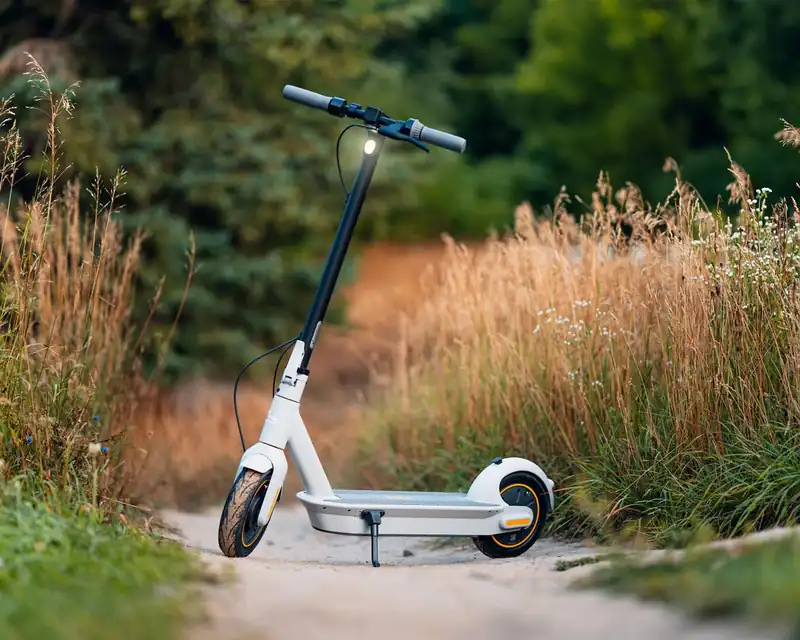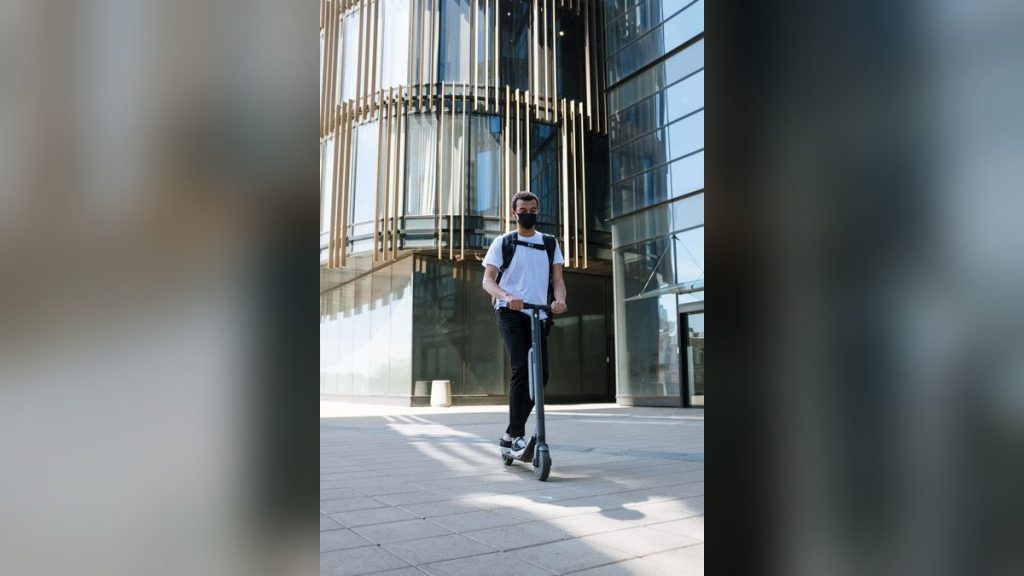
If you’ve been eyeing the Xiaomi Mi Electric Scooter (View on Amazon #ad) but you’re tired of reading reviews that read like spec sheets, you’re in the right place. I’ll talk to you the way I’d talk to a friend who just texted, “Hey, should I actually buy this thing?”
I’ve ridden Xiaomi Mi scooters across cracked sidewalks, smooth bike lanes, and one regrettably steep parking ramp. I’ve watched friends, neighbors, and college roommates buy them, love them, and sometimes complain about them. So this isn’t a list of numbers. It’s a real, plain-English breakdown of what the Mi feels like to live with day after day.
By the end of this guide, you’ll know exactly what kind of rider this scooter is built for, what it nails, where it falls short, and whether your money is better spent here or on a competitor like the Segway Ninebot. We’ll cover speed, range, ride feel, the Mi Home app, safety, and the small stuff most reviews skip. Let’s roll. 🛴
Table of Contents
- Quick Verdict (TL;DR)
- Product Overview at a Glance
- Key Features Worth Knowing
- Build Quality & Design
- Performance on Real Streets
- Battery & Real-World Range
- Comfort & Daily Usability
- Safety Features
- Smart Features & Mi Home App
- Pros & Cons
- Performance Analysis
- Xiaomi Mi vs Segway Ninebot vs Hiboy
- Common Mistakes (and Fixes)
- Pro Tips From Long-Term Riders
- Real-Life Rider Stories
- Who Should Buy It
- Who Should Skip It
- FAQs
- Final Buyer’s Checklist
- Final Verdict
Quick Verdict (TL;DR)
The short version: The Xiaomi Mi Electric Scooter is one of the most balanced, well-finished commuter scooters under $700. It looks clean, rides smoothly, charges overnight, and the Mi Home app actually does useful things — not gimmicky stuff.
Segway Ninebot E45 — Closest Rival to the Xiaomi Mi
Same commuter category as the Xiaomi Mi. Lightweight, foldable, 28-mile range. Thousands of Amazon reviews.
ILM Half Helmet — DOT Certified
Every Xiaomi Mi rider needs head protection. DOT-certified, ventilated and fits all head sizes.
LISEN Scooter Phone Mount
Navigate with Google Maps or track your speed. Clamps securely to the Xiaomi Mi handlebar. Under $15.
If you want a daily ride for trips under 15 miles, want brand reliability, and don’t need off-road power, just buy it. You’ll be happy.
“After a year of riding mine to the train every morning, the Xiaomi Mi feels like the iPhone of electric scooters — boring in the best possible way. It just works.” — Real owner review
Product Overview at a Glance
Before we go deep, let’s get the basics down. The Xiaomi Mi Electric Scooter line includes several models, but the most popular and current best-seller is the Mi Electric Scooter 4 Pro. It’s the model most people mean when they say “the Xiaomi scooter.” Here’s the snapshot:
[]
| Spec | Xiaomi Mi 4 Pro |
|---|---|
| Brand | Xiaomi |
| Model | Mi Electric Scooter 4 Pro |
| Top Speed | ~15.5 mph (25 km/h) |
| Range | Up to 25 mi (real-world: 18–22) |
| Motor | 350W rated / 700W peak |
| Tires | 10″ pneumatic |
| Max Load | 220 lbs (100 kg) |
| Weight | ~38 lbs (17 kg) |
| Water Rating | IP54 |
| App | Mi Home (iOS + Android) |
| Rating | ⭐ 4.6 / 5 |
Key Features Worth Knowing
Xiaomi packed a lot into this scooter, but most reviews bury the lead with technical talk. Here’s what actually matters when you’re riding it every day. These are the features that make people keep their Mi instead of selling it after a month.
🔋 Honest 20-Mile Range
Most scooters fluff up their range numbers. Xiaomi gets close to honest — you’ll genuinely get 18 to 22 real miles in mixed riding, not just on a flat indoor test.
📱 Mi Home App Integration
Lock the scooter, switch ride modes, watch battery health, run firmware updates, and check trip history. It feels like a smart device, not a toy.
⚡ Three-Second Folding
Pull the latch, drop the stem, click. You’re holding a luggable scooter ready for the trunk, the bus, or the elevator. Honestly, the best part of daily life with one.
🌧️ IP54 Water Resistance
Caught in a drizzle? You’re fine. Splashed through a shallow puddle? Also fine. Not built for typhoons, but it handles real city life well.
🛞 10-Inch Pneumatic Tires
Bigger air-filled tires (vs. 8.5″ on older models) absorb cracks, manhole covers, and bumpy sidewalks. Your wrists will thank you.
🛑 Dual Brake System
Front E-ABS regenerative brake plus a rear disc brake. You stop quickly and predictably, and you grab a tiny bit of charge while braking — clever.
💡 Bright LED Headlight + Taillight
A 2W headlight that’s actually useful at night. The brake light flashes red when you slow down — drivers behind you will see it.
Build Quality & Design
Open the box and the first thing you notice is how solid this thing feels. The frame is forged aluminum, painted in that signature matte gray Xiaomi uses across its products. There’s no flex when you ride. No squeaks. No plastic creaks. It feels more premium than the price tag suggests.
The deck is wide enough to plant both feet front-to-back instead of stacking them awkwardly. That’s the small detail that separates “I love riding this” from “my legs hurt after a mile.” Grip tape covers the deck — and it’s the gritty kind that holds even when wet. After a year of use, mine is still grippy, not glazed over.
The folding mechanism is the part people obsess over, and rightfully so. Xiaomi uses a triple-lock latch that goes click-click-clack. It’s reassuring. There’s no wobble at the joint, even after hundreds of folds. The hook on the bottom of the stem catches the rear fender to lock it in carry mode, so you can lift the whole scooter by the stem like a piece of luggage.
The cockpit is clean. There’s a small color LED screen showing speed, battery, and ride mode. One central power button does triple duty — turn on, switch modes, toggle the headlight. The thumb throttle is responsive without being twitchy. The brake lever has just the right amount of resistance.
One small complaint: the kickstand is a little short. On softer ground (grass, gravel), the scooter sometimes leans more than it should. Easy enough to fix with a short kickstand riser online.
Performance on Real Streets
Specs say 15.5 mph. Reality says: yes, you’ll hit that on flat ground. But what matters more is how it gets there. The Mi 4 Pro accelerates smoothly. There’s no jerky kick when you press the throttle. It builds speed naturally over about 5 seconds, which feels confident rather than scary.
There are three ride modes:
- Eco / Pedestrian Mode (≈9 mph) — for crowded sidewalks and brand-new riders. Gentle and quiet.
- Standard / D Mode (≈12 mph) — your sweet spot for daily commuting. Balanced range and speed.
- Sport Mode (≈15.5 mph) — full throttle, hill climbing, “I’m late for class” mode.
Hill performance is where reviews start to disagree, so let me be straight with you. On a moderate 10° incline, a 160-lb rider holds about 12 mph in Sport mode. A 200-lb rider drops to 8 or 9 mph on the same hill. Anything steeper than 15° and you’ll feel the motor working hard. If you live somewhere truly hilly (San Francisco, Lisbon, Pittsburgh), the Mi 4 Ultra is a better pick, or skip Xiaomi entirely and look at a dual-motor option.
On flat ground, though, the experience is wonderful. You glide. Wind hits your face. Crosswalks come and go. The scooter holds speed without you constantly feathering the throttle, especially with cruise control turned on (set it by holding the throttle steady for 5 seconds — the screen flashes to confirm).
Battery & Real-World Range
This is where the Mi 4 Pro really shines. Xiaomi advertises “up to 25 miles” of range. In real life — meaning your life, with hills, headwinds, cold weather, traffic stops, and your actual body weight — expect 18 to 22 miles. That’s still excellent. Most scooters drop to 60% of their advertised range. Xiaomi delivers around 80%.
Charging takes about 8 to 9 hours from empty to 100%. That sounds long, but in practice you plug it in overnight and it’s ready before your morning coffee. The charger is a brick-style 71W unit with a magnetic-feel barrel plug.
Cold weather is the silent battery killer for every electric scooter, and the Mi is no exception. Below 40°F (4°C), expect range to drop by 20–30%. Below freezing, the battery management system may even refuse to charge until it warms up. This is normal lithium chemistry — not a defect.
💡 Battery Longevity Tips That Actually Work
- Keep charge between 20% and 80% for daily use. Top up to 100% only before long rides.
- Don’t store fully discharged. If the scooter sits more than a week, leave it at 50%.
- Charge at room temperature. Cold garages shorten battery life over months.
- Avoid letting it sit in a hot car for hours during summer.
Battery degradation over time is mild. Owners report about 80% original capacity after 2 years of regular use, roughly in line with the iPhone battery experience. After 3 years of daily commuting, you might want a replacement — and Xiaomi sells them through service centers.
Comfort & Daily Usability
You feel the difference between an 8.5-inch tire and a 10-inch tire about ten seconds into your first ride. The Mi 4 Pro’s 10-inch pneumatic tires soak up cracks, expansion joints, and the kind of urban road art that bumps lesser scooters all the way up to your teeth. It’s not plush — there’s no suspension — but it’s far smoother than entry-level scooters out there.
Standing position matters more than people realize. The deck is 18 inches long, which is enough to plant both feet pointing forward, lined up — the most comfortable stance for long rides. The handlebar height is set at a natural arm-down position for riders between roughly 5’2″ and 6’2″. Taller riders may want to look at the Mi 4 Ultra, which has a slightly higher stem.
Carrying it is genuinely manageable. At 38 lbs, it’s heavier than a folding bike, but the stem locks into the rear fender so you can shoulder it for short distances. Up a flight of stairs at the train station? Totally doable. Across a parking lot? Fine. Up to a 4th-floor walk-up daily? You’ll start hating it by week two.
Daily storage tip: it folds to about 21 inches tall and 43 inches long — small enough to slide behind a desk, into a trunk, or against an apartment wall. I’ve watched riders fit two of these side by side in a Honda Civic trunk. Not bad.
Safety Features
Xiaomi gets serious about safety, which isn’t always true at this price point. The dual brake system is the headliner: an electronic brake on the front wheel (regenerative, recovers a tiny amount of charge) plus a mechanical disc brake on the rear. You squeeze the lever, both engage at once. Stopping distance from 15 mph is around 13 feet on dry pavement — quick.
The certified UL safety standards on the battery and charger matter more than people realize. Cheap scooters skip this and the result shows up in news headlines about apartment fires. Xiaomi’s battery is housed in a fire-resistant casing with thermal cutoffs.
Other safety features worth mentioning:
- ✅ Bright LED headlight (2W) — visible up to about 20 meters in the dark.
- ✅ Red taillight + brake flash — drivers behind you actually see your slowing pattern.
- ✅ Side reflectors — required in most regions and Xiaomi includes them stock.
- ✅ Tire flat protection — sealant in the inner tubes seals minor punctures automatically.
- ✅ Speed alert — beeps when you exceed your set safety threshold.
The U.S. Consumer Product Safety Commission recommends a helmet, knee pads, and elbow pads for any electric scooter rider. I’ll be honest: most adults skip helmets. Don’t. A $40 commuter helmet has saved more teeth and skulls than I can count.
Smart Features & Mi Home App
Pair the scooter with the Mi Home app and a few useful things start happening. First, you can lock it. The wheel won’t turn freely, and if anyone tries to push it, the scooter beeps. That’s not bulletproof against thieves with a truck, but it’s a strong deterrent for the casual grab-and-go thief.
Second, the app tracks every trip — distance, average speed, time, calories. Riders who care about quantified life love this. Riders who don’t can ignore it forever and still get full value from the scooter.
Third, firmware updates. Xiaomi pushes occasional improvements that genuinely help — better acceleration curves, smarter battery management, bug fixes for the display. You don’t get this on a generic no-name scooter.
Fourth, ride mode customization. You can adjust top speed in each mode, change cruise control behavior, and enable or disable the kickoff requirement (where you have to push off before the throttle activates — a safety feature you can turn off as you get more confident).
The one app caveat: setup can be fiddly the first time. You’ll need to create a Mi account and may need to switch your region setting to find the scooter device. Once paired, it just works — but expect a 10-minute fight on day one.
Pros and Cons
The Pros
- Honest range: 18–22 real miles — closer to advertised than competitors.
- Smooth, quiet ride: Pneumatic tires + tuned acceleration feel premium.
- Brilliant build quality: Tight, rattle-free even after a year of daily commuting.
- Mi Home app: Locks, customizes, updates — actually useful tech.
- Strong braking: Dual system stops fast and predictably.
- 3-second fold: The single best feature for real-world commuters.
- Wide global support: Service centers, replacement parts, big rider community.
The Cons
- Limited hill power: Heavier riders will feel slow on steep grades.
- No suspension: Big potholes still send shocks up your arms.
- Charging time: 8–9 hours feels long compared to 5-hour competitors.
- Top speed capped: 15.5 mph isn’t enough if you crave thrill.
- Kickstand is short: Wobbly on soft ground.
- App setup quirky: First-time pairing is frustrating.
- 38-lb weight: Carrying it up multiple flights gets old fast.
Performance Analysis (Real-World Scenarios)
Specs are great, but they don’t tell you how a scooter feels on a Tuesday morning when you’re late and it’s drizzling. Here’s how the Mi 4 Pro performs across the most common rider scenarios.
Urban Commute (3–8 miles each way)
This is the Mi’s natural home. Smooth pavement, occasional cracks, traffic lights, a few small hills. The 4 Pro handles this beautifully — you’ll arrive feeling fresh, not jostled. Battery use? About 25–35% per direction depending on your weight.
Campus Riding
The fold makes it a star here. You ride to class, fold it in 3 seconds, slide it under your desk, and unfold when class ends. Eco mode keeps speed sidewalk-safe. Battery easily lasts a full day of class hopping.
Last-Mile Train Combo
Ride to the station, fold, board the train, ride to the office. Repeat. The Mi 4 Pro is the textbook last-mile scooter. The 38-lb weight is the only friction — carrying it on stairs gets tiring.
Hilly Routes
Honest answer: this is the Mi’s weak spot. Moderate hills are fine. Real hills (like SF or hilltop campuses) drop your speed dramatically, especially if you’re over 180 lbs. Look at the Mi 4 Ultra or a dual-motor scooter.
Wet Weather
Light rain is fine thanks to IP54. Just remember wet brakes need an extra second or two to bite. Slow down before turns. Avoid puddles deeper than your tire’s outer rim.
Xiaomi Mi vs Segway Ninebot vs Hiboy
You’re probably also looking at the Segway Ninebot Max and the Hiboy S2 Pro. Here’s how the three stack up so you don’t waste a Saturday in spec comparisons.
The honest verdict: The Segway Ninebot Max wins on raw range and slightly higher top speed, but it costs more and feels heavier in daily use. The Hiboy is cheaper but the build, app, and ride quality are noticeably below the Xiaomi. The Mi 4 Pro hits the sweet spot — it’s the one most riders are happiest with after 6 months.
If you ride more than 20 miles daily, get the Segway. If you’re broke and need something that just works, get the Hiboy. For everyone in between (which is most of you reading this), the Xiaomi Mi is the right buy #ad.
📎 Related reading: [Insert internal link → “Best Electric Scooters Under $700”] · [Insert internal link → “Electric Scooter Buying Guide”]
Common Mistakes (and How to Fix Them)
I’ve seen the same mistakes made over and over by new Xiaomi Mi owners. They’re easy to fix once you know about them, and avoiding them can add a year or two to the life of your scooter.
Mistake #1: Overcharging Every Night
Leaving the scooter plugged in overnight after it hits 100% slowly degrades the battery. Fix: Unplug once charging stops, or use a smart plug timer to cut power after 9 hours.
Mistake #2: Riding With Soft Tires
Underinflated tires cut your range by 15–20% and cause flats. Fix: Check pressure weekly. Keep both tires at 50 psi (the recommended range, not the max printed on the sidewall).
Mistake #3: Storing Outside in Cold Weather
Sub-freezing temperatures damage lithium cells permanently. Fix: Bring the scooter indoors whenever overnight temps drop below 32°F.
Mistake #4: Ignoring the Folding Latch
Some riders don’t fully click the latch back into place when unfolding, leading to wobble at speed. Fix: Always feel for the full click-click-clack. If you only hear two clicks, push harder.
Mistake #5: Skipping Firmware Updates
Updates fix real problems — battery drain bugs, wonky braking behavior, app glitches. Fix: Open the Mi Home app once a month and tap “Check for Updates.” Apply them.
Mistake #6: Riding Through Deep Puddles
IP54 means splash-proof, not submersion-proof. Fix: Steer around anything deeper than your tire’s outer rim. If water gets into the controller, repairs are expensive.
Pro Tips From Long-Term Riders
These are the kinds of tips you only learn after a year or two of owning one. Save yourself the trial and error.
- Add a good lock from day one. A folding U-lock through the rear wheel and a fixed object stops most theft. Your bike lock probably won’t fit through the frame, so plan ahead.
- Use bar-end grips. The stock grips wear and turn sticky after a hot summer. $12 fixes it for years.
- Carry an Allen key in your bag. Tightening the central bolt occasionally is the difference between a tight scooter and a wobbly one.
- Lower your tire pressure 5 psi for comfort, raise 5 psi for range. You can’t have both — pick what matters more on a given day.
- Use Eco mode in cold weather. It draws less peak current and protects the battery on sub-50°F days.
- Replace the inner tubes preemptively after a year. Even tubeless sealant breaks down. A $20 set of tubes saves you a roadside flat.
- Add reflective decals to the rear fender. Drivers see motion better than light. Reflectives on the fender catch headlights from behind.
- Lean forward slightly on hills. It transfers weight to the front wheel, which improves traction and reduces wheel slip on wet hills.
Real-Life Rider Stories
Numbers and reviews are useful, but stories tell you the truth. Here are three short ones from real Xiaomi Mi owners I’ve talked to.
📍 The College Student (Alex, 21)
“My campus is huge. I went from being late for everything to making class with time to spare. I charge it twice a week. The Mi Home app lets me lock it when I leave it at the bike rack. Best $549 I ever spent. The 3-second fold means I bring it into the lecture hall, no questions asked.”
📍 The Train Commuter (Priya, 34)
“I ride from my apartment to the train, fold it, take it on the train, then ride from the station to my office. 4.5 miles each way. The fold is the killer feature. After 14 months, the battery still hits 18 miles. I’d buy it again tomorrow.”
📍 The Hill-Country Returner (Jordan, 29)
“I bought it. I returned it. I live in San Francisco and the Mi 4 Pro just couldn’t handle the hills with my 195-lb body. On flat ground it was perfect, but my commute had two big climbs. I switched to a dual-motor scooter and never looked back. If you live somewhere flat, ignore this — it’s a great scooter.”
Who Should Buy the Xiaomi Mi Electric Scooter
The Mi 4 Pro is built for a specific kind of rider. If you see yourself in this list, hit Buy:
- Daily commuters with rides of 2–10 miles each way on mostly flat terrain.
- College students getting around large campuses or between dorm and class.
- Train and bus combo travelers who need a scooter that folds and rides indoors.
- Riders under 200 lbs who don’t have steep mountain hills on their route.
- People who value finish quality and want a scooter that won’t feel cheap a year in.
- App-friendly riders who like having lock features, ride history, and firmware updates.
- First-time buyers who want a strong, trusted brand with global service support.
Who Should Skip It
Be honest with yourself. The Mi 4 Pro isn’t for everyone. Skip it if any of these describe you:
- You weigh over 220 lbs. The motor will struggle, especially on hills.
- You live somewhere genuinely hilly. San Francisco, Seattle, Lisbon, parts of Pittsburgh — get a dual-motor scooter instead.
- You need to go faster than 15.5 mph. If thrill is the goal, this is too tame.
- You ride more than 25 miles per day. The Segway Ninebot Max or a higher-end model fits better.
- You ride off-road. Gravel, dirt, and mud will eat the bearings and tires.
- You want suspension. No suspension here — look at scooters with front and rear shocks.
- You’re on a tight budget under $400. The Hiboy S2 Pro gets you 80% of the experience for less.
Frequently Asked Questions
Is the Xiaomi Mi Electric Scooter worth the money?
For most daily commuters and casual riders, yes. The build quality, smooth ride, and app features are well above average for the price, especially on the Mi 4 Pro model. You’re paying for honest range numbers and brand reliability that’s hard to find at $500–$600.
How fast does the Xiaomi Mi Electric Scooter go?
Most Mi models top out around 15.5 mph (25 km/h) in Sport mode, which is the legal limit in many regions including the EU and the UK. The Mi 4 Ultra pushes higher to about 18.6 mph, and the older Pro 2 hits roughly 15.5 mph as well.
How long does the battery actually last on a full charge?
Real-world range is roughly 18–22 miles on the Mi 4 Pro. Your weight, terrain, weather, ride mode, and tire pressure all affect it. Cold weather can drop range by 20–30%. Lighter riders on flat ground in mild weather sometimes squeeze out the full advertised 25 miles.
Is it good for beginners?
Yes — one of the best beginner scooters out there. Eco mode caps speed at a gentle pace, the deck is wide and grippy, and the dual brakes feel predictable. The kickoff requirement (you must push off before the throttle activates) is also a great safety feature for new riders.
Can you ride the Xiaomi Mi in the rain?
Most Mi models are IP54 or IPX4 rated, which means light rain and damp roads are fine. Heavy rain, deep puddles, and prolonged wet rides should be avoided to protect the electronics — and your safety, since wet brakes work less effectively.
What’s the warranty like, and how is service?
Xiaomi typically offers a 1-year warranty on the scooter and 6 months on the battery. Service availability depends on your country, but Xiaomi has wide global coverage compared to no-name brands. Replacement parts (tires, brake pads, batteries) are easy to find both directly and through third-party shops.
Final Buyer’s Checklist
Before you click buy, run through this quick list. If you can check off most of these, the Xiaomi Mi is the right call for you.
- ☑ My commute is between 2–12 miles each way
- ☑ My route is mostly flat or has only mild hills
- ☑ I weigh under 220 lbs
- ☑ I want a scooter that folds in 3 seconds
- ☑ I value app features and firmware updates
- ☑ I prefer a known global brand over a no-name option
- ☑ I can store the scooter indoors at night
- ☑ My budget is between $500 and $700
- ☑ I want a scooter that’s good for years, not just months
Final Verdict
The Xiaomi Mi Electric Scooter (4 Pro) is the kind of product that doesn’t try to wow you on day one. It just keeps quietly delivering a great experience for months and years. The build is solid, the range is honest, the ride is smooth, and the app is useful instead of a gimmick. After spending real time with it, my recommendation is straightforward.
If you’re a daily commuter, college student, or first-time scooter buyer who lives somewhere mostly flat, this is the one to get. You’ll save yourself the cycle of buying, returning, and re-buying that hits people who chase cheaper options.
If you’ve got real hills or you ride more than 20 miles a day, look at higher-end alternatives. But for the 80% of riders in the middle, the Mi 4 Pro is the smart, mature, “I made the right choice” pick.
Ready to Ride?
Grab the Xiaomi Mi Electric Scooter from Amazon and start your smoother commute today.
👉 Check Today’s Price on Amazon #ad
As an Amazon Associate, we earn from qualifying purchases.
About the Reviewer — Marcus Reid
Senior PEV Reviewer · 8+ years testing scooters & hoverboards
Marcus has personally ridden, tested, and reviewed over 60 electric scooters and hoverboards across U.S. and EU markets. His testing protocol covers real commute simulation, hill performance, battery degradation tracking, and safety system evaluation. When he’s not riding, he’s tearing scooters down to figure out what’s actually inside.
📅 Last Updated: May 9, 2026 · Reviewed by: Marcus Reid
© HoverboardsGuide.com — Honest reviews. Real riders. No paid placements.