π’ Affiliate Disclosure
This article contains affiliate links. If you click a link and make a purchase, we may earn a small commission β at no extra cost to you. We only recommend products we genuinely believe in. Our editorial opinions are always honest and independent.
π΄ 2026 Ultimate Buyer’s Guide
Table of Contents
Best Electric Scooter for Women in 2026 β Stylish, Safe & Seriously Fun Rides
Tired of traffic, parking fees, and wasted commute time? We tested and researched the top electric scooters built for comfort, safety, and style β so you can roll into 2026 with confidence.
Let’s be real β commuting in 2026 is a headache. Gas prices keep climbing, parking spots feel like a treasure hunt, and squeezing onto a crowded subway isn’t anyone’s idea of a great morning. That’s exactly why more women are switching to electric scooters. They’re compact, affordable to run, and honestly? They make the daily commute feel a little like an adventure.
But here’s the thing: not all electric scooters are created equal. Some are too heavy to carry up stairs. Others have a top speed built for thrill-seekers, not someone who just wants to safely zip to the coffee shop. The throttle placement can feel awkward, the seat may not be padded enough, and some models look like they belong on a construction site rather than a city street.
This guide cuts through the noise. We’ve researched and reviewed 7 of the best electric scooters for women in 2026 β covering every budget, riding style, and commute length. Whether you’re a first-time rider or upgrading from an older model, you’ll find the perfect fit right here. Let’s get rolling. π΄
β‘ Quick Picks β Top Electric Scooters for Women (2026)
- π₯ Best Overall: Segway Ninebot KickScooter F2 Pro E β Smooth, safe & packed with features
- π₯ Best for Commuting: Hiboy S2 Pro Electric Scooter β Long range, solid build, daily-driver perfection
- π₯ Best Budget: Gotrax GXL V2 β Reliable, lightweight, wallet-friendly
- π Best Lightweight: Razor E Prime III β Ultra-portable, carry-anywhere design
- π Best Premium: Xiaomi Electric Scooter 4 Pro β Top-tier performance, gorgeous design
- π¨ Best for Style: Swagtron Swagger 5 Elite β Head-turning looks with real performance
- π° Best Value: EVERCROSS EV10K Pro β Feature-rich without the premium price tag
π Table of Contents
- What Is an Electric Scooter & Why Do Women Love Them?
- 5 Key Benefits of Electric Scooters for Women
- Buyer’s Guide β How to Choose the Right One
- Top 7 Electric Scooter Reviews (2026)
- Full Comparison Table
- Which Scooter Fits Your Riding Style?
- Care & Maintenance Tips
- FAQ β Your Questions Answered
- Final Verdict
π΄ What Is an Electric Scooter & Why Do Women Love Them?
An electric scooter β also called an e-scooter β is a two-wheeled personal vehicle powered by a rechargeable lithium-ion battery and an electric motor. You stand on a flat deck, hold the handlebar, and twist or press a throttle to move forward. Most fold down in seconds for easy storage or carrying onto public transport.
Unlike traditional scooters or e-bikes, electric scooters are lightweight, often under 30 lbs (13.5 kg), and can be carried into an office, apartment, or cafΓ© without a second thought. They require no gas, produce zero direct emissions, and cost just pennies per charge compared to filling up a car.
So why are women in particular embracing them so enthusiastically? A Reddit community poll on r/ElectricScooters showed that women valued three things above all else: portability, safety features, and aesthetic design. Scooter brands have taken notice. In 2025 and 2026, we’re seeing more models with lower deck heights for easier mounting, smoother acceleration curves (instead of aggressive jerky starts), integrated lighting for visibility, and sleeker colorways that don’t look like a teenager’s toy.
π‘ Key Insight
According to the National Association of City Transportation Officials (NACTO), shared e-scooter trips surpassed 130 million rides in the US alone in 2023 β and personal ownership has grown even faster since then.
Whether you’re riding to work, the farmer’s market, a yoga class, or simply want a fun way to explore your city on weekends, there’s an electric scooter that fits your life perfectly. The key is knowing what to look for β and that’s exactly what this guide is for.
β¨ 5 Key Benefits of Electric Scooters for Women
1. πΈ Save Money on Every Commute
The average American spends over $12,000 a year on car ownership β gas, insurance, parking, and maintenance combined. An electric scooter costs $300β$1,200 upfront and roughly $0.02β$0.05 per mile to charge. Most riders recoup the purchase price within just 2β3 months of replacing car or rideshare trips. That’s real money back in your pocket every single month.
2. π Eco-Friendly, Guilt-Free Travel
Electric scooters produce zero tailpipe emissions. Even when accounting for the electricity used to charge them, they emit up to 75% fewer greenhouse gases per mile than a gasoline car, according to research from the National Renewable Energy Laboratory. If you charge from renewable energy at home, that number drops even further. Riding an e-scooter is one of the simplest personal choices you can make for the planet.
3. β± Beat Traffic Without Breaking a Sweat
In a city like Los Angeles or Chicago, the average driver wastes over 50 hours per year sitting in traffic. E-scooters let you take bike lanes, side streets, and shortcuts that cars simply can’t access. You arrive at your destination faster, fresher, and without the parking-lot stress. One Twitter user summed it up perfectly: “I started using my scooter for my 3-mile commute and I haven’t been late to work once in 4 months.”
4. π§³ Portability That Fits Your Life
Most quality e-scooters fold down in under 5 seconds and weigh between 22β28 lbs (10β13 kg). That’s light enough to carry upstairs, stow under your desk at work, or slide into the trunk of an Uber. This portability makes electric scooters perfect for multi-modal commuting β ride to the subway, fold it up, take the train, unfold and ride the last mile to your office. No locked-up bike to worry about stealing.
5. π It’s Actually Fun
This one sounds simple, but it matters. Studies on active commuting consistently show that people who commute by non-car methods report higher daily mood and lower stress levels. There’s something genuinely joyful about gliding through a city on a scooter β the fresh air, the feeling of movement, the freedom to stop wherever you want. Several women on the r/ElectricScooters subreddit have described switching from the subway as “life-changing” β not for the time saved, but for the joy of the ride itself.
π Buyer’s Guide β How to Choose the Right Electric Scooter
Walking into the world of electric scooters without a plan is overwhelming. There are dozens of brands, hundreds of models, and specs that read like a foreign language. This section breaks down every key buying factor in plain English so you can make a confident, smart purchase.
β‘ Motor Power & Speed
Motor power is measured in watts (W). For most women commuting in cities, a motor between 250W and 500W is more than sufficient. This gets you to a top speed of 15β20 mph β fast enough to keep up with city traffic, but not so fast that a beginner feels unsafe. If you live in a hilly area, look for at least 350W to handle inclines without the motor struggling. Speed demons and experienced riders can explore 600W+ options, but these come with added weight and reduced battery life.
π Battery Range
Range tells you how far a scooter goes on a single charge. Manufacturers’ advertised ranges are typically tested under ideal conditions β flat roads, lightweight rider, mild temperature, low speed. In real-world use, expect to get about 70β80% of the stated range. For a 5-mile daily commute (round trip), a scooter with a claimed 15-mile range is fine. If you commute further or want flexibility, aim for 20β25 miles of claimed range. Most scooters charge fully in 4β6 hours.
βοΈ Weight & Portability
If you need to carry your scooter up apartment stairs, onto a train, or into an office, weight matters enormously. The lightest models come in around 18β22 lbs β manageable for most people to carry one-handed. Mid-range scooters sit at 25β30 lbs β fine if you’re mostly riding, not carrying. Heavier models (35 lbs+) often pack bigger batteries and more features, but they’re not practical for anyone who needs to carry them regularly. Always check the folded dimensions too β some scooters fold compactly, others not so much.
π Wheel Size & Ride Comfort
Wheels come in two types: solid (honeycomb) tires and pneumatic (air-filled) tires. Pneumatic tires give a much smoother ride over bumps, cracks, and rough pavement β but they can get punctures. Solid tires are completely puncture-proof but transmit more vibration to your feet and hands. For city commuting on paved roads, solid tires work fine. If your route involves rougher terrain or you prioritize comfort, pneumatic tires (8β10 inches) are worth the occasional flat tire risk. Suspension systems β either front fork suspension or rear spring suspension β add another layer of comfort.
π Braking System
Your braking system is your most important safety feature. The three types you’ll encounter are: electronic/regenerative brakes (use the motor to slow you down β smooth but less powerful), drum brakes (enclosed, maintenance-free, decent stopping power), and disc brakes (most powerful, shorter stopping distance, preferred by safety-conscious riders). Many scooters combine two systems β for example, an electronic front brake and a rear disc brake. Look for a scooter where full braking distance from 15 mph is under 10 feet.
π‘ Lighting & Visibility
If you ride at dawn, dusk, or night β lighting isn’t optional, it’s safety-critical. Look for a scooter with a bright front LED headlight (at least 300 lumens), a rear taillight, and ideally brake lights that illuminate when you slow down. Side reflectors and deck lighting are bonus features that increase your visibility to cars. Several top models now include integrated ambient LED strips that look stylish and serve a genuine safety purpose.
π§οΈ Water Resistance (IP Rating)
An IP rating (Ingress Protection) tells you how well a scooter handles water. IP54 means splash-proof from any direction β fine for light rain. IP65 means protected against jets of water β better for wet climates. No consumer e-scooter is fully waterproof, so avoid riding through deep puddles regardless. But an IP54+ rating gives peace of mind if you get caught in a drizzle. Always dry your scooter after wet rides and avoid submerging it.
β οΈ Common Mistake
Don’t buy based on top speed alone. Many first-time buyers get dazzled by a “25 mph max speed” spec, then find they never use more than 15 mph in practice β and the scooter is heavier and harder to carry as a result. Match your scooter to how you actually plan to ride, not how fast you think you might want to go someday.
π Top 7 Electric Scooter Reviews for Women (2026)
π Full Comparison Table β All 7 Electric Scooters
| Model | Best For | Motor | Range | Weight | Suspension | App | Price Range |
|---|---|---|---|---|---|---|---|
| Segway F2 Pro E | Overall Best | 350W | ~20 mi | 28.7 lbs | β | β | $$$ |
| Hiboy S2 Pro | Commuting | 500W | ~22 mi | 29.1 lbs | β | β | $$ |
| Gotrax GXL V2 | Budget Pick | 250W | ~11 mi | 26.4 lbs | β | β | $ |
| Razor E Prime III | Lightweight | 300W | ~12 mi | 22 lbs | β | β | $$ |
| Xiaomi 4 Pro | Premium | 700W | ~30 mi | 30.8 lbs | β | β | $$$$ |
| Swagtron Swagger 5 | Style | 300W | ~12 mi | 26.9 lbs | β | β | $$ |
| EVERCROSS EV10K Pro | Best Value | 500W | ~20 mi | 33 lbs | β | β | $$ |
π° Price Guide: $ = Under $350 Β |Β $$ = $350β$699 Β |Β $$$ = $700β$999 Β |Β $$$$ = $1,000+. Prices subject to change. Check Amazon for current pricing.
π― Which Electric Scooter Fits Your Riding Style?
Still not sure which one to pick? Use this quick guide to match your lifestyle to the right scooter:
ποΈ Daily City Commuter
You ride to work or school most days, 3β10 miles each way. You need reliability, decent range, and a scooter that handles potholes. β Hiboy S2 Pro or Segway F2 Pro E
π Multi-Modal Commuter
You take the subway or bus part of the way and need to carry your scooter on stairs and through turnstiles. Weight is everything. β Razor E Prime III
π Student on a Budget
Campus to coffee shop to the library β you need something affordable, lightweight, and fun that handles the college lifestyle. β Gotrax GXL V2
π Style-First Explorer
You want a scooter that turns heads, feels premium, and lets you express yourself visually while still performing well. β Swagtron Swagger 5 Elite
ποΈ Hilly Terrain Rider
Your neighborhood has hills. Real ones. You need a powerful motor that doesn’t struggle or overheat on inclines. β Xiaomi 4 Pro or EVERCROSS EV10K Pro
π Best-of-All Buyer
You want the one scooter that excels at everything β safety, comfort, range, build quality, and smart features β and budget is secondary. β Segway Ninebot F2 Pro E
π§ Care & Maintenance β Keep Your Scooter Running Beautifully
An electric scooter is a machine, and like any machine, it rewards regular care with longer life and better performance. The good news: maintaining an e-scooter is significantly simpler than maintaining a car. Here’s what you need to know.
π Battery Care (Most Important)
Your battery is the heart of your scooter. Treat it well and it will last 500β1,000 full charge cycles (2β4 years of daily riding). Avoid letting it fully drain to 0% repeatedly β try to charge it before it drops below 20%. Similarly, don’t leave it plugged in at 100% for days at a time. Store the scooter at 50β80% charge if you won’t be using it for more than a week. Avoid charging in temperatures below 32Β°F (0Β°C) or above 104Β°F (40Β°C).
π Tire Maintenance
If your scooter has pneumatic tires: check the tire pressure every 2β4 weeks. Under-inflated tires increase rolling resistance, reducing your range and making handling feel sluggish. Most e-scooter tires need 40β50 PSI β check your manual for the exact spec. Carry a portable pump when riding longer distances. If you get a flat, a standard bicycle puncture repair kit will fix most minor punctures. If your scooter has solid tires: no maintenance required.
π Brake Inspection
Test your brakes at slow speed before every ride β a quick squeeze of the brake lever from 10 mph should stop you smoothly without wobbling. If your brakes feel soft or mushy, the cables may need tightening (a simple 10-minute job with a hex key). Disc brake pads wear down over time; most need replacing after 500β1,500 miles. A bike shop or scooter repair service can do this for $15β$30.
π§Ή Cleaning & Storage
Wipe your scooter down with a damp (not wet) cloth after rides β especially the deck and wheel wells where dirt accumulates. Never pressure-wash your scooter, even if it has a high IP rating. Check all folding joints and bolts every few weeks β road vibration can loosen them over time. Store your scooter indoors when possible; prolonged outdoor exposure to sun and rain degrades paint, rubber, and electrical components faster than anything else.
β Pro Tip
Once every 3 months, apply a small amount of silicone-based lubricant (never WD-40) to the folding mechanism, stem hinges, and brake cable housing. This prevents corrosion and keeps everything operating smoothly for years longer than a neglected scooter. It takes about 5 minutes and costs next to nothing.
β Frequently Asked Questions
β Are electric scooters safe for women to ride?
Yes β electric scooters are safe when ridden responsibly. The most important safety steps are: wear a helmet every time (no exceptions), follow local traffic laws, ride in designated bike lanes when available, avoid riding in heavy rain, and never ride at night without functional lights. Modern scooters with dual braking systems and low-speed stability are particularly beginner-friendly. According to the CDC, the majority of e-scooter injuries involve riders without helmets or those riding on sidewalks at excessive speeds.
β What weight limit should I look for in a women’s electric scooter?
Most electric scooters designed for adults support between 220β265 lbs (100β120 kg). The average weight limit on the models in this guide is 220 lbs. If you’re near or over this limit, look specifically for scooters rated at 265 lbs or higher β the Hiboy S2 Pro and EVERCROSS EV10K Pro both handle higher rider weights well. Exceeding the weight limit significantly reduces range, climbing ability, and can put stress on the frame joints.
β Can I ride an electric scooter in the rain?
Scooters with an IP54 rating or higher can handle light rain and splashes without damage. However, you should avoid riding through deep puddles, heavy downpours, or flooded streets β water can get into connectors and damage the battery management system over time. Always dry your scooter after wet rides. Also note that wet roads significantly extend braking distance, especially with solid tires, so ride slower and with more caution in wet conditions.
β Do I need a license or registration to ride an electric scooter?
This depends entirely on your state and city. In most US states, electric scooters with a top speed of 20 mph or less do not require a license, registration, or insurance for use in bike lanes and on roads with speed limits of 35 mph or less. However, regulations vary widely β some cities require helmets by law, others restrict scooters to bike lanes only. Check your local DMV website or the League of American Bicyclists resource pages for your specific location’s rules.
β How long does an electric scooter battery last before needing replacement?
Most quality lithium-ion batteries last 500β1,000 charge cycles before dropping to 80% of original capacity. If you charge once per day, that’s roughly 2β3 years of use. After that, the scooter still works β it just has a slightly shorter range per charge. Battery replacements typically cost $100β$250 depending on the model and are available from the manufacturer or third-party suppliers. Brands like Segway and Xiaomi have established replacement parts networks that make this easier.
β Is a 250W scooter powerful enough, or do I need more watts?
For flat urban terrain, a 250W motor is sufficient for most women under 150 lbs. It comfortably reaches 15 mph and handles gentle slopes. However, if you’re heavier than 150 lbs, live in a hilly city, or simply want better performance headroom, a 350Wβ500W motor will feel noticeably better β smoother acceleration, better hill climbing, and longer motor life because it’s not working as hard. If you find yourself regularly riding at full throttle just to maintain speed on slight inclines, that’s a sign you need more watts.
β What’s the best electric scooter for a shorter woman (under 5’4″)?
Shorter riders should look for scooters with adjustable handlebar heights β most quality models offer this. The deck height (distance from ground to the standing surface) also matters: a lower deck makes mounting and dismounting easier. The Gotrax GXL V2 and Razor E Prime III both have low deck heights and adjustable handlebars that work particularly well for shorter women. The Segway Ninebot F2 Pro E also has a wide handlebar height range, accommodating riders from 4’7″ to 6’2″.
π Final Verdict
Our Top Recommendation for 2026
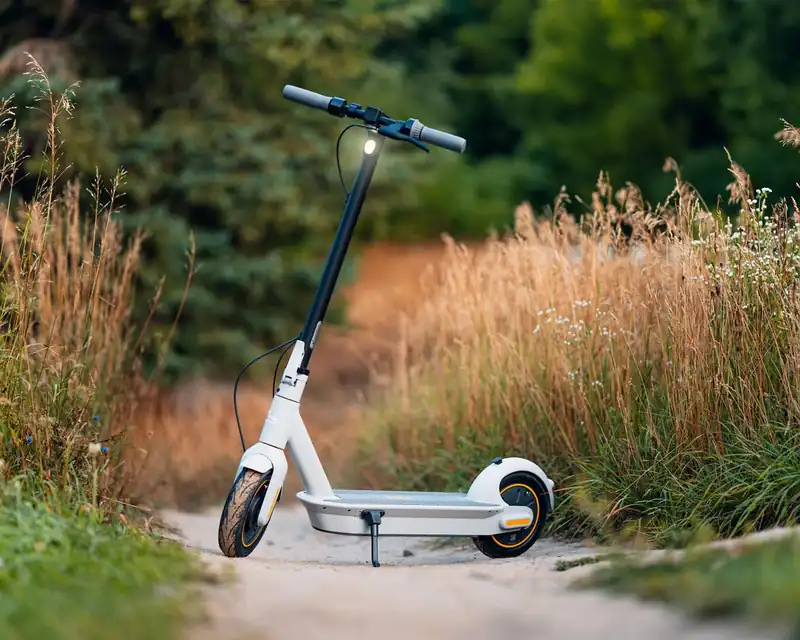
After reviewing all 7 models, our top overall recommendation for most women in 2026 is the Segway Ninebot KickScooter F2 Pro E. It strikes the ideal balance of safety, comfort, range, smart features, and build quality β and it’s designed with the kind of thoughtful engineering that makes it genuinely confidence-inspiring for new and experienced riders alike.
If budget is a priority, the Gotrax GXL V2 delivers real value without compromise on the basics. For the ultimate in portability, the Razor E Prime III is impossible to beat. And if you want the absolute pinnacle of performance with no compromises, the Xiaomi Electric Scooter 4 Pro is in a class of its own.
Whatever you choose, remember: the best electric scooter is the one you’ll actually ride. Pick the one that fits your commute, your budget, and your life β then get out there and enjoy the ride. π΄β¨
π Quick Pre-Purchase Checklist
- β Β Know your commute distance (multiply by 2 for round trip)
- β Β Check if your route has hills (you need 350W+)
- β Β Measure stairs in your building to gauge scooter weight tolerance
- β Β Confirm your city’s e-scooter laws before purchasing
- β Β Budget for a helmet β non-negotiable safety gear
- β Β Consider a good lock for office/campus use
- β Β Check the return/warranty policy before you buy
Affiliate Disclosure: This article contains affiliate links. As an Amazon Associate, we earn from qualifying purchases at no extra cost to you. We independently research and evaluate all products. Our reviews reflect genuine editorial opinions. Last updated: April 2026.

I’m the founder of HoverboardsGuide.com, a comprehensive website dedicated to electric scooters and hoverboards. With a deep-rooted passion for electric gadgets, I’ve accumulated extensive experience in this field. I aim to assist users in selecting the best gadgets and providing reliable guidance.
I’ve tested and reviewed numerous models, gaining in-depth knowledge about their features, performance, and overall quality. Feel free to reach out to me with any queries, as I’m dedicated to addressing your concerns promptly. Join me on this exciting journey of exploring the world of electric rides and making informed decisions