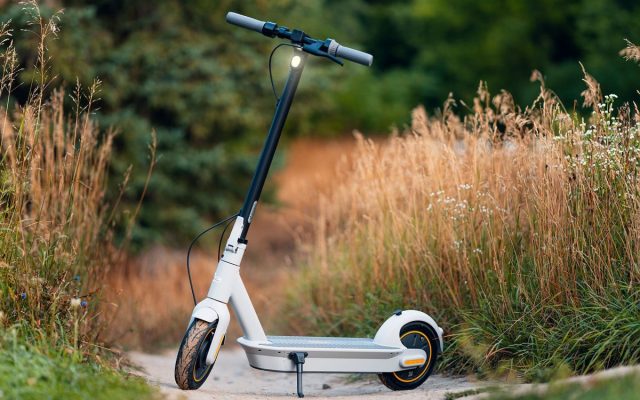
A scooter that's dead after months in the garage is almost always a sleeping battery, not a broken one. Here's how to safely wake it back up.
You wheeled your electric scooter out of the garage after a long winter, pressed the power button… and nothing. No lights, no beep, no life. If your electric scooter won’t turn on after storage, take a deep breath – this is one of the most common problems riders face every spring, and the good news is that it’s usually fixable right at home. In the vast majority of cases, the scooter isn’t broken at all. Its battery has simply fallen asleep.
Battery issues cause roughly 70 to 80 percent of all ‘no power’ problems after a scooter sits unused. When a lithium-ion pack is stored without charging, it slowly drains itself over the weeks and months. Drop low enough, and the battery’s built-in safety brain – called the BMS – cuts everything off to protect the cells. From the outside, the scooter looks stone dead. Underneath, it’s often just waiting for the right kind of charge to wake back up.
In this guide we’ll walk through exactly why scooters go dark in storage, the five quick checks that fix a lot of cases in minutes, and the safe way to revive a sleeping battery without turning your garage into a fire hazard. We’ll also cover how to tell whether the real problem is the battery or just a dead charger, and how to store your scooter next time so this never happens again.
This article is part of our electric scooter problems and care hub, which covers faults, batteries, charging and parts.
Why Your Scooter Went Dark in Storage
Every lithium-ion battery slowly loses charge even when it’s switched off. This is called self-discharge, and it’s completely normal – a healthy scooter pack might shed a few percent every month just sitting there. The dashboard, the Bluetooth board, and the BMS also sip a tiny bit of power around the clock. Leave the scooter unplugged for a whole winter and those small losses add up to one big one.
The trouble starts when the pack drops below a safety threshold. Most scooter batteries are built from cells that should never fall under about 2.5 to 3.0 volts each. When they do, the BMS (battery management system) disconnects the pack to stop the cells from being permanently damaged. Your scooter then shows zero signs of life. This protective ‘sleep’ or lockout is the number-one reason a scooter won’t turn on after storage – and happily, it’s also the most fixable.
Deep discharge isn’t the only culprit, though. Cold garages, damp basements, and swings in temperature invite condensation, which corrodes connectors and the charging port. An inline fuse can quietly blow. And sometimes it isn’t the scooter at all – the charger itself gives up over the winter. The symptom table further down sorts these out so you can zero in fast.
Deep discharge and BMS lockout
The most common cause by far. The pack drained below its safe floor and the BMS shut it off. This is usually recoverable with a slow, patient charge.
Corrosion and dirty contacts
Moisture leaves a thin film or a green crust on the charge port and terminals, blocking the connection. A careful clean often brings the scooter right back.
A blown fuse
Many scooters have an inline fuse. Temperature extremes or an old short can pop it, cutting all power even when the battery itself is perfectly good.
A dead charger
Chargers fail too. If the brick’s light never changes, or a meter reads zero volts at its plug, the scooter may be fine and the charger is the real problem.
| System (nominal) | Full charge | Healthy stored (~50%) | Charge now | Deep-discharge / BMS may lock | Likely dead – recycle |
|---|---|---|---|---|---|
| 36V (10-cell) | 42.0V | ~37V | ~34V | Under ~30V | Under ~20V |
| 48V (13-cell) | 54.6V | ~48V | ~44V | Under ~39V | Under ~26V |
| 52V (14-cell) | 58.8V | ~51V | ~47V | Under ~42V | Under ~28V |
Start Here: 5 Quick Checks That Fix a Lot of Cases
Before you assume the battery is toast, rule out the simple stuff. A surprising number of ‘dead’ scooters come back to life in five minutes because the real problem was a wall outlet, a loose plug, or a speck of dirt in the charge port. Work through these in order before you move on to any battery revival.
None of these need tools beyond a flashlight and maybe a cotton swab. Take your time with the charge port especially – it’s the single most overlooked fix.
- Test the wall outlet. Plug in something else – a phone charger or a lamp – to confirm the socket actually has power, then try a different outlet just in case.
- Watch the charger’s light. Plug the charger into the wall first; most glow green on their own. Then connect it to the scooter – many switch to red while charging. No change at all can mean a dead charger or a battery too low to even register.
- Inspect and clean the charge port. Shine a light inside and look for bent pins, lint, dirt, or green/white corrosion. Gently clean with a dry brush or a swab and a little electrical contact cleaner. Never poke metal into a live port.
- Hold the power button longer. Try a firm 3 to 5 second press. If your model has a reset pinhole or a hard-reset combo (on some Ninebot models: hold the brake and throttle, power off, release, then hold power for 3 seconds), give it a try.
- Look for obvious damage. Check for a popped fuse, chewed wires, water stains, or any battery swelling. Swelling means stop immediately and recycle the pack.
How to Safely Wake a Sleeping Battery
If the quick checks didn’t do it, the battery is probably in deep-sleep lockout. The fix here is patience, not force. A BMS will usually ‘wake up’ once the cells are nudged back above roughly 2.8 to 3.0 volts each – but that first trickle of charge can be slow, and a very low pack might sit for a while showing no progress at all before it suddenly starts accepting a normal charge.
So plug in the correct charger and leave it. Not for ten minutes – for hours. Plenty of riders report that a pack which looked completely dead came back after 24 to 72 hours on the charger. Keep it somewhere cool, dry, and non-flammable (a bare concrete floor, away from anything that burns), and check on it now and then. If after an hour or two the charger has switched to its ‘charging’ color and the battery is warming slightly, that’s a great sign – it’s waking up.
If the standard charger simply won’t start, a charger with a low-current ‘recovery’ or ‘boost’ mode can sometimes coax a stubborn pack past the threshold, because it feeds a gentle current instead of demanding a full one. That’s the safe version of a ‘jump start.’ The car-battery version is never safe – see the warning below.
Give it real time
Set a 24 to 72 hour window before you judge a battery dead. Deep-sleep packs often accept nothing for the first hour, then quietly begin to wake.
Use the exactly right charger
Match the voltage precisely. A 36V scooter needs a 42V charger; a 48V scooter needs about 54.6V. The wrong charger won’t wake it and can be dangerous.
Keep it cool and supervised
Charge on a hard, non-flammable surface – never on carpet or a bed – and don’t leave a recovering pack completely unattended the very first time.
Battery or Charger? How to Test With a Multimeter
A cheap multimeter – often under $20 – turns guesswork into a two-minute diagnosis. It tells you two things: whether your charger is actually pushing out voltage, and whether your battery still has some life in it. You don’t need to be an electrician. Just set the dial to DC volts on a range above your charger’s rating (the 200V DC setting works fine for any scooter).
First, test the charger. Plug it into the wall only – not the scooter – and touch the meter probes to the inner and outer contacts of the output plug. A working 36V scooter charger should read around 42 volts; a 48V charger, around 54 volts. If you see zero or a wildly low number, the charger is dead, and your scooter may be perfectly fine. Just be careful not to short the two contacts together while you test.
Next, test the battery at the charge port (check your manual for which contacts to touch). Compare the reading to the voltage guide below. Then plug the charger in and watch whether the battery’s voltage slowly climbs. If it climbs, charging is working and you simply need to wait. If it stays flat, the port wiring, the BMS, or the cells likely need a shop’s attention.
- Charger reads about 42V (36V scooter) or 54V (48V scooter): the charger is good.
- Charger reads 0V or very low: the charger is dead – replace it.
- Battery voltage climbs when the charger is connected: it is charging, so be patient.
- Battery voltage flat and very low: likely a BMS lockout or damaged cells.
Repair, Replace, or Recycle? Making the Call
Not every battery comes back, and knowing when to stop trying saves both money and danger. If your pack revived and now holds a charge and gives close to its old range, you’re done – go ride it. Just keep an eye on the range for a few weeks, since a deep discharge can quietly shave off some capacity even after a successful recovery.
If the scooter powers on but the range has dropped a lot, or it dies far sooner than it used to, the cells took permanent damage. A replacement battery is an option on many models and usually costs a fraction of a new scooter – but on budget scooters it can approach the price of a whole new ride, so weigh it up. Check whether your model even has a user-replaceable pack before you buy anything.
And if the battery is swollen, leaking, was ever soaked, or reads far below its danger threshold (under about 20V on a 36V pack), don’t gamble. Damaged lithium cells can fail violently. Take the pack to a proper battery-recycling drop-off – many hardware stores, bike shops, and Call2Recycle locations accept them for free. Never toss a lithium battery in with the household trash.
- Range dropped 30% or more after reviving – the cells are aging fast.
- Scooter shuts off suddenly at ‘half’ battery – a sign of failing cells.
- Pack won’t hold a charge overnight – an internal fault.
- Any swelling, heat, hissing, or smell – stop and recycle immediately.

Store It Right So This Never Happens Again
The whole ordeal is almost entirely preventable, and it comes down to one habit: never store a lithium scooter empty or completely full. The sweet spot for long storage is roughly 40 to 60 percent charge. A half-full pack has enough buffer to survive months of slow self-discharge without ever hitting the BMS cutoff, and it ages more slowly than a battery kept sitting at 100 percent.
Where you store it matters just as much. Lithium hates extremes. A freezing shed or a baking attic will both shorten battery life, so aim for a cool, dry, room-temperature spot – ideally somewhere between about 50 and 70 degrees Fahrenheit, and always above freezing. Damp basements invite the corrosion we talked about, so add a moisture absorber and keep the scooter off a cold concrete floor.
Then set a reminder. Every four to six weeks, plug the scooter in just long enough to bring it back into that 40 to 60 percent range, then unplug it. That one small monthly habit is the single best thing you can do for the battery. For very long storage – six months or more – and on models that allow it, consider removing the battery entirely and keeping it indoors. The table below sums up the whole plan by how long you’re parking the scooter.
| What you see | Most likely cause | First thing to try |
|---|---|---|
| No lights, no response at all | Deep-discharge BMS lockout or a blown fuse | Leave on the charger 24-72 hrs; check the inline fuse |
| Turns on, then dies in seconds | Very low or failing battery | Full charge, then test the real-world range |
| Charger light stays green, no charge | Battery too low to start, dead charger, or dirty port | Test the charger with a multimeter; clean the port; try another charger |
| Charger light red but nothing gained | Broken port wiring or bad cells | Multimeter test, then take it to a repair shop |
| Charger buzzes or gets hot, no output | A failed charger | Replace the charger |
| Swollen case, smell, or heat | Damaged lithium cells | Do not charge – recycle the battery |
| Storage length | Charge level | Where to keep it | Top-up schedule |
|---|---|---|---|
| Under 2 weeks | 50-80% | Indoors, dry | None needed |
| 2-8 weeks | 50-70% | Cool and dry, 50-70°F | Check once midway |
| 2-6 months (winter) | 40-60% | Climate-controlled, above freezing | Top up every 4-6 weeks |
| 6+ months | 40-50% (remove battery if you can) | Dry, room temp, off cold floors | Check every 4-6 weeks |
Common Mistakes (and How to Fix Them)
Fix: Both extremes stress lithium cells. Park it at 40-60% and it will survive months of storage without locking out or aging quickly.
Fix: A deep-sleep pack can take an hour just to register, and up to 24-72 hours to fully wake. Leave it plugged in and be patient before you judge it dead.
Fix: This can dump a huge, uncontrolled current and start a fire. Only ever wake a lithium pack with a proper, correctly-rated charger.
Fix: Bloating, hissing, or a chemical smell means the cells are unsafe. Don’t charge it – take it to a battery recycling drop-off instead.
Pro Tips
- 💡 Keep a cheap multimeter in your toolbox. For under $20 it tells you in two minutes whether the charger or the battery is the problem – no more guessing.
- 💡 Clean the charge port before you blame the battery. A cotton swab, a little contact cleaner, and a quick check for bent pins fixes more ‘dead’ scooters than people expect.
- 💡 Warm a cold battery to room temperature before charging. Charging lithium below freezing damages it, so let the scooter sit indoors for a few hours first.
- 💡 Label each charger with its voltage. When you own more than one device, grabbing the wrong-voltage brick is an easy – and dangerous – mistake.
- 💡 Set a monthly ‘top up the scooter’ phone reminder for the off-season. Thirty seconds of charging beats a springtime revival project every time.

An Example Scenario
Illustrative example: a composite of situations riders often describe, not a real customer story.
Marcus parked his Hiboy S2 in the garage in November at a full charge and forgot about it. By April it was stone dead – no lights, no beep, nothing. He nearly ordered a whole new scooter in frustration. Instead he plugged in the charger and left it on the concrete floor overnight. There was nothing for the first hour. But by the next morning the light had turned red, the pack was gently warm, and two days later it charged all the way up and rode like normal.
The lesson stuck. Now he keeps the scooter at about half charge over winter and tops it up once a month while he’s binge-watching TV. He hasn’t had a dead battery since – and he keeps a $15 spare charger on the shelf, just in case the original ever quits on him.
Frequently Asked Questions
Often, yes. Most ‘dead’ scooters after storage are simply in BMS lockout, and leaving the correct charger connected for 24 to 72 hours wakes them back up. Recovery isn’t guaranteed, though – if the pack was drained extremely low (under about 20V on a 36V scooter) or is swollen, it may be permanently damaged and should be recycled rather than charged.
Give it at least 24 to 72 hours before deciding it’s truly dead. A deeply discharged pack can show no progress for the first hour or more while the BMS slowly wakes, then suddenly start accepting a normal charge. Keep it on a cool, non-flammable surface and check on it periodically rather than leaving it unattended the entire time.
A green light usually means ‘not charging,’ which can happen for several reasons. The battery may be too low for the charger to even start, the charge port may be dirty or corroded, the connector may be loose, or the charger itself may be dead. Test the charger’s output with a multimeter – a 36V charger should read about 42V. If it reads zero, replace the charger.
No – never do this. Wiring a charged battery or car jumper cables directly to a drained lithium pack can create a massive, uncontrolled current surge of 150 amps or more, which is a leading cause of e-scooter battery fires. The only safe way to ‘wake’ a lithium battery is a slow charge from a proper, correctly-rated charger, ideally one with a low-current recovery mode.
Store the battery at about 40 to 60 percent charge – not full, not empty – in a cool, dry place above freezing. Then top it up to that range every four to six weeks. That single monthly habit prevents the deep discharge that causes almost all storage lockouts. For storage of six months or more, remove the battery if your model allows and keep it indoors.
Watch what happens after a full recovery charge. If it holds a charge and gives close to its old range, it’s fine. If the range dropped sharply, it dies suddenly at ‘half’ battery, or it won’t hold a charge overnight, the cells are worn out and need replacing. Any swelling, heat, hissing, or chemical smell means stop immediately and recycle the pack.
Final Checklist ✅
- ✅ Confirm the wall outlet works by testing it with another device.
- ✅ Check the charger’s light, and if you can, try a second known-good charger.
- ✅ Inspect and gently clean the charge port – look for bent pins, dirt, or corrosion.
- ✅ Leave the scooter on the correct charger for 24-72 hours before judging it dead.
- ✅ Use a multimeter to test both the charger’s output and the battery’s voltage.
- ✅ Inspect the battery for swelling, heat, or water damage – stop and recycle if you find any.
- ✅ Once it’s revived, store the scooter at 40-60% charge and set a monthly top-up reminder.