Kaabo Mantis 10 Pro Review: An Honest Rider’s Take
A real rider’s deep dive into the Mantis 10 Pro’s speed, range, comfort, and quirks, so you know exactly what you’re buying.
The Kaabo Mantis 10 Pro is one of those electric scooters that riders keep coming back to, year after year. It has been a favorite in the fast-scooter world for a long time, and the newest version keeps that reputation alive. If you want real speed, a comfy ride, and enough range to forget about your car, this scooter belongs on your short list. In this in-depth, personal review, I will walk you through exactly what it feels like to own and ride one.
I am not going to just read the spec sheet at you. Instead, I want to share the stuff that actually matters when the scooter is under your feet. How fast is it really? How far will it go on one charge? Is it comfortable? What holds up, and what does not? I have pulled together hands-on test data, real owner reports, and years of scooter know-how to give you the full picture, warts and all.
Here is the short version: the Mantis 10 Pro is a brilliant blend of speed, comfort, and value. It is not perfect, and it is not for everyone. But for the right rider, it might be the last scooter you buy for a very long time. Let’s dig in.
What Exactly Is the Kaabo Mantis 10 Pro?
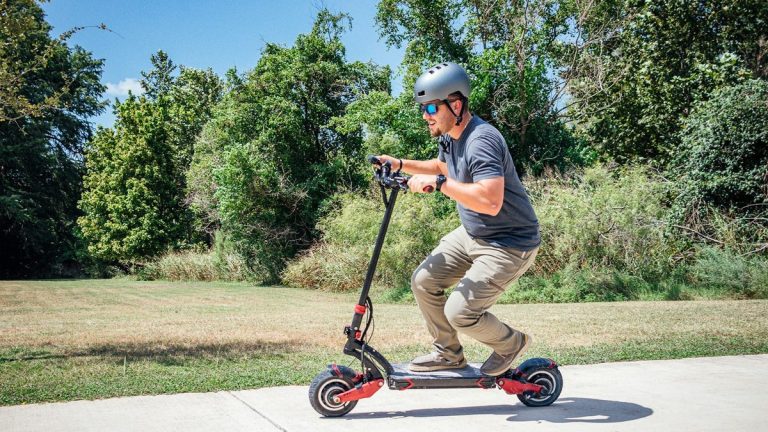
The Kaabo Mantis 10 Pro is a dual-motor performance scooter. That means it has two motors, one in each wheel, working together to give you strong power and a planted, sure-footed feel. It sits right in the sweet spot of the scooter world. It is faster and tougher than a simple commuter scooter, but it is lighter and cheaper than the giant hyperscooters that weigh 90 pounds or more.
Kaabo has been building the Mantis line for years, and the 10 Pro is the version most riders point to when they say ‘just get a Mantis.’ The ’10’ refers to the 10-inch wheels. The ‘Pro’ means you get the bigger battery, the stronger controllers, and full hydraulic brakes. It usually sells for around $1,900 to $2,000. That is a lot of money, but it is a fair price for what you get.
So who is it for? It is a fantastic pick for a longer daily commute, weekend fun rides, and riders who want speed without babysitting a fragile machine. It shrugs off rough pavement, small potholes, and gentle trails with ease.
- Commuters riding 5 to 20 miles a day who want to skip traffic
- Riders who love a fast, exciting ride but still want comfort
- People in hilly areas who need real climbing power
- Anyone who wants a proven, repairable scooter with easy-to-find parts
| Spec | Detail |
|---|---|
| Motors | Dual 1000W (60V), ~3200W peak |
| Top speed | Up to ~40 mph (37-40 mph tested) |
| Battery | 60V 24.5Ah (1,470Wh) LG/Samsung |
| Claimed range | Up to 45 miles |
| Real-world range | ~30-34 miles (hard dual-motor riding) |
| Brakes | Full hydraulic disc + electronic (EABS) |
| Suspension | Adjustable spring arms, front and rear |
| Tires | 10-inch pneumatic (air-filled) |
| Weight | ~65 lbs (29.5 kg) |
| Max load | ~265 lbs (120 kg) |
| Water resistance | IPX5 (V2, with extended mudguard) |
| Price | ~$1,900-$2,000 |
Speed and Power: What 2,000 Watts Feels Like
Let’s talk about the fun part. The Mantis 10 Pro runs two 1000-watt motors. On paper that is 2,000 watts of steady power, and it can push past 3,000 watts in short bursts when you pin the throttle. The result is quick, punchy acceleration that will surprise you the very first time you twist the throttle.
Kaabo lists the top speed at around 40 mph. In real-world testing, riders usually see about 37 to 40 mph, depending on rider weight, tire pressure, and how full the battery is. Either way, that is seriously fast for a scooter. It reaches 15 mph in about 2 seconds, so pulling away from a stoplight feels effortless and even a little thrilling.
The best part is that you stay in control of all that power. A handlebar switch lets you pick single-motor or dual-motor mode. Single motor is calmer and saves battery, which is great for new riders or slow zones. Dual motor unleashes the full punch for open roads and steep climbs. There is also an eco and turbo toggle to fine-tune things. Speaking of climbs, the Mantis 10 Pro tackles steep grades of around 30 percent without breaking a sweat.
Range and Battery: How Far Can You Really Go?
The Pro model carries a big 60-volt, 24.5Ah battery, which works out to about 1,470 watt-hours. It uses name-brand LG or Samsung cells, which is a good sign for both safety and long life. This large, quality battery is one of the biggest reasons to choose the Pro over the cheaper Mantis models.
Kaabo claims up to 45 miles of range. That number comes from gentle riding in single-motor eco mode. In the real world, if you ride hard in dual-motor mode at high speed, expect closer to 30 to 34 miles. That is still excellent, and it means most riders can go several days between charges without a second thought.
Your true range depends on a handful of things, and once you understand them you can stretch a lot more miles out of every charge.
- Speed: riding flat-out drains the battery far faster than cruising
- Rider weight and hills: more load means more power used
- Temperature: cold weather can noticeably cut your range
- Motor mode: single-motor eco can nearly double your miles
- Tire pressure: soft tires create drag and quietly waste energy
Ride Comfort: Suspension, Tires, and Brakes
Speed is nothing if the ride beats you up. This is where the Mantis 10 Pro really shines. It is famous for feeling smooth and planted, even on messy, cracked roads that would rattle lesser scooters to pieces.
Suspension that adjusts to you
The scooter uses spring-arm suspension on both the front and the rear. The best part is the adjustable preload. You can tune how soft or firm the springs feel to match your weight and your riding style. Heavier riders can firm it up for control, while lighter riders can soften it for a plush, floating glide. Five minutes of tuning here makes a big difference.
10-inch air-filled tires
The fat 10-inch pneumatic tires soak up bumps and grip the road well. They roll over cracks and small potholes that would jolt a hard-tire scooter. The trade-off is that air tires can go flat, so you will need to check the pressure now and then and handle the occasional puncture.
Fully hydraulic brakes
The Pro comes with full hydraulic disc brakes on both wheels, plus an electronic brake. They are strong, smooth, and easy to control with one finger. In testing, the Mantis stops from 15 mph in about 10 feet, which is among the best in its class. When you are moving this fast, brakes this good are a huge safety win.
Living With It: Build, Folding, and the Display
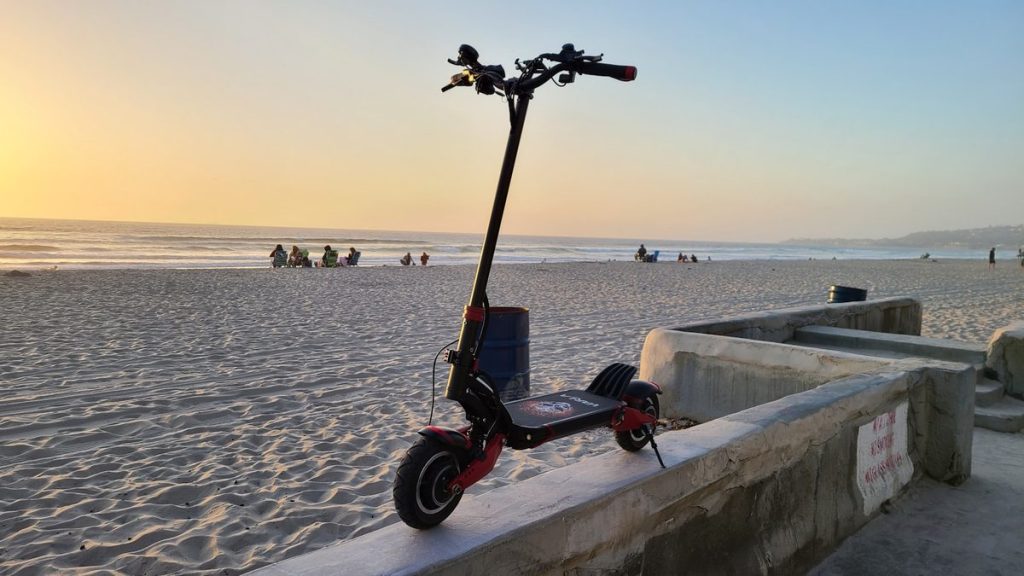
The Mantis 10 Pro weighs about 65 pounds. That is normal for a scooter this powerful, but it is not light. The stem folds down with a solid, wobble-free lock, and the folded scooter measures roughly 48 by 24 by 19 inches. It fits in most car trunks just fine, but lifting it up a flight of stairs every single day gets old quickly.
One honest gripe: the handlebars do not fold inward. So even when folded, the scooter stays fairly wide. If you need to carry it onto a packed train or bus, keep that in mind. The deck, on the other hand, is wide and grippy, giving you plenty of room to shift your feet around on long rides so your legs do not get tired.
Up front you get the Minimotors EYE display. It is bright, clear, and lets you customize your top speed, acceleration, and cruise control. It feels genuinely premium and makes dialing in your ride simple. The newest V2 version is rated IPX5 for water resistance and ships with a longer mudguard, so light rain is fine. Even so, I would still avoid deep puddles and heavy storms to keep the electronics happy for the long haul.
The Honest Downsides (and Who Should Skip It)
No scooter is perfect, and being honest about the flaws is the whole point of a personal review. Here is where the Mantis 10 Pro falls a little short of ideal.
- It is heavy at 65 pounds, so daily stair-carrying is a real chore
- The handlebars do not fold, so it stays bulky even when folded
- The stock foam grips feel a bit cheap, though they are easy to upgrade
- Air tires mean you will eventually have to deal with a flat
- At full price it is a serious investment, not an impulse buy
Who should skip the Mantis 10 Pro
You should probably pass if you live in a fourth-floor walk-up and rely on the subway, since the weight and non-folding bars will drive you crazy. It is also overkill if you only ride a mile to the store at low speed. A lighter, cheaper commuter would serve you better and save you money.
Who should buy it
If you want speed, comfort, and range in one tough, repairable package, and you can handle the weight, the Mantis 10 Pro is one of the smartest buys in its class. It has earned its loyal following for very good reason, and most owners never look back.
| Metric | Kaabo Claim | What Testers See |
|---|---|---|
| Top speed | 40 mph | 37-40 mph |
| Range | 45 miles | 30-34 miles (hard riding) |
| 0-15 mph | ~2 seconds | ~2.0 seconds |
| Braking (from 15 mph) | Short | ~10 feet |
| Hill climb | ~30% grade | Climbs steep hills with ease |
| Feature | Mantis 10 Lite | Mantis 10 Pro |
|---|---|---|
| Motors | Dual 500W (48V) | Dual 1000W (60V) |
| Top speed | ~31 mph | ~40 mph |
| Battery | 48V 13Ah | 60V 24.5Ah (1,470Wh) |
| Range | Up to 37 miles | Up to 45 miles |
| Brakes | Disc + electronic (EABS) | Full hydraulic disc + EABS |
| Weight | ~62 lbs | ~65 lbs |
| Price | ~$1,099 | ~$1,900-$2,000 |
| Best for | Value and everyday commuting | Speed, range, and long-haul comfort |
Common Mistakes (and How to Fix Them)
Fix: It is a blast, but it drains your battery fast and wears parts quicker. Use single-motor eco mode for normal commuting and save turbo for when you actually want to play.
Fix: Soft tires cause sluggish handling, shorter range, and more flats. Check your PSI every week or two and keep it within the range printed on the tire sidewall.
Fix: A basic bike helmet meant for 15 mph is not enough at 40 mph. Wear a proper helmet, gloves, and wrist guards. Your future self will thank you after the first close call.
Fix: Leaving it at 100 percent or letting it drain to zero for long stretches hurts the cells. For storage, keep it around 40 to 60 percent and top it up every few weeks.
Pro Tips
- 💡 Break it in gently. Take it easy for the first 20 to 30 miles, then re-torque every bolt you can reach. New scooters settle in, and this simple check prevents rattles and loose parts down the road.
- 💡 Match the suspension to your weight. Spend five minutes adjusting the spring preload. A firmer setting for heavier riders or a softer one for lighter riders completely transforms how the ride feels.
- 💡 Commute in single-motor eco mode. You will nearly double your range and get a calmer, safer ride for daily trips, while keeping all that dual-motor power ready for when you want to have fun.
- 💡 Carry a small repair kit. A mini pump, a few tire plugs, and a multi-tool can turn a ride-ending flat into a ten-minute roadside fix instead of a long walk home.
- 💡 Upgrade the grips. The stock foam grips are the weakest part of the whole scooter. A cheap set of rubber grips or a wrap makes long rides far more comfortable on your hands.
A Real-Life Example
Picture a rider named Marcus who lives about nine miles from his office. He used to drive and sit in stop-and-go traffic for 40 minutes each way. Now he rides his Mantis 10 Pro in single-motor eco mode, cruising at a calm 20 mph on the bike path, and makes it door to door in under half an hour. He charges it twice a week and has not bought gas for his short trips in months.
On weekends, Marcus flips into dual-motor turbo and lets it rip on quiet back roads, grinning the whole way. After a year and roughly 1,500 miles, his only real jobs have been keeping the tires topped up, tightening a few bolts, and swapping the foam grips for something grippier. That mix of weekday calm and weekend thrill is exactly why the Mantis has such loyal fans.
Frequently Asked Questions
It is water-resistant, not fully waterproof. The newest V2 version is rated IPX5 and comes with an extended mudguard, so light rain and damp roads are no problem. But you should still avoid deep puddles, heavy storms, and never ride through standing water, since electronics and water do not mix well. Wipe it down and dry it off after any wet ride to keep it healthy.
Most riders see about 37 to 40 mph in the real world. Kaabo lists the top speed at around 40 mph, and testers hit that in good conditions with a lighter rider and a full charge. Heavier riders, hills, and a low battery will shave a few miles per hour off that number. Either way, it is genuinely fast and easily keeps up with city traffic.
Expect roughly 30 to 45 miles depending on how you ride. The 45-mile figure comes from gentle, single-motor eco riding. If you spend your time flat-out in dual-motor mode, plan for closer to 30 to 34 miles. Cold weather, hills, and heavier riders all lower the number, while calm cruising and warmer days raise it.
It can be, thanks to its single-motor eco mode and adjustable settings that tame the power. A brand-new rider should start slow in an empty parking lot and keep it in the calmest mode until it feels natural. That said, it is a genuinely fast machine, so a nervous first-timer might feel more comfortable learning on something smaller and cheaper before stepping up to this.
About 12 hours from empty with the standard charger, since the battery is large. Most owners simply plug in overnight and wake up to a full charge. If you want faster charging, Kaabo offers a dual-charger setup that can cut the time to around 5 to 6 hours, which is handy if you ride long distances and need a quick top-up during the day.
For the right rider, yes. At around $1,900 to $2,000 it is a real investment, but you get speed, comfort, big range, strong brakes, and a proven design with easy-to-find parts. If you commute longer distances or want a fast, fun scooter that will last for years, it offers strong value. If you only need short, slow trips, a cheaper commuter makes more sense.
Final Checklist ✅
- ✅ Confirm you are buying the ‘Pro’ model with the 60V 24.5Ah battery and hydraulic brakes
- ✅ Budget for a quality helmet, gloves, and wrist guards before your first ride
- ✅ Check your local laws for scooter speed limits and where you are allowed to ride
- ✅ Set the tire pressure to the range printed on the sidewall before riding
- ✅ Adjust the suspension preload to match your body weight
- ✅ Take a slow first ride in single-motor eco mode in an empty parking lot
- ✅ Re-tighten all the bolts after your first 20 to 30 miles