Best Electric Longboards for 2026: 7 Tested Picks
Seven boards that actually go the distance — picked for real riders, real commutes, and real budgets.
Shopping for the best electric longboards can feel like a maze. Every brand promises sky-high speeds and endless range, and the prices jump around like crazy. So we cut through the noise. This guide pulls together seven boards we would happily ride ourselves, from a $330 starter to a $1,099 all-terrain beast.
An electric longboard is basically a longboard with a battery, one or two motors, and a small handheld remote. You lean to steer and squeeze the remote to speed up or brake. That is it. The magic is that it turns a sweaty 30-minute walk into a breezy 8-minute glide with no pedaling, no gas, and no parking headache.
Below you will find our top picks by rider type, a plain-English buying guide, and honest advice on range, hills, and safety. Whether you are rolling to class, beating traffic to work, or just carving your neighborhood for fun, there is a board here with your name on it.
What Makes a Great Electric Longboard
The heart of any electric longboard is its motor setup. Most good boards use two motors, one per rear wheel, for balanced power and better hills. Motor wattage tells you roughly how much muscle you get. A pair of 500W hub motors is plenty for flat commutes and gentle slopes. If you live somewhere steep or you are a heavier rider, look for 700W or more, or a belt drive for extra grunt.
Battery size, measured in watt-hours (Wh), drives your range. Bigger Wh means more miles, but also more weight and a higher price. Makers love to quote dreamy numbers, so always knock 25 to 35 percent off the advertised range for real life. The deck matters too. A flexible bamboo or composite deck soaks up cracks and bumps, while a stiff deck feels planted and steady at higher speeds.
Wheels shape your whole ride. Bigger, softer wheels (90mm and up) roll over rough pavement with ease, while small hard wheels make you feel every pebble. Good regenerative brakes are non-negotiable, since they slow you smoothly and top up the battery a touch. Finally, set a budget. Solid entry boards start near $300, the sweet spot sits around $450 to $850, and premium or off-road rigs climb past $1,000.
- Motors: dual hub motors for quiet, low-maintenance commuting; belt drives for maximum torque and hills.
- Range: expect only 60 to 75 percent of the advertised number in real riding.
- Deck: flexy bamboo or composite for comfort; a stiffer deck for high-speed stability.
- Wheels: 90mm+ street wheels for cracked roads; pneumatic tires for dirt and gravel.
- Brakes: smooth, strong regenerative braking with several speed modes.
| Board | Motors | Top Speed | Range (claimed) | Price | Best For |
|---|---|---|---|---|---|
| Meepo V5 | Dual 500W hub | 28 mph | 11-19 mi | ~$469 | Overall value |
| WowGo Pioneer 4 | Dual 680W hub | 28 mph | 22 mi | ~$449 | Beginners |
| Meepo Flow | Dual hub | 28 mph | 24 mi | ~$599 | Carving & comfort |
| Backfire Zealot S2 | Dual 875W belt | 30 mph | 30 mi | ~$849 | Long range |
| Exway Flex Pro | Dual belt | 31 mph | 25 mi | ~$949 | Premium commuter |
| Meepo Hurricane Bamboo | Dual belt (AT) | 30+ mph | 31 mi | ~$1,099 | All-terrain |
| Hiboy S22 | Dual 500W hub | 18.5 mph | 12 mi | ~$330 | Budget starter |
The 7 Best Electric Longboards for 2026
We researched and compared dozens of boards across every price tier. These seven rose to the top for build quality, real-world range, ride feel, and plain value. We have noted who each one is best for, so you can skip straight to your match.
Prices below are ballpark figures from mid-2026 and can shift with sales. The ranges listed are the maker’s claims, so plan for a bit less on your daily ride.
Meepo V5 — Best Overall Value
The Meepo V5 is the board we hand most new riders. For around $469 you get dual 500W hub motors, a stable top speed near 28 mph, and an 8-ply Canadian maple deck that feels solid underfoot. The base battery covers about 11 miles, and you can grab the extended pack for close to 19. It is quiet, low-maintenance, and IP55 water-resistant for surprise puddles. Four speed modes let you dial it from timid to spicy. It will not win drag races against $1,000 boards, but for daily cruising and light hills it nails the sweet spot of price and performance.
WowGo Pioneer 4 — Best for Beginners
If your budget is tight but you still want name-brand reliability, the WowGo Pioneer 4 is a gem near $449. Dual 680W hub motors push it to about 28 mph, and real-world range lands around 22 miles thanks to a Samsung 21700 battery pack. The deck blends maple, bamboo, and fiberglass for a comfy flex that eats road buzz. WowGo uses trusted Hobbywing electronics, so the throttle and brakes feel smooth and predictable, exactly what a first-timer needs. It is stable, forgiving, and easy to learn on.
Meepo Flow — Best for Carving
The Meepo Flow is pure fun. Its flexible bamboo deck and DKP trucks give it a surfy, carve-happy feel that stiffer boards just cannot match. Soft 90mm wheels cushion the ride, and the extra-wide deck gives your feet room to breathe. Expect around 28 mph up top and roughly 24 miles of range, with a quick two-hour charge. At about $599 it is aimed at riders who care more about flow and comfort than raw speed. If you love leaning into long, lazy turns, this is your board.
Backfire Zealot S2 — Best Long-Range Value
The Backfire Zealot S2 delivers premium performance without a premium-plus price. For roughly $849 you get dual 875W belt motors, a genuine 30 mph top speed, and a big 403Wh Samsung battery good for around 25 real miles (30 advertised). Belt drive means serious torque for hills and the freedom to swap wheels later. The composite deck feels planted and confident at speed. Reviewers routinely say it competes with boards that cost twice as much. If you commute far or chase hills, the Zealot S2 is a lot of board for the money.
Exway Flex Pro — Best Premium Commuter
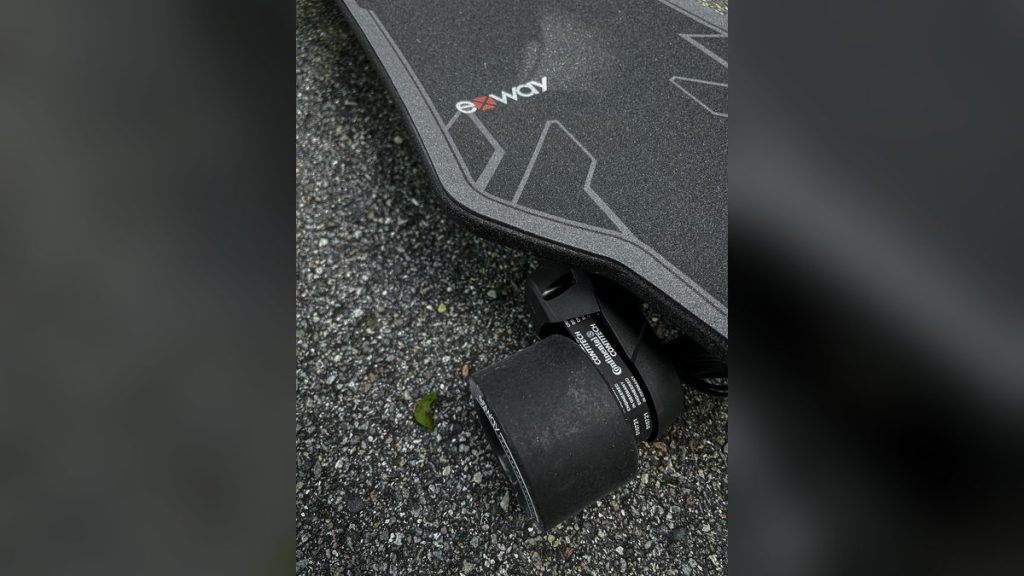
The Exway Flex Pro is built for riders who want comfort and polish. Its flexible deck and foam grip soak up vibration, so long commutes on rough pavement do not rattle your knees. Dual belt motors hit about 31 mph with roughly 25 miles of range, and the IP55 rating shrugs off light rain. Exway’s build quality, smart remote, and app tuning feel a cut above. At around $949 it is not cheap, but you are paying for refinement, strong brakes, and a ride that feels dialed-in from the very first push.
Meepo Hurricane Bamboo — Best All-Terrain
Want to leave the pavement? The Meepo Hurricane Bamboo (Pro trim near $1,099) rides on 7-inch pneumatic tires that float over grass, gravel, and cracked roads. Big dual motors send it past 30 mph and up steep hills without breaking a sweat, and the large battery stretches range toward 31 miles. It is heavy and a handful for total beginners, but nothing else here matches its go-anywhere confidence. If your route mixes dirt paths and city streets, or you just want a mini all-road machine, this is the one.
Hiboy S22 — Best Budget Starter
On the tightest budget, the Hiboy S22 gets you rolling for around $330. Dual 500W hub motors reach about 18.5 mph with roughly 12 miles of range. Those are modest numbers, but plenty for campus loops and short hops. It is light, simple, and backed by thousands of happy buyers, so you are not gambling on a no-name board. Think of it as a low-risk way to find out if electric riding is for you. Outgrow it, and you will know exactly what to upgrade to next.
Hub Motors vs. Belt Motors: Which Should You Get?
This is the big fork in the road when buying an electric longboard. Hub motors live inside the wheels. They are quiet, need almost no upkeep, and let the board coast freely when you power off, just like a normal longboard. The downside is a little less punch off the line, plus you cannot swap the wheels, because the motor basically is the wheel.
Belt motors sit under the deck and spin the wheels through a belt and pulley. They deliver more torque, climb hills better, and let you change wheels whenever you like. The trade-offs: belts wear out every few hundred miles and need replacing, and they whine a bit when you accelerate. For most street and bike-path riders, hub motors are the smarter, simpler pick. If you face steep hills, carry extra weight, or want off-road wheels, go belt.
How Much Range and Speed Do You Actually Need?
It is tempting to buy the board with the biggest numbers. Resist. Almost nobody needs 30 mph or 30 miles of range for a daily ride, and chasing those specs adds weight and cost you will rarely use. Start with your real trip instead. If your commute is three miles each way, a board rated for 12 to 15 miles gives you a comfortable buffer, even as the battery ages and cold weather nibbles at range.
Speed is the same story. Most new riders feel plenty of thrill at 15 to 18 mph, which is already faster than you can sprint. Boards that top out near 28 to 31 mph are exciting, but that speed gets sketchy fast on cracked pavement, and a fall at 25 mph can mean a hospital trip. Buy the range and speed that fit your life, then grow into the board’s higher modes as your skills catch up.
- Short campus or errand hops: 8 to 12 miles of range, and 15 mph is plenty.
- Daily 3 to 6 mile commute: aim for 15 to 22 miles of rated range.
- Long or hilly commutes: 25+ miles and a belt drive both help a lot.
- Always plan for 60 to 75 percent of the advertised range in real riding.
Staying Safe and Legal on Your Board
An electric longboard is a blast, but it is still a fast, standing vehicle with no seatbelt. A certified helmet is the one piece of gear you should never skip, since most serious injuries are head injuries. Wrist guards, knee pads, and elbow pads sound dorky, but they turn a gnarly wipeout into a shrug. Slide gloves help too. Buy the gear with the board, not after your first fall.
Learn your local laws before you ride. Rules for electric skateboards vary wildly by city and state. Some allow them on bike paths, others cap the speed or ban them from sidewalks. Ride predictably, use lights at night, and treat cars like they cannot see you, because often they truly cannot. Ease into speed, and never ride faster than you can safely stop.
- Always wear a certified helmet, and add wrist, knee, and elbow guards.
- Check your city and state e-skateboard laws before your first ride.
- Use front and rear lights after dark and ride defensively.
- Practice braking in an empty lot until stopping feels automatic.
Caring for Your Board So It Lasts
The battery is the most expensive part of your electric longboard, so treat it kindly and it will reward you with years of rides. For daily use, keep the charge between about 20 and 80 percent instead of always topping to 100. Charge after rides so you are never caught empty, but do not leave it plugged in for days. Storing it long-term? Leave it around half charge, keep it somewhere cool and dry, and top it up once a month.
The rest is simple. Before each ride, do a ten-second check: wheels tight, trucks snug, remote charged, deck free of cracks. Wipe the deck, wheels, and trucks with a damp cloth now and then, and keep water away from the battery box and motors. If you ride a belt board, inspect the belts for wear and keep a spare on hand. A swollen or hot battery is an emergency, so stop charging, move it outside, and contact the maker.
- Keep the battery between 20 and 80 percent for daily riding.
- Store long-term at about 50 percent charge in a cool, dry place, and recharge monthly.
- Do a quick bolt-and-wheel check before every single ride.
- Never hose down the board; wipe it clean and keep water off the electronics.
Which Electric Longboard Should You Buy?
Still torn? Here is the short version. For most people, the Meepo V5 is the easiest board to recommend. It is affordable, reliable, and just enough of everything. New riders on a budget should look hard at the WowGo Pioneer 4 or the Hiboy S22. And if comfort and carving matter most to you, the Meepo Flow delivers the most smiles per mile.
Chasing distance or hills? The Backfire Zealot S2 punches way above its price. Want premium polish for a long daily commute? Grab the Exway Flex Pro. And if your idea of fun includes dirt and gravel, the Meepo Hurricane Bamboo is your all-road companion. Match the board to your real riding, not the flashiest spec sheet, and you will love whatever you pick.
- Best overall value: Meepo V5
- Best for beginners on a budget: WowGo Pioneer 4 or Hiboy S22
- Best for carving and comfort: Meepo Flow
- Best long-range value: Backfire Zealot S2
- Best premium commuter: Exway Flex Pro
- Best all-terrain: Meepo Hurricane Bamboo
| Feature | Hub Motors | Belt Motors |
|---|---|---|
| Torque & hills | Good | Excellent |
| Noise | Quiet | Noticeable whine |
| Maintenance | Almost none | Belts wear out |
| Swap the wheels? | No | Yes |
| Coasting when off | Smooth | Slight drag |
| Price | Lower | Higher |
| Best for | Flat commutes | Hills & off-road |
| Rider Type | Ideal Range | Comfortable Speed | Best Motor Setup |
|---|---|---|---|
| Campus / errands | 8-12 mi | 12-15 mph | Dual hub |
| Daily commuter | 15-22 mi | 18-22 mph | Dual hub or belt |
| Hills / heavier rider | 20+ mi | 20-25 mph | Belt drive |
| Off-road / mixed | 25+ mi | 20-28 mph | Belt + pneumatic tires |
Common Mistakes (and How to Fix Them)
Fix: Pick range and speed that match your actual commute. Knock 25 to 35 percent off the advertised range and choose a board with a comfortable buffer, not just the biggest number on the box.
Fix: Buy a certified helmet with the board, not after your first fall. Add wrist guards, knee pads, and elbow pads, and practice braking before you ever open up the throttle.
Fix: If you are heavier or ride steep streets, a pair of 500W hub motors may struggle. Step up to 700W+ or a belt drive so the board climbs without bogging down or overheating.
Fix: Do not store the board dead or leave it at 100 percent for weeks. Keep daily charge between 20 and 80 percent, and store it long-term at around half charge in a cool, dry spot.
Pro Tips
- 💡 Learn to foot-brake and balance on a regular longboard first. It makes the electric one feel natural much faster.
- 💡 Ride in beginner mode until braking is automatic, then unlock the faster modes one step at a time.
- 💡 Charge to about 80 to 90 percent for everyday rides, and only fill to 100 percent right before a long trip to protect the battery.
- 💡 Carry your charger on long days and know your real range. Plan your route with a safety cushion so you never push a dead board home.
- 💡 Keep a small tool kit in your bag (plus a spare belt for belt boards). A loose truck bolt is a two-minute fix if you catch it early.
A Real-Life Example
My old commute was a 25-minute walk to the train, and I was always sweating by the time I got there. I grabbed a Meepo V5 mostly on a whim. The first week I wobbled around a parking lot in beginner mode, feeling ridiculous. By week two I was gliding to the station in eight minutes flat, coffee in hand, not a bead of sweat.
A year in, the only upkeep has been tightening a couple of bolts and keeping the battery topped between rides. My buddy went the other way and bought an $1,100 all-terrain board for a flat city commute. It is awesome, but it is total overkill for his three miles of smooth bike path. Match the board to your route. That is the whole secret.
Frequently Asked Questions
For most commuters and cruisers, yes. A good electric longboard turns a long, sweaty walk into a quick, fun glide, and quality boards last for years with basic care. If you ride a few times a week, the cost per trip drops fast, and it is far cheaper and greener than a car for short hops around town.
Plan on $400 to $850 for a board that balances range, power, and reliability. Solid budget starters like the Hiboy S22 go for around $330, while premium and all-terrain boards climb past $1,000. Under about $250, quality and safety get dicey, so it is worth stretching a little if you can.
Most quality boards cover 10 to 30 miles per charge, depending on the battery, your weight, the hills, and your speed. Always expect only 60 to 75 percent of the advertised number in real life. If a board claims 20 miles, plan your rides around roughly 14 to 15 to stay safe.
Not really, since most people feel comfortable within a few short sessions. Start in beginner mode in an empty parking lot and practice pushing off, balancing, turning, and especially braking. Keep speeds low until stopping feels automatic, and you will be commuting confidently within about a week.
Only lightly, and only if your board has a water-resistance rating like IP55, and even then it is risky. Water is the top cause of electronics failure, and wet ground kills your wheels’ grip. When in doubt, wait it out, and dry the board thoroughly if you do get caught in a shower.
Entry boards top out around 18 mph, mid-range boards hit 26 to 30 mph, and high-performance models can exceed 30 mph. But faster is not always better. Most riders find 15 to 20 mph is plenty thrilling and much safer on cracked city pavement. Buy for your comfort level, not bragging rights.
Final Checklist ✅
- ✅ Measure your real commute distance and set a range target, adding a buffer for hills and cold weather.
- ✅ Decide hub versus belt based on your hills, your weight, and any off-road plans.
- ✅ Set a budget, keeping in mind the $450 to $850 range hits the best value sweet spot.
- ✅ Buy a certified helmet and pads at the same time as the board.
- ✅ Check your local e-skateboard laws for speed limits and where you are allowed to ride.
- ✅ Charge the battery fully before the first ride and practice braking in an empty lot.
- ✅ Set up a simple battery routine: charge after rides and keep it between 20 and 80 percent.