Hoverboard Weight Limit: How Much Can It Hold?
From kids’ boards to 420-lb heavy-duty rides, here’s exactly how much weight a hoverboard can hold, and why the limit matters more than you think.
Before you step on a board, there’s one number that matters more than speed or battery life: the hoverboard weight limit. It’s the maximum rider weight the board is built to carry safely. Go over it and you’ll feel the difference right away, slower rides, weaker hills, and a board that wears out fast. Stay within it and your hoverboard feels quick, stable, and safe.
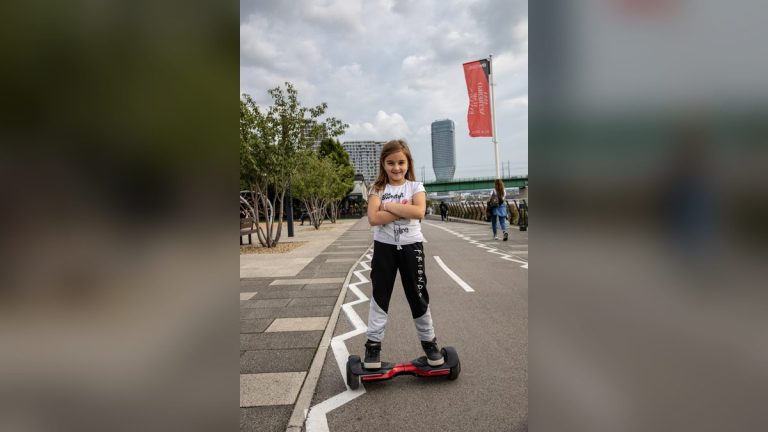
Here’s the short version. Most standard hoverboards hold about 220 pounds. Heavy-duty and off-road models can carry 265 to 420 pounds. And nearly every board has a minimum weight too, usually around 44 pounds, so young kids can ride safely. That’s a huge range, and picking the wrong end of it is one of the most common mistakes new buyers make.
In this guide we’ll break down every weight limit by wheel size and by model, explain what really happens when you go over, and help you pick a board with room to spare. Whether you’re shopping for a six-year-old or a 300-pound adult, there’s a board that fits. You just need to know the numbers.
What Is a Hoverboard Weight Limit, Really?
A hoverboard weight limit is the maximum rider weight the board is designed to carry while still balancing, steering, and braking the way it should. Manufacturers test each model to a set load, and that number, printed in the manual and on the box, is your safety line. It isn’t a friendly suggestion. The motors, battery, frame, and self-balancing sensors are all tuned around it.
But there are actually two numbers to know, not one. The maximum is the headline figure most people check. The minimum is the one most people forget. Nearly every hoverboard needs a rider of around 44 pounds to work at all, because the pressure sensors under your feet need enough weight to switch on the self-balancing system. Too light, and the board simply won’t engage.
Weight limits exist for real engineering reasons. A hoverboard has to constantly push back against your body to keep you upright, hundreds of tiny corrections every second. The heavier the load, the harder the motors work and the more the frame flexes. Stay within the rating and the board has plenty of muscle to spare. Push past it and every part of the system is running right at its edge.
| Wheel Size | Typical Weight Limit | Best For |
|---|---|---|
| 4.5 inch | 44 to 120 lbs | Young kids (age 6+) |
| 6.5 inch | 160 to 220 lbs | Kids, teens, beginners |
| 8 to 8.5 inch | 220 to 265 lbs | Teens and most adults |
| 10 inch | 265 to 420 lbs | Heavy adults and off-road |
Hoverboard Weight Limits by Wheel Size
Wheel size is the fastest way to guess a hoverboard’s weight limit before you even read the spec sheet. Bigger wheels come with bigger frames, stronger motors, and beefier batteries, so they carry more. Here’s how the common sizes stack up.
One thing to remember: wheel size gives you a ballpark, not a promise. Two boards with the same 8.5-inch wheels can have very different limits depending on their motor power and frame quality. Always confirm the exact rating for the specific model you’re eyeing before you buy.
6.5-inch wheels
The classic beginner size. Most 6.5-inch boards are rated for roughly 160 to 220 pounds and shine for kids, teens, and lighter adults on smooth surfaces like sidewalks and gym floors. They’re light, affordable, and easy to store, but they struggle with cracks, grass, and heavier riders.
8 to 8.5-inch wheels
The sweet spot for most adults. These all-terrain boards usually hold 220 to 265 pounds and add rubber cushioning that soaks up small bumps. The Gyroor Warrior, at 265 pounds, is a good example, plenty of capacity for the average adult with a backpack and still some room to spare.
10-inch wheels
The heavy-duty, off-road class. With reinforced frames and dual motors, 10-inch boards handle 265 to 420 pounds and roll over grass, gravel, and dirt. If you’re a larger adult or you ride off pavement, this is the size that won’t leave you stranded halfway up a hill.
Hoverboard Weight Limits by Model (2026)
Specs vary a lot from brand to brand, so let’s look at real numbers from popular 2026 models. The table below shows what today’s best-selling boards can actually carry, and who each one suits best.
A few patterns jump out. Premium commuter boards like the Segway Ninebot S cap out at 220 pounds, even with big 10.5-inch air tires, because they’re built for smooth speed rather than raw load. Budget 6.5-inch boards from brands like Sisigad and Hover-1 also cluster right around 220 pounds. The real capacity jumps come from the off-road specialists.
The Gyroor Warrior pushes the limit to 265 pounds with its 8.5-inch all-terrain tires. But the standout for heavy riders is the Swagtron T6 Outlaw, rated for a remarkable 420 pounds, one of the highest capacities of any hoverboard on the market. It was famously the first board built to handle over 380 pounds, and it’s still the go-to for larger adults years later.
- Standard commuter and budget boards: around 220 lbs
- All-terrain 8.5-inch boards: roughly 250 to 265 lbs
- Heavy-duty 10-inch off-road boards: 300 to 420 lbs
The Minimum Weight Limit: Why Light Riders Get Stuck
Here’s a scenario that stumps a lot of parents. You buy a hoverboard for your young child, charge it fully, and it just beeps and refuses to balance. Nothing is broken. Your child is almost certainly under the minimum weight limit.
Almost every hoverboard needs about 44 pounds (20 kg) of rider weight to activate. The board relies on pressure sensors under each footpad to sense when someone is standing on it, and those sensors are the trigger for the whole self-balancing system. If the rider is too light, the board can’t tell the difference between a small child and a bag left on the pad, so it stays off as a safety feature.
This usually lines up with kids aged six and up, but every child grows differently. If your little one is under that mark, you have two good options. Wait a bit until they’re heavier, or look for a kids’ model specifically tuned for lighter riders, some engage as low as 20 to 44 pounds. Forcing a full-size adult board to work for a tiny rider isn’t just frustrating, it can be genuinely unsafe if the board engages unpredictably.
What Happens If You Go Over the Weight Limit
So what actually happens if you ignore the number and ride overloaded? You won’t necessarily crash the moment you step on. The trouble builds up in ways that get worse over time, plus a few that can bite you right away.
The fix is simple, and it’s the theme of this whole guide. Buy a board with capacity to spare instead of one you’ll max out on day one.
Slower speed and weaker hills
An overloaded board can’t reach its rated top speed, and inclines that should feel easy become a real struggle. You’ll feel it lurch or stall on ramps and driveways where a properly sized board would breeze up.
Shorter battery and range
Heavier loads drain the battery faster. A board rated for 10 miles might give you only 6 or 7, and it’ll need charging more often, which also ages the battery quicker.
Faster wear and real damage
The motors, wheels, and frame all take extra strain. Over time that means burned-out motors, cracked shells, and bent axles, plus a warranty that usually won’t cover damage caused by overloading.
Safety and stability risks
The scariest one. An overloaded board balances less reliably, especially at speed or over bumps, which raises the odds of a wobble, a throw-off, and the bruises or broken bones that can follow.
How to Choose a Hoverboard for Your Weight
Picking the right board isn’t complicated once you know the trick. Don’t shop for your exact weight, shop for your weight plus a buffer. Aim for a board rated at least 20 to 30 pounds above what you really weigh. That headroom is what keeps the board fast, stable, and long-lived.
And ‘what you really weigh’ means fully loaded. Step on the scale wearing the jacket, shoes, and backpack you’ll actually ride with. A 200-pound rider carrying a 20-pound work bag and a winter coat is really asking the board to move 225 pounds. That total is the number that has to fit under the limit, not your bathroom-scale weight in socks.
Put it together and the math is easy. Real loaded weight, plus a 20-to-30-pound buffer, on a UL2272-certified board with wheels and motors sized for the job. Nail that, and you’ll never think about the weight limit again, which is exactly the point.
Check the motor, not just the wheels
Two boards can share the same weight rating, but the one with dual 350W or larger motors will hold that weight with more spirit, climbing better and keeping its speed on hills.
Look for a reinforced frame
Aluminum or reinforced-ABS bodies flex less under load than cheap plastic. For heavier riders, frame quality matters just as much as the rated number on the box.
Don’t skip UL2272
This is the battery and electrical safety certification every modern hoverboard should carry. It doesn’t set the weight limit, but it’s non-negotiable for safe riding at any weight.
Best Hoverboards for Heavier Riders
If you’re a larger adult, the good news is that being over 220 pounds no longer shuts you out. A handful of heavy-duty boards are built specifically for you, with the frames, motors, and tires to match.
The clear champion is the Swagtron T6 Outlaw. Rated for up to 420 pounds, it’s one of the highest-capacity hoverboards ever made, and it doesn’t skimp elsewhere. You get 10-inch rugged tires, a 12 mph top speed, up to 12 miles of range, and enough climbing power for 30-degree hills. It rolls over grass, gravel, and mud without complaint, exactly what you want when a smooth-sidewalk board would bog down under your weight.
For riders in the 220-to-265-pound range who mostly stay on pavement and light trails, the Gyroor Warrior 8.5-inch is a lighter, more affordable step down that still handles real weight with all-terrain tires and dual 350W motors. Either way, the principle holds. Match the board to your loaded weight with room to spare, and pick the frame and motors that back up the number on the box.
- Up to 420 lbs: Swagtron T6 Outlaw (10-inch off-road)
- Up to 265 lbs: Gyroor Warrior (8.5-inch all-terrain)
- Up to 220 lbs: Segway Ninebot S or Hover-1 Titan (commuter)
| Model | Wheel Size | Weight Limit | Best For |
|---|---|---|---|
| Segway Ninebot S | 10.5 inch | 220 lbs | Premium commuters |
| Hover-1 Titan | 10 inch | 220 lbs | All-terrain value |
| Sisigad 6.5″ | 6.5 inch | 220 lbs | Budget and kids |
| Gyroor Warrior | 8.5 inch | 265 lbs | Off-road adults |
| Swagtron T6 Outlaw | 10 inch | 420 lbs | Heaviest riders |
| Your Loaded Weight | Board Type to Buy | Minimum Wheel Size |
|---|---|---|
| Under 120 lbs | Standard kids or beginner board | 6.5 inch |
| 120 to 180 lbs | Standard or all-terrain | 6.5 to 8.5 inch |
| 180 to 220 lbs | All-terrain | 8.5 inch |
| 220 to 300 lbs | Heavy-duty off-road | 10 inch |
| 300 to 420 lbs | Max-capacity (Swagtron T6) | 10 inch |
Common Mistakes (and How to Fix Them)
Fix: Leave a 20-to-30-pound buffer above your current weight, especially for growing kids or if you ride with heavy winter gear. Headroom keeps the board fast and healthy for years.
Fix: Add the weight of your bag, laptop, groceries, and coat to your body weight. That fully loaded total is what actually rides on the board, and what has to fit under the limit.
Fix: Check the exact spec for your model. A 6.5-inch board may top out at 160 to 220 pounds while a 10-inch off-road board handles 420. Never guess from looks alone.
Fix: If a child weighs under about 44 pounds, a full-size board may refuse to balance. Choose a kids’ model tuned for lighter riders, or wait until they grow into it.
Pro Tips
- 💡 Aim for a board rated at least 20 to 30 pounds above your real weight, that buffer protects your speed, range, and battery life.
- 💡 Weigh yourself wearing the shoes, jacket, and backpack you’ll actually ride with. That loaded number is your true riding weight.
- 💡 Bigger wheels (8.5 to 10 inch) don’t just carry more, they also ride smoother over cracks, grass, and bumps.
- 💡 If two people will share one board, buy for the heavier rider plus a buffer, never for the average of the two.
- 💡 On air-tire models, keep the tires properly inflated. Low pressure quietly reduces both real-world capacity and range.
A Real-Life Example
A reader named Marcus, who’s 6 foot 2 and about 250 pounds, told us his first 6.5-inch hoverboard felt sluggish and could barely climb his driveway. He’d bought a board rated for 220 pounds, so he was riding it overloaded every single day. After switching to a 10-inch off-road model rated for 420 pounds, the difference was night and day, faster starts, real hill power, and no more wobble. The board was never broken. It was just carrying more than it was built for.
On the flip side, one dad bought a full-size board for his 40-pound daughter and couldn’t figure out why it kept beeping and refusing to balance. She was simply under the minimum weight to trip the foot sensors. A lighter kids’ hoverboard tuned for smaller riders solved it instantly, and saved him an unnecessary return.
Frequently Asked Questions
Most standard hoverboards have a maximum weight limit of about 220 pounds (100 kg). This covers the majority of 6.5-inch and many 8.5-inch models from brands like Hover-1, Sisigad, and Segway. All-terrain boards often push higher to 250 or 265 pounds, and heavy-duty off-road models can reach 400 to 420 pounds. Always check your specific model, since the number varies more than most people expect.
Yes, most hoverboards require a rider of at least 44 pounds (20 kg) to work. The board uses pressure sensors under your feet to switch on its self-balancing system, and a rider lighter than the minimum won’t trigger them. This is why very young children sometimes find that a board just beeps and refuses to balance. Some kids-specific models are tuned for lighter riders, engaging as low as 20 pounds.
Going over the weight limit makes the board slower, drains the battery faster, and strains the motor and frame. You’ll notice weaker performance on hills, shorter range per charge, and quicker wear on parts. Ride far over the limit and you also risk instability, motor burnout, and a voided warranty. A pound or two over is usually fine, but regularly overloading a board by 20 or more pounds is a real problem.
The Swagtron T6 Outlaw has one of the highest weight limits of any hoverboard, rated for up to 420 pounds. It was the first board built to handle over 380 pounds and remains a top pick for larger adults. Its 10-inch rugged tires, dual motors, and reinforced frame are what allow that high capacity. For riders under 265 pounds, the Gyroor Warrior is another strong high-capacity option.
Yes, heavier riders get slightly slower top speeds and noticeably shorter range. The motors work harder to move more weight, which burns through more battery per mile. A board advertised at 10 miles of range might deliver only 7 or 8 for a heavier rider, and top speed can drop by a mile or two per hour. Staying well under the weight limit is the easiest way to protect both.
No, hoverboards are designed for a single rider only. Even if two light people together weigh less than the maximum limit, the board’s balance sensors and footpads are built for one person’s stance. Two riders throw off the self-balancing system and make a fall very likely. If you want to share, take turns rather than doubling up.
Final Checklist ✅
- ✅ Weigh yourself in the clothes, shoes, and gear you’ll actually ride with.
- ✅ Add 20 to 30 pounds of buffer to that loaded number.
- ✅ Match the total to a board’s rated weight limit, not just its wheel size.
- ✅ Check the minimum weight limit if the rider is a young child.
- ✅ Confirm the board is UL2272-certified for battery and electrical safety.
- ✅ Choose 8.5-inch or 10-inch wheels if you’re over 180 pounds or riding off-road.
- ✅ Read the exact spec sheet for your model before you buy.