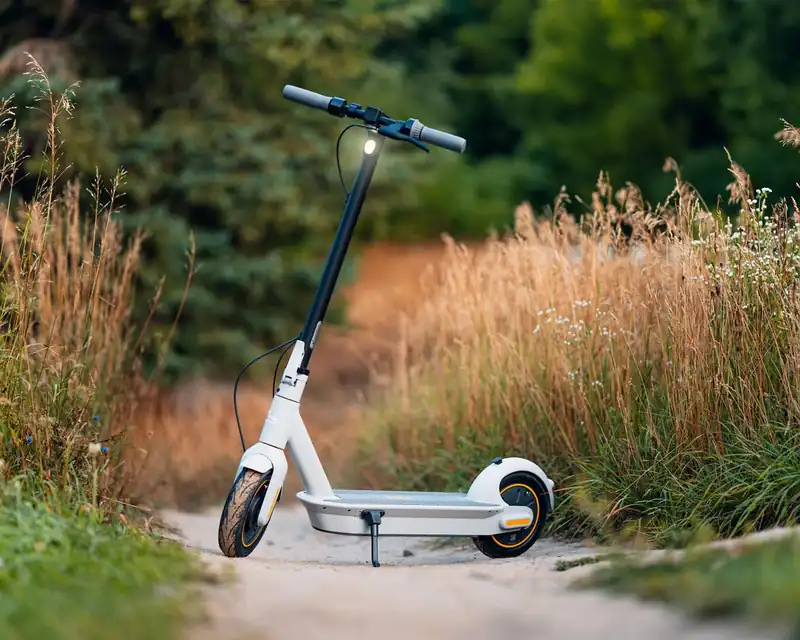
Pop the pack out, charge it at your desk, and clip in a spare to keep rolling — no outlet by your parking spot required.
Electric scooters with a removable battery give you a simple superpower: the battery pack lifts right out, so you can charge it anywhere and swap in a fresh one whenever you want. No dragging a 30-pound scooter up three flights of stairs just to reach an outlet. No standing next to the one plug in your apartment for four hours. When the pack runs low, you clip in a charged spare and keep riding.
That convenience is why removable-battery scooters have quietly become one of the most searched-for features in electric mobility. They are perfect for apartment and dorm dwellers, office commuters, and anyone who has ever felt range anxiety halfway home. In this guide we will cover how they work, who they are for, the honest trade-offs, and the best models you can actually buy in 2026 — with real specs and realistic prices.
We have leaned on current 2026 pricing and manufacturer specs, and we will always tell you when a range number looks optimistic. The goal is simple: help you pick a scooter you will still be happy with three winters from now.
What Is an Electric Scooter With a Removable Battery?
An electric scooter with a removable battery is exactly what it sounds like: the battery pack lifts out of the scooter instead of being sealed inside. On most models the pack lives inside the vertical stem — the pole you hold onto — or tucks under the deck you stand on. A key lock or a simple latch holds it in place. Turn the key, slide the pack out, and you are holding a self-contained battery you can carry anywhere.
This is different from how the majority of scooters are built. Popular models, including nearly all Segway Ninebot scooters, seal the battery deep inside the frame, where you cannot reach it without tools and a full teardown. Those are called built-in or integrated batteries. A removable design trades a little of that clean, sealed simplicity for a lot of everyday convenience.
Not every removable battery is created equal, though. Some are true tool-free swaps you can change in under a minute, which is ideal for carrying spares. Others are serviceable: you can take the pack out to replace it when it wears down, but it is more of a five-minute job than a roadside swap. Knowing which kind you are getting matters, so we flag it for each scooter below.
Where the battery lives
Usually in the stem (like the Turboant X7 Max and Levy Plus) or under the deck. Stem batteries are the easiest to reach and the fastest to swap on the go.
How the swap works
Insert the key, unlock, and lift the pack straight out. Drop in a charged one, push until it clicks, lock it, and ride. On the quickest designs the whole thing takes well under a minute.
| Model | Removable battery | Claimed range | Top speed | Weight | Price (approx.) |
|---|---|---|---|---|---|
| Turboant X7 Max | 36V 10Ah (360Wh), key swap | 32 mi | 20 mph | 34 lb | ~$430 |
| Levy Plus | 36V 12.8Ah (460Wh), tool-free | 20 mi | 18 mph | 30 lb | ~$529 |
| Hiboy S2R Plus | 36V 7.5Ah (270Wh), key swap | 22 mi | 19 mph | 29 lb | ~$400 |
| NIU KQi3 Pro | 48V (486Wh), serviceable | 31 mi | 20 mph | 45 lb | ~$599 |
| Kaabo Wolf King GTR | 72V 35Ah (2,520Wh), removable | 112 mi | 60+ mph | ~99 lb | ~$3,995 |
Why a Removable Battery Is a Game-Changer
The single biggest reason people love these scooters is charging. If you live in an apartment, a dorm, or a shared house, you probably do not have a power outlet next to wherever you park. Hauling a 30-plus-pound scooter indoors every night gets old fast. With a removable battery, you leave the scooter folded by the door — or locked up outside — and carry just the battery inside to charge on your desk or kitchen counter.
The second reason is range. A single charge only takes you so far, and waiting three to five hours for a recharge kills a long day out. Carry a charged spare and you skip the wait entirely: swap packs in under a minute and keep rolling. Two batteries roughly double your range, and three roughly triple it. It is the closest thing scooters have to refueling at a gas station.
There is a money angle too. Every lithium battery slowly fades after a few hundred charges. On a sealed scooter, a tired battery can mean buying a whole new scooter. On a removable one, you just slot in a fresh pack for a fraction of the price. You also get easier winter storage, since you can bring the battery inside where it is warm, and a lighter load to lift, because the scooter weighs several pounds less with the pack out.
- Charge indoors even if there is no outlet where you park.
- Carry a spare to double or triple your range with no downtime.
- Replace a worn battery instead of the entire scooter.
- Store the battery somewhere warm in winter to protect its life.
- Lift a lighter scooter — the pack alone is often 4 to 8 pounds.
Best Electric Scooters With Removable Batteries in 2026
Below are the removable-battery scooters worth your attention in 2026. A quick note on the word removable: the first three are true tool-free swaps you can change on the road in under a minute. The NIU is user-serviceable — the pack comes out for charging or replacement, but it is not a ten-second stem swap. The Wolf King GTR is a beast built for maximum range, with a big removable pack to match.
Match the scooter to your actual life, not the flashiest spec sheet. A short, hilly commute with lots of stairs points you toward a light budget swapper. A long daily ride points you toward more watt-hours or a spare.
Turboant X7 Max — best budget swap
The scooter that made removable batteries famous with everyday riders. A 36V 10Ah (360Wh) pack pops out of the stem with a key, feeds a 350W motor good for 20 mph, and rides on comfy 10-inch air tires. Claimed range is 32 miles (plan for around 18 to 20 in the real world). Usually under $500, with spare packs about $230.
Levy Plus — best-built commuter
A polished, 30-pound commuter with a tool-free Panasonic-cell pack (36V 12.8Ah / 460Wh) you can swap in under 10 seconds. Top speed is 18 mph, real-world range is around 20 miles per pack, and it uses a triple braking setup. Starts around $529 and feels a clear notch above the budget crowd.
Hiboy S2R Plus — easiest everyday value
A lightweight commuter with a 4.8-pound key-removable battery. One pack covers about 22 miles; add a spare and you are near 44. A 350W motor pushes it to roughly 19 mph. Often around $400, it is one of the cheapest ways into a genuine swap-and-go scooter.
NIU KQi3 Pro — best serviceable pack
NIU builds its KQi scooters with user-replaceable batteries, unlike most sealed rivals. The KQi3 Pro carries a 48V 486Wh pack, hits 20 mph, and claims up to 31 miles. At about 45 pounds it is heavier, and the swap is more of a service job than a roadside change — but you can replace the pack years down the line.
Kaabo Wolf King GTR — best for huge range
For riders who want to go far and fast, the Wolf King GTR packs a massive 72V removable battery (up to 2,520Wh) rated for as much as 112 miles. It is a heavy, expensive (around $3,995) performance machine, not a commuter — but that removable pack is the key to its enormous range.
Removable vs Built-In Batteries: Honest Trade-Offs
Removable batteries are great, but they are not free wins. The most common trade-off is weather sealing. Every time you add a battery bay, a latch, and an electrical connector, you add places where water could get in. That is why most removable-battery scooters carry an IPX4 rating — fine for light rain, not for puddles, deep water, or a pressure washer. Some sealed, built-in scooters manage slightly better protection.
There are a few other catches. Spare packs are not cheap, often $150 to $260 each on budget models and far more on premium ones. The battery connector can wear over hundreds of swaps if you are rough with it. And a removable pack is, in theory, a target for theft — though a good key lock, or simply taking the battery with you, solves that. On the flip side, that same removability is exactly what makes indoor charging and battery replacement so easy.
So how do you decide? If you park indoors right next to an outlet and rarely ride past a single charge, a well-sealed built-in scooter is perfectly fine — often simpler and a touch cheaper. If you fight for outlets, live upstairs, or want to erase range anxiety with a spare, the removable design pays for itself in convenience fast.
- Usually IPX4 sealing — light rain only, no puddles.
- Spare packs cost roughly $150 to $260 each on budget models.
- Connectors can wear if you swap roughly or force the pack.
- A loose pack is a theft target — lock it or take it with you.
How to Choose the Right Removable-Battery Scooter
Shopping for one of these comes down to a handful of things. Start with real range, and learn to read watt-hours (Wh). Watt-hours equal volts times amp-hours, and it is a far better range yardstick than the marketing miles. A 360Wh pack versus a 460Wh pack tells you more than two different up-to-25-miles claims ever will. As a rough rule, expect about 60 to 70 percent of the advertised range once you factor in your weight, hills, speed, and cold.
Next, check the spare battery — its price and whether it is actually in stock for your exact model. A removable scooter loses half its magic if you cannot buy a second pack. Then weigh the practical stuff: the scooter’s weight with and without the battery, the tire type (10-inch pneumatic tires ride far smoother than small solid ones), and the braking setup (a disc or drum brake beats a fender-stomp brake).
Finally, look for safety and support: a UL 2272 or UL 2271 certification, a solid key lock, and a real warranty. Do not over-buy, either. A 60 mph, 100-pound performance scooter with a giant removable pack is overkill for a two-mile commute — and a genuine hassle to carry a spare for.
- Range: compare watt-hours, and expect about 60 to 70 percent of the claim.
- Spare battery: confirm the price and that it is in stock for your model.
- Weight: check it both with and without the pack installed.
- Tires: pneumatic (air-filled) rides smoother than solid.
- Brakes: disc or drum beats a fender-stomp brake.
- Safety: look for UL 2272 / UL 2271 and a secure key lock.
Battery Care, Charging, and Safety
Lithium batteries are safe when they are treated well and genuinely risky when they are not. The headline rule is to buy certified. UL 2272 covers a scooter’s entire electrical system, while UL 2271 certifies the battery pack itself. A model carrying these has been tested for overheating, short circuits, water exposure, and even drops. It is the single clearest signal that a scooter will not become a fire hazard.
Charging habits matter just as much. Use only the charger that came with your scooter, because mismatched chargers are a real cause of fires. Charge on a hard, non-flammable surface, never on a bed or couch, and keep the battery away from your doorways so a rare failure never blocks your escape route. Do not charge overnight or when you are not home, and unplug once the pack is full. Let a battery cool down for a bit after a hard ride before you plug it in.
For storage and health, keep packs in a cool, dry place — not a freezing garage or a hot car. If you are storing a spare for weeks, leave it around 50 to 60 percent charged and top it up every couple of months. Inspect your batteries now and then: any swelling, a burning or chemical smell, or a pack that gets strangely hot is your cue to stop using it immediately and replace it.
- Buy UL 2272 / UL 2271 certified scooters and batteries.
- Use only the original charger, and unplug at full charge.
- Charge on a hard surface, never overnight or unattended.
- Store spares cool and dry at 50 to 60 percent charge.
- Watch for swelling, heat, or odd smells — retire the pack if you see them.
Real Costs: Spare Batteries, Replacements, and Long-Term Value
Let us talk money, because removable batteries change the math over a scooter’s life. Up front, a spare pack for a budget commuter runs roughly $150 to $260 — the Turboant X7 Max’s extra battery is about $230, and the Levy spare sits in the same ballpark. High-capacity performance packs cost far more, sometimes well over $1,000. It is not pocket change, so buy a spare only if you will actually use the extra range.
The bigger savings show up later. Every lithium battery fades, most noticeably after a few hundred full charge cycles, which is often two to four years of regular commuting. When that day comes on a sealed scooter, you are frequently looking at replacing the whole machine, because the labor to crack it open and swap the cells costs almost as much as a new one. On a removable-battery scooter, you buy a fresh pack, click it in, and your ride is basically new again for a fraction of the price.
There is a resale angle, too. A used removable-battery scooter is an easier sell, because the buyer knows the most expensive wear part can be swapped cheaply. Add it all up and the slightly higher upfront cost of a removable design often works out cheaper across three or four years of riding.
| Factor | Removable battery | Built-in battery |
|---|---|---|
| Charge indoors without the scooter | Yes — carry just the pack | No — bring the whole scooter |
| Extend range with a spare | Yes — swap in under a minute | No — you wait for a recharge |
| Replace a worn-out battery | Easy and affordable | Often needs a full teardown |
| Weather sealing | Usually IPX4 (light rain) | Sometimes sealed a bit better |
| Weight when carrying | A few lb lighter with pack out | All-in-one, nothing to remove |
| Upfront simplicity | Extra latch and connector | Cleaner, fewer parts |
| Scooter | Spare / replacement pack | Extra range per pack |
|---|---|---|
| Turboant X7 Max | ~$230 | up to ~30 mi |
| Levy Plus | ~$249 | ~20 mi |
| Hiboy S2R Plus | ~$180 | ~22 mi |
| NIU KQi3 Pro | ~$250 | ~31 mi |
| Kaabo Wolf King GTR | $1,000+ | up to ~90 mi |
Common Mistakes (and How to Fix Them)
Fix: Most scooters — including nearly all Segway Ninebot models — have sealed, built-in batteries. Before you buy, look for the words removable or swappable in the spec sheet, and confirm the pack comes out with a key or latch, not a screwdriver.
Fix: Claimed range is measured with a light rider at low speed on flat ground. Plan for about 60 to 70 percent of the sticker number in real life. If you need 20 real miles, buy a scooter rated for 30 — or plan to carry a spare battery.
Fix: Spare packs sell out and get discontinued once a model is retired. If range matters to you, buy the second battery while your exact model is still in stock, not two years later when it is gone.
Fix: Charge on a hard, non-flammable surface, use only the charger that came with your scooter, and do not leave batteries charging while you sleep or leave home. Unplug them once they hit full.
Pro Tips
- 💡 Number your two batteries and alternate them each ride so they age at the same pace.
- 💡 For daily commuting, charge to about 80 to 90 percent instead of 100 percent — it is gentler on lithium cells and still covers most trips.
- 💡 Store a spare you will not use for a while at roughly 50 to 60 percent charge in a cool, dry spot, and top it up every couple of months.
- 💡 Wipe the battery contacts clean and make sure the pack clicks fully home — a loose connection is the usual reason a scooter randomly cuts out.
- 💡 Weigh your spare before committing to carry it daily; a 4 to 8 pound pack in your bag adds up on a long walk.
A Real-Life Example
Take Maya, who rents a fourth-floor walk-up with exactly one outlet by the front door. Her old scooter had a sealed battery, so charging meant parking the whole thing in the hallway every night and hoping her landlord did not mind. With a removable-battery model, she slides the pack out, drops it on her desk to charge, and leaves the scooter folded in the closet. Her building manager is happier, and so is her back.
Then there is the weekend range trick. A friend of mine keeps a charged spare in his backpack. When his first pack runs low around mile 18, he pulls over, swaps in the fresh one in under a minute, and keeps going — no sitting in a coffee shop for four hours waiting on a wall charger.
Frequently Asked Questions
Yes — carrying a fully charged spare essentially doubles your range, because each pack adds another full charge. When the first battery runs low, you swap in the second in under a minute and keep riding, with no waiting for a wall charge. Three packs triple it, and so on. The only real limits are the cost and the weight of carrying extra batteries around.
They can be, slightly. A removable pack means extra seams and a connector where water could sneak in, so most sit around an IPX4 rating, which is fine for light rain but not for puddles or a pressure washer. Built-in batteries are sometimes sealed a bit better. Either way, do not ride through standing water or leave any scooter out in a storm.
Expect roughly $150 to $260 for a budget commuter pack — the Turboant X7 Max spare runs about $230, for example. Premium and high-capacity packs cost much more, sometimes over $1,000. That may sound steep, but a fresh battery is far cheaper than a whole new scooter, which is a big reason removable designs can save money over time.
Into the office, absolutely — that is one of the best reasons to own one. On a plane it is complicated: most scooter batteries are well over the 100Wh airline limit for lithium batteries (a 360Wh pack is more than three times that), so airlines generally will not allow them. Always check with your specific airline first, and never just assume it is fine.
Often yes — not because the scooter itself is tougher, but because you can replace a worn-out battery instead of scrapping the whole ride. Lithium packs slowly lose capacity after a few hundred charge cycles. On a sealed scooter that can mean the end of the road; on a removable one, you just slot in a new pack and keep going for years.
The Turboant X7 Max is the popular budget pick, thanks to a key-lock removable pack, 10-inch air tires, and a price that is usually under $500. The Hiboy S2R Plus is another affordable option with a quick-release battery. For a step up in build quality and swap speed, the Levy Plus is worth the extra money.
Final Checklist ✅
- ✅ Confirm the battery is truly removable — tool-free, with a key or latch, not screws.
- ✅ Look up the spare or replacement battery’s price and whether it is in stock right now.
- ✅ Check for UL 2272 or UL 2271 safety certification.
- ✅ Compare watt-hours (Wh), not just advertised miles, to judge real range.
- ✅ Note the scooter’s weight both with and without the battery installed.
- ✅ Make sure the charge port and battery bay look weather-sealed (aim for IPX4 or better).
- ✅ Plan a safe indoor spot to charge — hard surface, official charger, never overnight.