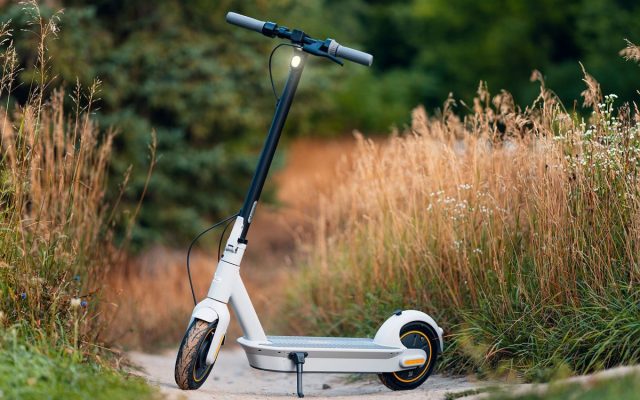
The honest, up-to-date guide to watt-hour limits, TSA screening, and what to do when your scooter is simply too big to board.
So you want to take your electric scooter on a trip, and now you are wondering what airport security will say. Before you pack anything, you need to understand the FAA regulations for flying with electric scooter batteries. Here is the honest truth right up front: most electric scooters cannot fly at all. The lithium battery inside your scooter is almost always too big for a passenger plane. That is not us being dramatic. It is a federal safety rule, and TSA agents enforce it every single day.
The reason comes down to one number: watt-hours (Wh). Lithium-ion batteries can overheat and catch fire in a rare event called thermal runaway, and a fire in a sealed cargo hold is a nightmare at 35,000 feet. So the FAA, TSA, and the Department of Transportation set a hard ceiling. Any lithium battery over 160 Wh is banned from passenger aircraft, in both carry-on and checked bags. Almost every adult electric scooter has a battery well above that limit.
This guide walks you through the rules in plain English. You will learn the exact watt-hour tiers, how to find your own battery’s rating, why hoverboards get an even stricter ban, what changed in 2026, and the real-world ways to get your scooter to your destination when it cannot come with you on the plane.
This article is part of our electric scooter safety and laws hub, which links every safety gear and legal guide.
The Short Answer: Will Your Scooter Battery Fly?
Let us save you some time. If you own a normal adult electric scooter, the answer is almost certainly no. The battery is too large, and no amount of paperwork or sweet-talking at the gate will change that. The FAA rule is not a suggestion that airlines can bend. It is written into federal hazardous-materials law, and the person scanning your bag has no power to make an exception.
There is a small silver lining, though. The rules are not banning every lithium battery you own. Small spare batteries and power banks are still welcome, as long as they stay under the size limits. So while your scooter itself has to stay home, the phone charger and the little power bank in your backpack are fine. The problem is specifically the big battery pack that powers a scooter, e-bike, or hoverboard. Those live in a size class that passenger planes simply will not accept.
Think of it like liquids at security. A travel-size bottle is fine, a full gallon jug is not, and there is no version of the rule where the jug gets through. Your scooter battery is the gallon jug.
| Battery capacity | Carry-on | Checked bag | Airline approval | Max spare batteries |
|---|---|---|---|---|
| Up to 100 Wh | Allowed | No (spares) | Not needed | Reasonable personal use |
| 101 to 160 Wh | Allowed | No (spares) | Required | 2 per person |
| Over 160 Wh | Banned | Banned | Not available | 0 |
| Mobility aid up to 300 Wh | Battery carried on | Device gate-checked | Notify airline ahead | 1 x 300 Wh or 2 x 160 Wh |
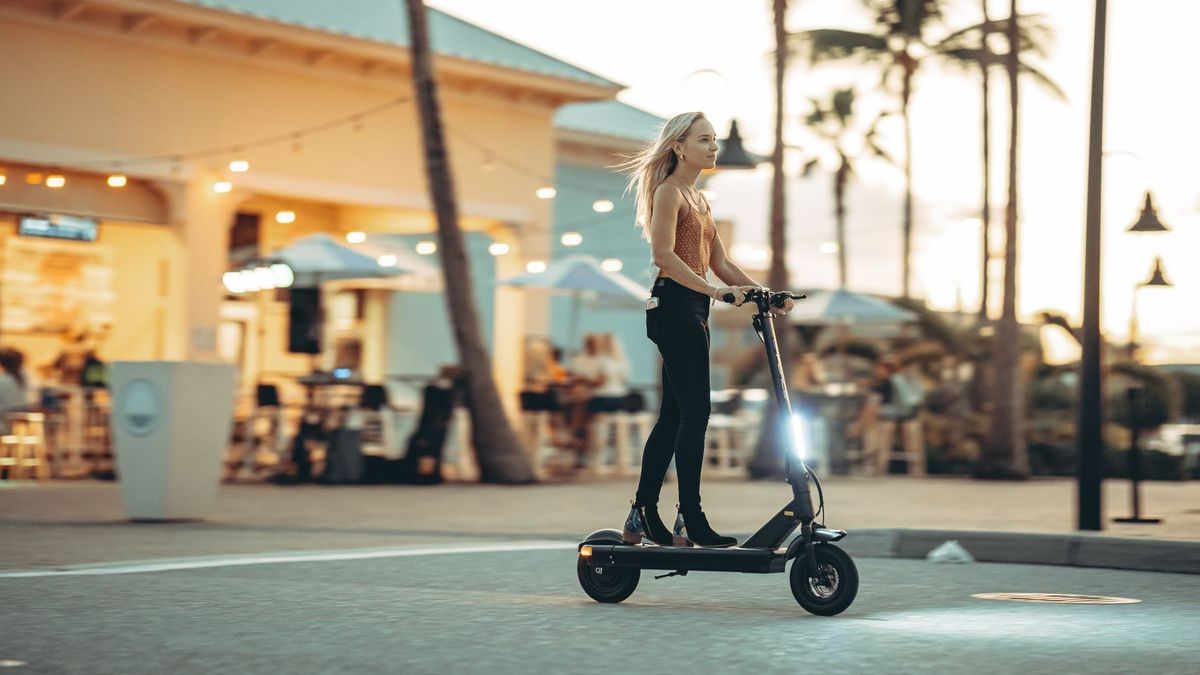
The FAA Watt-Hour Rules, Made Simple
Everything in the lithium battery rules revolves around watt-hours, written as Wh. A watt-hour measures how much energy a battery holds. The bigger the number, the more energy packed inside, and the bigger the fire risk if something goes wrong. That is why the FAA sorts every battery into three simple tiers based on its Wh rating.
Two rules apply to every tier, no matter the size. First, spare or loose lithium batteries and power banks must go in your carry-on, never in checked baggage. Second, you have to protect the terminals from short-circuiting. That means keeping batteries in their original packaging, taping over the metal contacts, or slipping each one into its own pouch or sleeve so nothing metal can bridge the connections in your bag.
- Wh, not mAh, is the number that matters. Always convert to watt-hours.
- Spare batteries and power banks: carry-on only, always.
- Protect every terminal from short circuits with tape, packaging, or a pouch.
- Prevent accidental power-on so the device cannot switch itself on in your bag.
100 Wh or less: green light
Batteries and power banks up to 100 Wh are allowed in carry-on with no special permission. This covers nearly every phone battery, laptop, and standard power bank (roughly 27,000 mAh at 3.7V or less). You can bring a reasonable number for personal use.
101 to 160 Wh: needs a yes from the airline
Batteries between 101 and 160 Wh are allowed only if your airline approves them first, and you are capped at two spare batteries per person. This range covers some pro camera batteries and larger laptop packs. Call the airline before you fly.
Over 160 Wh: not happening
Anything above 160 Wh is forbidden on passenger planes, in carry-on and checked bags alike. This is where basically every electric scooter, e-bike, and hoverboard battery lands. There is no approval process that unlocks this tier for regular travelers.
Why Almost No Electric Scooter Can Board
Here is where the math turns cruel. Even the smallest, lightest budget scooters carry batteries that blow past the 160 Wh ceiling. The bargain-bin Gotrax GXL V2 packs about 187 Wh. Mid-range commuters like the Xiaomi and Unagi models sit around 275 to 282 Wh. Popular picks like the Segway Ninebot F40 hit 367 Wh, and a Segway Ninebot MAX G2 holds a whopping 551 Wh. Big performance scooters can top 1,000 Wh.
Compare those numbers to the 160 Wh limit and the picture is clear. The most modest adult scooter on the market is still more than 25 Wh over the line, and most are two to five times over it. There is no popular adult electric scooter that legally fits inside carry-on lithium rules. The table below shows how far past the limit common models fall.
A few tiny kids’ scooters or ultra-light travel models occasionally dip under 160 Wh, but they are rare, and you still need to confirm the exact Wh rating and get airline sign-off. For the vast majority of riders, the scooter is grounded even when you are not.
How to Find Your Scooter Battery’s Watt-Hours
Before you assume the worst, check your own numbers. Every legit battery has its capacity printed somewhere: on a sticker on the battery pack, in the owner’s manual, or on the manufacturer’s spec page. Look for a value in Wh. If you see it listed directly, you are done.
Often, though, you will only see volts (V) and amp-hours (Ah), or worse, milliamp-hours (mAh). No problem. The formula is easy: Volts times Amp-hours equals Watt-hours. So a 36V battery rated at 7.5 Ah works out to 36 times 7.5, which is 270 Wh. If your label shows mAh instead, divide by 1,000 first to get Ah (7,500 mAh becomes 7.5 Ah), then multiply by the voltage.
Do this math before you even think about the airport. It takes thirty seconds and tells you exactly which side of the 160 Wh line your battery falls on. Snap a photo of the label too, so you have proof of the rating if anyone at the airline asks.
A quick worked example
Say your scooter label reads 36V and 10,000 mAh. Convert mAh to Ah: 10,000 divided by 1,000 equals 10 Ah. Then multiply: 36V times 10 Ah equals 360 Wh. That is well over 160 Wh, so this battery cannot fly.
Hoverboards, E-Skateboards and Unicycles: Even Stricter
If you ride a hoverboard, the news is even blunter. Since 2015, virtually every major airline has banned self-balancing devices completely, in both carry-on and checked bags, regardless of the battery size. This ban came after a wave of hoverboard fires during the holiday boom that year. So even a small hoverboard with a modest battery gets turned away purely for being a hoverboard.
Electric skateboards, longboards, and electric unicycles (EUCs) do not get a blanket brand ban like hoverboards, but they run into the exact same watt-hour wall. Most e-skateboard batteries land between 90 and 500 Wh, and EUCs are notorious for enormous packs, often 500 to 2,000 Wh or more. Anything over 160 Wh is a no, and most of these devices sail far past that.
The safest move for any personal electric vehicle is to assume it cannot fly, then verify. Confirm your device’s exact battery Wh, then call the airline. If the numbers or the device type do not clear the bar, plan to ship it or leave it home.
- Hoverboards and self-balancing scooters: banned outright by nearly all airlines, any size.
- E-skateboards: usually 90 to 500 Wh, so most are over the 160 Wh limit.
- Electric unicycles: frequently 500 to 2,000+ Wh, essentially never flyable.
- Some airlines ask for UL 2272 safety certification even on devices they might allow.
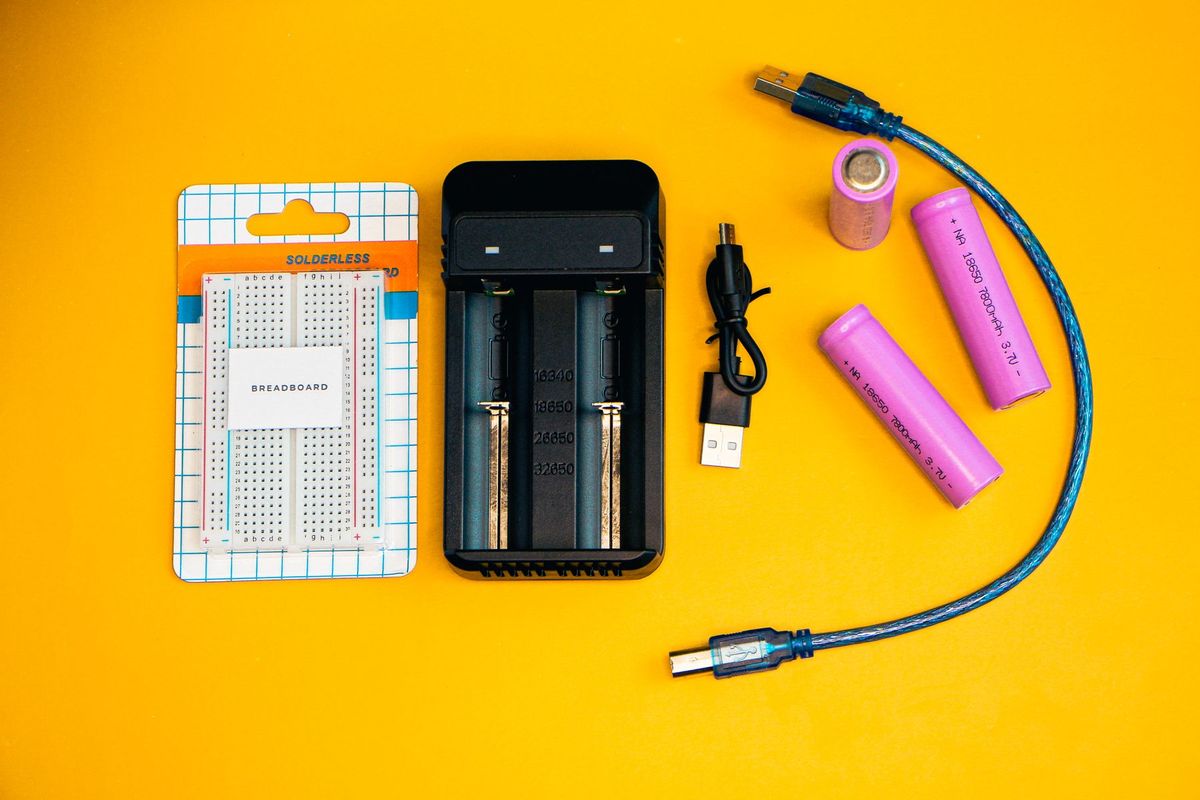
What Changed in 2026: The New Battery Rules
Battery rules got tighter in 2026, driven by several in-flight battery fires that made headlines in 2025. In March 2026, a new international standard backed by the ICAO took effect across member countries, creating the first coordinated global rules on portable batteries. US airlines rolled out their own matching updates around the same time.
The headline change is about where your power banks and spare batteries can go. They can no longer live in the overhead bin. Airlines now require them to stay on you, in a seat pocket, or in the bag under the seat in front of you, so crew can reach a battery fast if it starts to overheat. You also cannot use a power bank to charge devices during the flight on many carriers. American and Delta cap you at two power banks of 100 Wh each, while Southwest limits you to one. United requires spares to stay out of the bin as well.
One important exception: if you rely on a mobility scooter or power wheelchair as a medical assistive device, the rules are more generous. Under the Air Carrier Access Act, you can travel with a device battery up to 300 Wh, or two spares of 160 Wh each, with advance notice to the airline. That accommodation is for genuine mobility aids, not recreational scooters.
- Power banks must stay visible and within reach, never in the overhead bin.
- No in-flight charging from a power bank on most US carriers.
- American and Delta: max two power banks, 100 Wh each. Southwest: one.
- Mobility-aid users: up to 300 Wh with airline notice under the Air Carrier Access Act.
What to Do Instead: Get Your Scooter There Anyway
A grounded scooter does not mean a grounded trip. Riders move their scooters across the country all the time; they just do not do it on a passenger plane. The most reliable option is to ship the whole scooter by ground freight through a carrier that accepts lithium batteries by road. Book it a week or two ahead, since ground shipping with batteries has its own packing rules and is slower than air.
If shipping feels like a hassle, renting or buying at your destination is often cheaper and far less stressful. Many big cities have shared scooter fleets you can unlock with an app, and short-term rental shops exist in tourist-heavy areas. For longer stays, a modest new scooter bought locally may cost less than round-trip freight and lets you sell or keep it afterward.
A rare few travel scooters have removable batteries, and if yours splits into packs that each stay under 160 Wh, an airline might allow the batteries in carry-on with approval, plus the scooter body in checked baggage. This is uncommon, so confirm every number and get written airline approval before you count on it. When in doubt, ship it or rent it and skip the airport headache entirely.
- Ship it: use a ground freight service that accepts lithium batteries by road.
- Rent it: unlock a shared scooter with an app or use a local rental shop.
- Buy it: a budget scooter at your destination can beat round-trip freight.
- Split it: only if removable packs each fall under 160 Wh, with airline approval.
| Electric scooter | Battery (Wh) | Over 160 Wh? | Can it fly? |
|---|---|---|---|
| Gotrax GXL V2 | 187 Wh | Yes | No |
| Hiboy S2 | 270 Wh | Yes | No |
| Xiaomi / Mi Scooter 1S | 275 Wh | Yes | No |
| Unagi Model One (E250) | 282 Wh | Yes | No |
| Segway Ninebot F40 | 367 Wh | Yes | No |
| Hiboy S2 Pro | 417 Wh | Yes | No |
| NIU KQi3 Pro | 486 Wh | Yes | No |
| Segway Ninebot MAX G2 | 551 Wh | Yes | No |
| Airline | Power banks allowed | Size limit | In-flight charging | Storage |
|---|---|---|---|---|
| American | Up to 2 | 100 Wh each | Not allowed | Keep visible, not in bin |
| Delta | Up to 2 | 100 Wh each | Not allowed | Keep visible, not in bin |
| Southwest | 1 | Under 100 Wh | Not allowed | Keep in view |
| United | Reasonable number | 160 Wh max (100-160 needs approval) | Not allowed | No overhead bin |
Common Mistakes (and How to Fix Them)
Fix: Loose lithium batteries are banned from the cargo hold, and scooter batteries are over the limit anyway. Never check them. If a device is allowed at all, spares ride in your carry-on where you can reach them.
Fix: Milliamp-hours alone do not tell you if a battery is legal. Convert first: divide mAh by 1,000 to get Ah, then multiply by the voltage. That watt-hour number is what the 160 Wh limit is measured against.
Fix: Light and foldable does not mean flyable. Even compact scooters like the Gotrax GXL V2 sit above 160 Wh. Check the exact battery rating on the label before you make any travel plans around it.
Fix: Airline policies shifted in 2026 and can be stricter than the FAA baseline. Read your carrier’s battery page within a week of your flight and call if anything is unclear, especially for mobility devices.
Pro Tips
- 💡 Snap a clear photo of your battery label showing volts, amp-hours, and watt-hours before any trip. It settles questions fast and proves the rating if the airline asks.
- 💡 For any spare battery or power bank you do bring, tape over the terminals or use a padded pouch or fireproof bag so nothing metal can short it out in your bag.
- 💡 Keep power banks at 100 Wh or less, stash them under the seat in front of you, and skip charging your phone from them mid-flight to stay on the right side of 2026 rules.
- 💡 Planning a long trip? Book ground freight for your scooter one to two weeks ahead, or line up a rental at your destination instead of fighting the battery rules.
- 💡 If your scooter is a genuine medical mobility aid, tell the airline at least 48 hours before departure so they can arrange the up-to-300 Wh accommodation and gate-check.
An Example Scenario
Illustrative example: a composite of situations riders often describe, not a real customer story.
Marcus learned this the hard way at the airport. He rolled up to security with his Segway Ninebot MAX folded neatly beside his suitcase, figuring a quick fold and a smile would get it through. The agent took one look, checked the 551 Wh rating, and told him it could not board, not in carry-on and definitely not checked. He ended up leaving it with a relative who lived nearby and spent his whole trip wishing he had planned ahead.
The next time he traveled, Marcus shipped the scooter by ground freight a week early for about forty dollars. It was waiting at his hotel when he landed, fully charged and ready to ride. He walked through security with nothing but a carry-on and a small power bank in the seat pocket, and he never gave the battery rules a second thought.
Frequently Asked Questions
Almost certainly not. Nearly every adult electric scooter has a lithium battery over 160 watt-hours, which is banned from passenger aircraft in both carry-on and checked bags. Even small budget scooters like the Gotrax GXL V2 exceed the limit. Ship it by ground or rent one at your destination instead.
You can carry lithium batteries up to 100 Wh with no approval, and 101 to 160 Wh with your airline’s permission (limited to two spares). Anything over 160 Wh is forbidden on passenger planes. Scooter batteries, which usually run 180 to 1,000 Wh, fall far above this ceiling.
No. Spare and loose lithium batteries are banned from checked baggage entirely, because a fire in the cargo hold is nearly impossible for the crew to reach. On top of that, scooter batteries exceed the size limit, so they are not allowed in carry-on either. There is no legal way to check a scooter battery.
Only if each removable pack is under 160 Wh, which is rare for scooters. Most scooter batteries are sealed and well over the limit, so removing them does not help. If you own an unusual model with small, detachable packs, confirm the exact Wh and get written airline approval before you rely on it.
No. Since 2015, virtually all major airlines have banned hoverboards and self-balancing scooters completely, in both carry-on and checked bags, no matter the battery size. The ban followed a string of hoverboard fires. If you own one, plan to ship it or leave it at home.
Ship it by ground freight through a carrier that accepts lithium batteries by road, and book a week or two early. Alternatively, rent a shared or shop scooter at your destination, or buy an affordable local model. These options are usually cheaper and far less stressful than fighting the battery rules.
Final Checklist ✅
- ✅ Find your battery’s watt-hour rating on the label, the manual, or the spec page.
- ✅ If only mAh and volts are listed, convert: (mAh divided by 1,000) times volts equals Wh.
- ✅ Confirm whether your battery is under 100 Wh, 100 to 160 Wh, or over 160 Wh.
- ✅ Read your specific airline’s current battery and power bank policy before you fly.
- ✅ Move all spare batteries and power banks into your carry-on and protect the terminals.
- ✅ For a scooter over 160 Wh, book ground freight or arrange a rental at your destination.
- ✅ For a medical mobility scooter, notify the airline at least 48 hours before departure.