Two very different single-wheel rides: one a forward-facing speed machine, the other a surf-style board. Here's how to choose the right one for you.
Trying to decide between an electric unicycle vs Onewheel? You’re not alone. These are two of the most eye-catching rides in personal electric mobility, and from a distance they look like cousins: one wheel, no handlebars, a rider gliding along like magic. Get closer, though, and they’re almost opposite machines that reward completely different riders.
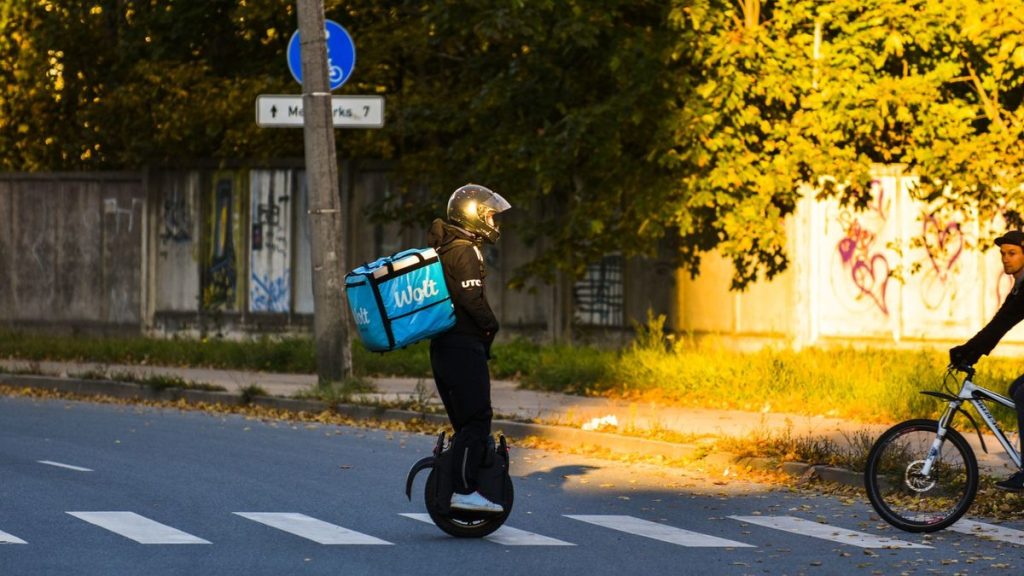
An electric unicycle, or EUC, is a tall self-balancing wheel you stand beside, facing forward, with fold-out foot pedals on each side. It’s built for speed and distance. A Onewheel is a stubby board with one fat tire in the middle, ridden sideways like a snowboard or surfboard, and it’s built for playful, off-road fun. One is a serious commuter; the other is a toy in the very best sense of the word.
In this guide we’ll compare stance, speed, range, learning curve, terrain, safety, and price using real 2026 models and prices. By the end, you’ll know exactly which one-wheeled ride belongs in your garage, and which one you’d probably regret buying.
Electric Unicycle vs Onewheel: The Quick Answer
Both machines balance on a single wheel and run on electric power, but they feel like completely different sports. An electric unicycle is a tall wheel you stand beside, facing the direction you travel, balancing front-to-back with your own body. A Onewheel is a chunky board with one fat go-kart tire in the middle, and you ride it sideways, weight split between your toes and heels, like a skateboard or a snowboard.
Here’s the short version. If you want real speed, long range, and a machine that can replace part of your car commute, the electric unicycle wins hands down. If you want a playful, surfy ride for trails, grass, and carving around the neighborhood, the Onewheel is tough to beat and far easier to learn. EUCs go faster and farther; Onewheels are simpler to pick up and more fun off the pavement.
Neither one is objectively better. They just answer different questions. The rest of this guide digs into each area so you can match the ride to your life, your budget, and how much practice you’re willing to put in.
- Pick an electric unicycle if you want a fast, long-range daily commuter and don’t mind a longer learning curve.
- Pick a Onewheel if you want a fun, surf-style board for trails and short cruises that you can learn in an afternoon.
- Have both budget and patience? An EUC will last you longer as your skills grow.
| Feature | Electric Unicycle (EUC) | Onewheel |
|---|---|---|
| Riding stance | Forward-facing, wheel between legs | Sideways, surf/snowboard style |
| Top speed | 20 to 56 mph | 16 to 20 mph |
| Range | 20 to 90 miles | 11 to 32 miles |
| Learning curve | Harder (about 15 to 30 hours) | Easier (about 5 to 10 hours) |
| Best terrain | Pavement plus light off-road | Trails, grass, dirt |
| Weight | 30 to 100+ lbs | 23 to 35 lbs |
| Price range | $400 to $4,400+ | $1,050 to $3,200 |
| Best for | Commuting, speed, distance | Off-road fun, carving, cruising |
How Each One Rides (Stance and Feel)
The stance is the single biggest day-one difference between these two, and it shapes everything about how they feel. On one, you face forward like a runner. On the other, you stand sideways like a surfer. That one change decides how you balance, how you steer, and how quickly the whole thing clicks.
If you’ve spent time on a skateboard, snowboard, or surfboard, the Onewheel will feel familiar almost instantly. If you haven’t, the EUC’s forward stance can actually feel more natural once your ankles learn the job, because you’re always looking where you’re going.
Riding an electric unicycle
You stand on two fold-out pedals with the wheel tucked between your calves, facing forward. You speed up by leaning gently forward, slow down by leaning back, and steer by tilting your ankles and shifting your hips. There are no handlebars, so every bit of balance comes from your feet, ankles, and core. The first hour feels wobbly and strange, but once it clicks, it feels like effortless, hands-free gliding, and many riders say nothing else compares.
Riding a Onewheel
You stand sideways with one foot near the nose and one near the tail, the single wide tire centered under you. The board handles front-to-back balance itself through a sensor pad, so you mostly manage side-to-side, pressing your toes or heels to carve and leaning forward to accelerate. Riders describe it as snowboarding or surfing on pavement. It feels playful and intuitive fast, which is a big part of the appeal.
Speed, Range, and Power
This is where the electric unicycle flexes its muscles. Even an approachable beginner wheel like the INMOTION V9 tops out around 28 mph and covers up to 37 miles on a charge. Move up the range and you’ll find EUCs doing 40 to 56 mph with 60 to 90 miles of range, which is genuinely wild for something you stand on. Onewheels, by contrast, are tuned for control instead of top speed. The current lineup maxes out around 16 to 20 mph with roughly 11 to 32 miles of range depending on the model.
Why the big gap? An EUC packs a large battery and a powerful motor right inside the wheel, so there’s room for serious capacity. A Onewheel has to fit its battery into a flat deck, which limits size. Onewheel also deliberately caps speed for safety, since pushing the motor past its limit is exactly what causes the dreaded nosedive. In other words, the ceiling is a design choice, not just a limitation.
What does this mean for you? If you have a 10-mile-each-way commute or want to keep pace on a busy bike lane, the EUC’s speed and range are the difference between arriving relaxed and arriving stranded. If your rides are 3 to 8 fun miles around town and trails, a Onewheel has all the range and speed you’ll actually use.
- Beginner EUC (INMOTION V9): 28 mph, up to 37 miles.
- High-end EUC: 40 to 56 mph, 60 to 90 miles.
- Onewheel lineup: 16 to 20 mph, 11 to 32 miles.
- EUCs also climb steep hills better thanks to far higher wattage.
The Learning Curve: Which Is Easier to Ride?
If getting rolling quickly matters to you, the Onewheel is the clear winner. Because the board balances front-to-back on its own, you only have to manage side-to-side, much like a skateboard. Most people are cruising within their first hour, and comfortable within about 5 to 10 hours of total practice. The learning is gentle and, frankly, a lot of fun the whole way through.
Electric unicycles ask more of you. You control balance in every direction yourself, with nothing to hold on to. Expect roughly 1 to 3 hours of practice just to roll in a straight line, and somewhere around 15 to 30 hours, usually spread over a few weeks, to feel truly confident mounting, dismounting, and turning at low speed. It’s a real skill, and the early sessions can be humbling. The payoff is that once it clicks, it clicks for good.
For both rides, the smart approach is the same: wear your gear, practice in an empty lot or on grass, and break your sessions into short 30-minute chunks so your ankles and brain can absorb it. Progress on an EUC is not linear; many riders struggle for two or three sessions and then suddenly get it all at once.
Terrain, Portability, and Everyday Use
Where and how you’ll ride matters as much as the spec sheet. These two machines pull in different directions here, and matching that to your daily life will save you from buyer’s remorse.
The Onewheel is the trail king. Its fat, soft tire soaks up grass, dirt, gravel, and rooty singletrack that would stop most other rides cold. Electric unicycles handle pavement beautifully, and bigger 16 to 22-inch wheels can do light off-road duty, but nothing in this pair beats a Onewheel for pure off-pavement play. For commuting, though, the EUC pulls ahead: it’s faster, goes much farther, and has a retractable trolley handle so you can roll it along like a suitcase when you’re off it.
- Onewheel weight: roughly 23 to 35 lbs, with a built-in carry handle.
- EUC weight: about 30 to 100+ lbs, but it rolls like luggage on its trolley handle.
- Both get heavy and awkward hauling up multiple flights of stairs.
Best for off-road and trails
The Onewheel, without much debate. That go-kart tire and self-balancing deck were practically made for dirt paths, beaches, and grassy parks. It’s the ride you take to have fun rather than to get somewhere.
Best for commuting and city use
The electric unicycle. Higher speed keeps you with traffic, big range removes range anxiety, and the slim profile plus trolley handle make it easy to roll into an elevator, office, or onto a train.
Which is easier to carry
The Onewheel is lighter at roughly 23 to 35 pounds, but it’s boxy. EUCs run heavier, from about 30 pounds for small wheels to 100-plus for big ones, yet they roll on their own wheel, so you rarely have to dead-lift them except up stairs.
Safety: Nosedives, Recalls, and Gear
Let’s be honest about risk, because both of these can hurt you if you get careless, and both are perfectly manageable if you respect them. The Onewheel’s signature danger is the nosedive: if you demand more than the board can give, by going too fast, climbing a steep hill, or riding on a low battery, the nose can drop and pitch you forward. In September 2023, Future Motion recalled about 300,000 Onewheels after four reported deaths, and pushed a firmware update adding Haptic Buzz, a loud buzzing and vibrating warning that fires as you approach the board’s limits. Every current Onewheel ships with it.
Electric unicycles warn you differently, with tiltback (also called pedal dip): as you near the wheel’s limit, the pedals tilt up under your toes to physically push you to slow down. Higher-end EUCs carry huge power reserves that make cutouts rare, but they also reach much higher speeds, and a fall at 30-plus mph is a serious event. Choosing a UL 2272 certified wheel, like the INMOTION V9, also lowers the risk of a battery fire while charging.
The gear conversation is identical for both. A certified helmet is non-negotiable. Wrist guards are the most underrated item you can buy, because falling forward onto outstretched hands is the most common beginner crash and wrist fractures are the most common injury. Add knee and elbow pads as your speeds climb, and never ride at 100 percent throttle where you have no reserve to catch a bump.
- Always wear: a certified helmet and wrist guards.
- Add as speed increases: knee pads, elbow pads, and gloves.
- Keep a power buffer: never ride below 15 to 20 percent battery, especially uphill.
- Onewheel: never ignore Haptic Buzz. EUC: never ride through tiltback.
Price and Value: What You Get for Your Money
Onewheel pricing is refreshingly simple because there’s one brand, Future Motion. In 2026 you’re looking at roughly $1,050 for the Pint S, around $1,500 for the Pint X, about $2,300 for the GT, and about $3,200 for the high-performance GT S-Series. You’re paying for a polished, patented ride, strong brand support, and a big, friendly community.
Electric unicycles span a much wider range. Budget and learner wheels start around $400, excellent do-everything wheels like the INMOTION V9 land near $1,000, and 40-plus mph flagships such as the INMOTION V13 climb from $2,000 to $4,400 and beyond. Dollar for dollar, EUCs simply give you more speed and range, though the very best ones cost as much as a used car.
So what’s the value verdict? For pure commuting muscle, the EUC delivers more capability per dollar. For a plug-and-play fun board with excellent resale value and an easy learning curve, the Onewheel earns its price. Whichever way you lean, budget another $100 to $250 for safety gear and consider a spare charger; both are money well spent on day one.
- Onewheel: about $1,050 (Pint S) up to about $3,200 (GT S-Series).
- Entry EUC: roughly $400 to $700 for learner-friendly wheels.
- Do-it-all EUC: around $1,000 (INMOTION V9).
- Flagship EUC: $2,000 to $4,400+ for 40 mph-plus speed and 60 to 90 miles of range.
| Model | Type | Top Speed | Range | Approx. Price |
|---|---|---|---|---|
| Onewheel Pint S | Onewheel (entry) | ~16 mph | ~11 mi | $1,050 |
| Onewheel Pint X | Onewheel (mid) | ~18 mph | ~18 mi | $1,500 |
| Onewheel GT | Onewheel (flagship) | ~20 mph | 20 to 32 mi | $2,300 |
| Onewheel GT S-Series | Onewheel (performance) | ~20 mph | 16 to 25 mi | $3,200 |
| INMOTION V9 | EUC (beginner) | 28 mph | 37 mi | ~$999 |
| INMOTION V13 Challenger | EUC (premium) | ~43 mph | ~75 mi | ~$4,400 |
| Ride | Pros | Cons |
|---|---|---|
| Electric Unicycle | Fast, long range, great commuter, hands-free, strong hill power | Steeper learning curve, heavier, higher speeds raise crash stakes |
| Onewheel | Easy to learn, playful off-road, surf-like feel, lighter to carry | Slower, shorter range, nosedive risk, more expensive per mph |
Common Mistakes (and How to Fix Them)
Fix: Powerful 40-plus mph EUCs and the Onewheel GT S-Series are unforgiving for beginners. Start on a tamer ride like the INMOTION V9 or Onewheel Pint S, learn the basics, and grow into speed later.
Fix: Wrist fractures and head injuries are the most common serious falls on both rides. Wear a certified helmet and wrist guards on every single ride, and add knee and elbow pads as your speed climbs.
Fix: Nosedives and cutouts almost always follow a warning. Slow down the instant you feel EUC tiltback or hear the Onewheel’s Haptic Buzz, and never ride below 15 to 20 percent battery, especially uphill.
Fix: Hills, cold weather, speed, and rider weight all shrink range fast. Plan for roughly 60 to 70 percent of the rated number so a fun ride doesn’t end with a long, heavy walk home.
Pro Tips
- 💡 For your first EUC sessions, ride alongside a wall or hold a friend’s shoulder, then lift your hand for a few seconds at a time until balance clicks.
- 💡 Keep a 20 to 30 percent battery buffer, especially on hills or in cold weather, because motor power and safety margin both drop as the battery drains.
- 💡 Learn a clean step-off and an emergency dismount before you start pushing your top speed. Knowing how to bail safely prevents most bad falls.
- 💡 Never ride through a tiltback or Haptic Buzz warning. Treat it as a hard stop sign, not a suggestion.
- 💡 Air your tire up to the recommended pressure and carve gently at first to break it in. Correct pressure improves range, comfort, and control.
A Real-Life Example
My neighbor and I bought our first boards the same month. He grabbed a Onewheel Pint X, I went with an EUC. He was carving the local dirt trail by the end of day one, grinning the whole time. It took me a solid two weeks of parking-lot laps before my unicycle felt natural. But once it clicked, our rides split apart: he’d tap out around 6 miles at 18 mph, while I was still cruising at 25 mph with half a battery to spare. A year later we both love our choices, his for weekend trail fun, mine for the daily commute. That’s the whole comparison in a nutshell.
If you possibly can, try before you buy. Plenty of local shops and EUC or Onewheel meetup groups will let you test-ride both. Ten honest minutes on each machine will tell you more about which one fits you than any spec sheet ever could.
Frequently Asked Questions
Neither is clearly safer; both are safe with gear and respect for their limits, and risky without either. Onewheels can nosedive if you exceed their power, which led to a 2023 recall and a new Haptic Buzz warning. EUCs reach higher speeds, so falls can be worse, but they warn you with tiltback and many are UL certified. Wear a helmet and wrist guards on either one, and never ride past a warning signal.
The Onewheel is much easier to learn. Most riders are cruising within an hour and comfortable in about 5 to 10 hours, because the board balances front-to-back for you and you only manage side-to-side. An electric unicycle takes roughly 1 to 3 hours just to ride in a straight line and around 15 to 30 hours to feel confident, since you balance it in every direction yourself.
Yes, for short commutes. A Onewheel Pint X or GT handles a 5 to 10 mile round trip nicely, and it shines if your route includes bike paths, grass, or dirt shortcuts. For longer daily commuting or keeping pace with city traffic, though, an electric unicycle’s higher speed and 30 to 90 mile range make it the better tool for the job.
The electric unicycle is far faster. Even a beginner EUC like the INMOTION V9 hits 28 mph, and high-end wheels reach 40 to 56 mph. Onewheels top out around 16 to 20 mph by design, deliberately prioritizing control and stability over outright speed.
It depends on where you live. Many US cities treat them like e-scooters or e-bikes with rules on speed and where you can ride, while some ban them from sidewalks or roads entirely. Laws vary by state and city, so check your local rules, stick to bike lanes and paths where they’re allowed, and always wear a helmet.
Yes. Future Motion still sells Onewheels, and every current board ships with the Haptic Buzz firmware that warns you before you reach the board’s limits. The recall was resolved with that free update rather than by pulling the product, so the Pint S, Pint X, GT, and GT S-Series all remain available today.
Final Checklist ✅
- ✅ Decide your main use first: commuting and distance leans EUC, off-road fun leans Onewheel.
- ✅ Set a total budget that includes $100 to $250 for safety gear, not just the ride itself.
- ✅ Pick a beginner-friendly model like the INMOTION V9 or Onewheel Pint S, not the fastest one.
- ✅ Buy a certified helmet and wrist guards before your very first ride.
- ✅ Practice in an empty lot or on grass, near a wall or fence you can lean on.
- ✅ Check tire pressure and install any firmware updates before you ride.
- ✅ Plan your routes around roughly 65 percent of the rated range to avoid getting stranded.