People often use “hoverboard” and “Segway” as if they were the same thing. They are related, since both balance themselves using gyroscopic sensors, but they are very different machines to ride, carry and buy. Here is how they compare, and which one makes sense for you today.
This article is part of our hoverboard buying guide, which brings together every hoverboard guide on the site.
The short answer
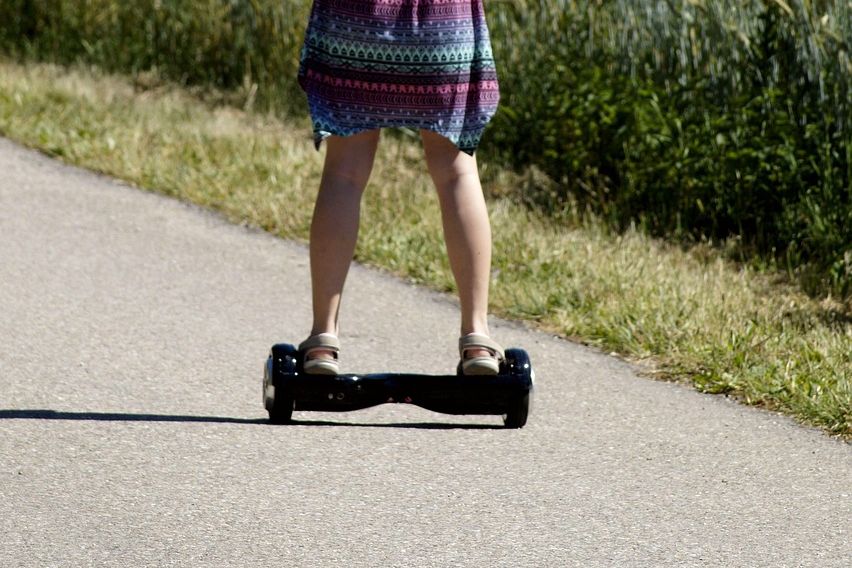
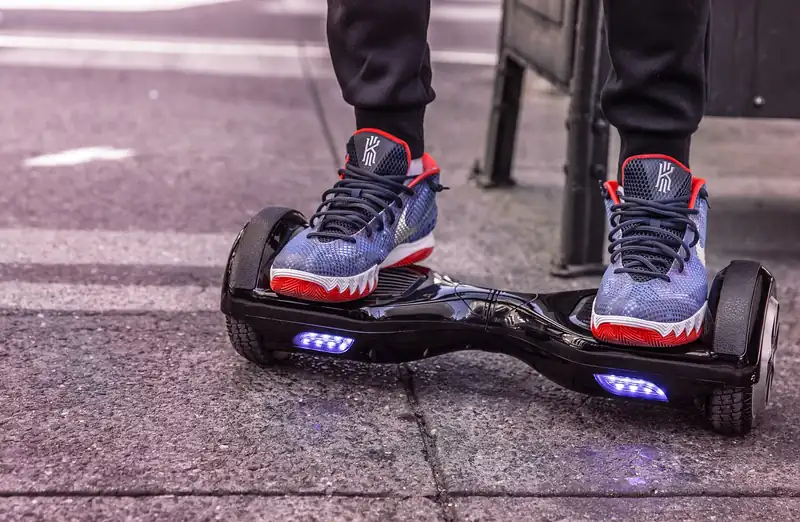
A hoverboard is a small, light, two-wheeled board with no handlebar. You stand on two foot pads and steer by tilting your feet. A Segway, in the original sense, is the Segway PT: a much larger two-wheeled machine with a tall handlebar that you steer by leaning it. The Segway PT went out of production in 2020, and the Segway brand (now Segway-Ninebot) today sells hoverboard-style boards of its own, such as the Ninebot S2 with a knee-control bar.
So for most people the real choice today is between a classic hoverboard and a hoverboard with a knee bar or handle, which gives you some of the Segway’s stability in a much smaller package.
Hoverboard vs Segway at a glance
| Hoverboard | Segway PT (original) | |
|---|---|---|
| How you steer | Tilt your feet on the two foot pads | Lean the handlebar left or right |
| Handlebar | None (some models add a knee bar or handle) | Tall handlebar at chest height |
| Typical top speed | About 6 to 10 mph; a few boards are rated up to about 12 mph | About 12.5 mph |
| Weight | Usually around 20 to 35 lb | Around 100 lb |
| Portability | Carry it by hand, fits in a car trunk or closet | Needs a vehicle or ramp to transport |
| Learning curve | A few minutes to an afternoon for most riders | Easy once shown; the handlebar helps balance |
| Who uses it | Kids, teens and adults for fun and short trips | City tours, security patrols, large sites |
| Still sold new? | Yes, from many brands | No, production ended in 2020 |
How each one works
Both use the same basic idea. Gyroscopes and accelerometers measure which way you are leaning many times a second, and the motors drive the wheels to keep you upright. Lean forward and you go forward; lean back and you slow down or reverse.
The difference is what you lean with. On a hoverboard, each foot pad has its own sensor and motor, so pressing your toes down on one side and not the other turns the board. On the Segway PT, the platform moves as one piece and you turn by tilting the handlebar. Our guide to how a hoverboard works explains the sensors in more detail.
Speed, range and terrain
Most hoverboards top out somewhere between 6 and 10 mph, which is about jogging to fast-running pace, with a few performance boards rated up to about 12 mph. Range depends on the battery and the rider, and is typically a handful of miles to around a dozen. The Segway PT was built for longer days of use, with a top speed of about 12.5 mph and larger batteries.
Terrain depends on the wheels more than the brand. Small 6.5-inch solid wheels are for smooth pavement and indoors, while 8.5-inch all-terrain wheels and 10-inch air-filled tires cope with grass, gravel and cracked paths. The Segway PT’s large tires handled rough ground comfortably, and many tour companies used off-road versions. See our guide to how fast a hoverboard goes for real-world speeds.

Portability and storage
This is where hoverboards win easily. A typical board weighs about as much as a full suitcase and can be carried up stairs, slid under a bed or put in a car trunk. The Segway PT weighs around 100 pounds and is closer to a small vehicle: you need a ramp, a van or a large trunk to move it, and somewhere to park it.

Learning curve and safety
The Segway PT’s handlebar gives you something to hold, which many first-time riders find reassuring, and tour operators could teach a group to ride it in a few minutes. Classic hoverboards take a little more practice because there is nothing to hold, but most people are riding comfortably within an afternoon; our beginner’s guide to riding a hoverboard walks through the first steps.
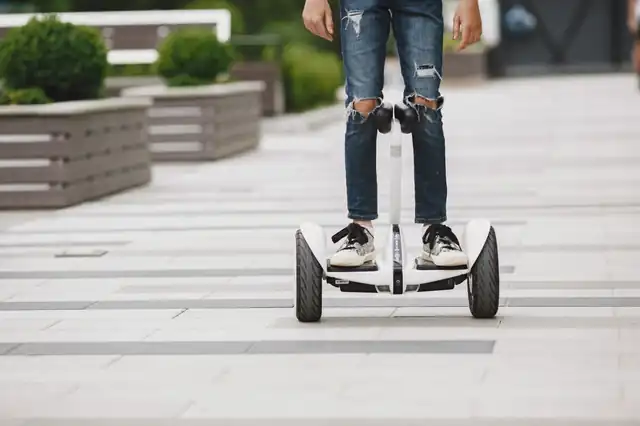
If you want the stability of a handlebar without the size of a Segway, look at hoverboards with a knee-control bar, such as the Ninebot S2 below, or boards with a handle; see our guide to hoverboards with handles.
Whatever you choose, buy a board certified to UL 2272, the US safety standard for hoverboard electrical and battery systems, and wear a helmet. Rules on where you can ride vary by state and city; our guide to hoverboard laws by state is a good starting point.
Which should you buy?
Since the Segway PT is no longer made, buying one means buying used, along with any battery and parts questions that come with an ageing machine. For most people, a modern hoverboard is the practical choice:
- Choose a classic hoverboard if you want something light and affordable for fun, short trips and riding with friends.
- Choose a hoverboard with a knee bar or handle if you want the easiest learning curve or extra stability, for example for an older beginner.
- Look at a used Segway PT only if you specifically need a handlebar machine for longer daily use and have somewhere to store and transport it.
 Representative photo
Segway Ninebot S2
The modern Segway-brand alternative to the PT: a height-adjustable knee-control bar and 10.5-inch tubeless tires make it one of the easiest self-balancing rides to learn, in a fraction of the size and weight. Segway rates it for riders aged 16 to 50.
Best for: Teens 16+ and adults who want stability and range
- Wheels
- 10.5" tubeless pneumatic
- Max rider
- 220 lb
- Top speed
- Up to 11.2 mph
- Range
- Up to 21.7 mi
- Certification
- UL 2272
- Knee-bar steering is quick to learn
- Longest advertised range of our picks
- Height-adjustable bar fits riders 4’3" to 6’6"
- App with a learning mode
- Rated for riders 16 to 50 only
- Costs considerably more than classic hoverboards
- 220 lb rider limit
Manufacturer-advertised figures as quoted in our review; real-world range and speed are usually lower.
 Representative photo
Gyroor Warrior G2
If you prefer a classic board with no bar, our most-recommended all-rounder has 8.5-inch all-terrain wheels and a 265 lb rating for teens and adults on mixed surfaces.
Best for: Teens and adults who ride on mixed surfaces
- Wheels
- 8.5" solid all-terrain
- Max rider
- 265 lb
- Top speed
- Up to 10 mph
- Range
- 7.5–9.5 mi
- Certification
- UL 2272
- Bigger tires than a 6.5-inch starter board, so grass and gravel are manageable
- Higher rider limit than most boards at this size
- Bluetooth speaker and app on most listings
- Heavier to carry than a 6.5-inch board
- Our articles quote different speed and rider-limit figures for different Warrior versions — check the exact listing
Manufacturer-advertised figures as quoted in our review; real-world range and speed are usually lower.
Comparing more options? See our best hoverboards guide, our self-balancing scooters for adults, and how hoverboards compare with electric scooters and the Onewheel.
Frequently asked questions
Is a hoverboard the same as a Segway?
No. Both are self-balancing, two-wheeled machines, but a hoverboard is a small board with no handlebar that you steer with your feet, while the original Segway PT is a much larger machine with a tall handlebar that you steer by leaning it.
Do they still make Segways?
The original Segway PT went out of production in 2020. The Segway brand, now part of Segway-Ninebot, still makes self-balancing scooters such as the Ninebot S2, along with kick scooters and other rides.
Which is easier to learn, a hoverboard or a Segway?
The Segway PT’s handlebar makes it easy for most beginners to feel stable straight away. A classic hoverboard takes a little more practice, but a knee-bar model like the Ninebot S2 closes much of that gap.
Which is faster?
The Segway PT was limited to about 12.5 mph. Most hoverboards top out between 6 and 10 mph, with a few performance models rated up to about 12 mph.
Can kids ride a Segway?
The Segway PT was designed for adults and is too large and heavy for children. For kids, a hoverboard sized for their age and weight is the better choice; check the manufacturer’s minimum age and rider weight before you buy.