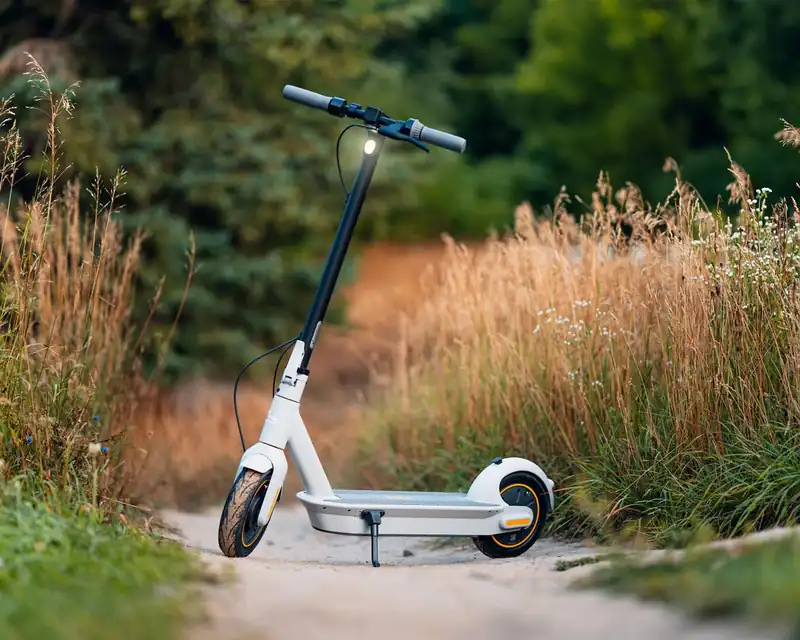
Real-world range, honest weights, and the right pick for your exact commute — from a 26-pound carbon featherweight to long-range comfort kings.
The best electric scooters for commuting can turn a stressful, stop-and-go drive into the part of your day you actually look forward to. Instead of crawling through traffic, hunting for parking, or waiting on a bus that runs late, you roll straight past it all and park right by the door. No gas, no parking fees, and often a faster door-to-door time than a car in a busy city.
But here is the honest truth: most scooters are not built for the daily grind. Plenty look great in ads, then disappoint the moment you load them with a real rider, a backpack, a hill, and a cold morning. Advertised range numbers are optimistic, cheap tires beat up your wrists, and a 50-pound scooter is no fun to carry up subway stairs. Picking the right one is less about chasing the flashiest specs and more about matching a scooter to your specific route.
That is exactly what this guide does. We rounded up seven of the best commuter scooters you can buy in 2026, across every budget, from a 26-pound carbon-fiber featherweight to a long-range comfort king that eats potholes for breakfast. For each one you will get real-world range (not just the box number), honest weights, prices, and the type of rider it suits best, plus the buying tips and safety basics that make scooter commuting genuinely stick.
What Makes an Electric Scooter Great for Commuting
A great commuter scooter is not always the fastest or the most powerful one. It is the one that fits your specific ride, day after day, in real weather and real traffic. Before you get dazzled by top-speed numbers, think about the boring stuff that actually decides whether you will still love your scooter in six months: how far it really goes, how much it weighs when you have to lift it, and how it handles a rainy Tuesday.
The single biggest mistake is trusting the range printed on the box. Brands measure range with a light rider, on flat ground, at low speed, on a warm day. Your real number will be 30 to 50 percent lower, and cold weather trims another chunk. So if your round-trip commute is 12 miles, do not buy a scooter rated for 15, buy one rated for 25 to 30. That headroom keeps you off the charger every night and protects the battery long-term.
After range, comfort and safety come down to two overlooked parts: tires and brakes. Pneumatic or self-healing tubeless tires soak up cracks and curbs that solid foam tires slam straight into your wrists. And a proper braking setup, ideally a disc or drum brake paired with an electric or regenerative brake, is what lets you stop confidently when a car door swings open in front of you.
- Real range: Aim for a claimed range at least 1.5 to 2 times your daily round trip
- Weight and folding: Under 35 lbs is easy to carry; 50-plus lbs is a workout on stairs
- Tires: Pneumatic or self-healing tubeless soak up bumps; solid tires never go flat but ride harsh
- Brakes: A disc or drum brake plus electric braking stops you fastest, especially in the wet
- Water resistance: Look for IP54 at minimum; IPX6 or IP66 if you ride in real rain
- Hill power: 350W is fine for flat cities; choose 500W or a high peak wattage for steep grades
| Scooter | Best For | Top Speed | Real Range | Weight | Price |
|---|---|---|---|---|---|
| Segway Ninebot MAX G2 | Best overall | 22 mph | ~28-30 mi | 54 lbs | $799-999 |
| NIU KQi3 Pro | Best value | 20 mph | ~18-22 mi | 45 lbs | $499-600 |
| NIU KQi Air | Lightest / portable | 20 mph | ~22-24 mi | 26 lbs | $1,199-1,499 |
| Segway Ninebot MAX G3 | Long / rough rides | 28 mph | ~30-40 mi | 54 lbs | ~$1,199 |
| Apollo City | Hills / all-weather | 27 mph | ~22-28 mi | 65 lbs | ~$1,499 |
| Hiboy S2 Pro | Best budget | 19 mph | ~17-19 mi | 32 lbs | $449-540 |
| Gotrax G4 | Cheap starter | 20 mph | ~16-18 mi | 37 lbs | $400-600 |
The 7 Best Electric Scooters for Commuting in 2026
Here are our seven picks, each chosen for a different kind of rider and commute. There is no single winner, so read the one-line verdict at the end of each and match it to your own route, budget, and how often you have to carry the thing. Prices move around with sales, so treat them as ballparks.
1. Segway Ninebot MAX G2 — Best Overall Commuter
If you want one scooter that nails the daily commute, start here. The MAX G2 pairs a 450W motor (900W peak) with dual suspension and 10-inch self-healing tubeless tires, so cracked city pavement barely registers. It tops out at 22 mph and returns a genuine 28 to 30 miles per charge, which covers most round trips with room to spare. Traction control helps on wet mornings, built-in turn signals make you predictable in traffic, and Apple Find My tracking deters thieves. At roughly 799 to 999 dollars it is the comfort-first sweet spot. The catch: at about 54 lbs, it is heavy to carry upstairs.
2. NIU KQi3 Pro — Best Value All-Rounder
The KQi3 Pro is the scooter we recommend most often when someone wants real quality without spending four figures. Its 350W motor (700W peak) and punchy 48V battery hit 20 mph and hold it, even up gentle hills. Expect a real 18 to 22 miles from the claimed 31, plus a confidence-inspiring triple-brake setup with front and rear discs. The 9.5-inch tubeless tires resist flats, and the app adds cruise control and custom riding modes. At around 499 to 600 dollars it undercuts the premium crowd while feeling almost as polished. For most nine-to-five commuters, this is the smart-money pick.
3. NIU KQi Air — Best Lightweight and Portable
Do you carry your scooter up stairs, onto a train, or under a desk? The KQi Air is a revelation at just 26 pounds, thanks to a body that is 70 percent carbon fiber. Despite the featherweight build, it still delivers 20 mph, 10-inch pneumatic tires, and a real-world 22 to 24 miles, an efficiency no other lightweight matches. It is pricey at roughly 1,199 to 1,499 dollars, and its IP55 rating means light rain only. But if your commute mixes riding with lifting and public transit, nothing else comes close to this blend of portability and range.
4. Segway Ninebot MAX G3 — Best for Long or Rough Commutes
When your commute is long, hilly, or paved with potholes, the MAX G3 is the comfort king. Segway doubled the peak power to 2,000W, so it climbs and cruises at 28 mph without strain. Dual hydraulic suspension and big 11-inch self-sealing tires flatten rough roads better than anything near its roughly 1,199 dollar price. Range is the headline: up to 50 miles claimed and a very usable 30 to 40 miles in the real world, with fast charging in about 3.5 hours. It is heavy and not cheap, but for demanding daily distances it earns every dollar.
5. Apollo City — Best Premium Build and Hill Climber
The Apollo City feels like a motorcycle-grade machine shrunk down for the sidewalk. Its 500W motor pushes the single-motor version to 27 mph and chews through steep grades that stall lesser scooters. Self-healing PunctureGuard tires, a stiff frame, and an excellent IP66 water-resistance rating make it a genuine all-weather daily driver. Real range lands around 22 to 28 miles. At roughly 1,499 dollars it is an investment, and at 65 pounds it is a beast to lift, but riders who face serious hills or ride in all conditions rarely regret it.
6. Hiboy S2 Pro — Best Budget Commuter
The S2 Pro proves you do not need to spend big to commute happily. For around 449 to 540 dollars you get a 350W motor, a 19 mph top speed, dual shock absorbers, and 10-inch pneumatic tires that ride smoother than the solid-tire budget crowd. Real range sits near 17 to 19 miles, fine for shorter city commutes, and the 260-pound weight capacity is generous. At about 32 pounds it is also light enough to carry occasionally. It lacks the polish and long legs of pricier picks, but as a first commuter scooter it is hard to beat the value.
7. Gotrax G4 — Best Cheap Starter Scooter
If you are testing whether scooter commuting is for you, the Gotrax G4 is the low-risk entry ticket. It regularly sells for 400 to 600 dollars, yet still offers a 350W motor, a 20 mph top speed, 10-inch pneumatic tires, and a bright LED headlight. Claimed range is 25 miles; plan for a real 16 to 18. The IP54 rating handles light drizzle, and folding is quick for trunk storage. You give up suspension and premium fit-and-finish, so it rides firmer, but for the money the G4 is a dependable way to ditch short car trips.
How to Match a Scooter to Your Commute
There is no single best commuter scooter, only the best one for your commute. The right pick depends on three things: how far you ride round trip, how hilly your route is, and whether you ever have to carry or store the scooter along the way. Nail those and the decision almost makes itself.
If your commute is short and flat, say a few miles across a city center, you do not need to spend big. A budget model like the Hiboy S2 Pro or Gotrax G4 has plenty of range and power, and you will appreciate saving the money. If you cover a longer distance or face real climbs, that is where a stronger motor and bigger battery pay off, and a MAX G3 or Apollo City stops feeling like a luxury and starts feeling like a necessity.
The trickiest commutes are the mixed ones. If you ride to a train, carry the scooter aboard, then ride again on the other side, weight becomes everything, and the 26-pound NIU KQi Air is worth its premium. Use the quick matches below as a starting point, then read the full pick above.
- Under 8 miles and flat: Hiboy S2 Pro or Gotrax G4
- 8 to 15 miles, mixed terrain: NIU KQi3 Pro or Segway MAX G2
- 15-plus miles or steep hills: Segway MAX G3 or Apollo City
- Train, stairs, and carrying involved: NIU KQi Air
- All-weather, rain or shine: Apollo City or Segway MAX G3
Understanding Range, Speed, and Battery Life
The number on the box is the single most misleading spec in the whole category. Brands test range in ideal conditions: a light rider, flat ground, low steady speed, warm weather. Real commuting is none of those things. Plan on getting 30 to 50 percent less than advertised, and expect winter to shave off another 10 to 15 percent as cold batteries lose punch.
Top speed is fun to compare, but most of your riding actually happens at 12 to 18 mph. A higher top speed mostly means quicker acceleration and easier hill climbing, which is where power really matters. Do not buy a 28 mph scooter just for bragging rights if your route never uses it, you will pay for that speed in extra weight and price, and it can be harder to control in tight traffic.
Battery health is the quiet factor that decides how your scooter feels in year three. Lithium batteries are happiest living between about 20 and 90 percent charge. Topping up to 100 percent occasionally for a long ride is fine, but draining to zero and storing the scooter empty is the fastest way to lose range for good. Treat the battery well and a quality pack easily lasts three to five years of daily commuting.
Staying Safe and Legal on Your Commute
A scooter commute is only a good commute if you arrive in one piece. The most important upgrade is not a spec, it is a helmet, and the second is being seen. At 20 mph you are moving faster than drivers expect a small vehicle to move, and many simply will not notice you until you are right in front of them. Ride like you are invisible and leave yourself an out at every intersection.
Laws vary a lot from place to place, and they change quickly. Many US cities cap e-scooters at 15 to 20 mph, keep them off sidewalks, and require them to use bike lanes. Some states require lights, set a minimum rider age, or even ask for registration. Spend ten minutes checking your city and state rules before your first commute, it is far cheaper than a ticket or an impounded scooter.
Finally, plan for theft. A commuter scooter left outside an office all day is a target. A sturdy folding lock or a heavy chain through the frame, combined with app-based tracking like Apple Find My, turns your scooter from an easy grab into someone else’s problem. Never lock only the folding stem, always secure the main frame.
- Always wear a helmet; a certified bike or e-scooter helmet is enough
- Add front and rear lights and reflective gear, even for daytime rides
- Learn your local speed limits and where scooters are allowed to ride
- Lock the frame to something solid and enable anti-theft tracking
- Never ride with headphones in both ears, hear the traffic around you
Caring for Your Commuter Scooter
The good news is that commuter scooters are low-maintenance compared to cars or even e-bikes. A few small habits keep yours safe, fast, and lasting for years. The two that matter most are tire pressure and smart charging, and neither takes more than a minute.
Check your tire pressure at least once a week if you run pneumatic tires. Underinflated tires quietly kill your range, make the ride feel mushy, and sharply raise your risk of a pinch flat. Keep them at the pressure printed on the sidewall. While you are down there, give the tires a quick look for embedded glass, screws, or cracks before they turn into a flat on your morning ride.
For charging, resist the urge to leave the scooter plugged in overnight every single night. Charging to 80 to 90 percent for daily use and only going to 100 percent before longer rides keeps the battery healthier for years. Wipe the scooter down after wet or dusty rides, never blast it with a pressure washer, and check that the folding hinge and stem clamp stay tight. A loose hinge is both annoying and genuinely unsafe at speed.
- Keep pneumatic tires inflated to the sidewall pressure for range and comfort
- Charge to 80 to 90 percent daily, and avoid storing the battery fully empty
- Wipe down after wet or dusty rides, and never use a pressure washer
- Check the folding hinge and stem clamp stay tight before each ride
- Store indoors in moderate temperatures; extreme cold or heat harms the battery
| Scooter | Motor (Peak) | Battery | Tires | Water Resistance |
|---|---|---|---|---|
| Segway MAX G2 | 450W (900W) | 551 Wh | 10″ self-healing tubeless | IPX5 |
| NIU KQi3 Pro | 350W (700W) | 486 Wh | 9.5″ tubeless | IP54 |
| NIU KQi Air | 350W (700W) | 451 Wh | 10″ pneumatic | IP55 |
| Segway MAX G3 | 850W (2000W) | 597 Wh | 11″ self-sealing tubeless | IPX6 |
| Apollo City | 500W | ~960 Wh | 10″ self-healing | IP66 |
| Hiboy S2 Pro | 350W | ~270 Wh | 10″ pneumatic | IP54 |
| Gotrax G4 | 350W | ~360 Wh | 10″ pneumatic | IP54 |
| Your Commute | Best Pick | Why |
|---|---|---|
| Short flat city hops (under 8 mi) | Hiboy S2 Pro / Gotrax G4 | Cheap, light enough, plenty of range for the distance |
| Standard 8-15 mi round trip | NIU KQi3 Pro / Segway MAX G2 | Reliable real-world range and comfort at a fair price |
| Long or hilly (15+ mi) | Segway MAX G3 / Apollo City | Big range, strong hill power, plush suspension |
| Mixed with train and stairs | NIU KQi Air | 26 lbs carbon frame is easy to carry and store |
| All-weather, rain or shine | Apollo City / Segway MAX G3 | Top-tier IP66/IPX6 water resistance and grippy tires |
Common Mistakes (and How to Fix Them)
Fix: Assume you will get 30 to 50 percent less than the box claims, and closer to half in winter. Buy a scooter rated for at least 1.5 to 2 times your daily round trip so you are not charging every night or getting stranded.
Fix: If you will ever carry it up stairs or onto a train, weight matters more than top speed. Anything over 50 lbs is a real workout. If you lift it daily, target something in the 26 to 35 lb range like the NIU KQi Air.
Fix: Solid tires never puncture but beat up your wrists on rough roads. Choose pneumatic or self-healing tubeless tires for comfort, and check for at least an IP54 rating before riding in any weather.
Fix: A 28 mph scooter is thrilling but often overkill, and it is heavier, pricier, and harder to control in traffic. For most city commutes, a stable 18 to 22 mph model is safer, cheaper, and plenty fast.
Pro Tips
- 💡 Ride in eco or standard mode for your daily commute and save sport mode for hills. You will add real miles of range and extend battery life.
- 💡 Charge to 80 to 90 percent for everyday use and only fill to 100 percent right before a long ride. Never store the scooter fully drained.
- 💡 Check tire pressure weekly. Correct pressure improves range, softens the ride, and dramatically cuts your risk of pinch flats.
- 💡 Fold your scooter and stage it by the door the night before. It removes the tiny bit of friction that tempts you back into the car.
- 💡 Add a handlebar mirror and a bright rear light. Assume drivers do not see you and ride defensively at every intersection.
A Real-Life Example
I switched to scooter commuting two winters ago after one too many surge-priced rideshares. My route is 5.5 miles each way, mostly flat with one nasty hill by the river. A mid-range commuter with a claimed 30-mile range gets me through the whole week on two charges, even when it is cold. The first month I learned two lessons the hard way: keep the tires properly inflated (my range jumped noticeably once I did) and never trust how deep a puddle looks.
The best part is not even the money I save, though that adds up fast. It is arriving at work actually awake, having skipped the parking garage and the crawl down Main Street. On Fridays I fold the scooter, carry it onto the train, and meet friends across town. That flexibility is the reason I will never go back to driving those short trips.
Frequently Asked Questions
Most commuter scooters deliver 30 to 50 percent less than their advertised range in real riding. A model rated for 40 miles typically returns a real 20 to 28 miles, depending on your weight, speed, hills, and temperature. Cold weather can cut another 10 to 15 percent. That is why you should always buy a scooter rated for well beyond your actual round-trip distance.
Yes, for trips up to about 10 to 15 miles each way they are one of the fastest, cheapest door-to-door options in a city. You skip traffic jams, parking fees, and gas, and you often beat a car on time in dense areas. They work best when your route has bike lanes or calm streets, and when you can store the scooter safely at both ends.
Most commuter scooters top out between 18 and 28 mph. However, many US cities legally cap e-scooters at 15 to 20 mph on public paths, and the rules vary widely by state and even by neighborhood. Always check your local laws before your first ride, since some places also restrict sidewalk riding, set age limits, or require lights.
Light rain is usually fine if your scooter has at least an IP54 rating, but heavy rain and deep puddles are risky. Water can reach the battery or electronics, and wet brakes and painted lines get slippery fast. If you commute in real weather often, choose a model with a higher rating like IPX6 or IP66, slow down, and avoid standing water.
Plan on 450 to 1,000 dollars for a scooter that will genuinely hold up to daily commuting. Below 450 dollars you compromise on range, brakes, and durability, while the 600 to 900 dollar range hits the sweet spot of comfort, real range, and reliability. Spend above 1,000 dollars only if you need long range, serious hill power, or an ultralight carbon frame.
A quality lithium battery lasts about 3 to 5 years, or roughly 500 to 1,000 charge cycles, before you notice a real drop in range. You can stretch that lifespan by charging to 80 to 90 percent for daily use, avoiding full drains, and storing the scooter indoors away from extreme heat or cold. Cheap scooters with smaller, lower-grade packs tend to fade sooner.
Final Checklist ✅
- ✅ Measure your exact round-trip distance and note the steepest hill on your route
- ✅ Pick a scooter with a claimed range at least 1.5 to 2 times that distance
- ✅ Confirm the folded weight is one you can comfortably carry if needed
- ✅ Check the water-resistance (IP) rating against your local weather
- ✅ Verify your city and state speed limits and where you are allowed to ride
- ✅ Budget for a helmet, a sturdy lock, and lights on top of the scooter price
- ✅ Register the serial number and set up any app-based anti-theft tracking